

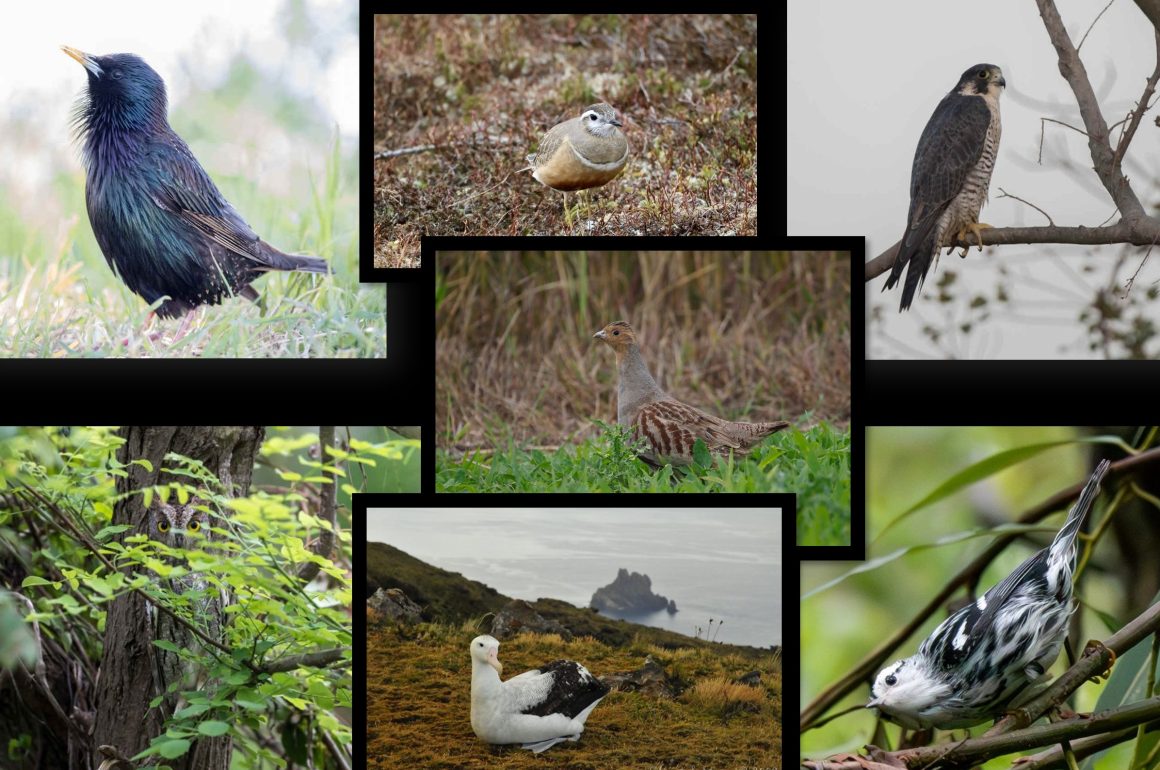
For this post, we asked our writers to name their favourite bird species. Here are their replies.
Eurasian Dotterel
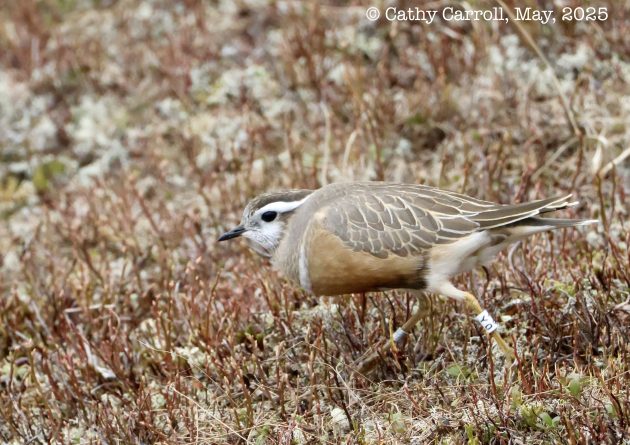
Leading us away from his nest, this Dotterel was ringed on this same tundra on July 7, 2019. It had been only a few days old and still in the nest.
Full disclosure, I really wanted to participate in this collaborative post, but I knew, up front, that I did not have a favourite bird, at least not in the literal sense. Perhaps I have a favourite bird each year—for example, I am very fond of our local American Robins—but I can’t name an all-time favourite bird. The thing is, when I have a chance to travel, the trip will usually always yield an unforgettable bird. So, for this post, I chose to select my favourite bird from my Finland trip in May 2025. We had come here, to Inari–Saariselkä Kaunispää, in Lapland, the tallest point in Finland that one can drive to, for one bird. The Eurasian Dotterel (Eudromias morinellus). Getting out of the van and surveying the area, I thought we would never find this bird in this weather on this vast tundrascape with radio towers along the upper elevation. We spread out and began to trudge forward, most of us not even sure how to cover the area. Then I barely heard, over the wind and thrashing rain, one of the trip participants calling out to us. “Hey, you guys, Moss is calling us.” I picked up my pace, and there, between where Moss was standing and where I was approaching, I saw the bird’s movement in front of me. Moss continued to stand by the bird’s nest with 3 speckled eggs. Not seeing the bird, he had stepped too close and startled the Dotterel from its nest. Thus began a little love affair for me, standing on that immense, windy, cold, and rainswept tundra, when I saw my first, and most likely only, Dotterel.
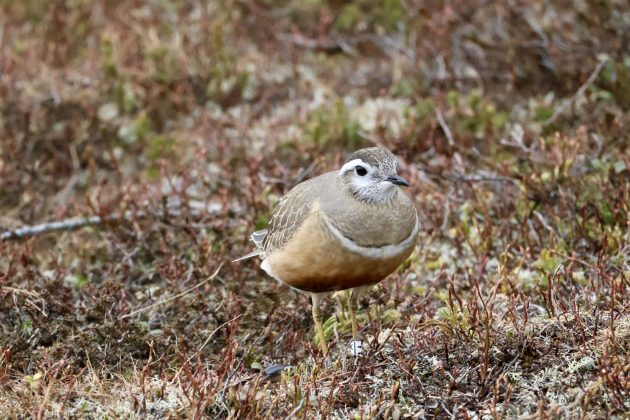
This Dotterel had migrated from as far as North Africa or even further south from the Middle East—an approximate distance of anywhere from 3,500 to 5,000 miles to get to his breeding site. He had bred with a female who laid three eggs in a nest that was very close to the nest where he was born. His female mate then left to breed again in another location. He remained behind to incubate, hatch, and raise his young—alone.
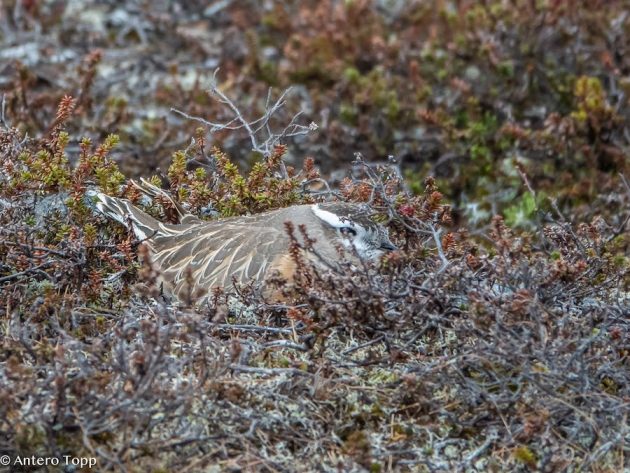
Photo by the trip leader Antero Topp. We left the Dotterel settled back on his nest. For many reasons, a very special bird and, hands down, my favourite bird of 2025.
The Dotterel was nearly 6 years old when we saw him. He had migrated as many as 10,000 miles, or more, to and from his breeding site. Over his lifetime, this adds up to many thousands of miles. This is not in the same league as some of our truly long-distance migrants (the godwits, Red Knots, etc.). But his success in returning to the tundra of his birth and continuing to breed is wonderfully impressive.
There are a couple of other things that are charming about the male Dotterel. He is known to be quite tame, especially as the time for the hatching of his young gets closer. Other birds also have a polygamous breeding strategy, but this is the only one I have ever seen.
(Cathy Carroll)
Common Starling
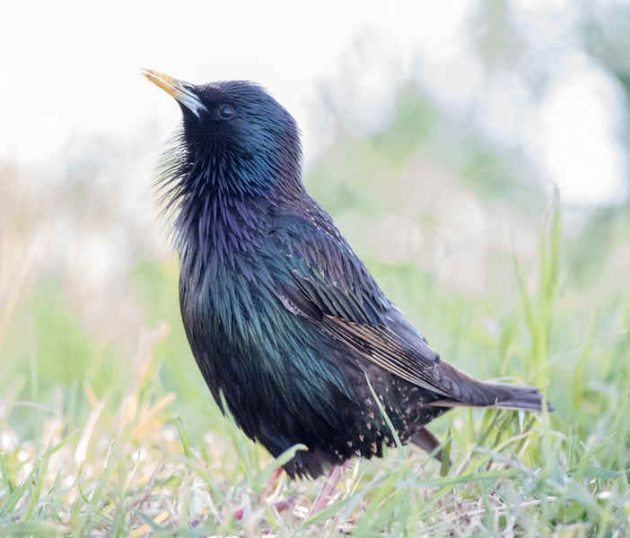
American readers (Canada, Mexico, USA, et cetera) generally despise the Common Starling. It’s an invasive species (so are they!), it occupies spaces the native species need (so do they!), and they are noisy, intrusive, and spread disease (you should get the point by now). The Common Starling is a beautiful bird with its classy winter plumage and its sparkling breeding costume. Aesthetics is not the reason I love these birds. They’re also plucky and intelligent. That’s cool, but also not enough to be a favourite. No, it’s their joie de vivre. There’s nothing more heartwarming than a Common Starling in spring, sitting on a branch and singing its heart out. It will imitate other songbirds, insert its own tunes, but most importantly: it will flutter its wings with sheer joy. In defiance of the demotivational poster, the bird visibly enjoys itself; it loves life and lives love. I can not see a singing Starling and not smile. Fortunately, they are all around us: my favourite Common Starling, which makes it favourite squared, sings from the beams of Rotterdam Central Station. I have taken the next train on several occasions, just to listen a bit longer.
(Peter Pennning)
Grey Partridge
A favourite bird species? It’s one of those questions that people frequently ask you, but it’s also a very difficult one to answer. I generally reply that it’s the bird I’m currently looking at, but that’s a bit too vague for most people. According to AviList, there are 11,131 species to choose from, which is rather a lot. I’ve seen around 4,000 of them, which reduces the choice, as I’m not going to decide on a bird that I’ve never seen.
Of those 4,000, there are quite a few I can quickly rule out. Shags and cormorants aren’t among my favourites, bulbuls are too boring, cisticolas too confusing. If I opted for a gull, you would probably think that I’m some sort of nut. I’ve always been a wildfowl enthusiast, but can I really say that I prefer a Wigeon to a Pintail, or an Eider to a Smew? It’s just as difficult with geese. Nothing can beat the winter spectacle of great skeins of Pinkfooted Geese etched against a blood-red winter sunset, a sight I enjoy regularly here in East Anglia, but individually, a Pink-foot isn’t nearly as exciting as, say, a Red-breasted Goose.
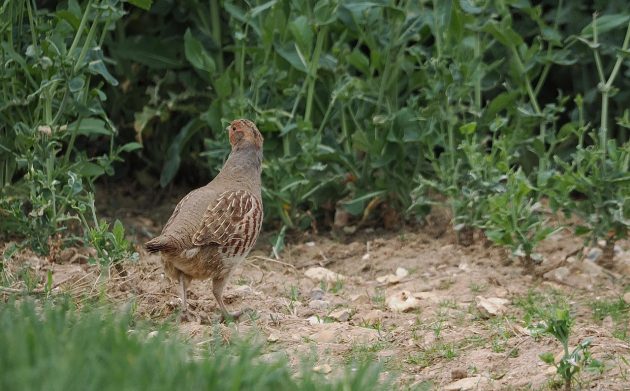
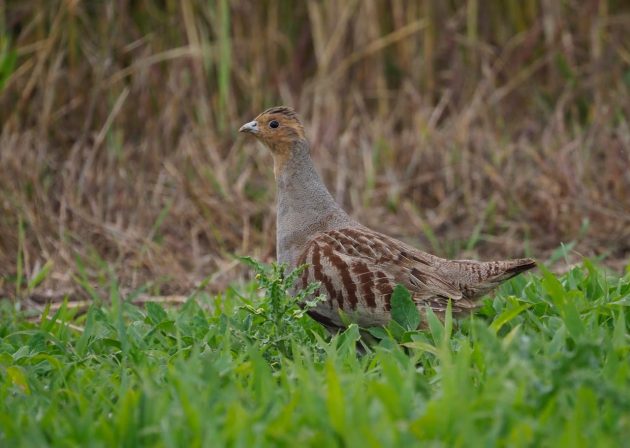
No, I’m not going to opt for an exotic beauty like a Bee-eater, much as I enjoy seeing them. My favourite has got to be a bird I encounter more often. A Barn Owl is a fine contender, and one that never fails to delight me whenever I see one. A summer wouldn’t be a summer without a Swallow, and this is a delightful bird that comes into my top two. But the winner has to be the Grey Partridge. It’s a characteristic little bird that is symbolic of the English countryside: its decline reflects the industrialisation of farming. Its colours are subtle, its shape comfortable, while it’s a bird that I encounter every month of the year. The fact that I saw a covey this morning might just have something to do with my decision, but every encounter with these delightful little game birds is always a treat.
(David Tomlinson)
Black-and-white Warbler
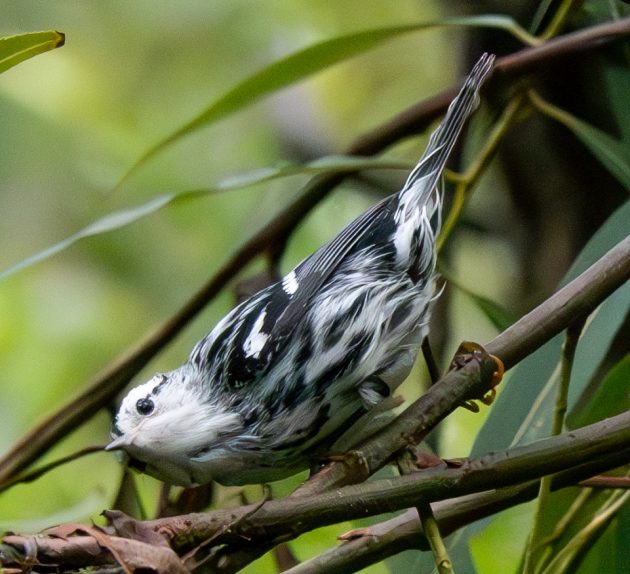
Of the more than 50 warbler species in North America, my favourite is the striking, aptly named Black-and-white Warbler (Mniotilta varia). It is easy to identify. Both males and females are beautifully marked. They are not easily confused with all those other buffy, pale, green, washy olive warblers. This warbler is the zebra of the warbler world. You cannot mistake it. It also has a unique foraging pattern, moving along, up, down, and around tree branches. It makes photographing them easy and hard. If you get enough shots fast enough, you will get a keeper and feel like a real bird photographer pro. This warbler also makes you look like a real bird pro to your friends and family who know nothing about this bird or have ever seen it. Ah, you point out, there is a Black-and-white Warbler. It impresses every time.
(Mary Alice Hayward)
Wandering Albatross
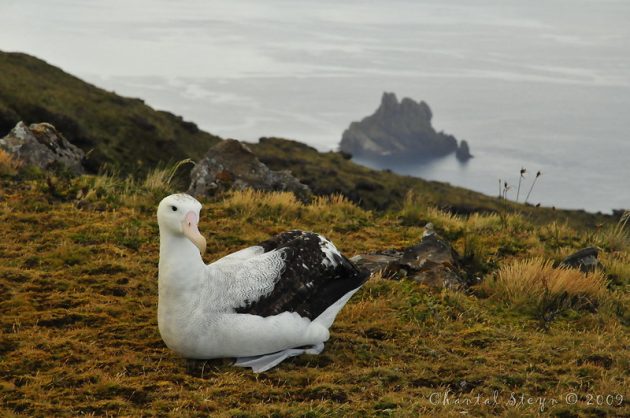
It’s always an impossible choice for a birder to select just one of over 10,000 birds to claim as their favourite – and what qualifiers are you using? Bird you have been most excited to see? Which bird do you look forward to seeing the most? One that makes you light up when you think about it? Well, for me, whenever I am asked this question, my go-to answer is Wandering Albatross. I have been lucky enough to see them twice along the roaring 40’s just off the coast of South Africa, and the majesty of this ginormous, gorgeous bird gliding along the surf is unsurpassable. These birds live a life so different from our own, it’s truly incredible to witness it in person and think of all it must have seen.
(Hannah Buschert)
“Wandering Albatross” by Chantal Steyn is licensed under CC BY-NC-ND 2.0.
Peregrine Falcon
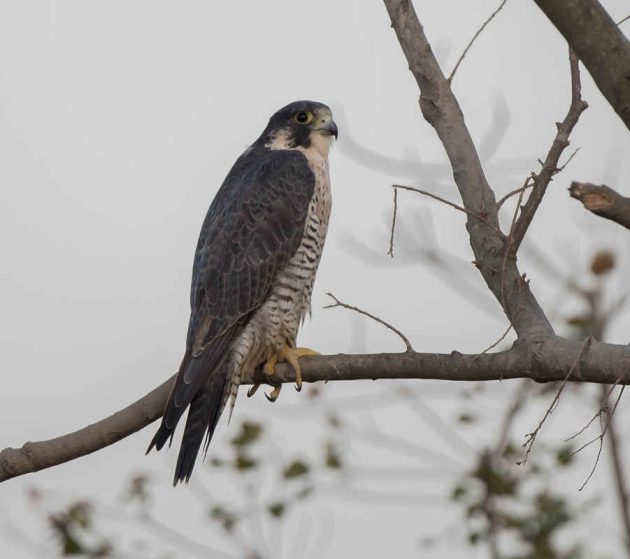
My favourite bird species is the Peregrine Falcon. Not only because of its elegance and hunting behaviour, but also because I was significantly involved in the project to reintroduce the tree-nesting population to eastern Germany in the early 1990s.
(Rolf Nessing)
Oriental Scops Owl
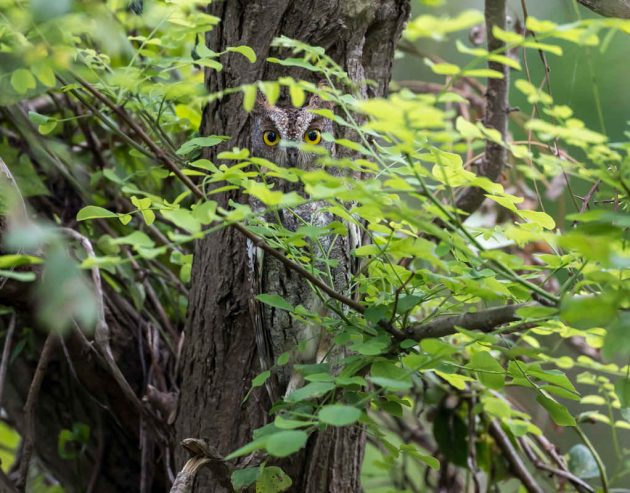
As the editor of this post, I have some leeway in bending the rules – but probably not enough to submit a cat as my favourite bird species. So, the next best thing, the bird most closely resembling a cat, is the Oriental Scops Owl. Additional benefits: It comes in two morphs, and can – with a lot of luck – be seen in Shanghai twice a year during migration season.
(Kai Pflug)
Gorgeous Bushshrike (photo: Derek Keats)
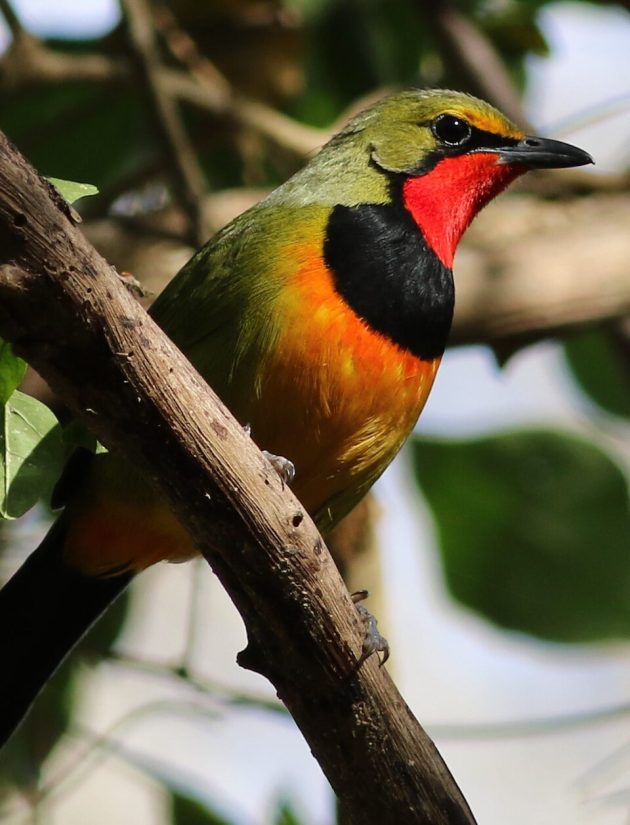
“What is your favourite bird?” is the first question I usually get asked by non-birders when I reveal this hobby of mine. I’ve usually braced for it by this point in the conversation, but still mostly do the wrong thing by saying “I love them all”, which usually only produces blank or disappointed looks. My favourite birds change all the time, depending on which places and moments from my birding experiences I most fondly remember in that moment, but one of the best-represented species in this ranking has to be the Gorgeous Bushshrike. It is one of the birds I first wanted to see when I became interested in birds as a boy in South Africa. Of the birds I’ve seen, it is among those I most want to get another view of. And besides its stunning plumage, its loud, bubbly call is always a pleasure to hear when scrambling through thorny thickets.
(Luca Feuerriegel)






Very enjoyable read, thanks to all.
Peter really likes to get his digs in, doesn’t he? Cracks me up every time. But I can’t disagree with anything he wrote about the Starling (or North Americans). He gets it right with Starling joie de vivre. Many years ago there was a news report of a car wash theft. One bad winter, a car wash owner was selling car washes like hotcakes. But when he went to collect his quarters (American coin) from the money boxes, the boxes were empty. This went on for a while. Finally, he set up cameras to discover who the thief was. Three guesses, the first two don’t count. European Starlings had discovered an access to the money boxes by way of a little hole where they entered the box (recall the video), and exited the box with a quarter in their beaks. Back and forth, this went on and on. So then he had to find out where the quarters were going. The Starlings were depositing the quarters on the roof on the car wash. The owner was finally able to collect his earnings. Clever, as always, they were probably clearing the boxes out to make room for nesting material. Nowadays modern car wash payment requires inserting a credit card. No more money for the Starlings.
Regarding starlings I am partial to murmurations. A truly spectacular sight.