

In Chinese, words are often composed of two characters, and the pattern is frequently the same. Take this example, “meili”:
- Mei means beautiful
- Li means beautiful
- And to nobody’s surprise, the combination of both characters again means beautiful.
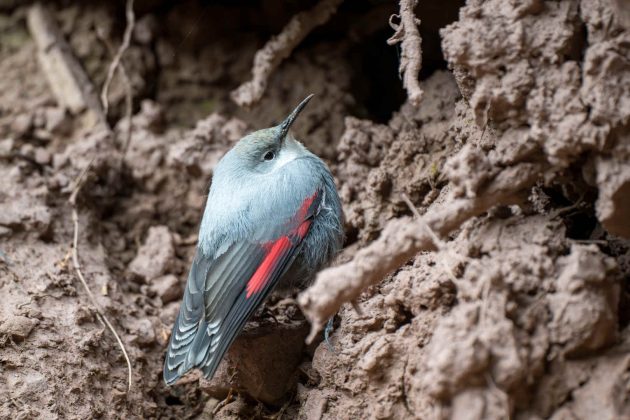
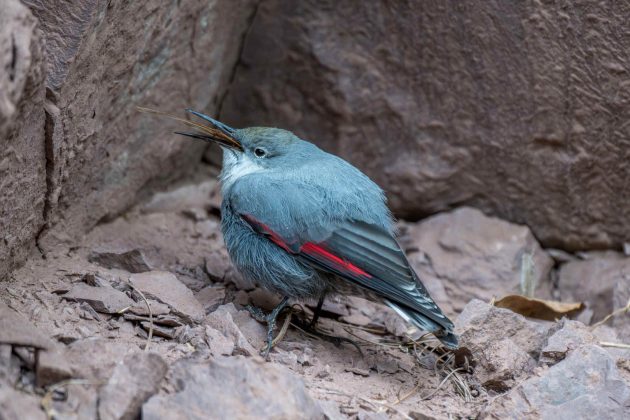
The scientific name of the Wallcreeper, Tichodroma muraria, follows a similar pattern. Tichodroma comes from Greek teikhos, meaning wall, while dromos -also in Greek – means runner. And the muraria then is Latin for “of the wall”.
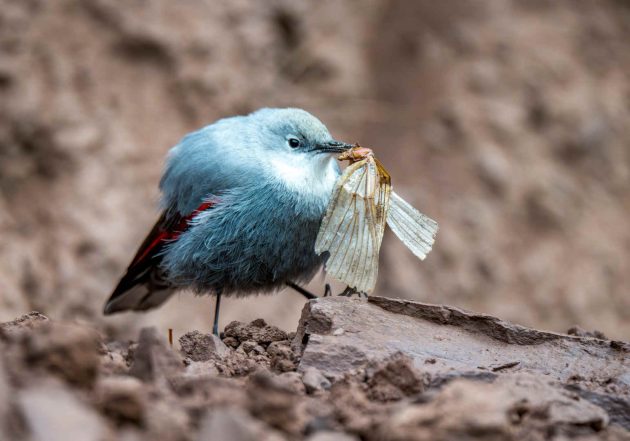
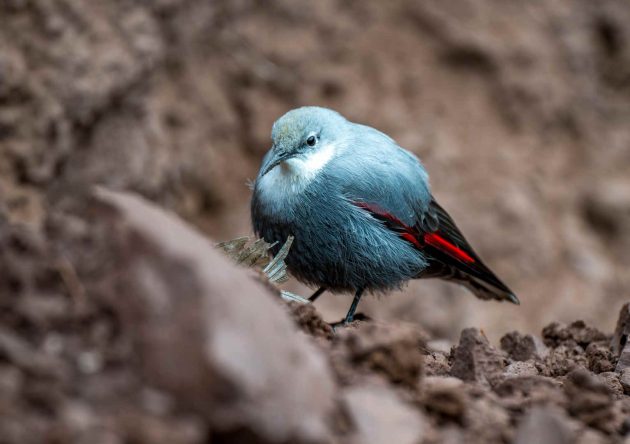
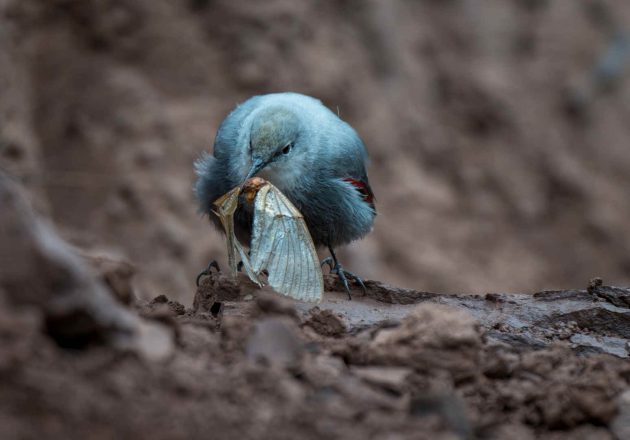
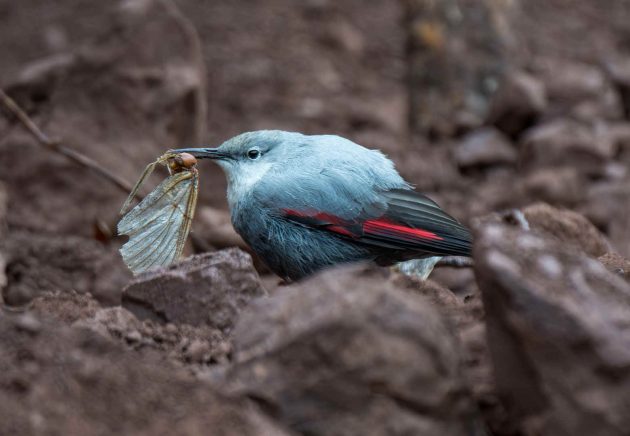
Much like my cats are obligatory carnivores (I sometimes tell them when they try to eat something else), wallcreepers are obligatory insectivores. And indeed, getting the photos shown in this post at Laojunshan, Yunnan, China, I was lucky to encounter a wallcreeper struggling to deal with a rather large insect and thus mostly ignoring the insistent photographer.
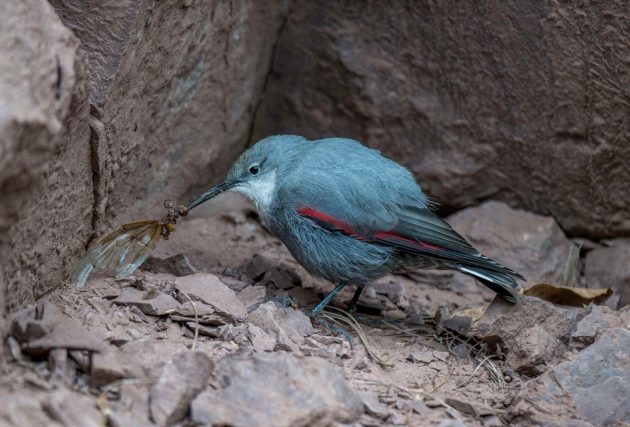
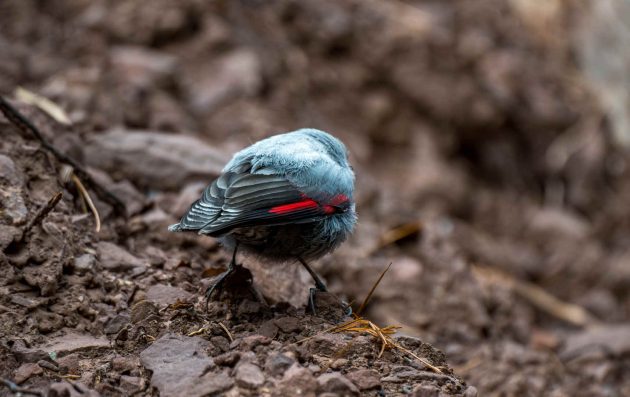
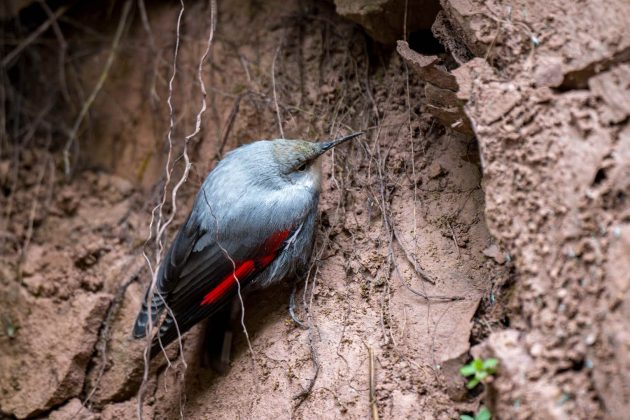
The HBW untypically and somewhat surprisingly gushes about the species: “Despite its very large but discontinuous range … the long-billed, rock-climbing Wallcreeper is arguably one of the most visually stunning, and sought-after, birds in Eurasia.”
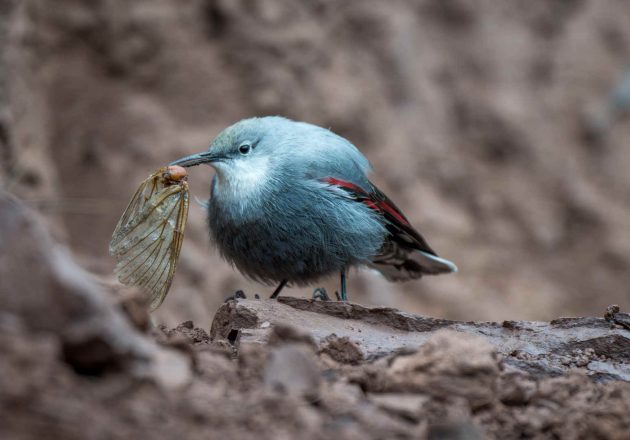
Why there is a perceived contradiction between the range and the fact that the bird is stunning and sought-after is a bit of a mystery to me, though.
Apparently, in the past, the wallcreeper was given its own family (yes, I know that this is not the correct way to say it, but it sounds fun), while nowadays, it is regarded as a subfamily within the nuthatches.
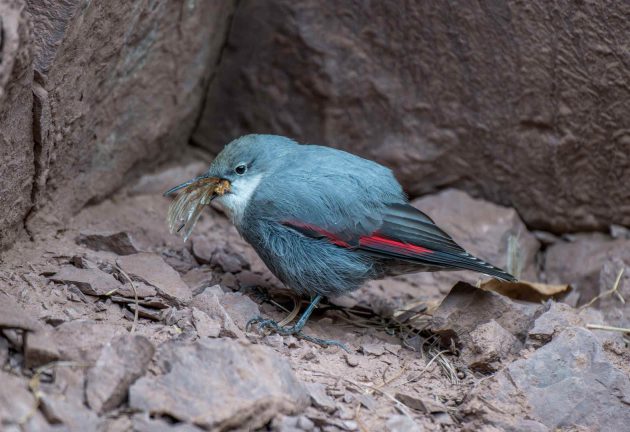
Given what an exciting bird this is, the scientific literature on it is surprisingly sparse and – frankly speaking – quite boring. Mostly of the type of “Review of the status in Iran”, “Distribution in Catalonia”, or “New Record in Mongolia”. Not the kind of papers I can extract vaguely interesting semifacts from.
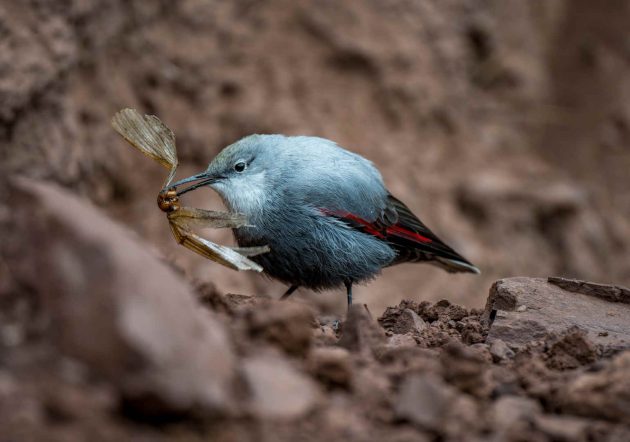
So, just a few more photos …
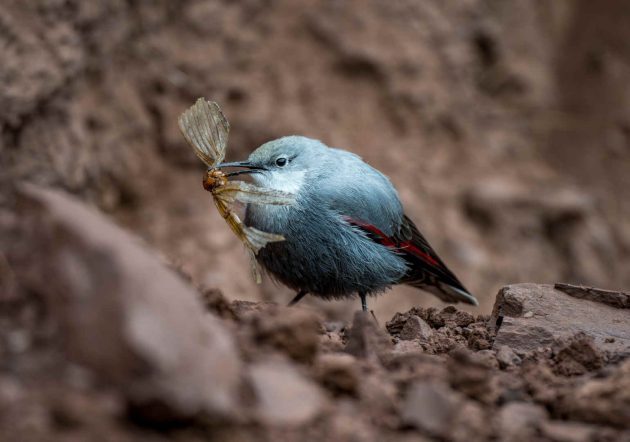
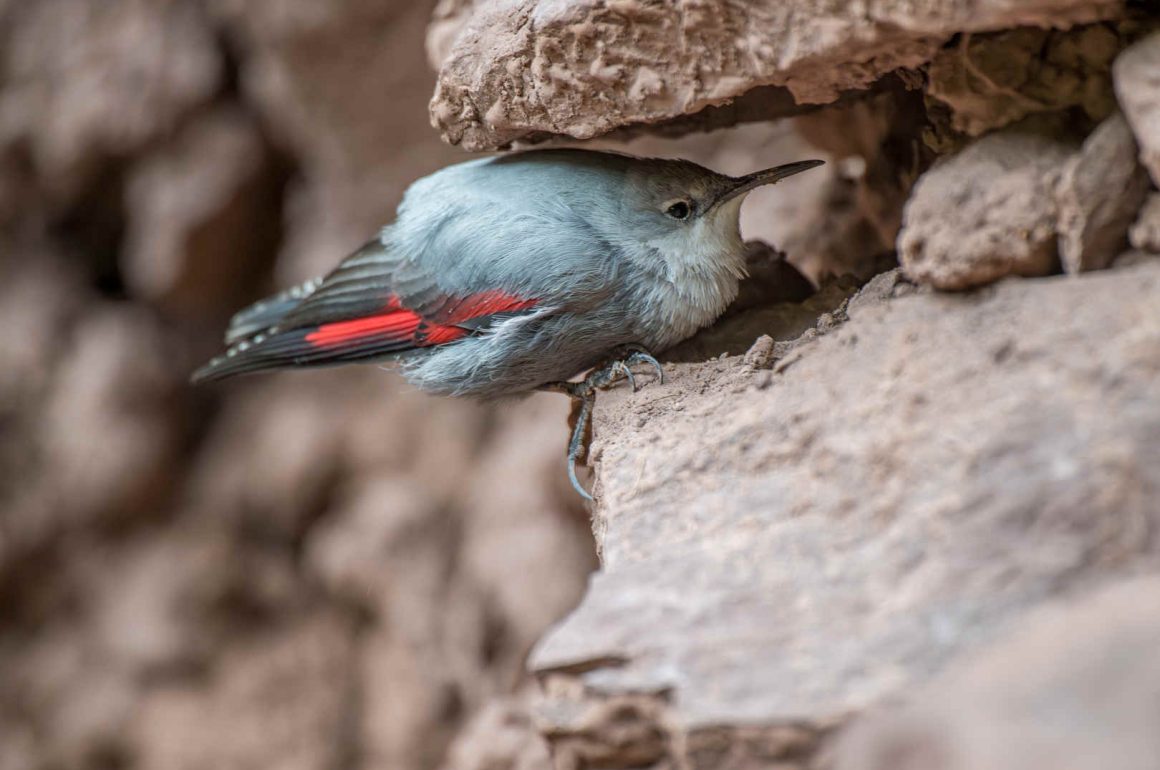
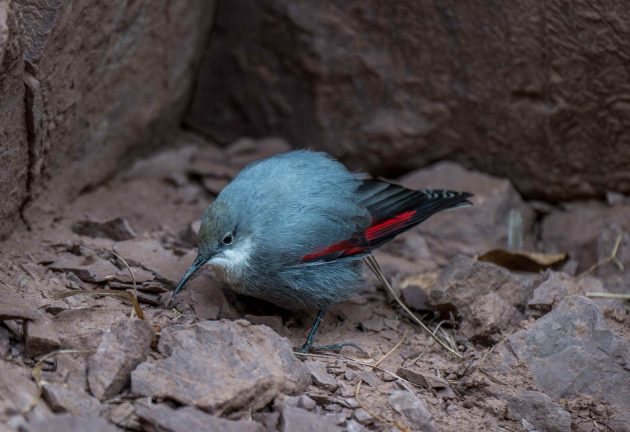
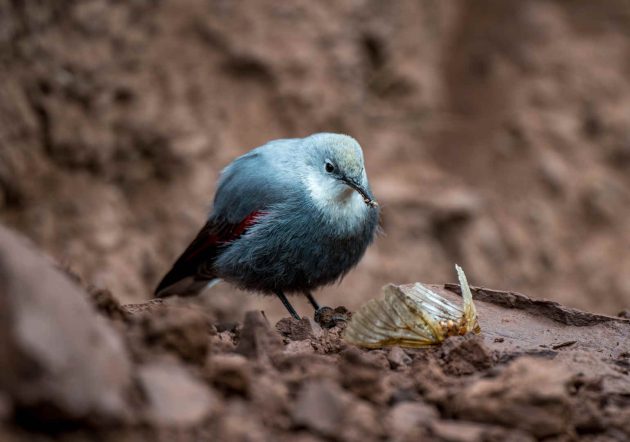
As far as I can tell, my photos show a bird of undefined sex in non-breeding plumage, consistent with the time the photo was taken (second half of October). A breeding male would have a wholly black throat, while the throat of a breeding female would have a black spot at the throat surrounded by white.
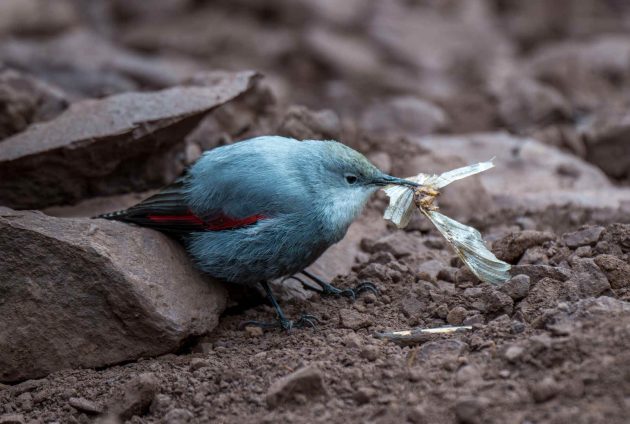
One interesting behavioral aspect is the frequent wing-flicking of the bird (which I did not see much of as the bird was very focused on dealing with its insect prey). Apparently (according to the HBW), this serves to display the red and white wing markings, signaling the presence of the bird to conspecifics and substituting for the rather weak contact calls of the species.
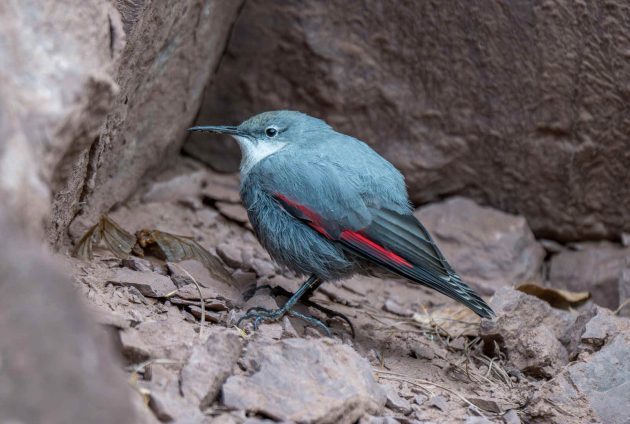
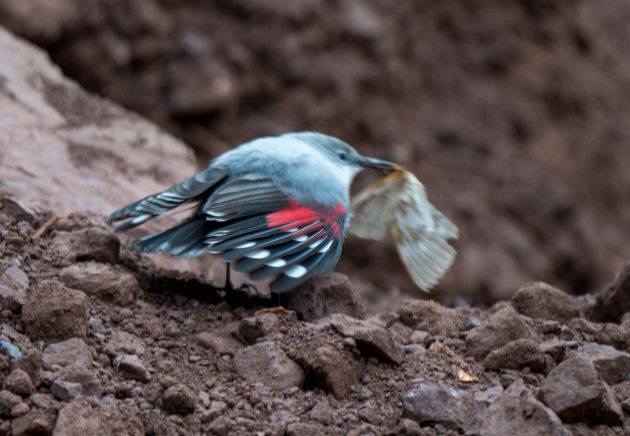
After the bird I photographed had swallowed the edible parts of its insect prey, it went back to its day job of searching for insects on the rock walls, not afraid to venture into some of the deeper fissures in the rocks. This got me what I think was the best photo of the whole trip to Yunnan this time.
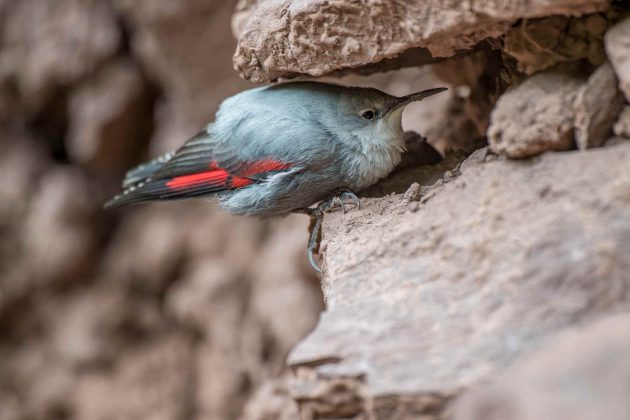







Yes, brilliant photo, that last one. Meili!
I love photographs of birds going about their business. The bug didn’t stand a chance with that determined, little bird. Wallcreepers are on my wishlist.
Wallcreepers are fascinating birds – there always seem to be lots of wall to search, but very few wallcreepers to find. Despite this, I have seen them in several European countries, from Spain to Slovakia, and also in the Himalayas. Here I saw my bird feeding along a fast-flowing mountain river (where we also saw an ibisbill). This liking for rivers is a behaviour that is, as far as I am aware, unrecorded in Europe. Do Chinese birds like rivers?
Stunning little bird! Wishlist grows bigger with every post I read!
Other than adding great bird for a Spotlight post, I agree with all of the above commenters. My comment is a question. What does HBW stand for? (I know it must be something really obvious.)
HBW is the Handbook of the Birds of the World or the online equivalent https://birdsoftheworld.org/ which is now managed by Cornell University
Great photos. I saw wallcreepers on several group tours I led in Romania, Georgia, and Central Asia. Amazing birds.
What a great series of photos! I also loved the insight on bird naming. Thanks!
Thanks, Susan! I know that many people will probably find some of the photos repetitive, but I am usually too impatient to take and watch bird videos, and for me personally, such a sequence as in this post is the best way to get a feeling for the bird.