

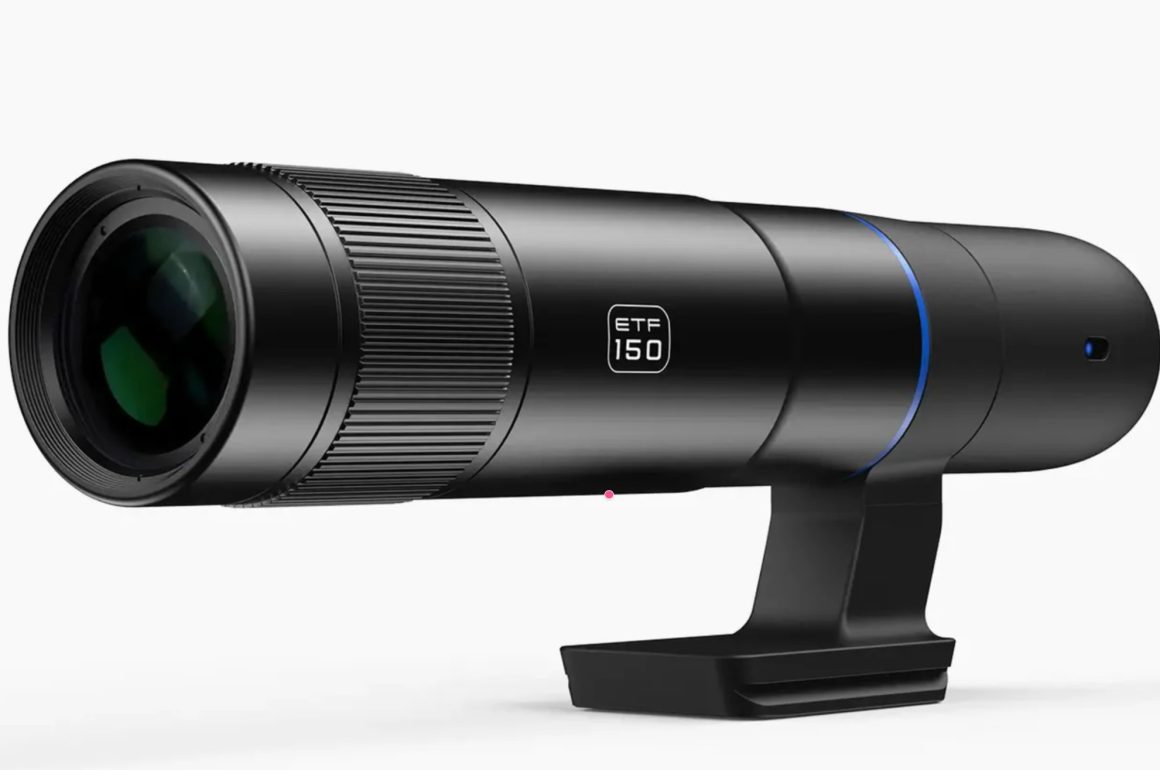
Recently, several mostly Chinese companies have introduced moderately priced digital/optical devices potentially useful for birders. And with me living in Shanghai, I seem to be among the first they ask to review their products.
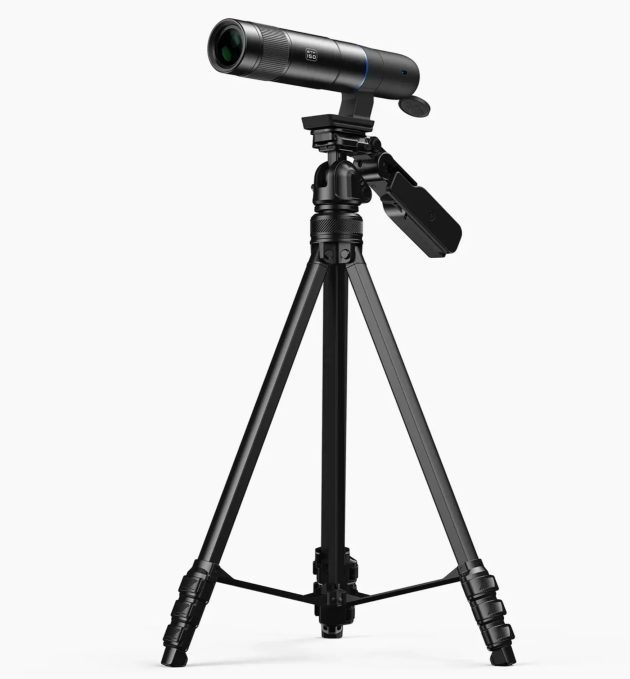
The VisionMax All-in-One Portable Smart Digital Telephoto by Apexel is such a device. Its shape is as longish as the long name suggests. More importantly, it claims to replace your binoculars, camera, and tripod adapter in a single compact device.
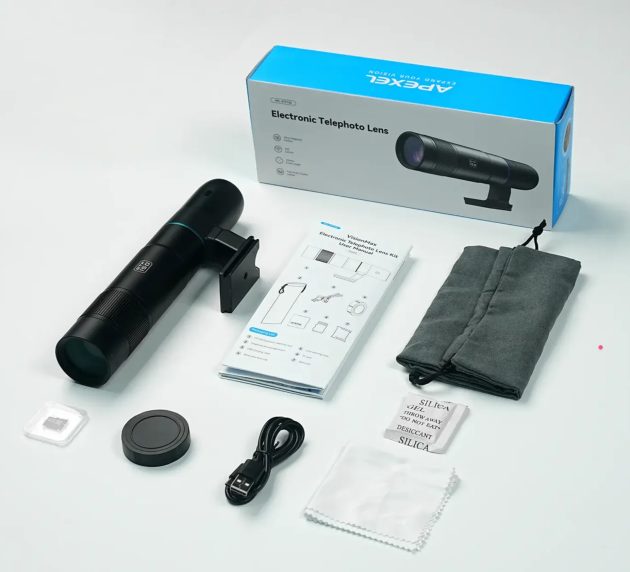
Basically, it is an electronic, lightweight (about 400 grams) lens which, when coupled with your smartphone, can indeed take over some functions of your binoculars and your camera – though not all of them, as I will explain below (not sure why the Apexel marketing people thought adding a tripod adapter as an additional device to be replaced would be a good idea).
It has an impressive optical zoom – 45 times. In the field, this means a lot of range – but also that handholding the device is not an option. In fact, one of the two purchasing options for the device includes a tripod – you should only ignore that option if you have a decent tripod already.
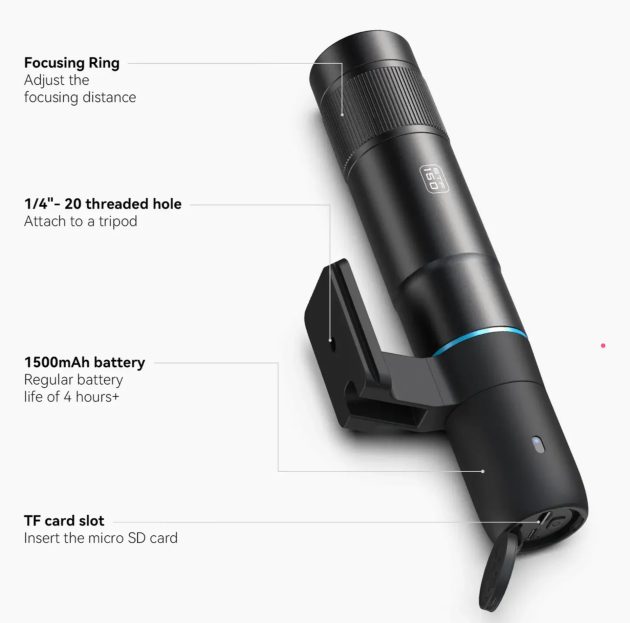
So, here are my positive impressions after using the VisionMax for a bit:
It is indeed easy to set up in combination with a mobile phone (a big bonus for me, as I often struggle getting Bluetooth and other devices to work – a digital native I am apparently not)
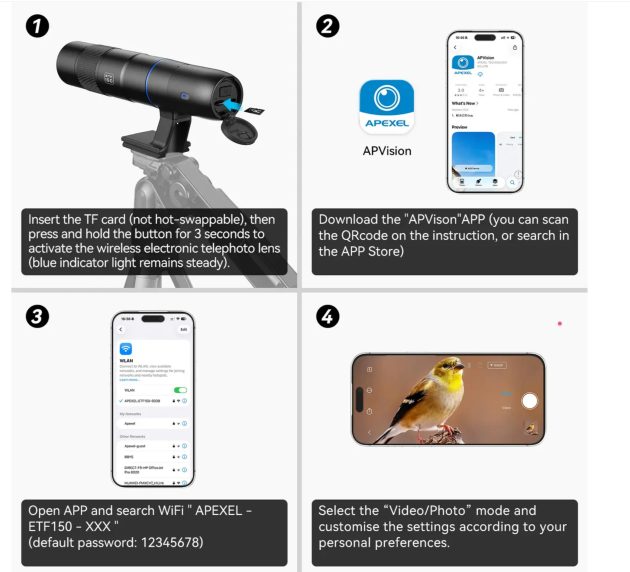
It is easy to operate and focus – though the focusing has to be done manually, a difference from my high-end photo equipment.
Taking photos via the app and the mobile phone is straightforward, and I had no issues transferring the files to a computer for further analysis.
The device looks solidly built and is indeed quite lightweight – the main thing to worry about when transporting will most likely be the tripod.
That said, the device clearly also has its limitations – for me, it will be an additional piece of equipment rather than one replacing binoculars or a camera:
As already mentioned, given the high optical zoom and the need for manual focusing, use without a tripod seems more or less impossible. That limits its use in many birding situations, e.g., during a walk in a forest or when birding by car.
The photo quality is inferior to high-end cameras such as the ones I am using (I know that this is an unfair comparison, given that my photo equipment probably costs 50-100 times more than the Visionmax).
Compared to binoculars, the VisionMax is likely to be of limited use with fast-moving birds nearby – the optical zoom is too high, and the manual focusing takes too long.
As a consequence of the above, I see the best practical use in identification and field surveys of far distant birds such as shorebirds. For those cases, the VisionMax allows convenient recording at a quality good enough to allow for later bird ID, and the limitations of the VisionMax are less important.
The VisionMax currently sells for USD 146 without a tripod and USD 175 with a tripod on the website of the producer Apexel.










Good useful review of this product. Interesting concept and for the price point useful as you note without breaking the bank.
Seems a good deal to me indeed