

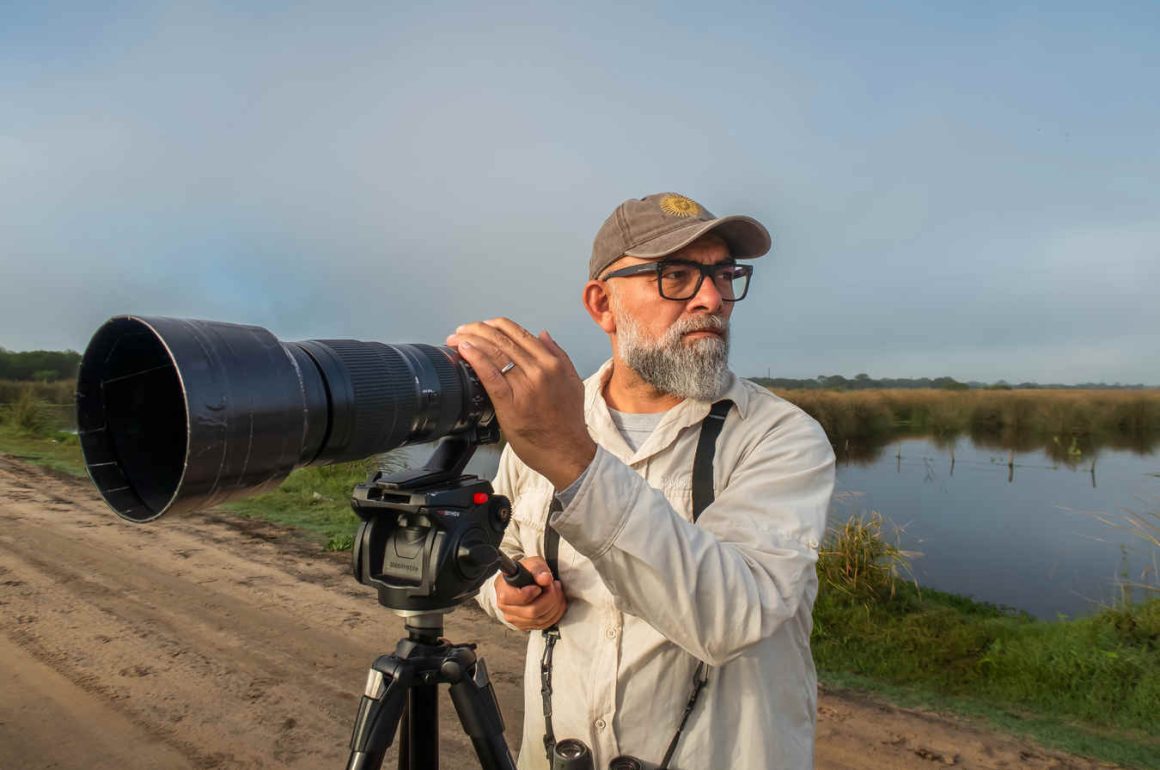
What is your favorite bird species?
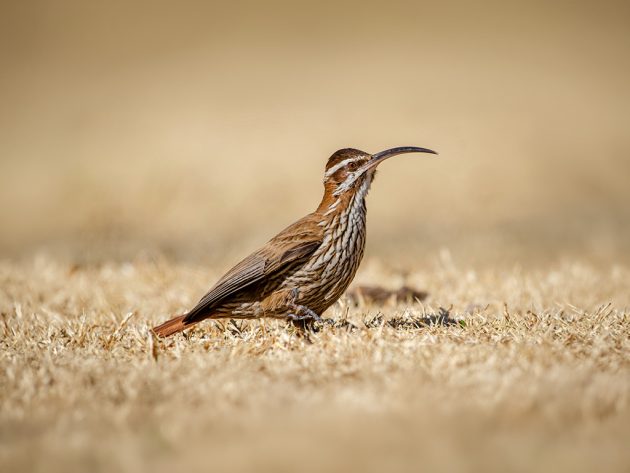
I would choose the Furnariidae, the ovenbird family, rather than a single species. There may be some local bias in that, but I find the whole family fascinating: brown and rufous birds, often cryptic, sometimes overlooked, always interesting. The Rufous Hornero is the most familiar example in Argentina, but the family includes extraordinary birds such as the Scimitar-billed Woodcreeper, the Great Rufous Woodcreeper, the Red-billed Scythebill, the canasteros, and the spinetails. They are birds that reward patience and attention. For me, that is reason enough.
Scimitar-billed Woodcreeper
What is your name, and where do you live?
My name is Javier Pereyra. I live in Buenos Aires, Argentina.
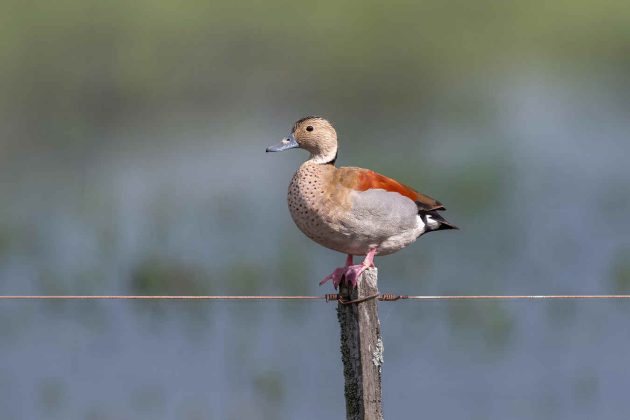
Ringed Teal
What are the main regions or locations you cover as a bird guide?
I guide in Buenos Aires City and Buenos Aires Province. In the city, Costanera Sur Ecological Reserve is one of the great urban birding sites in the region. In the province, I work across several different habitats, including the Paraná Delta, Pampas wetlands and grasslands, and the Samborombón Bay coastline. I also guide in the southern part of Entre Ríos Province, where Ceibas and the surrounding area are among the most rewarding birding destinations within reach of Buenos Aires.
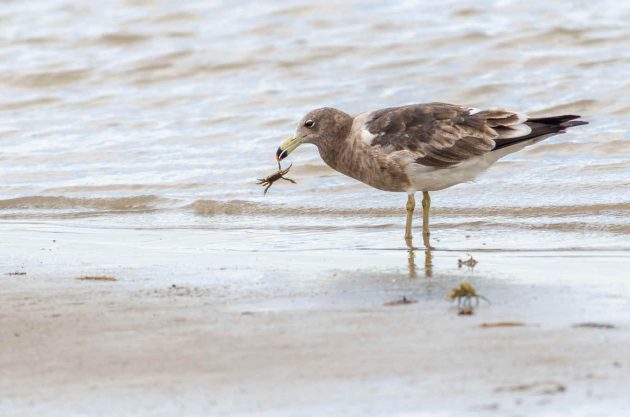
Olrog’s Gull
How long have you been a bird guide?
I have been guiding independently for six years, after several years working with local birding operators.
How did you get into bird guiding?
As a child in western Buenos Aires Province, nature was still close at hand, but books were my first way of going deeper into the world: dinosaurs, remote geographies, places with exotic names. Tanzania, the Mariana Trench, and an extinct primate. What mattered was not only the distance, but the question each thing held. Birds came with the same pull, but closer and more real. Why does a Rufous Hornero build with mud the way an Inuit builds with ice? Why does a Chalk-browed Mockingbird throw itself at a yarará pit viper? How can a Fork-tailed Flycatcher cross thousands of kilometers of open sky with a tail longer than its body? Birding gave me a way to keep asking those questions in the field, with binoculars in my hands.
For years, reading and birds occupied a large part of my life while I worked as a taxi driver in Buenos Aires. Through that work, I began crossing paths with people connected to Aves Argentinas, conservation projects, and eventually local birding operators, first as a driver on birding trips. That was where it clicked: I wanted to be the person who shares what he loves. On those trips, I was never just the driver waiting in the car, sipping mate. I took part, scanned, asked questions, stacked up field guides, read blogs, listened to birding podcasts, and learned by watching good guides work.
I also learned by making mistakes, like shouting from a distance, “Cinereous Harrier coming!” in the middle of a silent marsh. It was enthusiasm I did not yet know how to channel. Later, I worked on my English the same way I had learned other things: through books, audiobooks, and birding podcasts, until it became a real tool for guiding. In time, I began guiding in Buenos Aires and the southern part of Entre Ríos Province, also working as a co-guide and doing scouting trips in other regions of Argentina. That path shaped the way I guide: study, get out in the field, put in the kilometers, and keep asking questions.
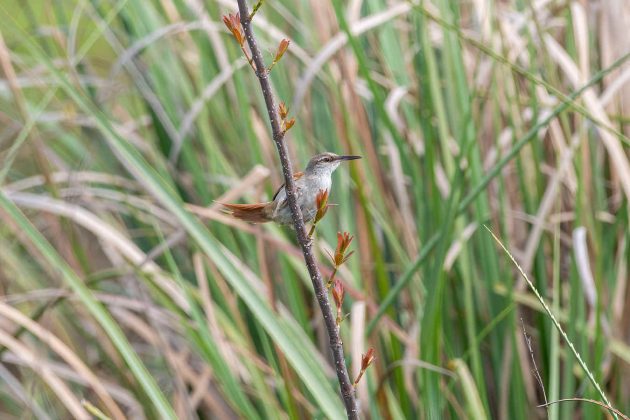
Straight-billed Reedhaunter
What are the aspects of being a bird guide that you like best? Which aspects do you dislike most?
A client once told me, while we were trying to get a good look at a Diademed Tanager: “I know when we have a good bird. I can tell by my guide’s face.” I liked that because it was true. It still is. I do not want to lose that enthusiasm.
What I like most about guiding is being part of the moments when a bird becomes an experience for someone else. Sometimes it is a lifer, a species someone has waited years to see. Sometimes it is a common bird, like a Rufous-collared Sparrow, seen closely enough to stop feeling common for a moment. I like that possibility in guiding: helping something that was always there become visible in a different way.
What I like least is the time away from home. I have a wife and a young daughter, and longer trips mean days away from them. That is the hardest part for me. Guiding gives me a life I value, but it also asks for time away from the people I love most. I try to accept that and make the time in the field count.
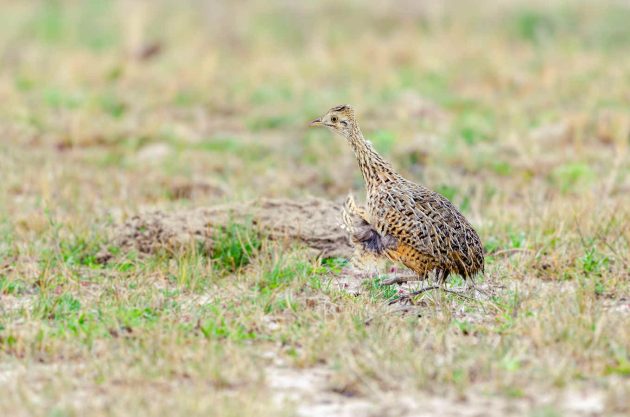
Spotted Nothura
What are the top 5-10 birds in your region that are the most interesting for visiting birders?
- Saffron-cowled Blackbird. One of Argentina’s most sought-after grassland birds, globally threatened and strongly tied to high-quality Pampas grasslands.
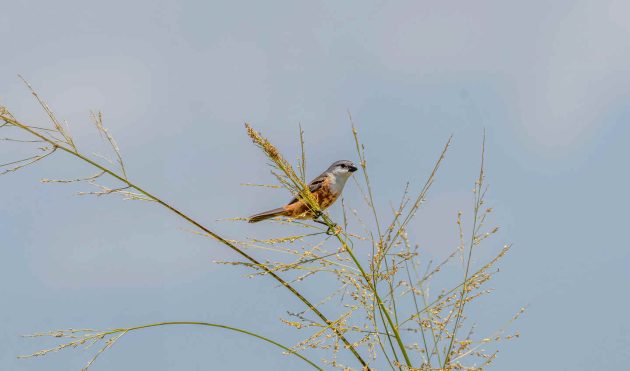
- Marsh Seedeater. A globally threatened grassland seedeater, present in season and one of the more difficult Sporophila to connect with.
- Yellow Cardinal. A striking and globally threatened bird of open woodland and espinal, always special to find.
- Straight-billed Reedhaunter. A Furnariidae specialist of dense reedbeds, local, distinctive, and rarely seen well without time in the habitat.
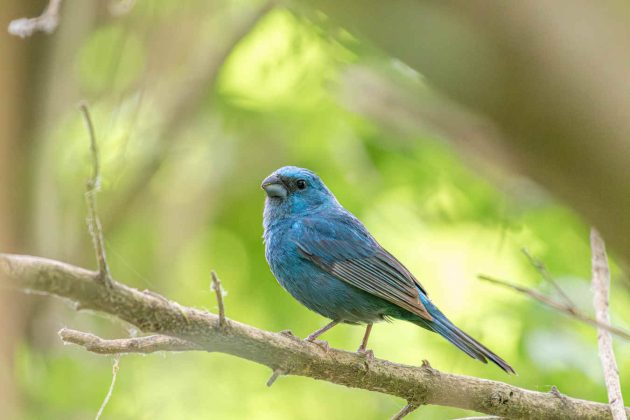
- Glaucous-blue Grosbeak. A beautiful and somewhat unpredictable bird of gallery forest, woodland edges, and dense growth.
- Dot-winged Crake. A highly sought-after crake, possible in the right wetland habitat and always a prize when it shows.
- Olrog’s Gull. A Southern Cone coastal specialty, closely tied to the Atlantic shore and crab-rich habitats.
- South American Painted-snipe. A stunning and secretive wetland bird, surprisingly possible when water levels and conditions are right.
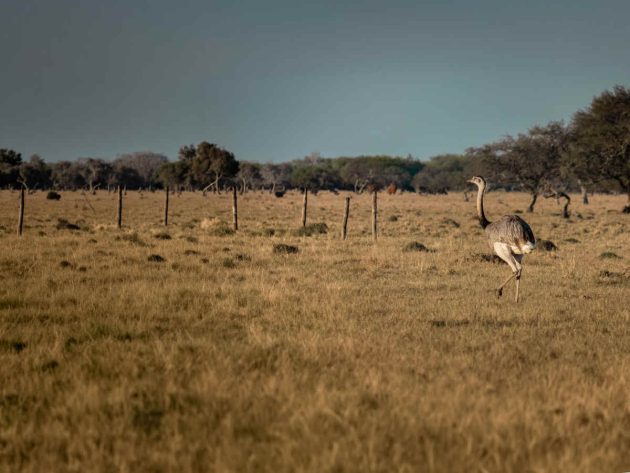
- Greater Rhea. The great open-country bird of the Pampas, impressive not only as a species but as part of the landscape.
- Hudson’s Canastero. A subtle grassland Furnariidae, range-restricted and especially meaningful in the Pampas of W. H. Hudson.
Rhea
Can you outline at least one typical birdwatching trip in your area? Please briefly describe the locations, the key birds and the approximate duration of such a trip
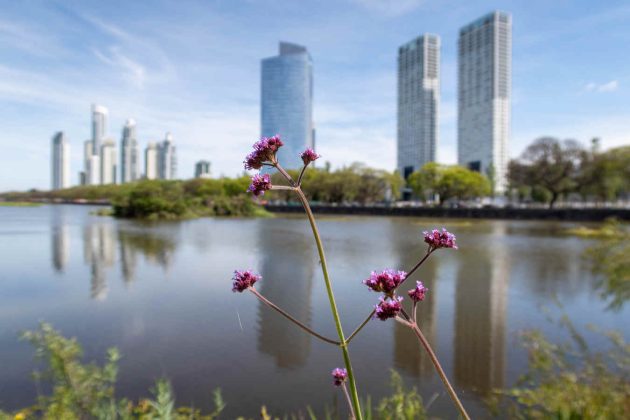
A typical first birding trip in Buenos Aires is a half-day visit to Costanera Sur Ecological Reserve, right on the edge of the city. It is an excellent introduction to the birds and habitats of the region, with wetlands, lagoons, grassland patches, woodland, and views toward the Río de la Plata. Depending on the season and water levels, we may look for rails, herons, ducks, tyrants, furnariids, migrant shorebirds, and many common but beautiful urban and wetland species. It is usually a 4 to 5-hour outing. Few urban reserves anywhere deliver this much.
For a full-day trip, one of the best options is the southern part of Entre Ríos Province, usually using the Ceibas area as a base for the day. The landscape there combines espinal woodland, grasslands, marshes, roadside wetlands, and agricultural edges. Key birds can include Yellow Cardinal, Glaucous-blue Grosbeak, Straight-billed Reedhaunter, Marsh Seedeater in season, Saffron-cowled Blackbird in the right areas, Greater Rhea, woodpeckers, seedeaters, raptors, and many wetland species. This is usually a long, full day from Buenos Aires, but it gives visiting birders a much deeper sense of the habitats beyond the city.
Glaucous-blue Grosbeak
What other suggestions can you give to birders interested in your area?
The best time to visit depends on what you are looking for. Spring and early summer, roughly October to December, bring breeding activity, migrants, and the best chances for some of the more sought-after grassland species. Winter, from June to August, is quieter but can be excellent for raptors, waterfowl, and some species that are harder to find in the warmer months.
Buenos Aires has good international connections and is easy to use as a base. Most of my destinations are reached by car, and I handle all logistics and transport. A full day in the southern part of Entre Ríos Province, for example, is long but entirely doable from the city.
Much of the birding is done from or near the vehicle, with stops along the route. The weather in Buenos Aires Province can change quickly.
In practical terms, bring comfortable shoes, a hat, sunscreen, insect repellent, a water bottle, and a light rain jacket for full-day trips. Binoculars and a spotting scope can be available if needed, but birders with their own optics should bring them. For visitors with specific target birds, it is very useful to share those targets in advance so the day can be planned around realistic conditions.
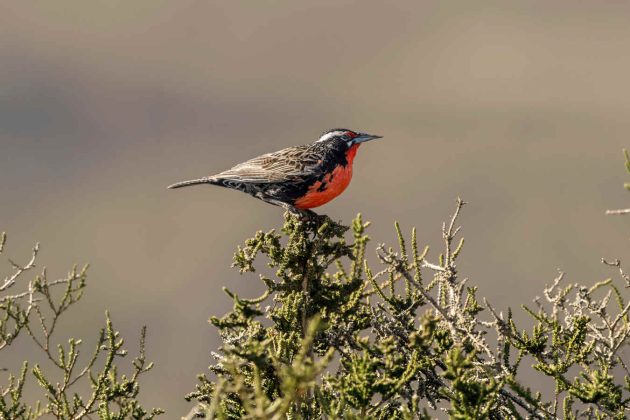
Long-tailed Meadowlark
If any readers of 10,000 Birds are interested in birding with you, how can they best contact you?
The best way is through my website, wildpampasbirding.com, where there is a contact form, or by email at info@wildpampasbirding.com. Visitors can also contact me by WhatsApp at +54 9 11 6288-6862. They can write with their dates, interests, target birds if they have any, and the kind of trip they have in mind. I am also on Instagram at @wildpampasbirding.
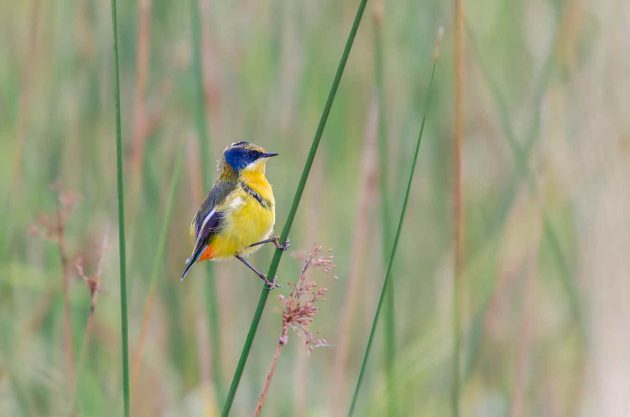
Many-colored Rush Tyrant
Is there anything else you would like to share with the readers of 10,000 Birds?
Buenos Aires works very well as a gateway for birding in Argentina. The city has good international connections, strong birding sites within easy reach, and a remarkable variety of habitats nearby: urban wetlands, the Paraná Delta, Pampas grasslands, coastal marshes, and bird-rich areas across the provincial border in Entre Ríos. It is also a good base for travelers who want to combine birding with culture, food, history, or time in the city. For me, part of the pleasure of guiding here is showing how much birding can begin from Buenos Aires without needing to go very far.
Marsh Seedeater





Really enjoyed this review and getting to know you a little bit. If I am ever in BA I will reach out for a birding trip with you. Nice interview!
Thank you so much, Mary Alice! That means a lot. And yes, please do reach out whenever you’re planning a trip to Buenos Aires, I’d love to show you around