

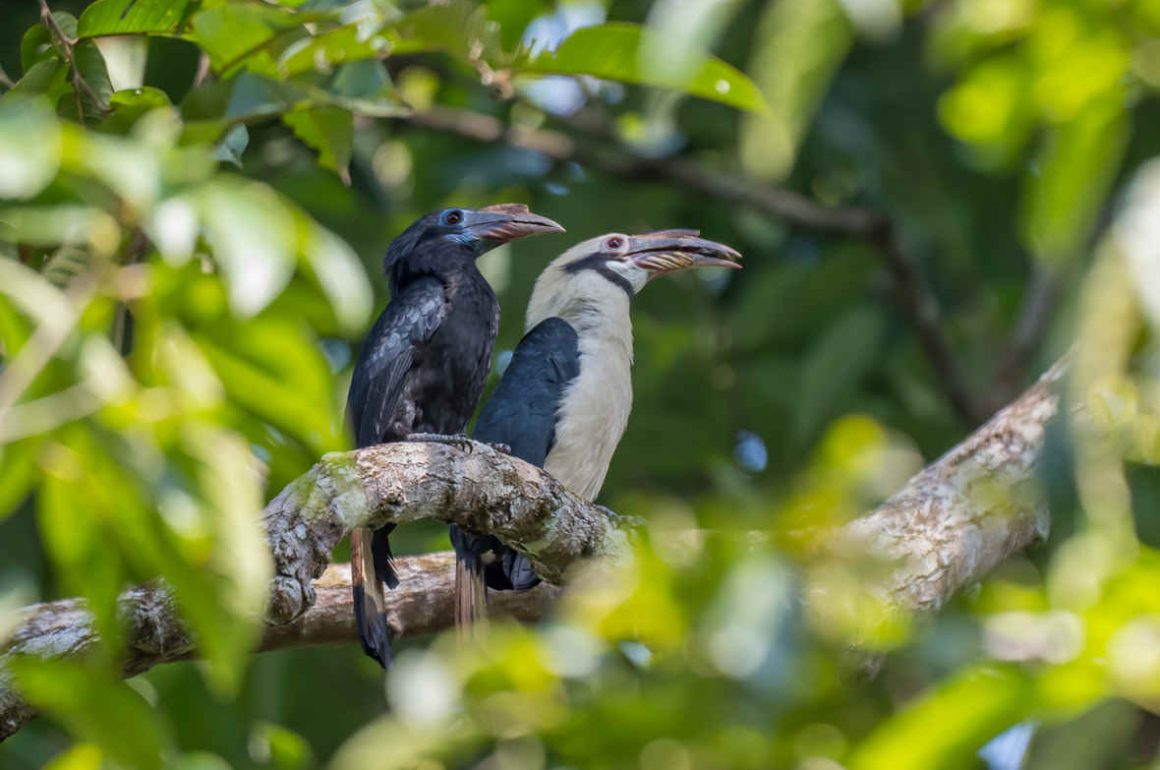
The Philippines has ten or eleven hornbill species, all endemic. Most of them can only be found in parts of the Philippines—a nice map illustrating this can be found here.
While I did not see any of the three larger hornbills, I did get photos of two of the five smaller hornbills in the Penelopides genus. These all look fairly similar and were apparently considered to be just one species, but were later split based on their different island habitats and their markings.
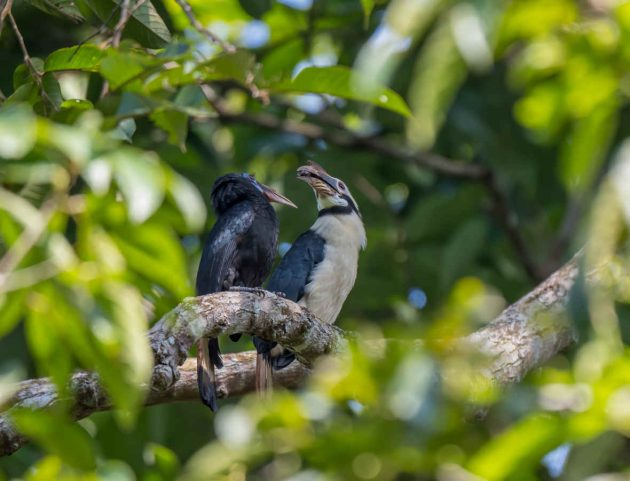
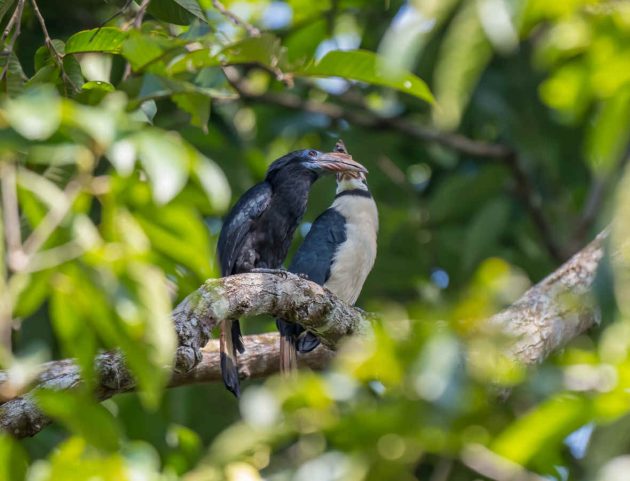
So, here is the Mindanao Hornbill, Penelopides affinis.
There are two differing explanations for the genus name. It may just be an allusion to the Greek mythological figure Penelope (dear to me as a great admirer of the singer Penelope Houston). That’s the one who, to escape a remarriage, every night undid all her daytime textile work (which would have made her a very attractive wife to one Sisyphus, I guess—they could spend a lot of time discussing their work and feeling soulmatish).
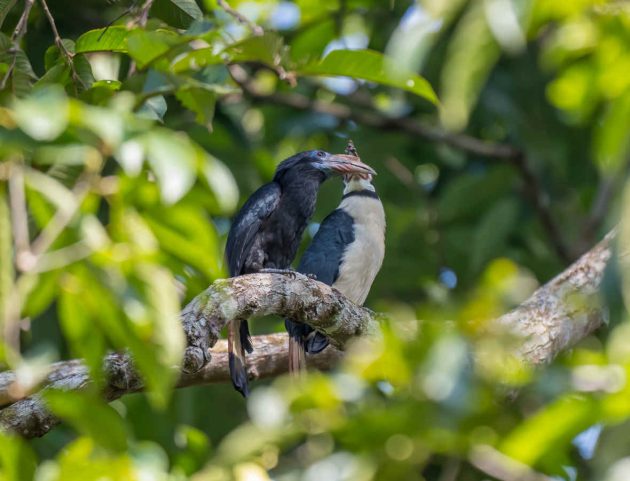
The other is that it comes from Latin pene (‘almost’) + Greek lophos (‘tuft’) + -oides (‘resembling’), with the lopides misspelt (it lacks an h). Yes, two explanations almost equally fascinating.
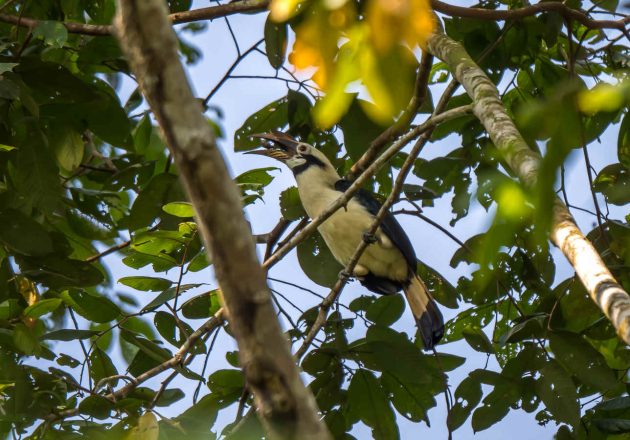
And the affinis is a catch-all term used for many (more than 80) species that apparently are similar or related to other species.
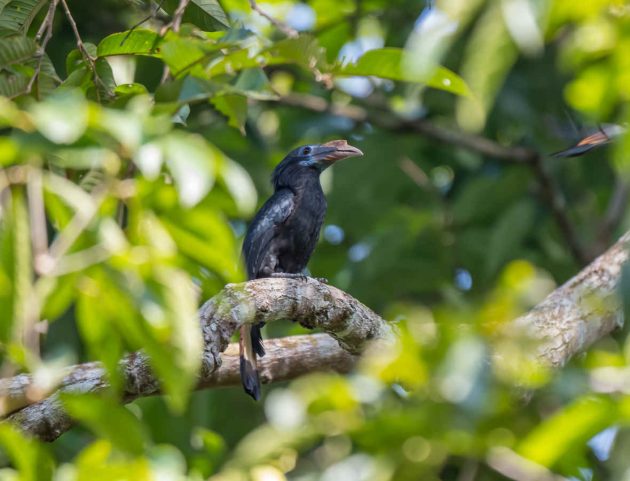
The species has not been formally assessed for its threat level—apparently it is fairly common on Mindanao, so Least Concern might be a likely assessment, though it is vulnerable to commercial logging, which removes the tree hollows the birds require for nesting. A long paper (39 pages) on the threats to Philippine hornbills and the link to forest cover can be found here.
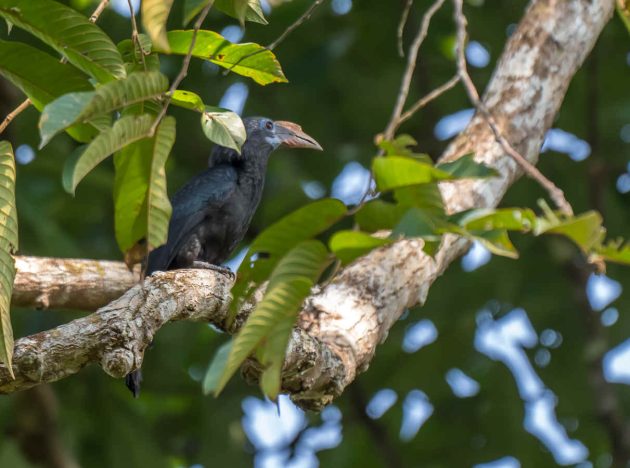
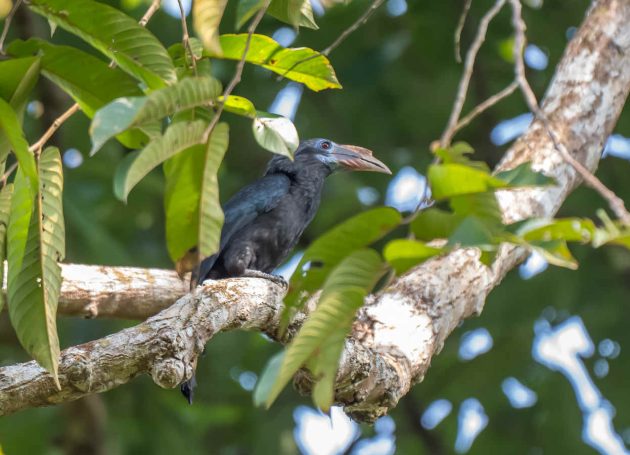
While the female is almost completely black, parts of the male are described by HBW as “dirty white,” a critical tone that continues when stating that its bill is “relatively small for a hornbill.”
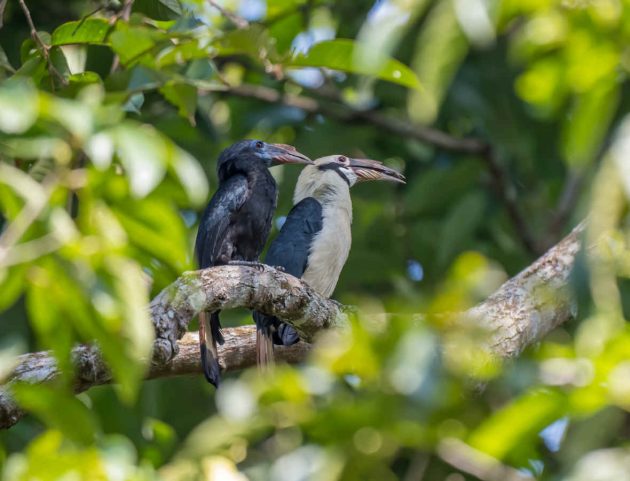
Apparently, for this and other hornbills, cooperative breeding is more likely under stable climatic conditions—which is different from observations of other species such as African starlings. Why these straightforward findings have to be phrased in sentences such as “We show that, in contrast to the global pattern, cooperative reproduction is positively associated with both inter- and intra-annual climatic stability” is a mystery to me, though.
Flying from Mindanao to Luzon a few days later, I got to see the Luzon Hornbill, though this time only a male (and at a location that failed to deliver the promised Whiskered Pitta, so, a compensation of sorts). The species name Penelopides manillae is a bit—but only a bit—more interesting than affinis.
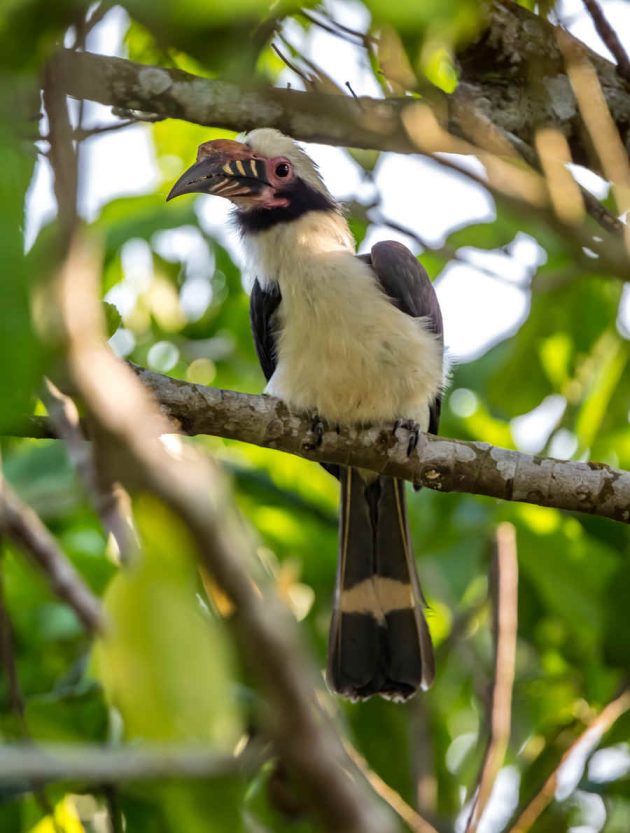
While it is listed as Least Concern, this sounds too positive given some information in the detailed HBW section on conservation status: “Polillo (estimated population 1000 birds) … Still hunted for food and trade on Polillo, mainly during breeding season, with up to 80 hornbills shot at a time.” Indeed, in the Philippine Red List, the species has been uplisted to Vulnerable due to the intensifying threats of deforestation and wildlife poaching (source).
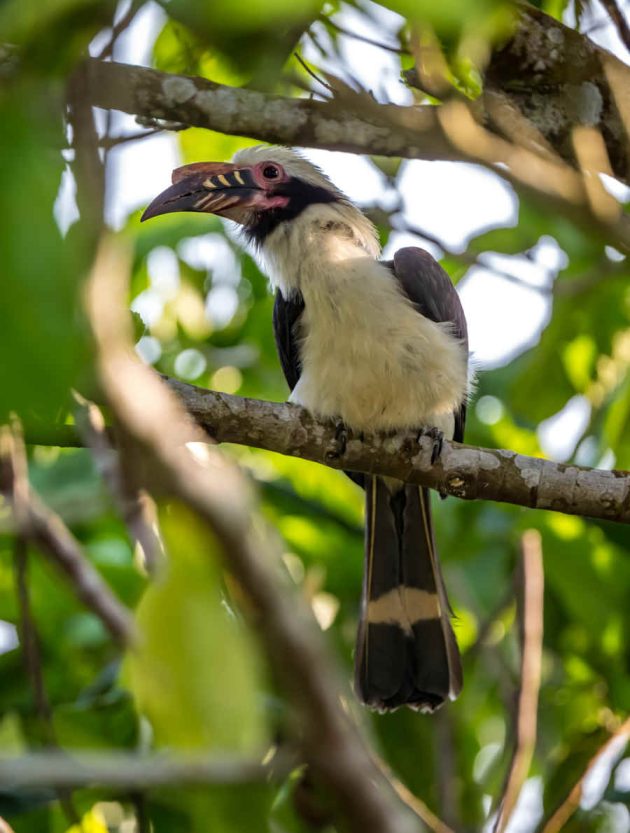
Like other hornbill species, breeding is done by the female locking herself into a tree hole for about 90 days, with some preference for the exact architecture of the hole: “Cavity opening dimensions (W×L) ranged from 6.5–16 cm×8.5–34 cm with vertical depths (floor to ceiling) of 34–300 cm and a mean depth of 3.86±4.91 cm, suggesting a preference for shallow cavities with high ceilings and small entrances” (source).
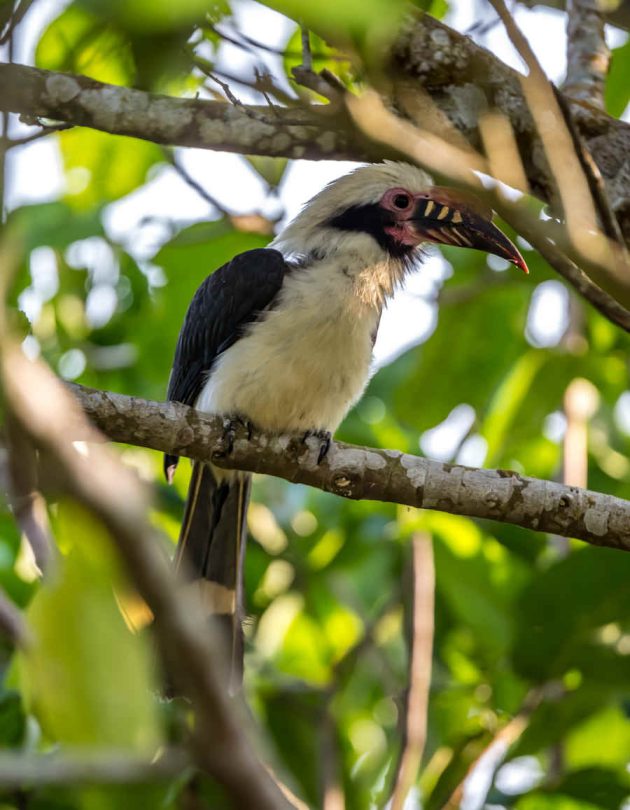
Meanwhile, presumably depending on the level of nagging by the female, the male hornbill in this study delivered food through the cavity slit 11–27 times a day—mainly the fruits of 32 species of plants. I wonder whether the slit imposes a limit on the size of the fruit?
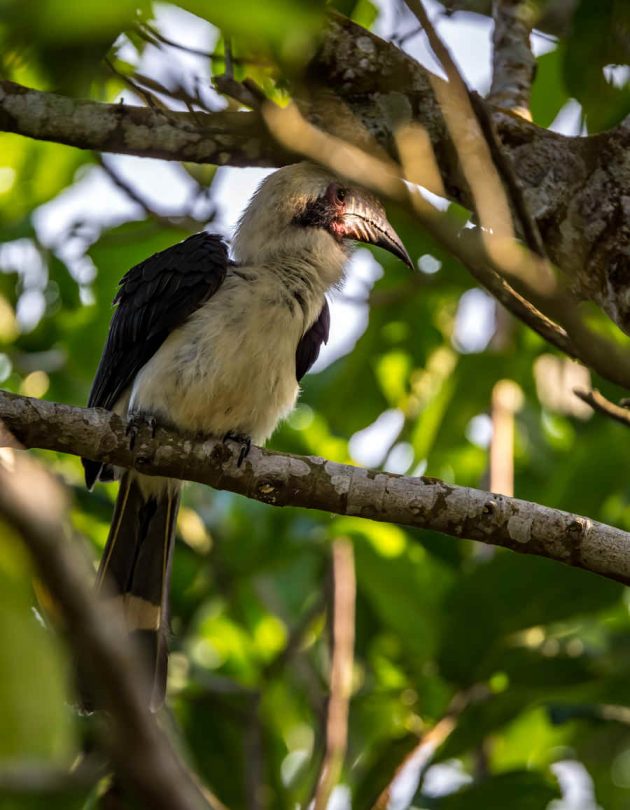
If instead of this paper, you prefer to read something which you do not understand, I recommend Intraspecific Rearrangement of Duplicated Mitochondrial Control Regions in the Luzon Tarictic Hornbill Penelopides manillae (Aves: Bucerotidae).
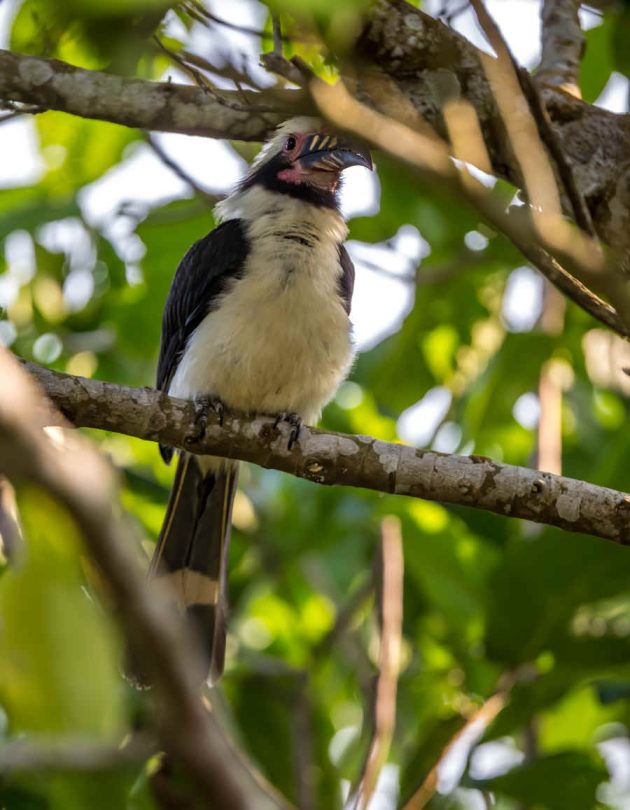
Back to something a bit more interesting, at least in my opinion. A paper compared the density of this hornbill in disturbed and residual lowland forests. Interestingly, the disturbed forest had a higher density—for one obvious reason (more fruiting trees) and one nonobvious one (fewer large trees and thus fewer nesting holes). Apparently, during the breeding period, male hornbills are highly territorial near their nesting trees, which lowers their density. It’s a bit like an office where a few employees fiercely guard their favorite desks—others avoid those spots, leaving parts of the office surprisingly empty.








Greek Mythology and hornbills, what’s not to like?