

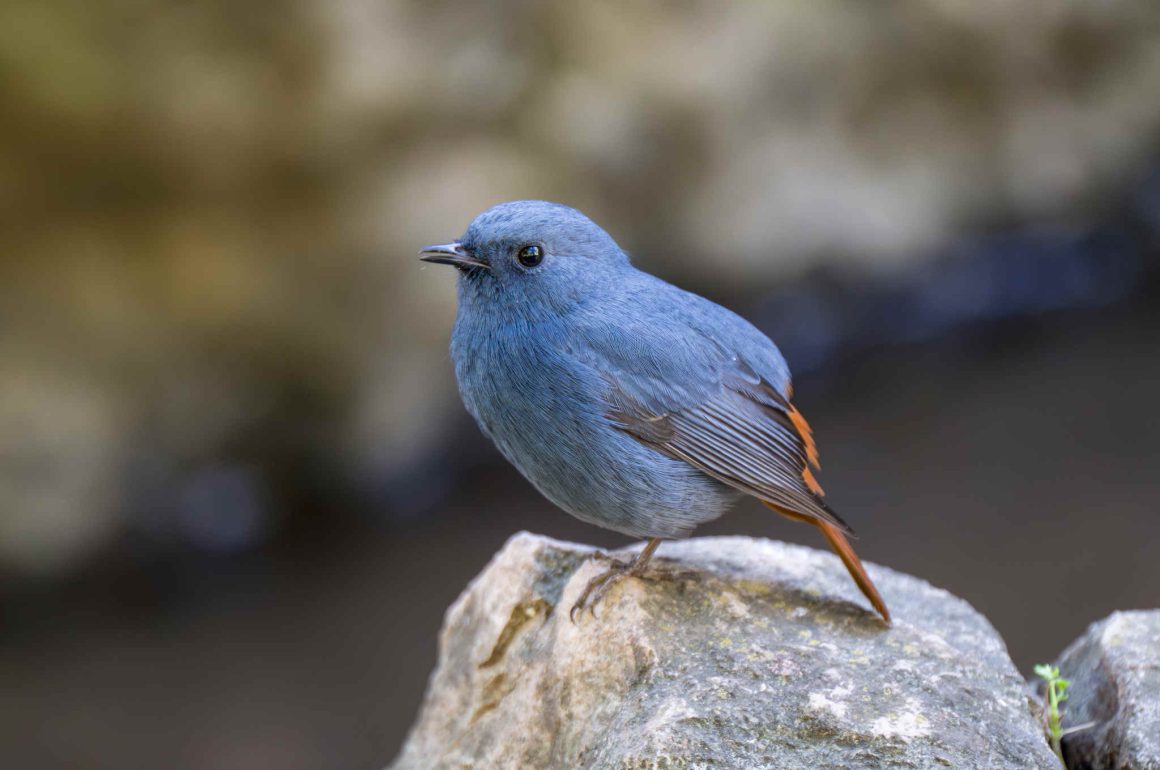
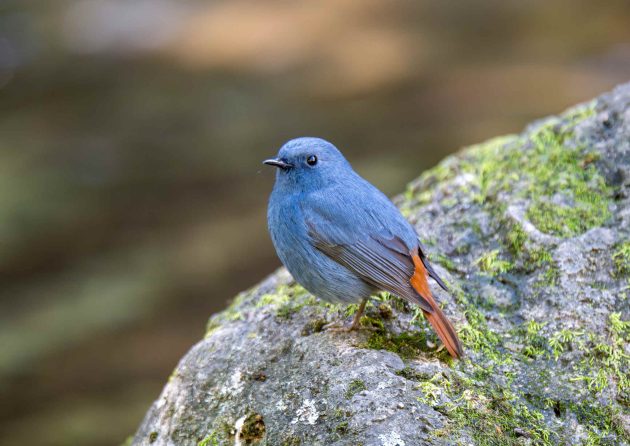
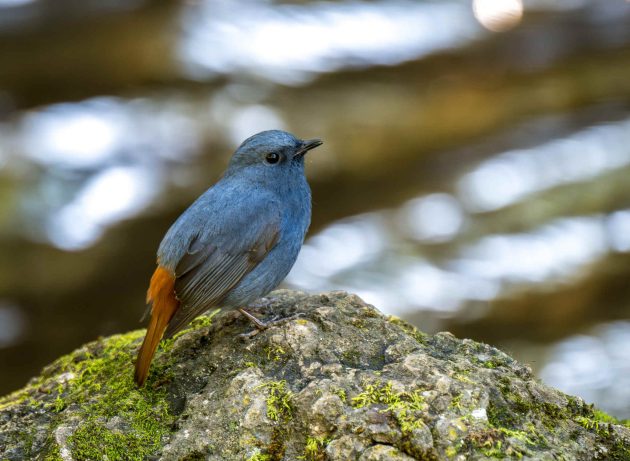
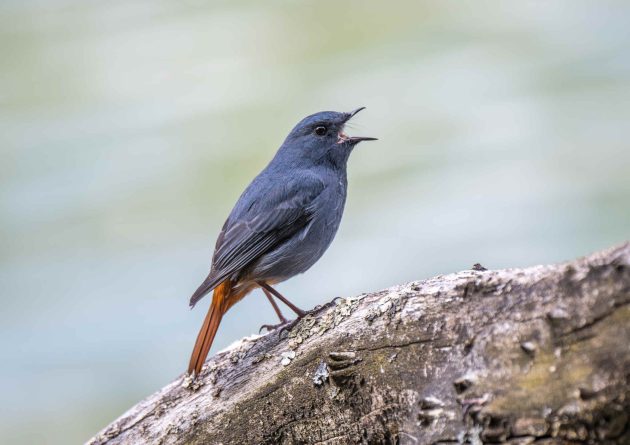
Whenever you are near a clear, rocky stream in China, it is not unlikely you are near a Plumbeous Water Redstart. They are small and not quite as obvious as in the photos in this post, but you might still see them quickly, as they move around quite a bit.
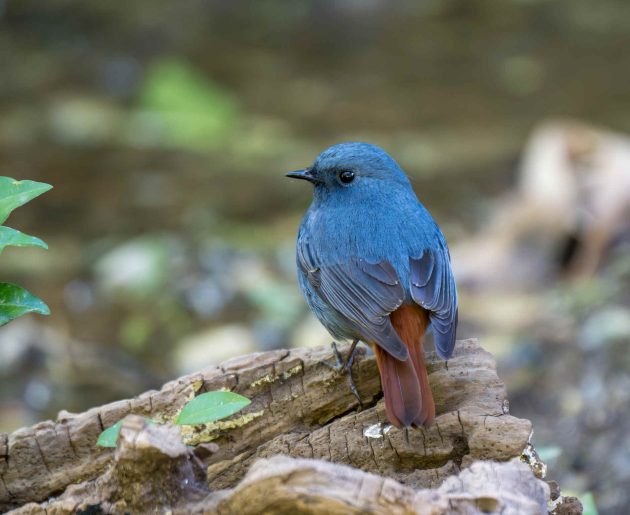
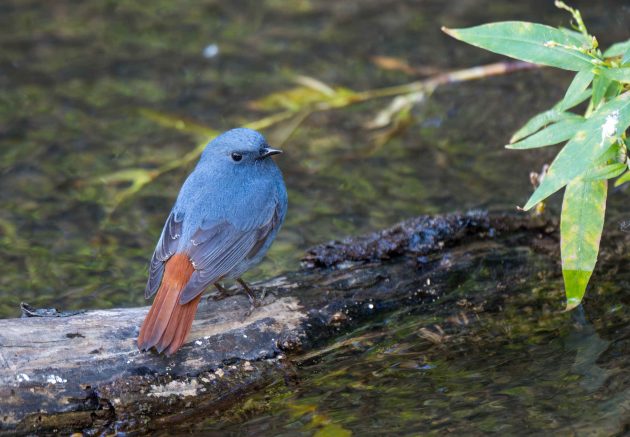
Or hear them, though wherever they are, there is usually also a noisy river partly covering their sound.
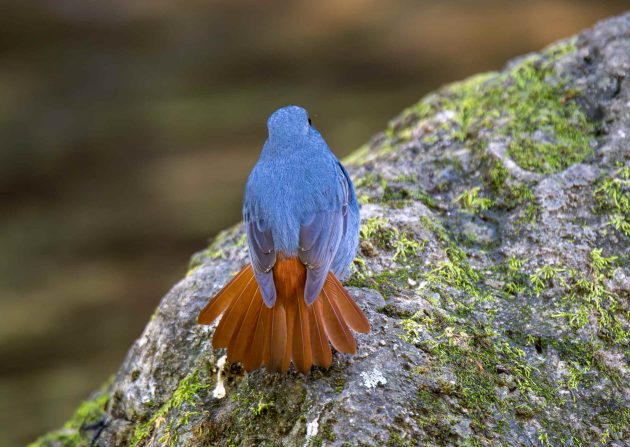
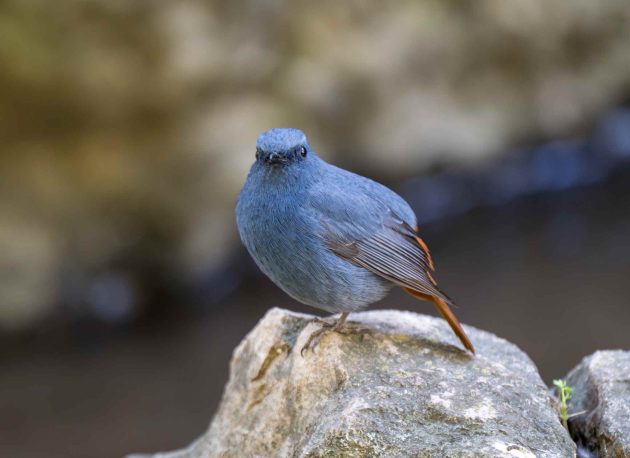
The scientific name Phoenicurus fuliginosus describes the species as being red-tailed (phoinikos -crimson or red, ouros -tailed) as well as sooty (fuliginosus). Apparently, when ornithologists or birders use “sooty” to describe plumage, they generally mean a blackish tone that is less intense than pure black, often with a smoky or brownish cast. You always learn something reading my posts, whether you want it or not.
Presumably, you can also learn something from scientific papers with titles such as “The biogeographic history of Phoenicurus redstarts reveals an allopatric mode of speciation and an out-of-Himalayas colonization pattern”.
Though it almost seems that with a title like this, the authors of the paper try hard to prevent you from learning anything.
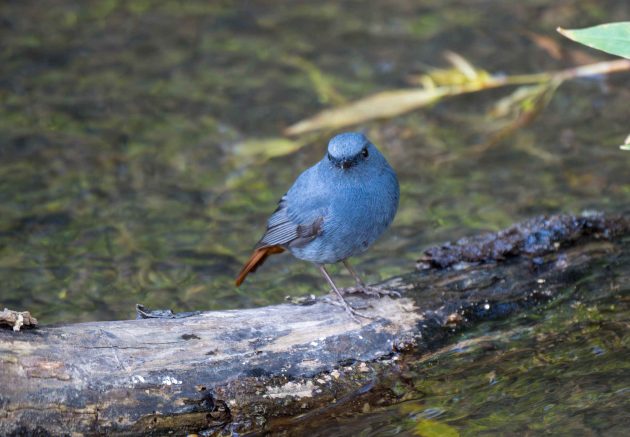
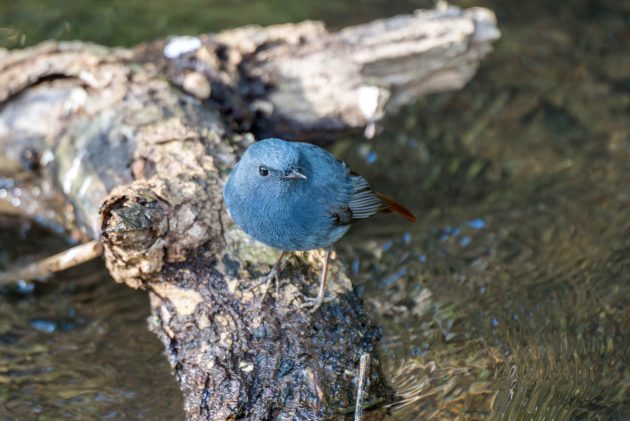
They could have titled the paper “Redstarts evolved into different species after being separated by geography, and their ancestors first lived in the Himalayas before moving elsewhere”. It would have been much easier to understand without the loss of any content, but they might have lost some grants in the process. Well. If I were ever to be in a long-distance relationship, I would from now on blame the subsequent separation on allopatry.
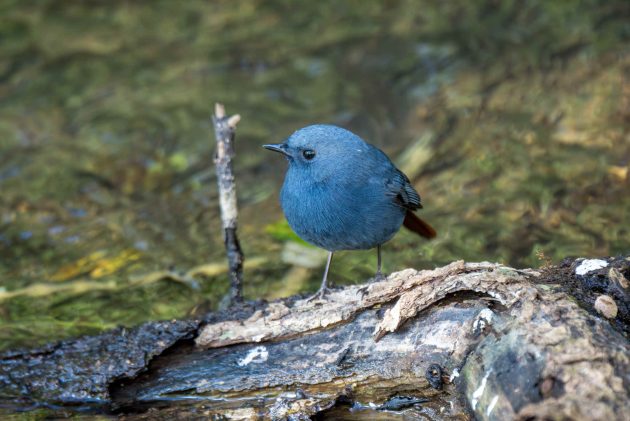
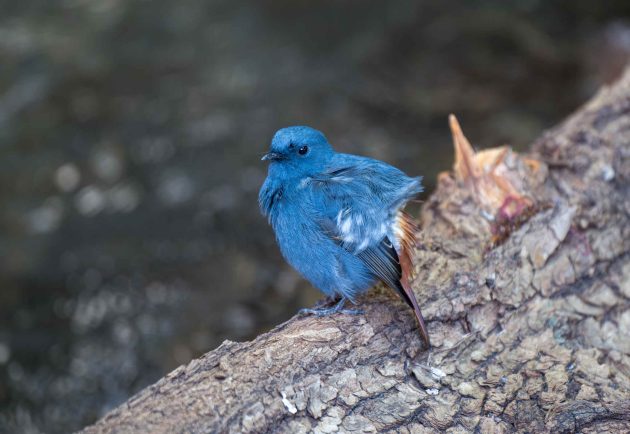
What do these redstarts eat? A time-consuming way would be to watch them for a long time. Presumably, you could also catch and kill them. A more up-to-date and less yucky way is described in a paper titled “Using molecular scatology to identify aquatic and terrestrial prey in the diet of a riparian predator, the Plumbeous Water Redstart Phoenicurus fuliginosa“. Ok, that does not sound that easy to understand either, but basically, it means collecting feces of the bird (admittedly, a bit “yuck” too) and then doing DNA analysis of what is in there. In this case, they found 108 species (mostly beetles) in birds living in Taiwan.
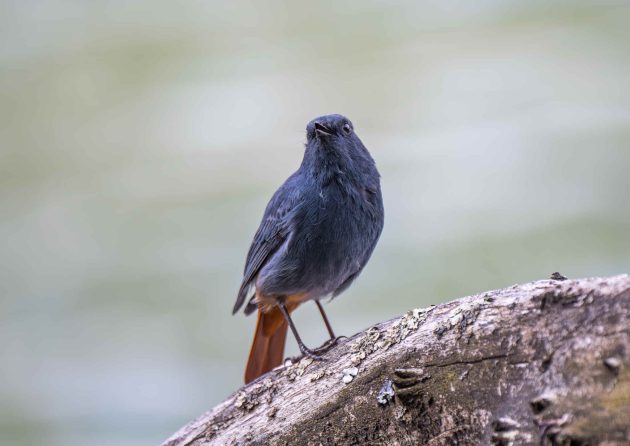
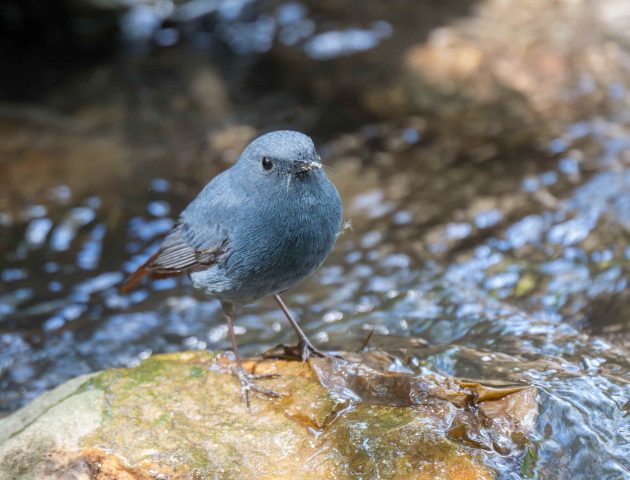
Somewhat surprisingly, the Plumbeous Water Redstart also spends quite a bit of time defending its territory, though that means attacking larger birds such as White-capped Redstart and Brown Dipper (source).
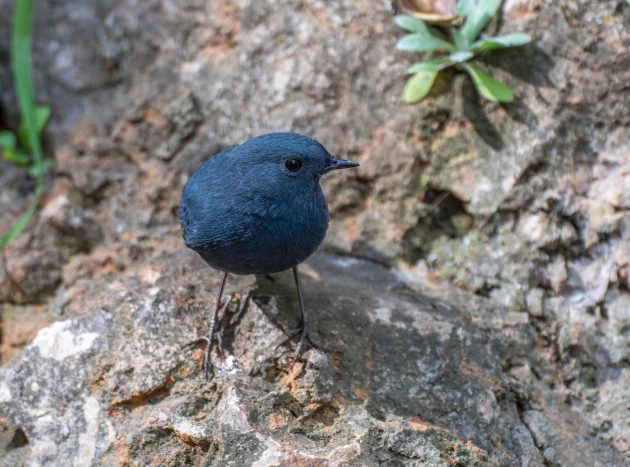
And finally, I think I joked to one of my bird guide friends about the female of the species as having a beautiful soul. Probably not wrong, but I realized it is quite an attractive one on its own as well. Less flashy, more stylish. Like me (he said, probably too optimistically).
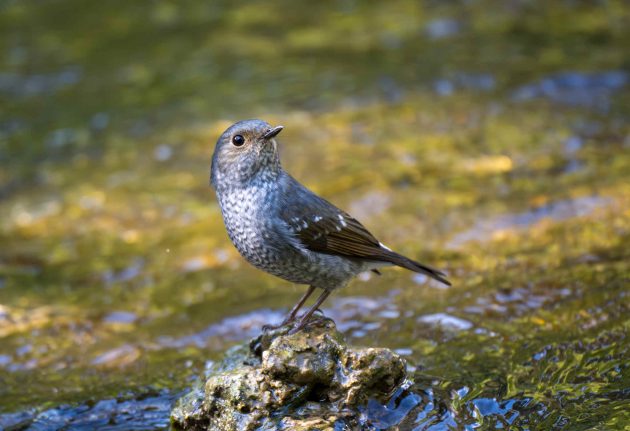
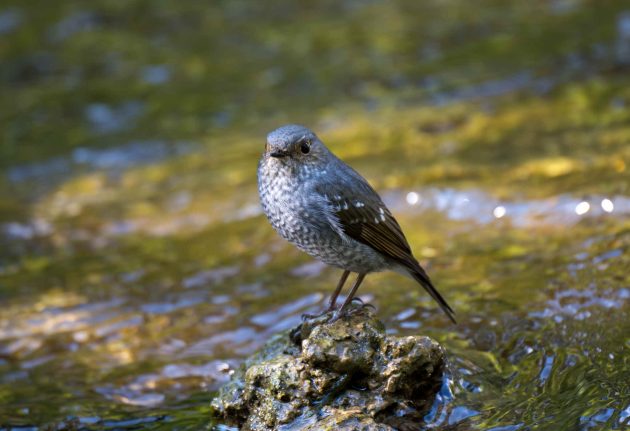









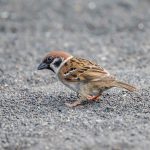


What a lovely bird! With these pictures there is a chance of disappointment in real life but since the bird is allopatric to me I can’t be too worried.
What I admire most here is not just the information, but the way knowledge reshapes perception. Without your words, the Plumbeous Water Redstart would remain part of the river’s background noise for me.
Thanks, Zuhal! This is a bird one can actually see in Afghanistan – for example, in the river on the road from Kabul to Jalalabad.