
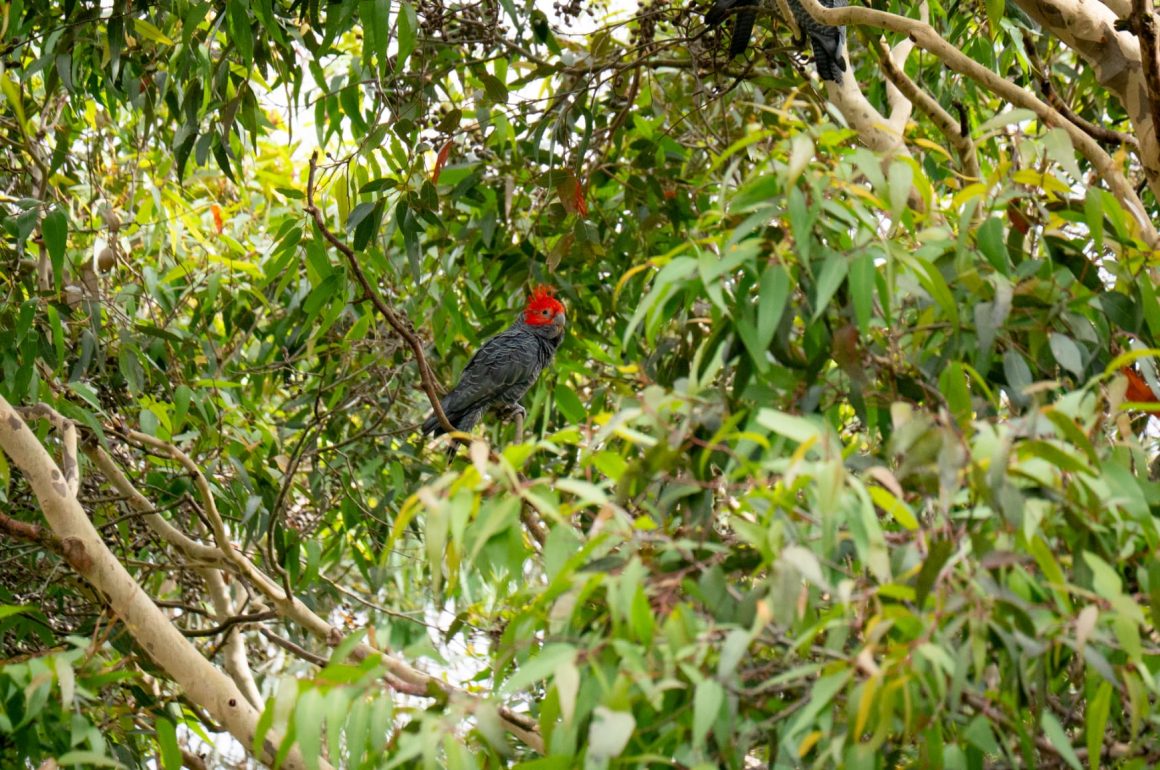
I had intended this post to be about the Western Treatment Plant in Melbourne – the indisputable mecca for birding in Victoria. But the bird gods had their own plans, and instead, I am writing about Gang-gang Cockatoos.
I’ve previously written about their larger and more rambunctious relatives, the Sulphur-crested Cockatoo, here. Gang-gang Cockatoos are not as ubiquitous; endemic to South-Eastern Australia, in 2022 they were listed as an endangered species. Although Gang-gang Cockatoos had faced mounting threats for decades, their decline was exacerbated by the 2019-2020 bushfires and the associated loss of habitat. Gang-gangs rely on tall trees for their nest hollows and often return to the same nesting site each year.
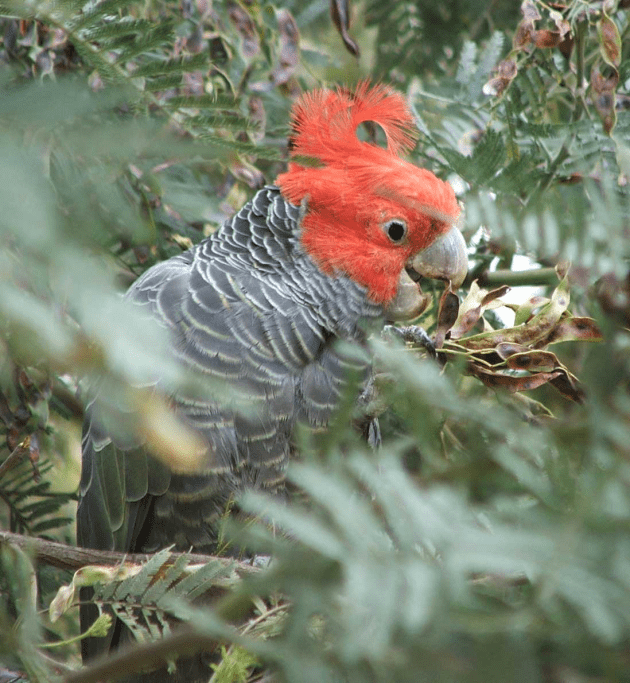
Both male and female Gang-gangs have a slate-grey body, a wispy crest and lighter barring on their feathers. The males stand out with their scarlet crest. The birds are excellent at using their feet to feed. They have a distinctive sound of a rusty, creaking door, and their name is possibly onomatopoeic, stemming from an Aboriginal language.
I first saw Gang-gang Cockatoos on Boxing Day 2025 at wetlands near me. I was admiring a King Parrot when someone thankfully got me to turn my head around, and I saw a pair of Gang-gang Cockatoos lingering in the tree for 30 seconds before they flew away into a thicket of trees.
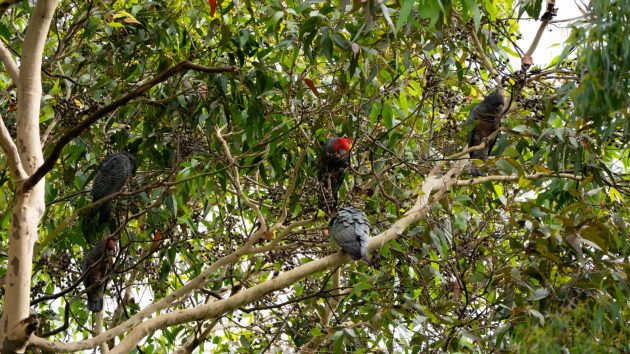
A week later, on New Year’s Day, after a morning exploring a state forest, we went to a bustling picnic site in Kinglake National Park. While families unpacked sandwiches from eskies and got cricket bats ready, several Gang-gangs were high in the canopy of trees, making such a din that only the screaming children could drown out. I counted four in amazement. It was the first day of the year, and I hadn’t even seen an Australian Magpie yet, but here I was standing beneath Gang-gang Cockatoos. Everyone was immersed in their ground-level activities, not looking skyward, which I suppose is what people generally do. But I did have this urge to jump on top of a picnic table and yell for everyone to stop what they were doing – look up, there’s bloody Gang-gang Cockatoos in the sky!
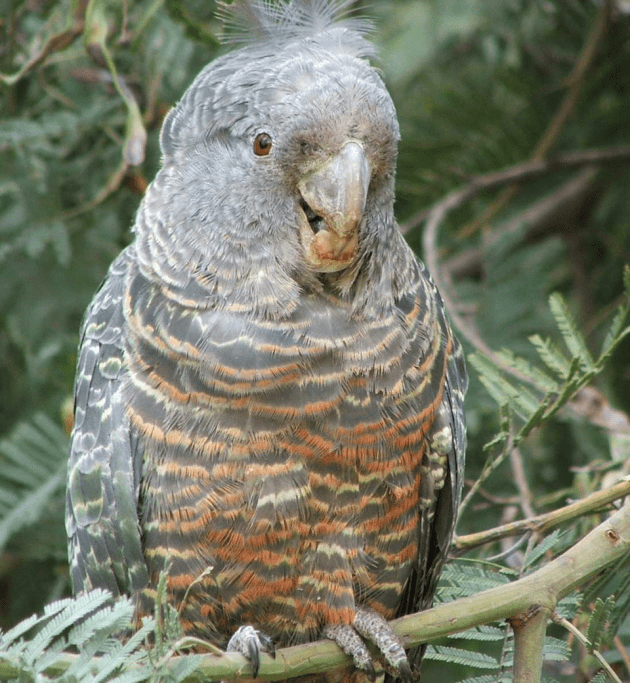
Then, a few weeks later, at home, I heard that unmistakable creaky-door call again, with my first thought being “surely not – it must be a Galah”. My heart leapt when I looked out the window to see two Gang-gang Cockatoos feeding each other in a gum tree. I hurriedly moved out to the porch. There were at least TWENTY birds in the trees surrounding the house, feeding and clambering amongst the branches. One quizzically cocked his head at me.
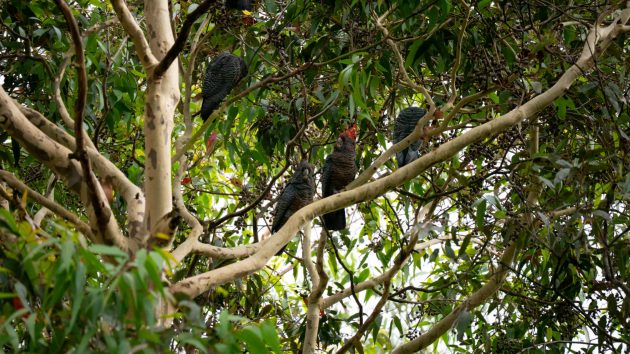
My next step was to wake up everyone in the house who was still sleeping, as no one needs a lie-in (even on a Sunday morning) when there are Gang-gang Cockatoos in the backyard. This included my bleary-eyed brother, who had no idea what a Gang-gang was, what it was doing in a tree and why he should care. I think he would say it was worth it. But he was, for whatever reason, a bit of a grump the rest of the day.
We all brought our mugs of warm drinks out and watched them enraptured for 15 minutes or so, before the birds all took off in a synchronised flock and disappeared over the ridge.
It feels serendipitous to have seen this charming bird, one that I had never encountered before, three times in a month, and with such little effort on my part. The unpredictable ways that birds have and the wonder they stir keeps birding meaningful and necessary for me.
Therefore, I declare 2026 to be the year of the Gang-gang Cockatoo. May it bring us all many, many moments of magic with the birds around us.





Excellent use of “bloody”, like the Gang-gang, very Australia! Loved to read this and can’t wait for the sewage works to appear in future!
There are many times that I want to tell people to look up and enjoy the show that the birds are putting on, too. Thanks for a wonderful post.
Thank you for your comments, Peter and Leslie!
Thank for for your reports, I am enjoying your writing very much.