

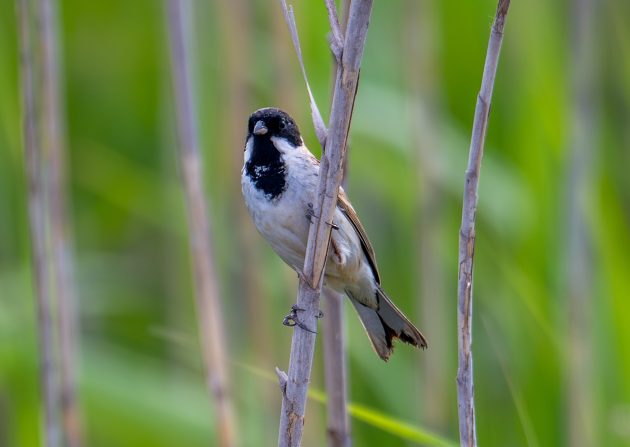
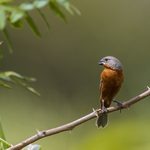
To illustrate this post, I asked Kai Pflug for some pictures of a Reed Bunting. “Sure, which Reed Bunting?“, came the rapid reply (he’s very responsive). Me: “Is there more than one?” followed immediately by Kai’s “OMG“. I have been accused before of not knowing my birds from my elbow on these webpages so I can’t even claim this was a low for me. It was just another low.
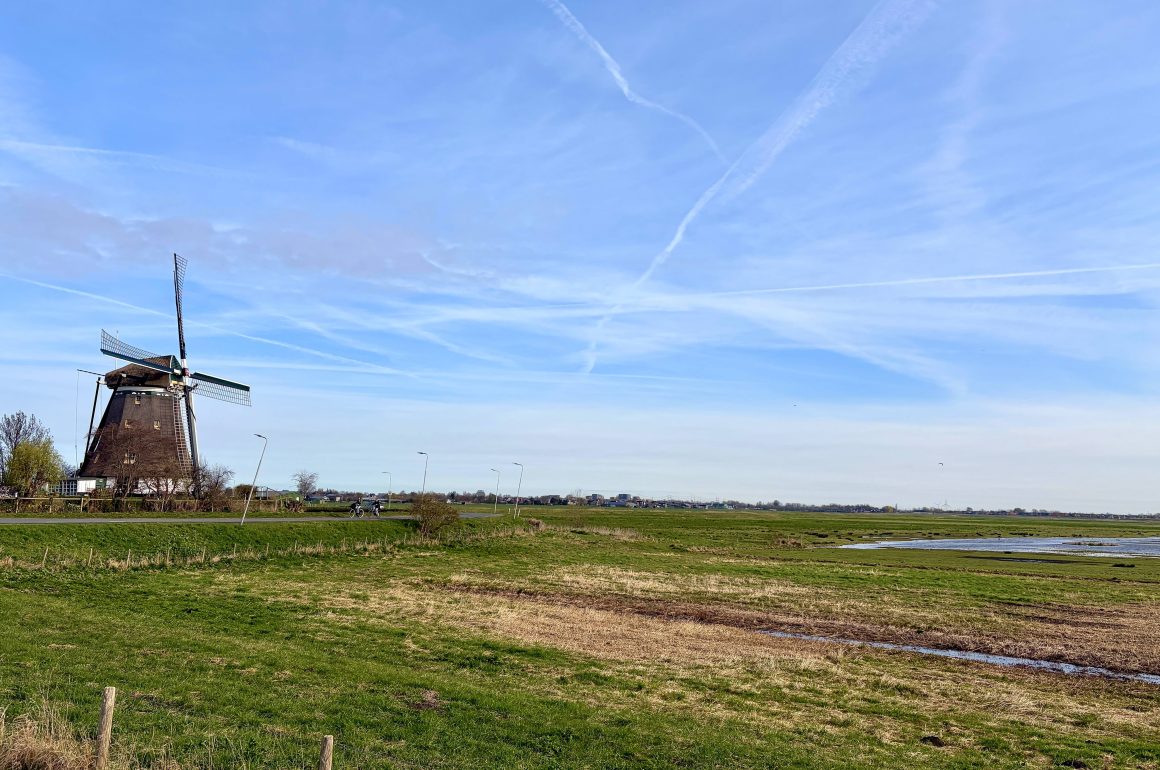
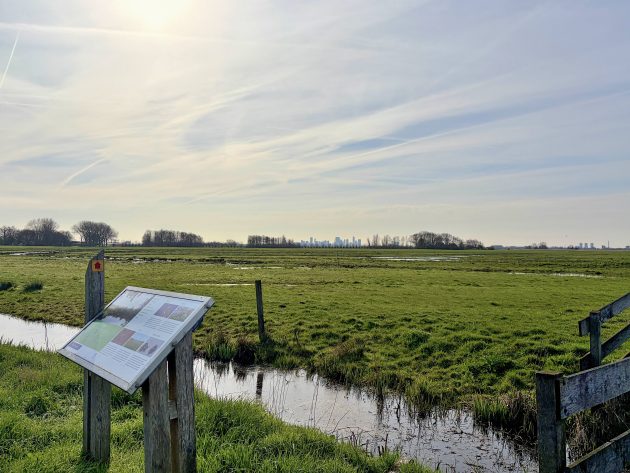
Where they go high, we go low! So, taking the literal interpretation of “going low” I jumped on my bicycle and cycled down into the Ackerdijkse Plassen. If you just imagine this place without bicycle paths, electricity pylons, jet trails, signboards and the Rotterdam skyline in the distance, than this is what swampy, low-lying Holland looked like long ago.
It was busy with birders because a Bluethroat had been reported on the local rarities website. There was much else to enjoy and since it was my first time to this spot, I was excited. The sun shone – never a guarantee in March – with birdsong everywhere. The ponds in front of the first hide I visited (De Kluut) were filled to the brim with Greylag Goose, a lot of Eurasian Wigeon, too many Canada Goose, a few Egyptian Goose, Common Shelduck, Gadwall, and Mallard. The songbirds in the reeds and alders were not especially rare, but it is always good to hear Common Chiffchaff, Cetti’s Warbler, Common Linnet, European Goldfinch and the aforementioned Common Reed Bunting. A lot of use of the word “common”, I know. I leave it to Kai to dig up an obscure reference for the scientific name of the bunting, Emberiza schoeniclus, but I was tempted to mark this post for the Poetry section solely on the strength of this name.
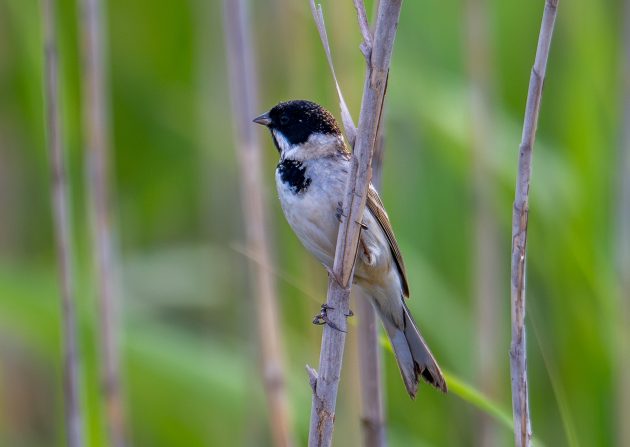
Common Reed Buntings are on the up and coming, with an average 5% increase since 1990. Numbers seem to stabilise now, but the species is with 67.000-125.000 breeding pairs relatively easy to find in the swampier parts of the country. No surprise then that I found several singing males.
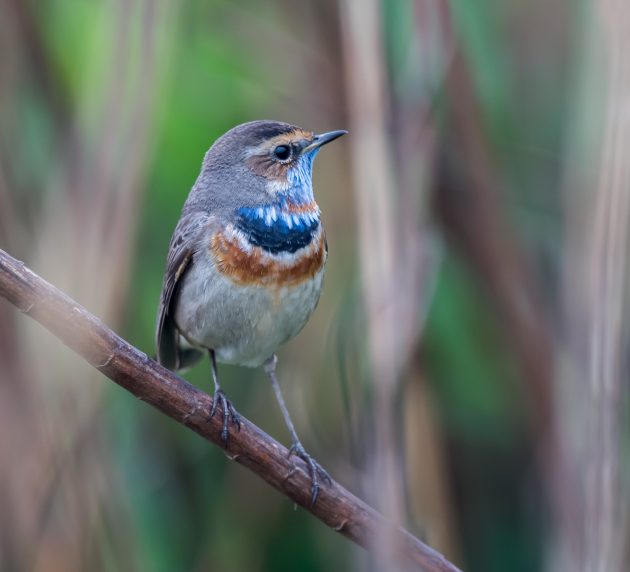
The wind had picked up (to gale strength at the time of writing) and the Bluethroat was nowhere to be heard nor seen. I will return of course; this area still has a lot for me to explore. I will leave you with a cliff-hanger and the promise to show you more Bluethroats without the need to travel to Alaskan tundra and dwarf-shrub meadows.







Nothing like the first loud birdsong day of springtime! Thanks for sharing your adventure!
Good post, Peter! Don’t let Kai get to you. I’m sure he meant, “I love buntings, too”.
Ah I enjoyed this! Laughed a lot, especially the Kai references. Beautifully written!