

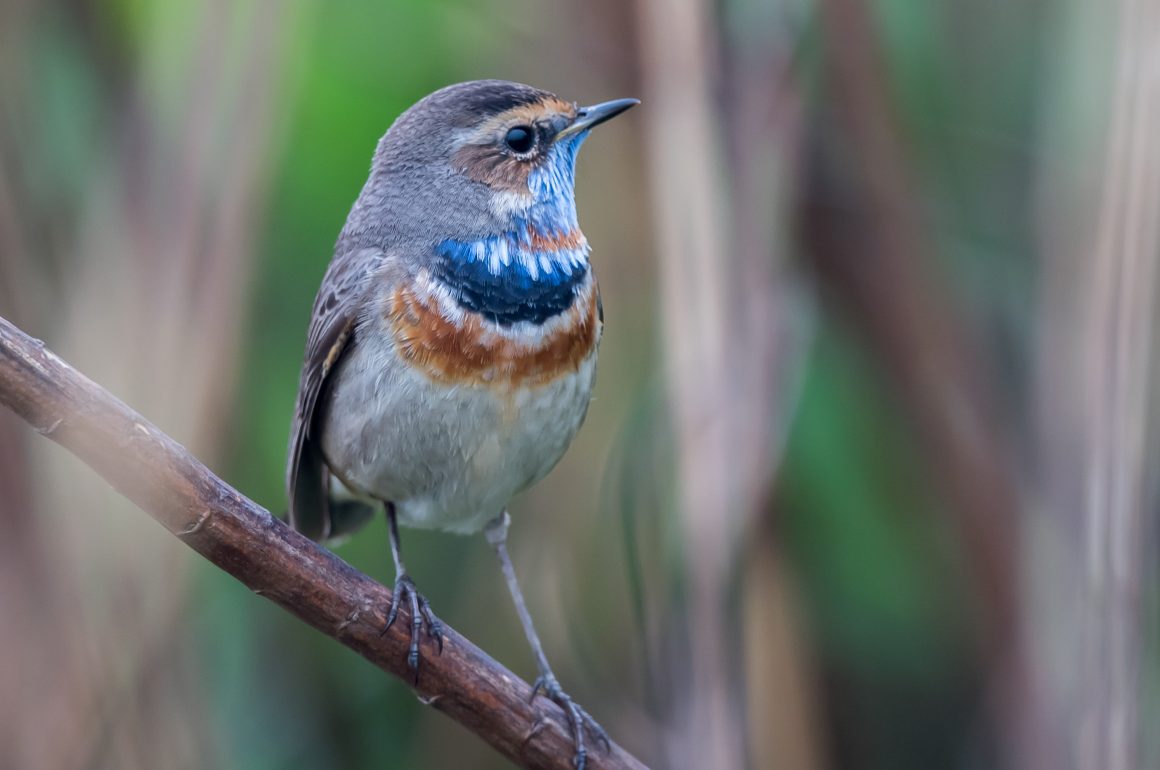
With this post’s title I fully understand that you are only sticking around to understand what the featured Bluethroat is all about. But for the linguistically gifted it is already clear: blauw means blue. There is a lot of blue where I live: without elevation to speak of, anything above 20 centimeters is blue sky. When Dutch people drink too much they become “blauw“, an effect captured eloquently in one of the better Dutch pop songs from the 90’ies. Failing to win a girl’s heart is “een blauwtje lopen“, a parasitic butterfly is a Blauwtje, and then there’s “het Blauwborstje” – the Bluethroat. Unsurprisingly, with so much blue to compete with, the Bluethroat has had to don the most astonishing blue. Hummingbirds dare not cross the Atlantic for fear of being put to shame by this brilliant blue (the colour seems to be less known on yonder shores for other species too). Even the females are quite lovely albeit without the blue.
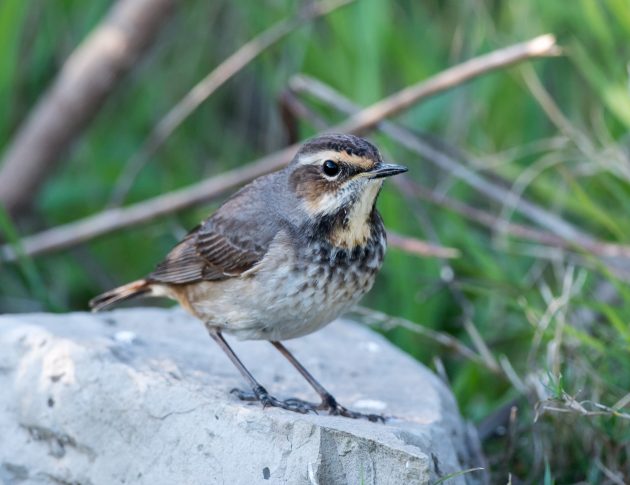
Where can we find these gorgeous birds? As denizens of reedy undergrowth they can be elusive… Also, do not look for these birds in Alaskan tundra and dwarf-shrub meadows. No, spend your hard-earned money on a trip to The Netherlands. The Bluethroat can be found in suitable habitat throughout the country. There are 13.000 to 17.000 breeding pairs, but the best chances for the outside birder (or that most unfortunate of creatures, the birder who brought family along…) would be Texel, the swampy border between Groningen and Drenthe, the provinces of Utrecht, North and South Holland and the Biesbosch. Can I see them in the Oostvaardersplassen?, I hear you ask. Yes, you can, anywhere in suitable habitat, I said. Please pay attention, class.
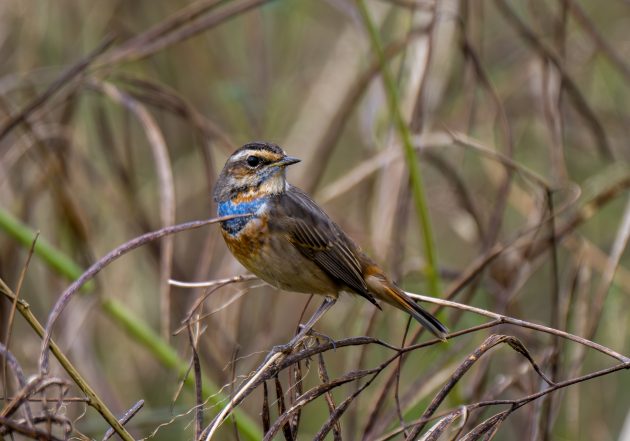
To be fair – the bird’s distribution does not necessarily match the areas I mentioned. The Bluethroat is a shy bird (yes, it’s a bit blue, har har har), so it is much more common in nature reserves and big natural areas. My recommendation is based on the Patagonia Picnic Table effect. The sheer number of birders in the west of the country will ensure the birds are all spotted and reported. Follow my recommendations if you don’t want to dip on the bird. For the more adventurous, find the bird yourself and don’t have 8 million Dutchmen nearby.
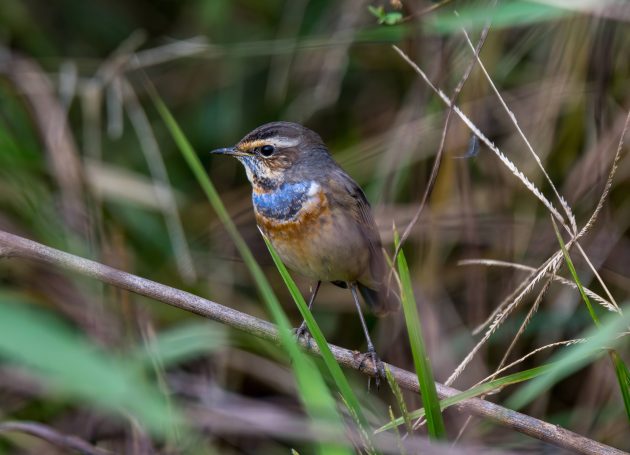
All pictures by Kai Pflug.








Leave a Comment