

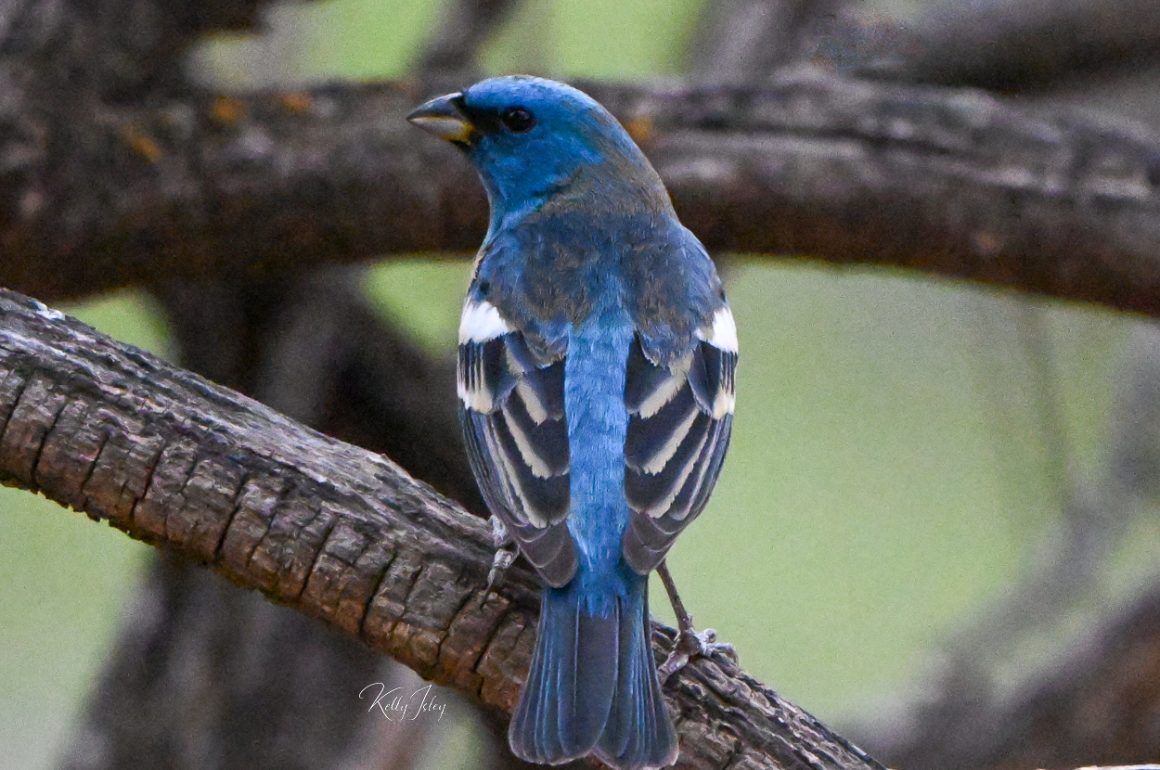
Every spring, northern Arizona receives a brief but unforgettable visitor. Along cottonwood-lined creeks, brushy canyon trails, and quiet woodland edges, flashes of brilliant blue begin appearing in the sunrise glow. For birdwatchers and photographers alike, the arrival of the Lazuli Bunting (Passerina amoena) is one of the season’s small miracles and a vivid signal that migration is underway across the Southwest.
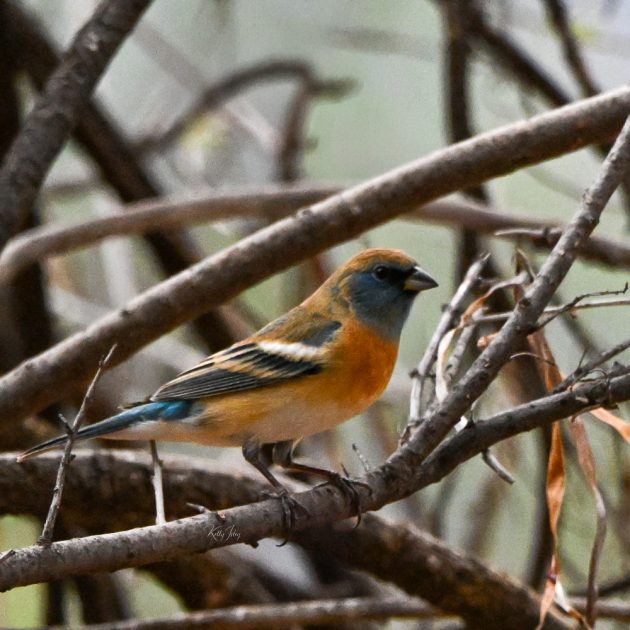
The male Lazuli Bunting is difficult to mistake once you see one clearly. Its blue head and back seem almost tropical against the subdued greens and browns of early spring, while its soft cinnamon breast and crisp white wing bars complete the striking combination. Females are far more subtle, dressed in soft brown tones that help them disappear into dense shrubs and streamside vegetation.
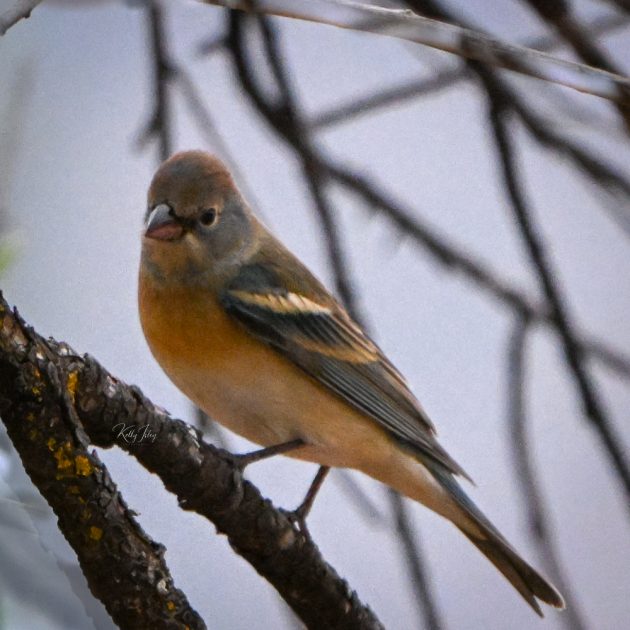
In northern Arizona, Lazuli Buntings typically begin appearing in April, with migration continuing through May. For some birds, Arizona is only a temporary stop along a much longer journey. After wintering primarily in western and central Mexico, they move north through the deserts and canyons of the Southwest toward breeding grounds in the Rocky Mountains, the Pacific Northwest, and even southern Canada. Others remain in suitable habitat across Arizona through the summer breeding season before beginning their southbound migration later in the year.
One of the best parts of spring birding is never quite knowing where a Lazuli Bunting might appear. I often notice them first by movement. A small shape darting from a shrub to an exposed branch, followed by the bright, jumbled song of the male as he claims a perch above the surrounding brush. Riparian corridors seem especially attractive to them. Creeks bordered by willows, mesquites, cottonwoods, or thick undergrowth provide shelter, food, and nesting habitat during their stay.
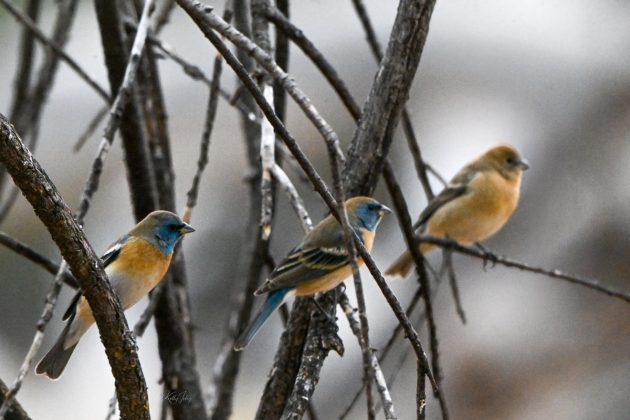
Because many migrating buntings may only remain in one area for a few days or weeks, encounters might feel like they are fleeting. One morning, a canyon may seem empty, and the next, it suddenly holds three or four males glowing in the fresh spring light. Their arrival frequently coincides with warmer temperatures, leafing trees, and the return of other migratory songbirds, forming a sense that the entire landscape is waking up after winter.
For photographers, the Lazuli Bunting offers both loveliness and challenge. Their constant movement through tangled branches can test patience, and strong midday light rarely does their colors justice. Early morning or late midday light usually produces the best results, especially when the bird pauses briefly on an open perch.
One lesson many bird photographers learn over time is that the background matters almost as much as the bird itself. In classic bird portraits, the background is often rendered into a soft blur that helps separate the subject from its surroundings and creates a stronger sense of depth. This effect is known as shallow depth of field and is achieved by using a wider aperture.
Settings such as f/4 or f/5.6 are ideal for creating this softer background effect. When the vegetation behind the bird falls out of focus, the Lazuli Bunting’s vivid blue plumage becomes even more striking. Positioning yourself so there is a greater distance between the bird, and the background can further enhance the effect, turn busy branches and leaves into smooth washes of color.
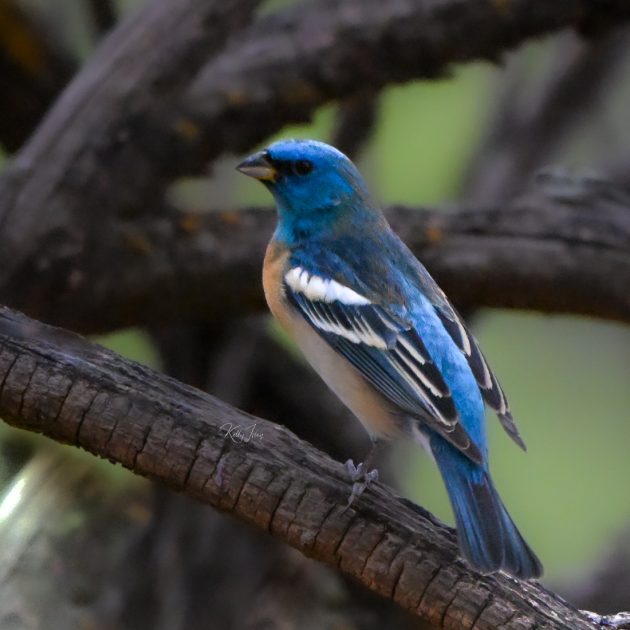
Even with careful technique, photographing Lazuli Buntings often calls for patience and luck. Sometimes the best moments last only seconds, a male singing in open sunlight or pausing long enough for the shutter to click before vanishing back into the brush.
By midsummer, many Lazuli Buntings begin drifting south again, eventually returning to their winter range in Mexico. Their time in northern Arizona is relatively short, which may be part of what makes them so memorable. For a few weeks each spring, these brilliant songbirds bring flashes of color and motion to canyon trails and creek beds across the region, rewarding anyone willing to slow down and watch carefully.









What a beautifully written piece. The observation about noticing buntings first by movement before catching that burst of blue really rings true, and it captures something that’s hard to put into words about spring birding in general. The photography tips are a genuinely useful addition, especially the reminder about background distance and how much it changes the final image. The Lazuli Bunting has always felt like one of those birds that almost seems too vivid to be real when the light catches it just right, and you’ve done a wonderful job conveying that sense of fleeting wonder. Looking forward to getting out to a riparian corridor this month with this article in mind!
During a Bird Chautauqua at Lee Vining, CA, one year I learned that they are fire followers. They were plentiful in a recently burned aspen forest.