

It is easy to understand why showers are very rarely installed on planes, and why even the toilets do not flush properly (with the occasional exception, such as the 400 million USD plane gifted to Mr. Trump by Qatar, which supposedly includes a bidet):
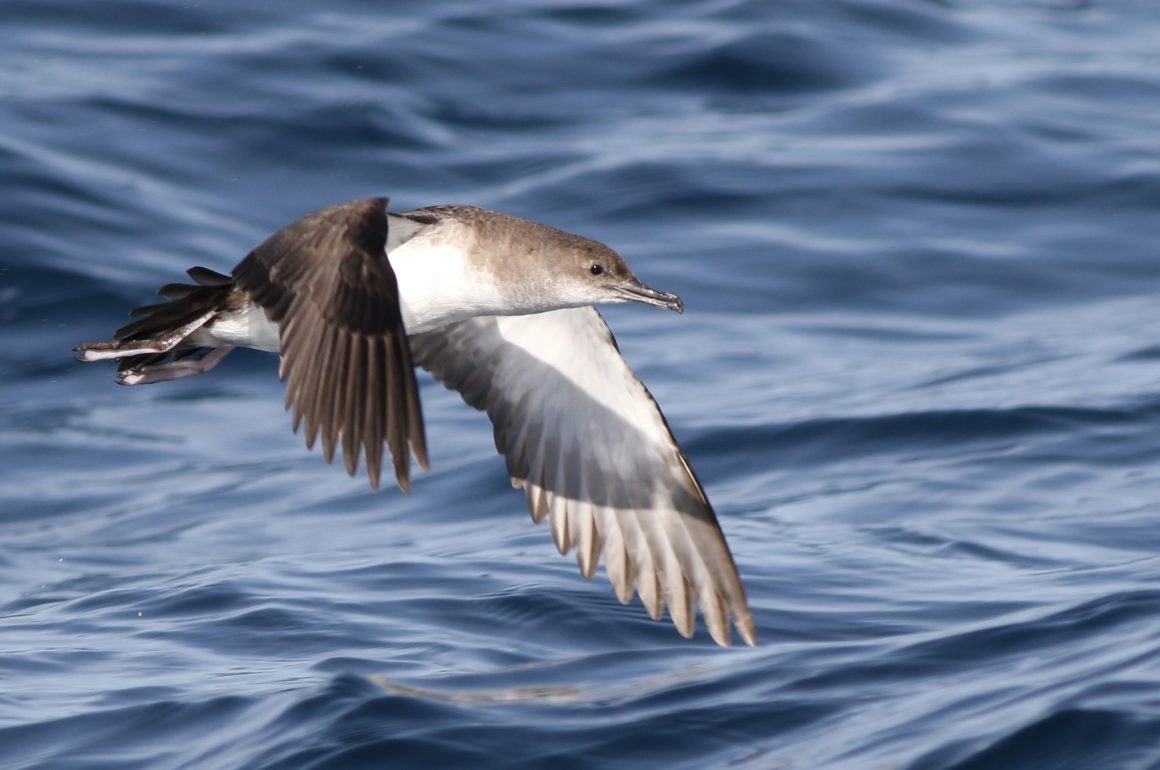
Water is relatively heavy, and efficient flight is all about minimizing weight. That is an issue not only for airline companies but also for birds. They can carry even less water around with them than an economy class passenger, but sometimes (for example, on migration when crossing oceans or deserts) do not have a chance to drink for several hours or even days.
So, birds resort to cheating – well, not really cheating, I guess. Let’s call it adaptations, it sounds better.
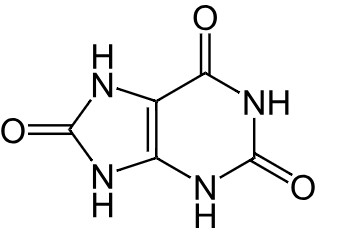
One way to conserve water is to avoid losing it. Birds do that by excreting nitrogen as uric acid rather than urea. Uric acid is insoluble in water, so it is expelled as a paste with minimal water loss.
Uric acid, or if you want to sound posh: 7,9-Dihydro-1H-purine-2,6,8(3H)-trione
Another way is to create your own water. When food is metabolized, water is synthesized. While this also applies to mammals, the amount of water created is greater when fat is burned, and birds rely more on fat burning than on carbohydrates and proteins. One gram of fat burned creates about one gram of water, which can be a vital amount during long-distance migration over oceans and deserts.
Chemical reaction of oxidizing a fatty acid, leading to the creation of water

A third option utilized by some seabirds is desalination – obviously, it would be very annoying to have to fly to an island any time a seabird needs a drink. So, the seabirds drink seawater and then actively pump out the salt (NaCl) via nasal salt glands. How does this work?
The bird takes in salty seawater – too salty to be directly useful. The salt glands then spend energy to separate ions from that medium-salty solution. One stream becomes a very salty solution, which is excreted through the nostrils, while the rest of the water in the body stays at a lower concentration suitable for the cells. This pumping of ions costs energy but delivers useful (i.e., not too salty) water. It is very much like reverse osmosis or industrial desalination, just done biochemically instead of mechanically. Bird families with highly developed salt glands include shearwaters, petrels, albatrosses, pelicans, penguins, gulls, terns, and skuas.
Finally, a very specialized method – well, not so much of conserving but rather of transporting water – is used by male sandgrouse. Their belly feathers are specially adapted both in their structure and their chemistry (hydrophilic rather than hydrophobic), so they can absorb water and hold it during a flight. The males use these feathers to transport up to 25 ml of water to their chicks, which can then suck it out of the feathers. Maybe not quite water conservation, but too interesting not to mention it.
Photo: “01-21-2018 Black-vented Shearwater Dana Point CA 2L5A9898” by jacksnipe1990 is licensed under CC BY-NC-ND 2.0.












Fascinating!
Seeing sandgrouse collect water at a water hole is a fantastic spectacle and you would have been amiss not to mention it. Also, the bidet deserved a mention, but important details were left out. Is it made of gold or just gold-plated? For the first time in this series I actually knew the chemistry already, which after 23 posts is an amazing feat of digging up unknown facts in the previous posts!! Twenty-twice I have been learning new stuff, so cool.
A very interesting series. Danke Kai.