


From frying eggs, we all know what happens when proteins get heated up: they denature. This is a particular problem for desert birds, which may face temperatures of 50 degrees Celsius and above, substantially higher than their body temperature, which is about 40-42 degrees for many bird species.
Chemically, the heat and dehydration of proteins mean that they destabilize: the weaker bonds that stabilize proteins and their shape, such as hydrogen bonds, ionic bonds, hydrophobic interactions, and van-der-Waals forces, are disrupted. This leads to misfolding – the main protein chain is not broken up, but the shape of the protein chain changes, and that means the proteins can no longer fulfil their biological functions.
Birds – and particularly desert birds – employ a class of proteins named heat shock proteins to limit the negative effect of heat. Among other mechanisms, these heat shock proteins protect exposed hydrophobic regions of unfolded proteins by binding to them. This prevents these areas from sticking together and forming insoluble aggregates.
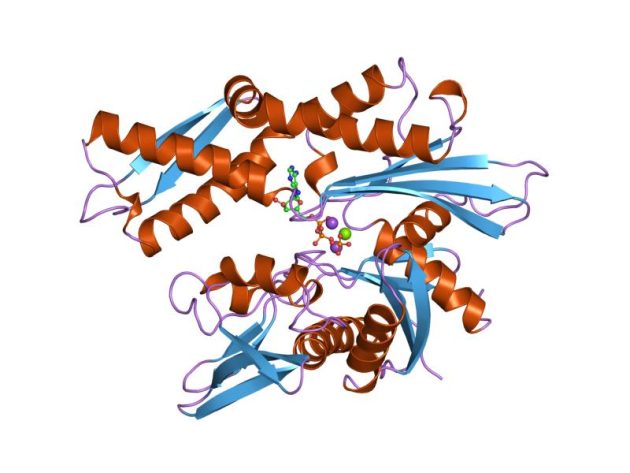
One heat shock protein creatively named HSP70 is the one most studied for birds. It has a segment that can bind to unfolded peptides, protecting them from denaturation.
Structure of the ATPase fragment of a 70K heat-shock cognate protein
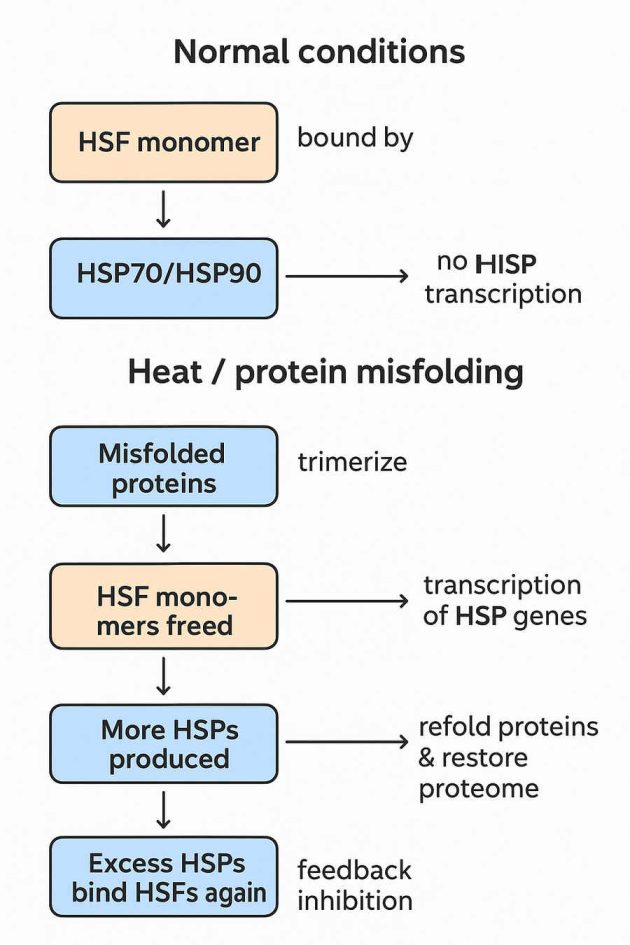
When there is no heat stress, the HSPs bind to heat shock factors (HSFs), which keep them inactive. However, once proteins misfold, the HSPs are utilized to stabilize them, which frees the HSFs. These free HSFs then trigger the production of more HSPs. The chart below shows the process with a bit of additional detail.
Desert birds mostly use the same system and chemistry as other birds – they just do it a bit more efficiently.
The biggest difference is in the role HSPs play in dehydration, which is much more of a challenge for desert birds. HSPs have a bigger role in balancing protein folding and unfolding with the changes caused by dehydration. For non-desert birds, this function of HSPs against dehydration is less important.
For two other roles of HSP, the role is similar for desert birds and others, but desert birds are a bit more efficient. Desert birds often live closer to heat extremes, so HSP70 works at slightly lower stress levels and faster after exposure. And for the management of Reactive Oxygen Species, while all birds have HSPs and antioxidants protecting proteins from oxidative stress, HSPs may be more actively coupled with antioxidants to prevent protein damage, as the level of Reactive Oxygen Species tends to be higher.
Photo: Chestnut-bellied Sandgrouse, Delhi area, India, April 2019














Leave a Comment