

Highlights
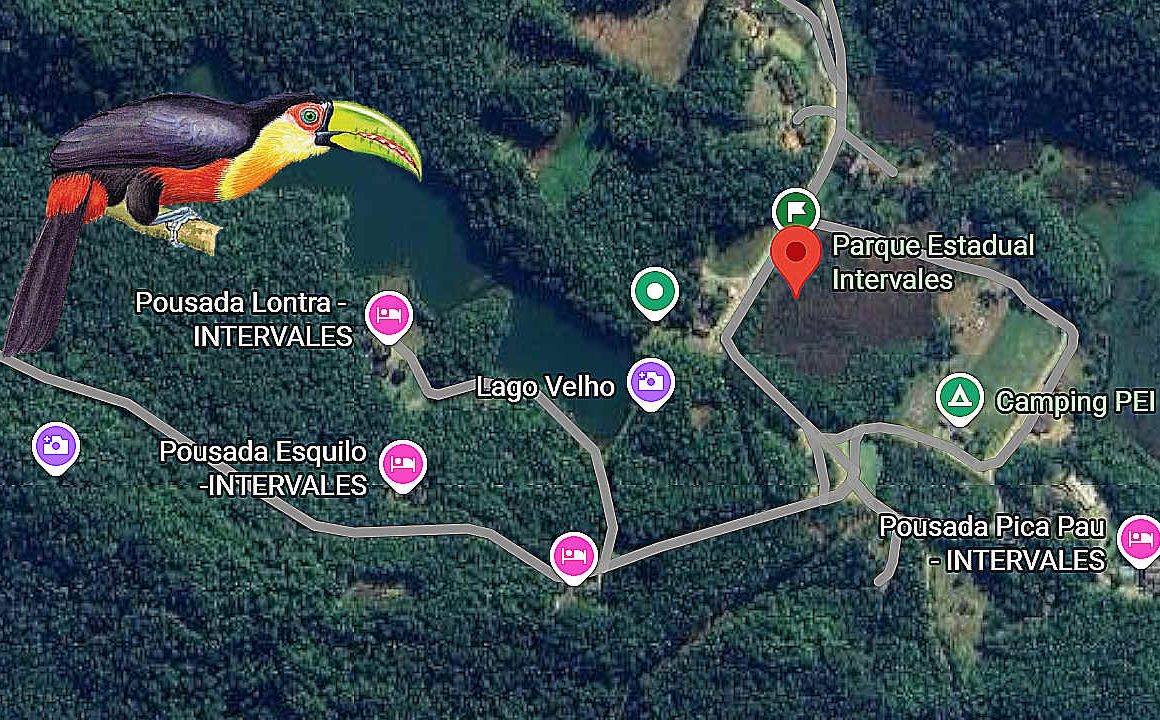
This fantastic State Park is located only three hours from São Paulo. It is considered one of the best parks for Atlantic Forest birds in the world! Its 40 thousand hectares are part of the largest mosaic of conservation units of the Atlantic Forest biome. A very rich fauna and flora can be found at Intervales State Park, the majority are endemic to Atlantic Forest, which is the most endangered biome in Brazil. A major hotspot for conservation.
The park has great accessibility, presenting several self-guided trails. A nice and safe environment that makes Intervales a true playground for birders and nature lovers. On eBird, the park’s list is passing 500 species of birds!
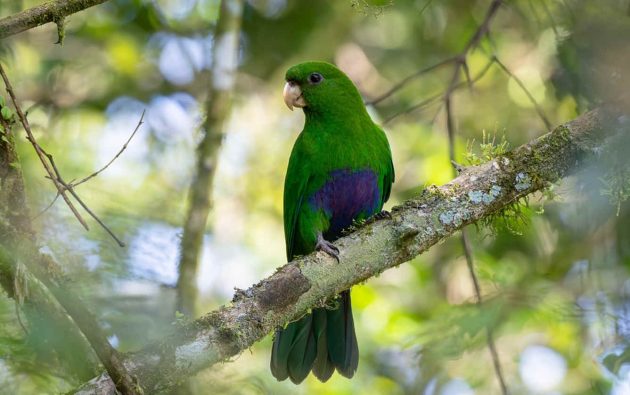
Blue-bellied Parrot (Photo: Mateus Giotto)
Key Bird Species and Families
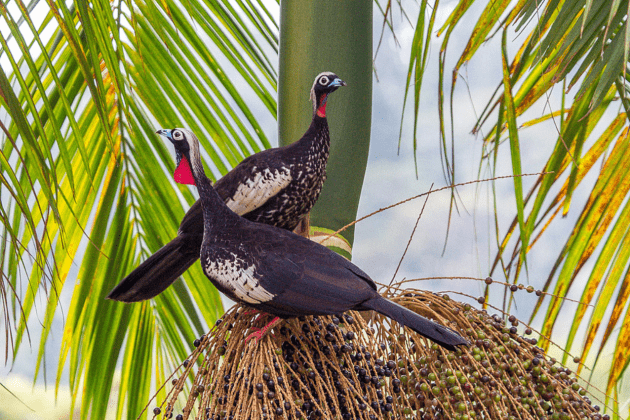
- Black-fronted Piping-guan
- Blue-bellied Parrot
- Silky-tailed Nightjar
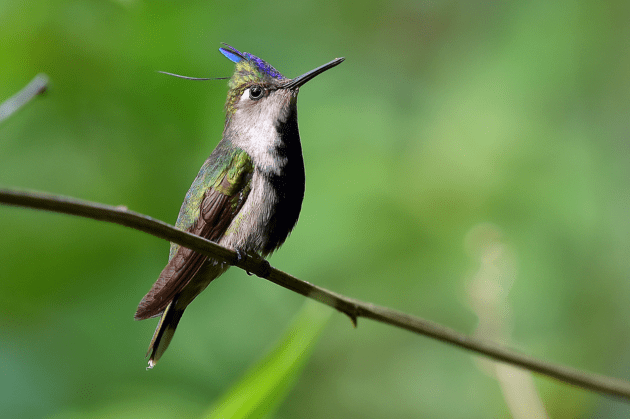
- Purple-crowned Plovercrest
- Dusky-throated Hermit
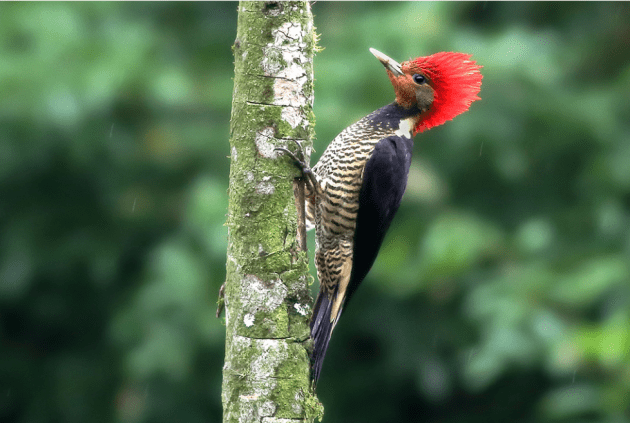
- Helmeted Woodpecker
- Red-and-white Crake
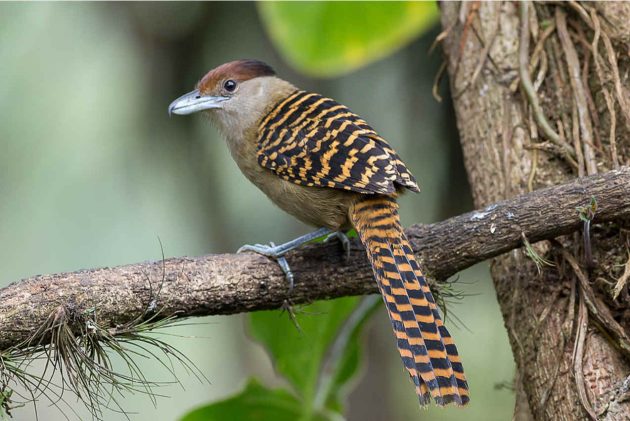
- Giant Antshrike
- White-bearded Antshrike
- Black-legged Dacnis
- Green-throated Euphonia
Giant Antshrike (Photo: Daniel Grandjean)
Best Regions for Birding
The park is very big and has lots of trails and roads.
- The access road can be really great for more common birds like White-tailed Hawk, Campo Flicker, White-rumped Monjita, Burnished-buff Tanager, and even Red-legged Seriemas sometimes.
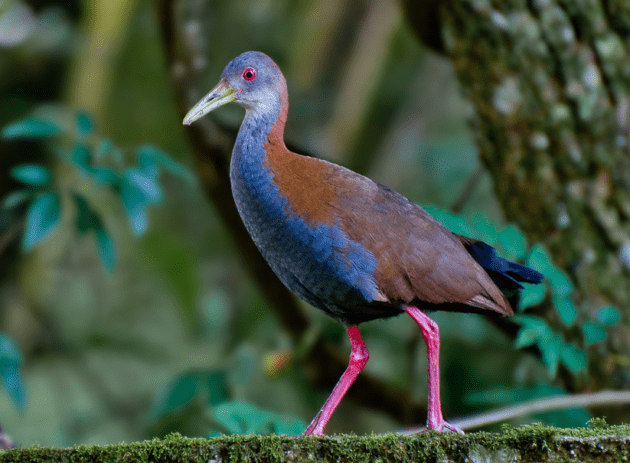
- Around the Pousadas (lodges) and the park’s garden, soccer field, and lake are good for Green and Buff-necked Ibises, Common Gallinule and Wattled Jacana, Slaty-necked Wood-rail, Blackish Rail, and Red-and-white Crakes, and more.
- Self-guided trails around the common areas of the park can render Blond-crested Woodpecker, Red-breasted Toucan, Red-ruffed Fruitcrow, Scaly-headed Parrot, White-rimmed Warbler, Red-necked and Green-headed Tanagers, among many others.
- Trails and roads longer and further from the park’s entrance, like the famous Carmo road, are the best options for the most difficult birds like the endangered Black-fronted Piping-guan, White-bearded Antshrike, Spot-billed Toucanet, Cinnamon-vented Piha, Atlantic Royal Flycatcher, and several others.
Slaty-breasted Wood-rail (Photo: Frederico Swarofsky)
Best Birding Season
From May to December is the best time of the year. July, August, and September are really awesome months to visit. Many people know that, so the park can be busy with groups of birders. But remember, the area is quite big, and there are lots of rooms in the Pousadas for everybody to enjoy themselves. From November to April, it can rain a lot in the region.
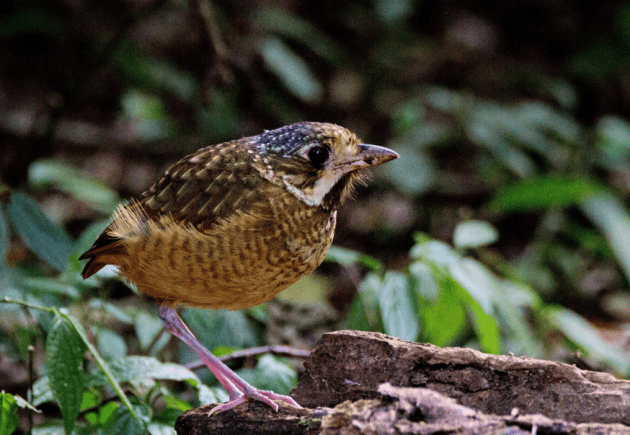
Variegated Antpitta (Photo: Chuck Heikkinen)
Birding Trip Suggestion(s)
Reservations can be made only online. The park has four Pousadas (lodges), which are old and rustic farmhouses adapted to tourism. Not fancy at all, but not bad either. Rooms have good beds and blankets with warm electric showers. Yes, it can be cold, so don’t forget to bring warm clothes.
There is only one option for a restaurant, which is located 5 minutes from the park’s entrance. A small one, but the food is homemade and quite good. Best to let the people from the restaurant know in advance that you are coming.
As the park is very big and has lots of caves, it is mandatory to hire one of the local guides. Except if you use only self-guided trails. The local guides are really nice and experienced people. They don’t speak English, but they understand it and know the birds’ English names.
Helmeted Woodpecker (Photo: Paul Larh)
Practical Tips
Bird watching sessions must be early in the morning and in the late afternoons. Don’t forget to always wear long pants, closed shoes and hats. I also recommend bringing insect repellent, a bottle of water, a rain jacket, and/or a small umbrella. For the Carmo road, you might need a 4×4 car, or you can walk uphill for an extra 30 minutes; after that, the road is easy walking.
Black-fronted Piping-guan (Photo: Demis Bucci)
Books
- Birds of Brazil: a Field Guide – Ber Van Perlo
- Birds of Brazil: The Atlantic Forest of Southeast Brazil – Martha Argel
Violet-crowned Plovercrest (Photo: Rudimar Cipriani)
Links
- Official park information – Parque Estadual Intervales – Núcleo Sede
- eBird Hotspot list – Lista de Aves – PE Intervales, Ribeirão Grande, São Paulo, Brazil – Hotspot do eBird
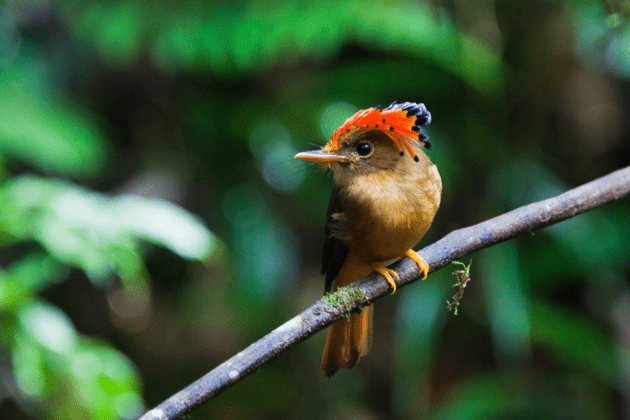
Atlantic Royal Flycatcher (Photo: Marco Guedes)
By René Santos
René Santos is a bird guide based in SaoPaolo, Brazil. René can be reached at renearara@gmail.com and has been profiled in our series on global bird guides. He is also present on YouTube.







Great park. I saw 82 lifers in a single weekend. We drove in from São Paulo on Friday and drove back on the Monday morning to catch the plane home. A Slaty Bristlefront walked over my shoe… Bring insect repellent and good clothing – the open areas can have biting flies and botflies.