


On January 12, 2026, we made our first trip of the season to the Marsh Trail at Ten Thousand Islands National Wildlife Refuge a few miles east of Naples Florida. The refuge protects mangrove, marsh, and tropical hardwood hammock habitats in Southwest Florida.

Carolina Wren
The trail itself is only 2.4 miles long, so it is an easy walk on a level, gravel path. There is an observation tower, which looks out over the marsh. It’s a great place to use your scope, to check which birds are there, or to take photographs. Every day, there is something new to see, as birds migrate through. On this day, a Carolina Wren was serenading everyone in the parking lot.
This winter has seen very little rain in Southwest Florida, so water levels are down everywhere. I have already noticed the low levels at some of the places I visit regularly.
Usually, there is a wet area on your right, after you walk over the short bridge into the refuge. On this day, it was almost dried out. On your left, there is a larger wetland area. It still had water, but it wasn’t very deep. There were waders there, as well as Pied-billed Grebes.
I always check the mangroves when I head in, as often there are smaller birds hiding in them. I saw a Blue-gray Gnatcatcher and heard a White-eyed Vireo singing.

White-eyed Vireo
The view from the tower was still great. The main waterfowl were Blue-winged Teal. I had to look carefully through the teals to find the lone Northern Shoveler and the male Green-winged Teal, which were reported the day before. Plying the shallows were Greater and Lesser Yellowlegs, Killdeer, and Least Sandpiper.

Killdeer
A local birder came along and told us to head down the path, because there was an amazing treat at the end. He told us we would be getting close when we passed the spot with the alligators. How often are you told that in your directions to find a bird?
We turned the corner and there was a shallow area full of practically every wader found in SW Florida! The shallow water was a trap for the fish and the birds were taking advantage of that.
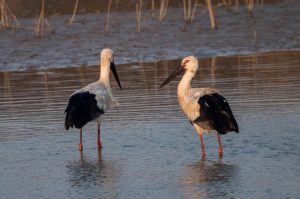
We watched Great Egrets, Snowy Egrets, and Great Blue Herons gobble down fish. Wood Storks and Roseate Spoonbills swished their bills in the water to stir up the fish and other tasty items from the mud. American White Pelicans swam in groups, herding fish together in the pond, so their flocks could feed. It was a rare and incredible sight.

American White Pelican
We plan to be back there at the end of the month, with the local Audubon group. I expect we’ll see lots of new and interesting birds.
Note: Photo at top of article by Leslie Kinrys. Other photos are from Wikipedia Commons, an online source of copyright-free photos: Carolina Wren by Rhododendrites; White-eyed Vireo by lwolfartist; Killdeer by Charles Homler; American White Pelican by Don Faulkner.





We once used Humpback Whales to indicate where the shearwaters were but walking past aligators is a thing that would make me think twice… great post!