

On March 28th, four of my best birding buddies staged the first Big Day of which I have knowledge for the state of Michoacán. Unfortunately, that day I was in a neighboring state on a brief family vacation, so I could not participate. (However, the birding was good there, also, and I’ll soon post a report about that outing.)
Since I feel it is important to show what can be achieved in our area, I’m cheating a bit and simply translating this report by my ornithologist friend Jonathan Vargas. Jonathan is a highly regarded birding guide, and his contact information is included at the bottom of this post. All photos are Jonathan’s. All text is also his, translated by me, except for my additional comments in brackets.
Yesterday we made our first attempt at a Big Day in the area of Morelia, Michoacán together with my great friends Dr. Nacho Torres, Master in Sciences Jorge Guerra, and Pablo Torres, ecology student.
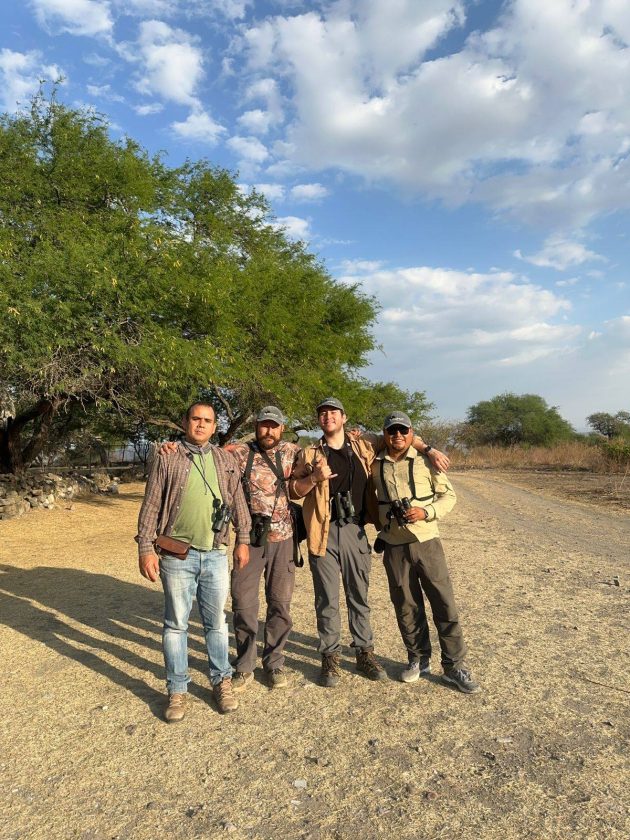
Our objective was to find the largest possible number of birds in a single day, as well as showing the importance of Michoacán for birding tourism.
Although we did not follow a strict 24-hour protocol, our adventure began the previous night. We slept in the town of Tzitzio so we could start out at 4:30 a.m. in the area of Copuyo/Paso Ancho, in Tierra Caliente (Hot Country) at an altitude of 800-1000 meters (2700-3300 feet).
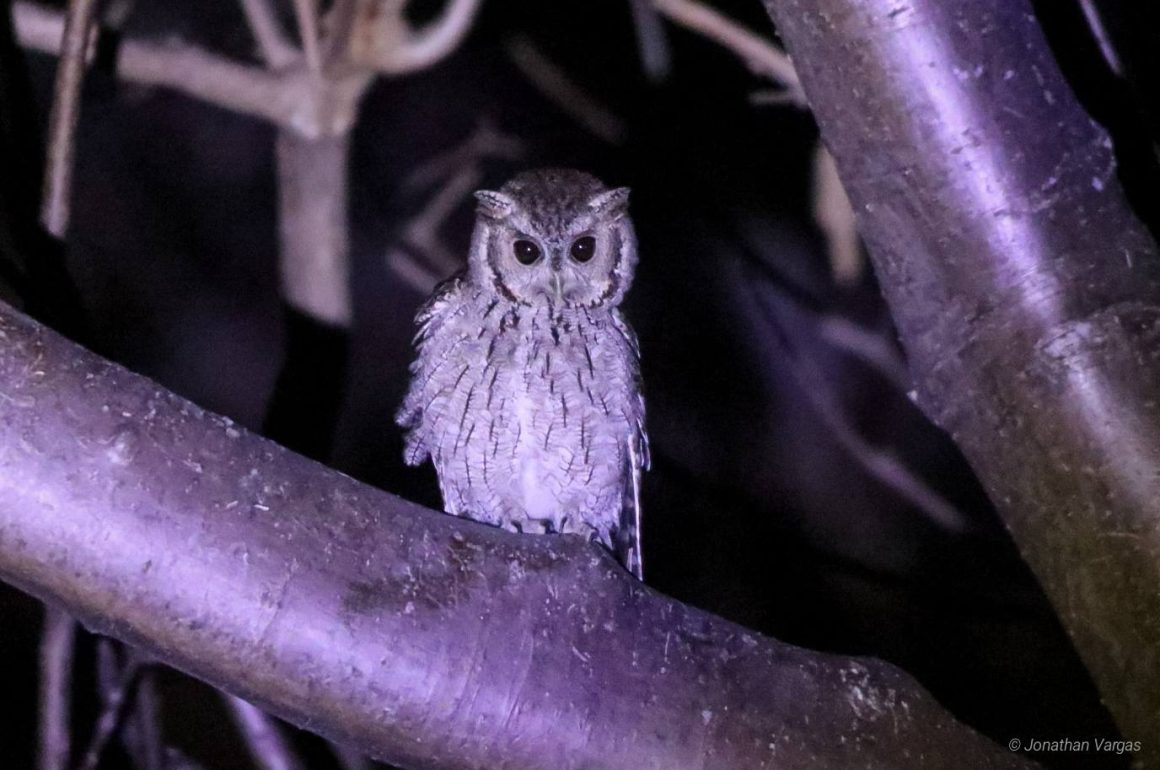
Our day began in spectacular fashion, with nocturnal species such as the Balsas Screech-Owl, Colima Pygmy-Owl, Mottled Owl and Buff-collared Nightjar. Dawn brought jewels such as the Orange-breasted Bunting and Painted Bunting, as well as other endemics like the Banded Quail, Golden-crowned Emerald, and Black-chested Sparrow.
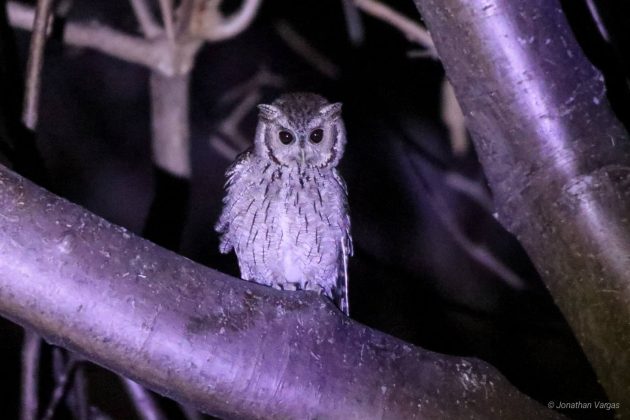
Balsas Screech Owl
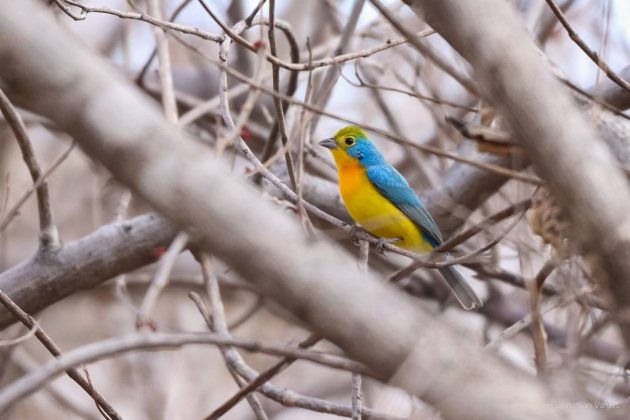
Orange-breasted Bunting
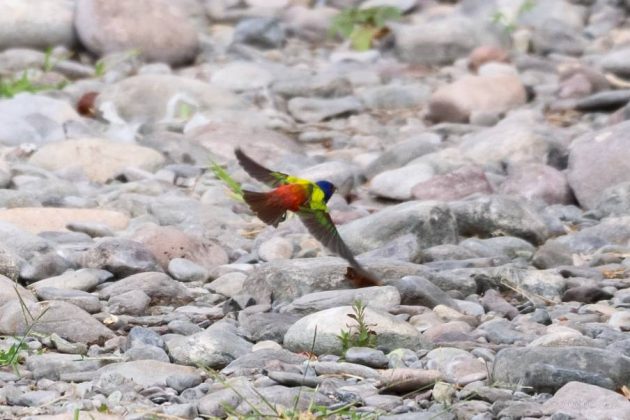
Male Painted Bunting in flight
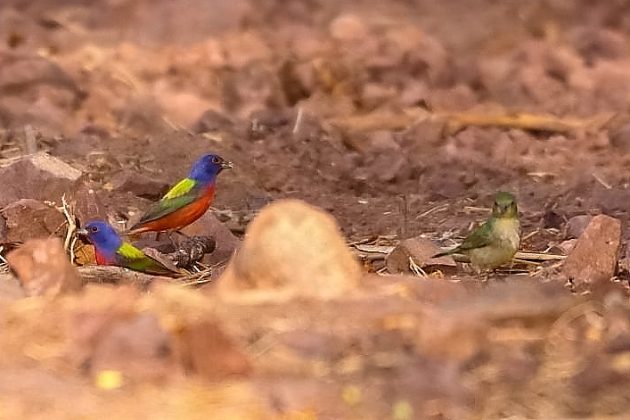
Painted Bunting
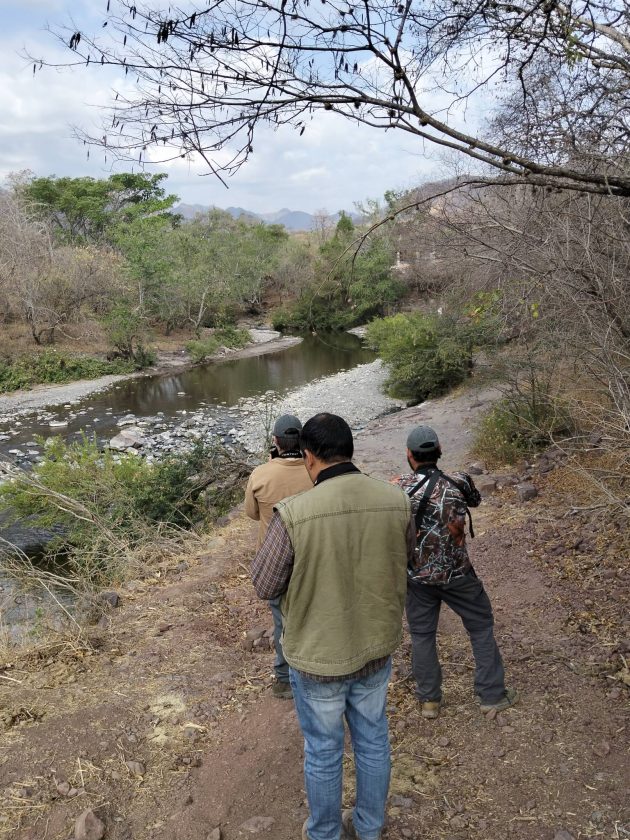
This is where the Painted Buntings were seen.
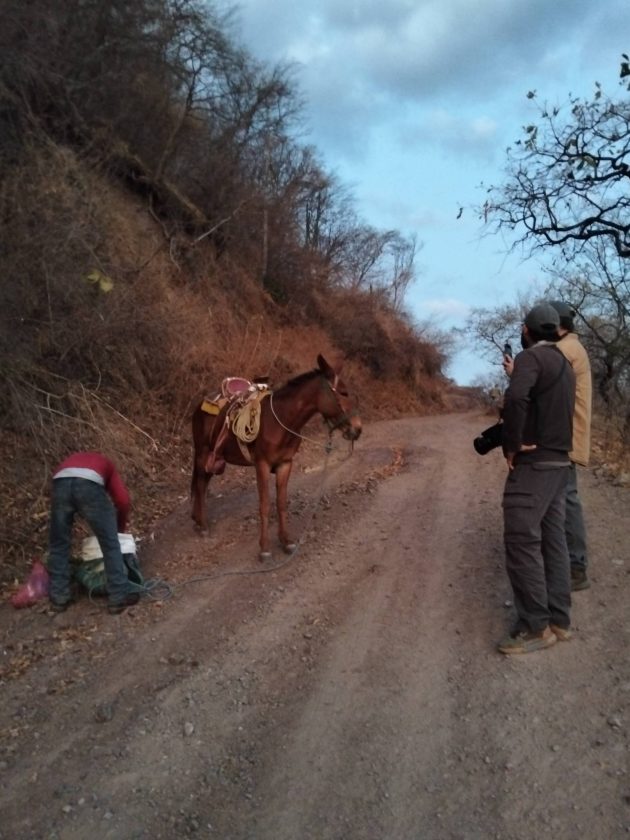
This man came by selling blackberries at dawn. Nacho bought a bag from him.
At midmorning we ascended to the temperate forests in the mountains of el Temazcal and Las Mesas (around 2000 m/6600 ft). Here we added such species as the Golden-browed Warbler, Transvolcanic Jay, and Olive Warbler.
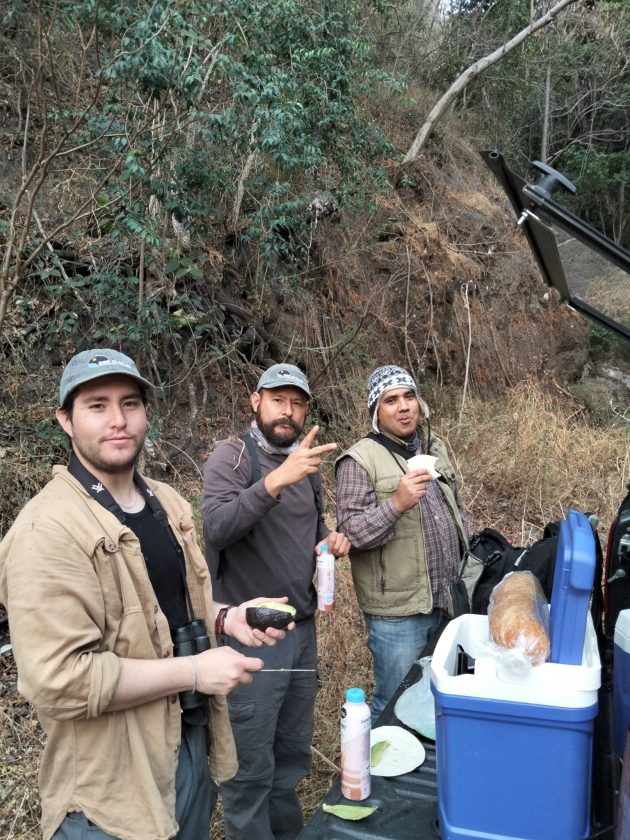
Gathering strength after dawn
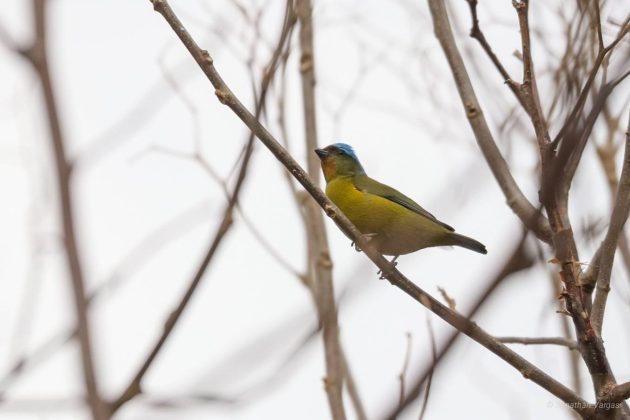
A female Elegant Euphonia
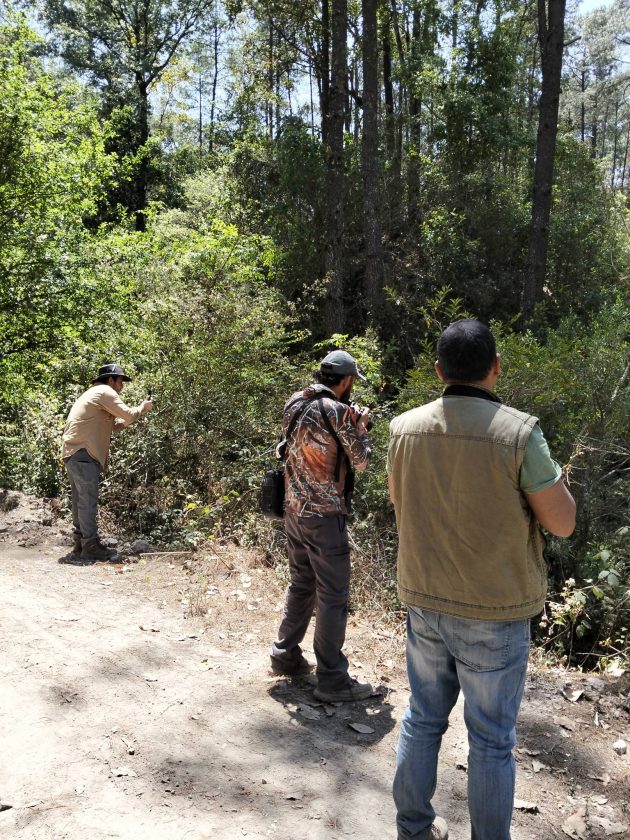
Here we are trying to see the Golden-browed Warblers, in Las Mesas.
By noon we reached Lake Cuitzeo with 106 species under our belt, a little bit below what we had hoped for. But the afternoon rewarded us by allowing us to pass 180 species. An incredible surprise was the first documented sighting of a Glossy Ibis for the state of Michoacán.
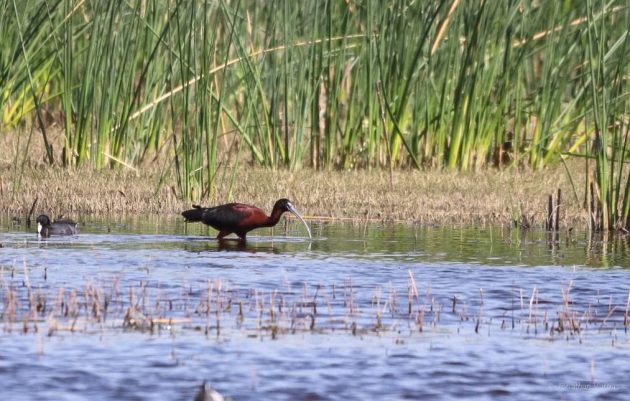
Glossy Ibis
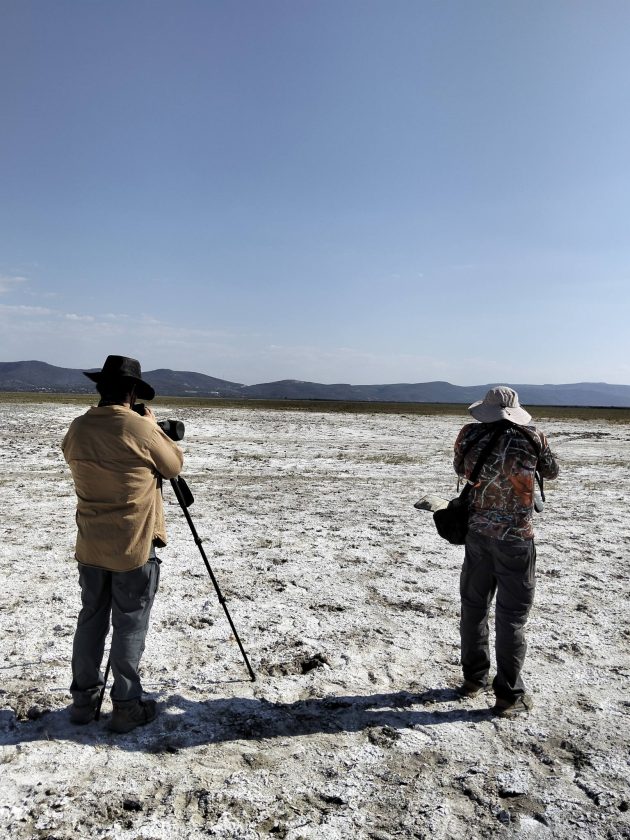
Searching for Snowy Plover nesting sites along Lake Cuitzeo, a WHSRN Regional Importance Site
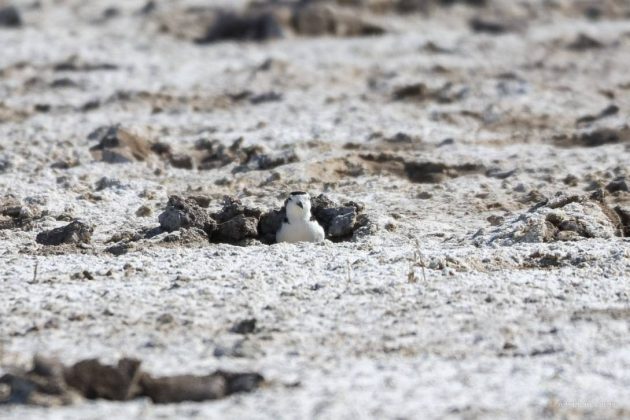
A Snowy Plover. Unfortunately, we found a predated adult and an abandoned nest. [Paul’s note: Jonathan has worked with Snowy Plovers in Ensenada, Mexico for many years. The following week, he found the first occupied nest ever along Lake Cuitzeo.]
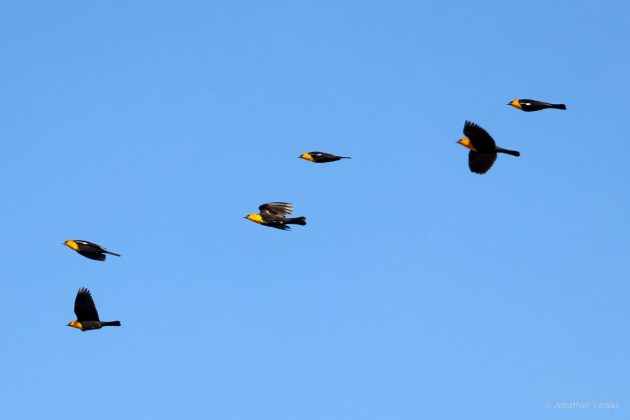
Yellow-headed Blackbirds
We ended our day at Nacho’s house in the town of Jesús del Monte, celebrating with mezcal while we listened to Acorn Woodpeckers and a Mexican Whip-poor-will. [Paul’s note: Nacho is a botany professor with a specialty in mezcal production. His house sits in the middle of a fantastic birding spot.]
Our final count was 193 species, only seven below our objective of 200.
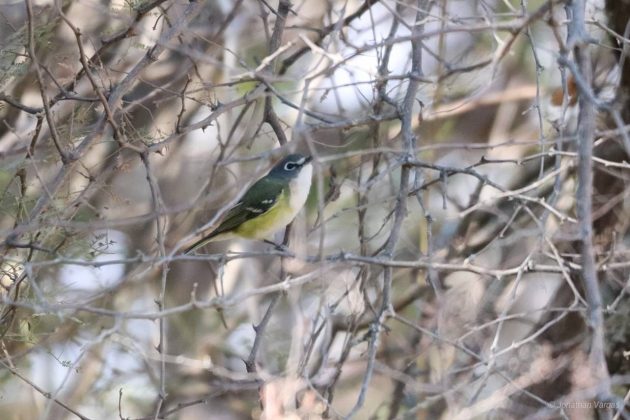
Blue-headed Vireo [a difficult species in Michoacán]
There is no doubt that Michoacán is an extraordinary destination for birding, and an area with great potential for bird tourism in Mexico.
Special thanks to Don Lupe and Chacho for their hospitality the previous night in Tzitzio.
Aquí pueden ver la lista completa de las aves que encontramos
You can see the complete list of the birds we found here.











Leave a Comment