

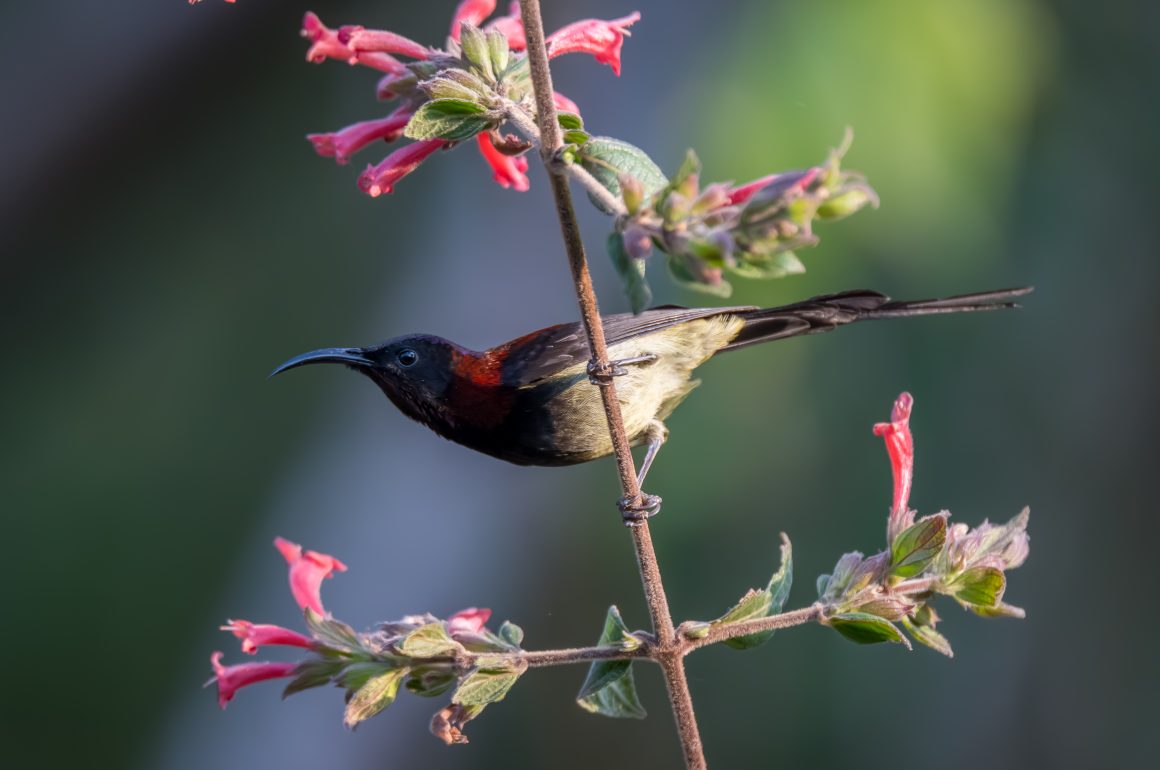
I have a completely unproven theory that many bird photographers are people who would love to create beautiful art—but combine this ambition with a distinct lack of artistic skill, and (fortunately) full awareness of that lack. Bird photography offers a convenient solution: the creation of beauty is outsourced to nature, while the minor act of capturing it provides just enough satisfaction to compensate for the essentially uncreative process of pressing a camera button.
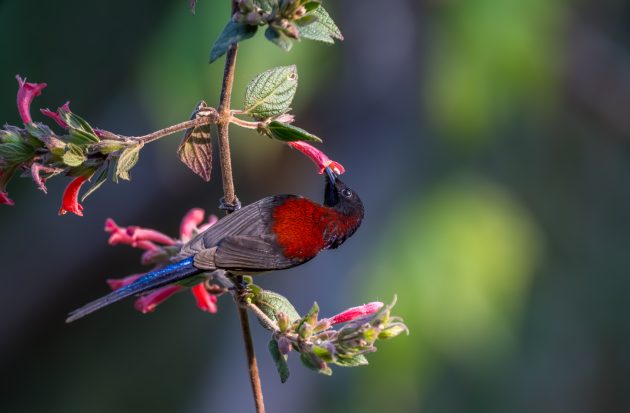
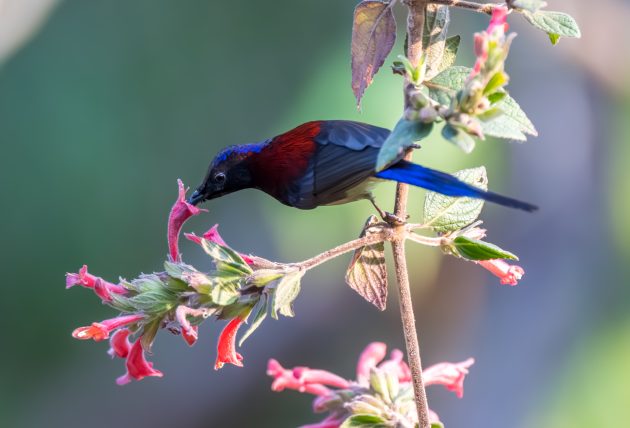
Take these photos of Black-throated Sunbirds (male and female—though, admittedly, the paragraph above applies more to the male). Give me art supplies, and I will struggle to do anything more than ruin a perfectly good piece of paper. Give me a camera and a sufficiently expensive lens, and I can produce something that might even convince a few unsuspecting viewers of my artistic vision.
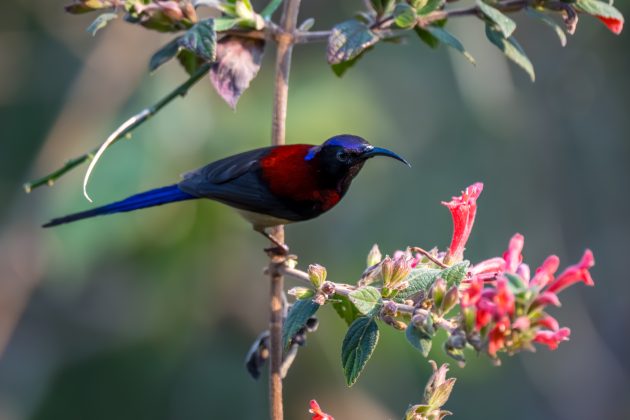
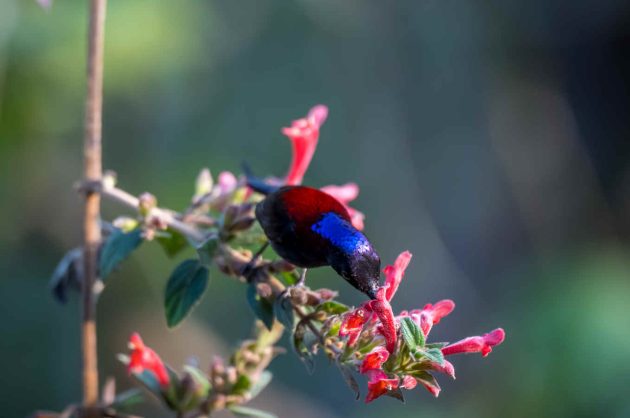
That said, in the interest of pretending there is more to this post than decorative photography, here are a few vaguely scientific facts about the Black-throated Sunbird.
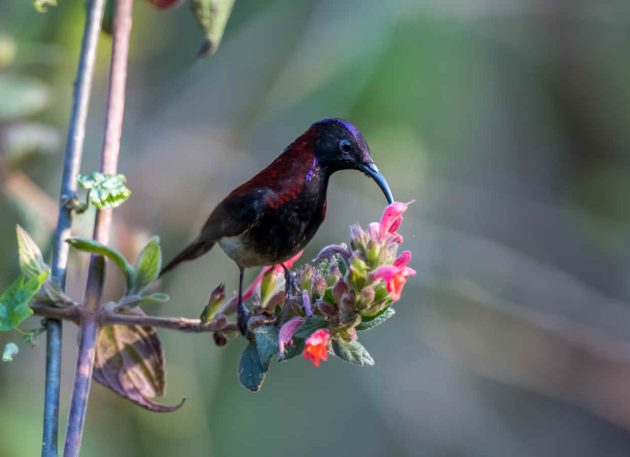
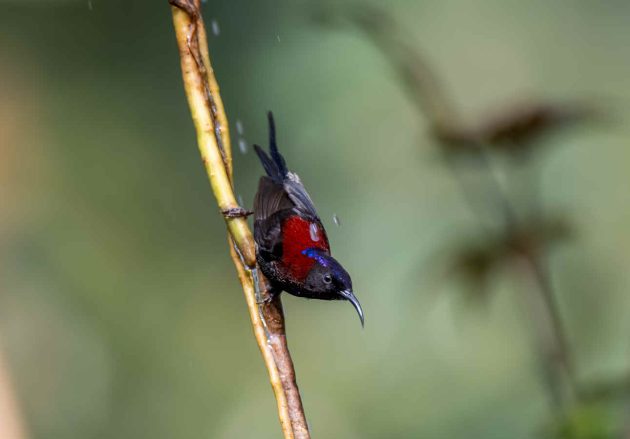
The scientific name Aethopyga saturata combines what sounds faintly like a medical condition with an appreciation of the male’s intense coloration—saturata meaning richly colored.
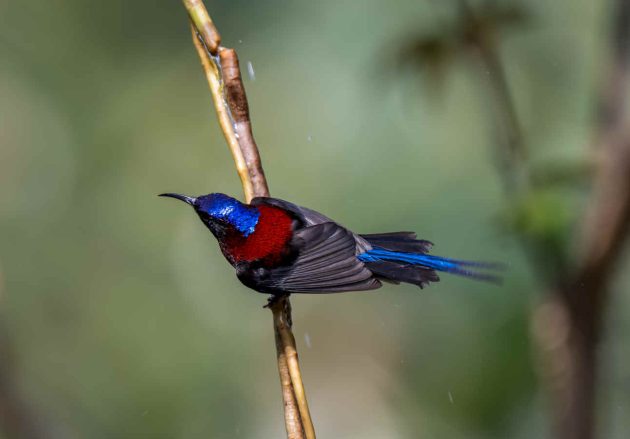
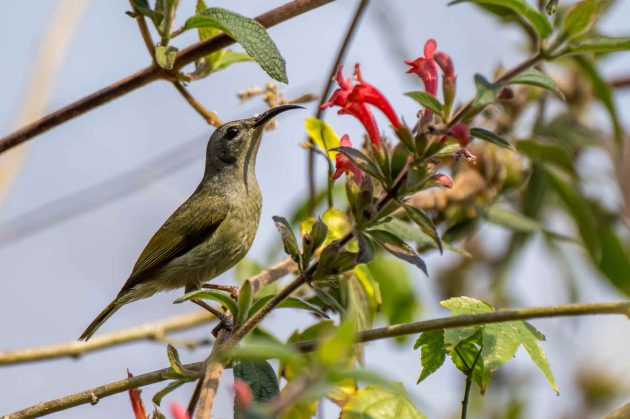
The species is part of highland mixed-species foraging flocks in Peninsular Malaysia (source), typically outshining some of the more muted participants (it is difficult to build artistic credibility photographing Mountain Fulvettas).
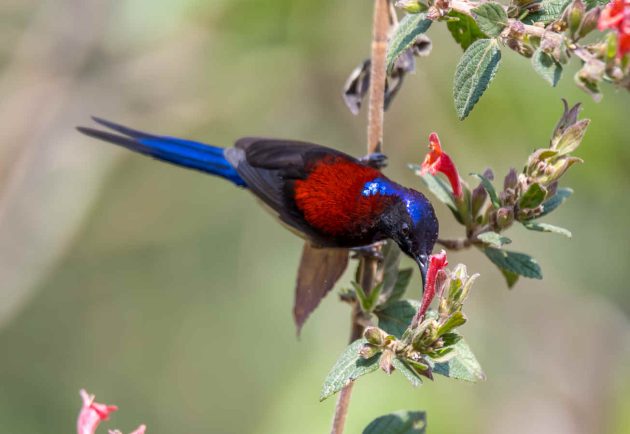
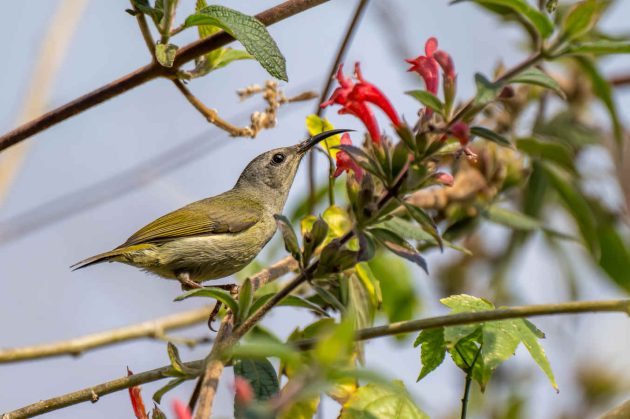
Juvenile males go through various stages of drabness before turning into the brightly colored adults photographers prefer—these stages are nicely illustrated in photos here.
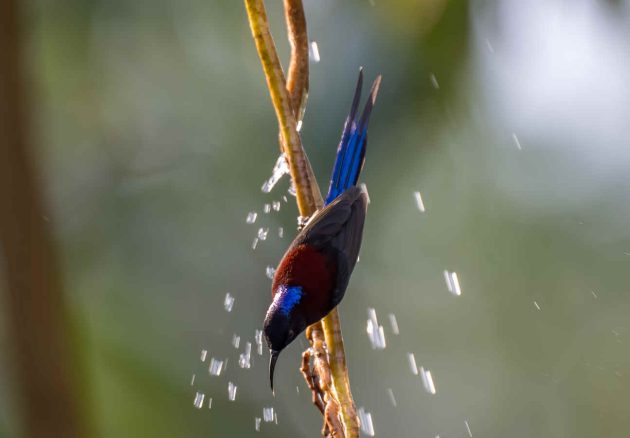
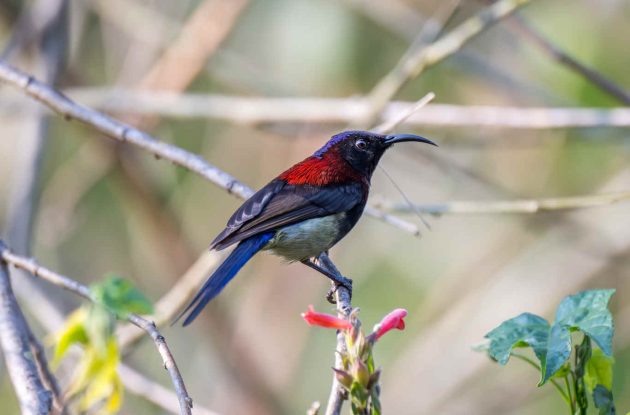
The authors of one paper note that “the throat appears black but in good light is metallic purple-blue”, something I could not confirm in my own photos. There is some blue on the sides of the throat, though—perhaps this is what they had in mind.
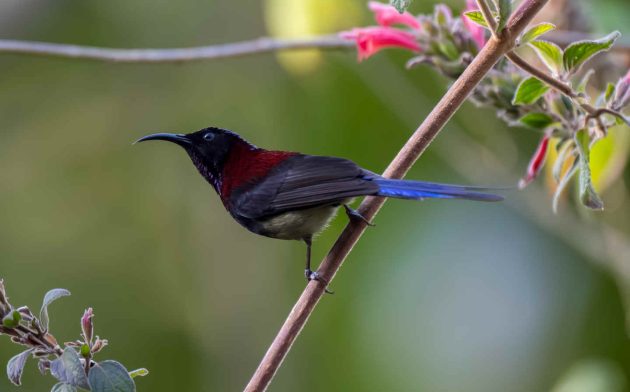
Another paper features the species (along with other sunbirds and flowerpeckers) as a pollinator of aerial mistletoes. It does not attribute any particular aesthetic sensitivity to the bird, instead noting that “males are aggressive and territorial” and unwilling to share mistletoe bushes while feeding.
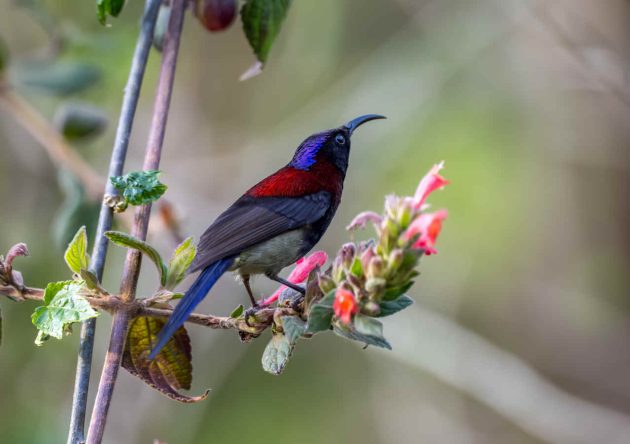
At Baihualing in Yunnan, China, where these photos were taken, they visit bird hides—apparently, particularly the (vain?) males like bathing. Which, conveniently, allows photographers to outsource both beauty and effort.
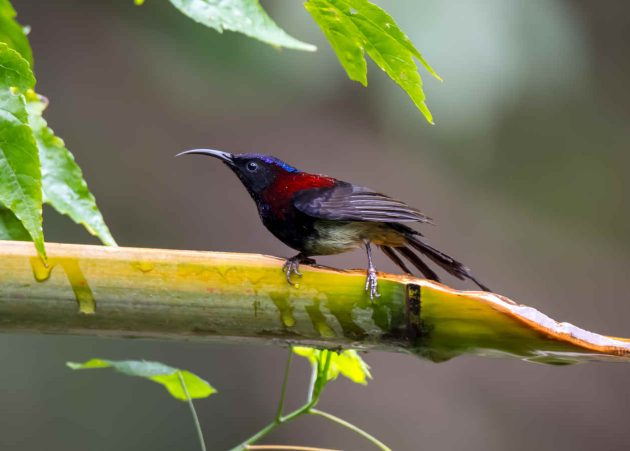








The black throat really stands out – I completely understand why that feature was used for the common name.