

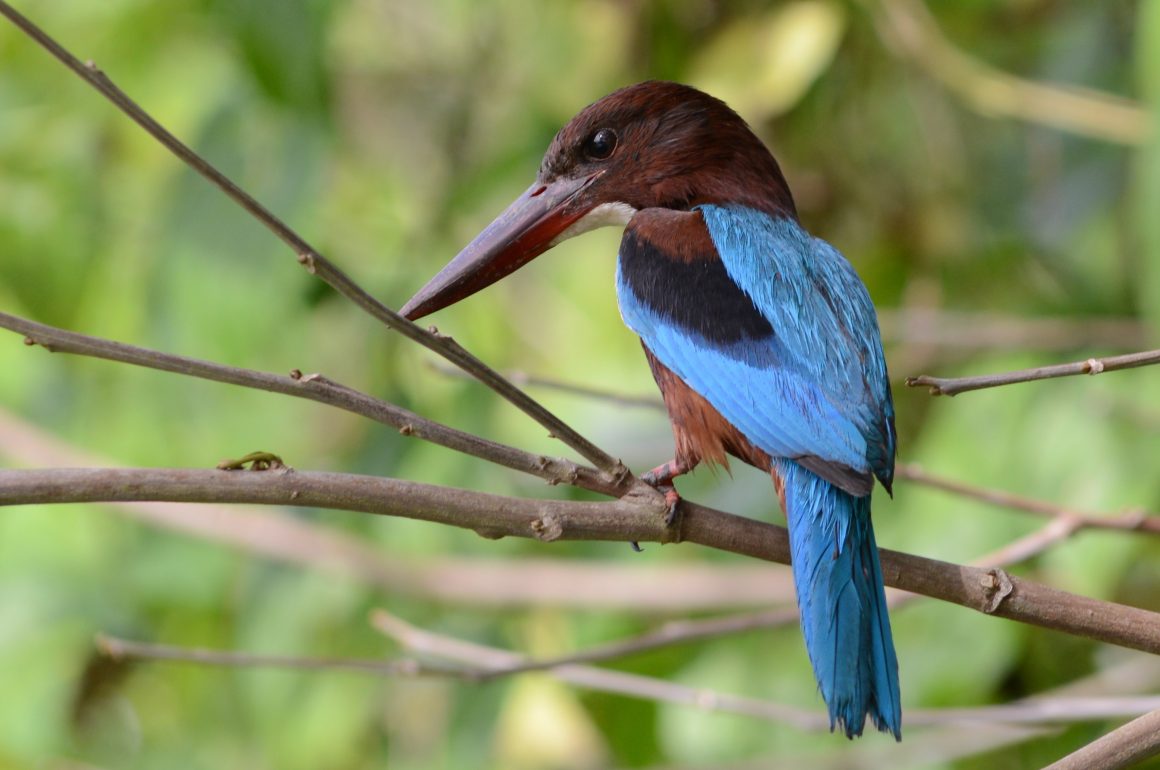
Most birding tour companies schedule a stop in Bundala National Park on a tour to Sri Lanka. The reason is simple: despite its small size, the park’s multiple habitats including wetlands and dense thickets host a huge number of birds. This is also where many rare migrants are found annually, adding the excitement of possibly finding a vagrant.
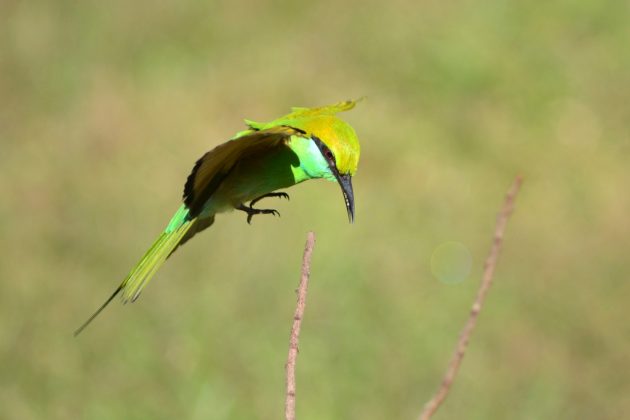
I’ve only been to Bundala once, which is scandalous for somebody who has lived in Sri Lanka for several years. However, the single visit already proved the great diversity of birds to be found here, although this post’s title may be somewhat misleading the low number of rarities I recorded – and that are therefore represented in this post – does not do the place justice. The White-throated Kingfisher in this post’s featured image – one of the most common birds in Sri Lanka – is a good indicator for this contradiction. Even when you aren’t looking for rarities, you will always be entertained by Green Bee-eaters perched on exposed branches right next to the road. These birds are common in much of Sri Lanka but their tame nature and stunning colours make them impossible to resist.
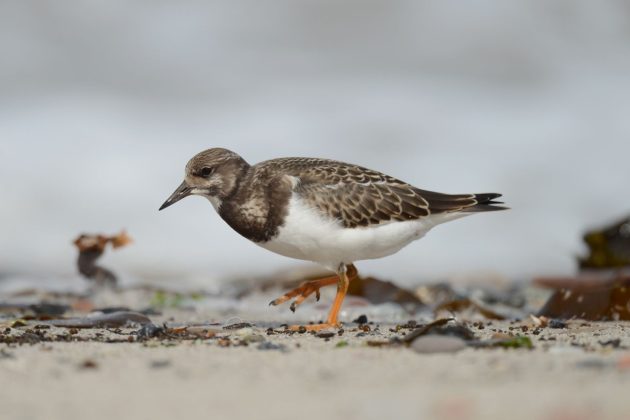
The salt works in the national park are great for waders, despite their probably expansive negative effects on surrounding ecosystem health. One highlight hear is the annual occurrence of a few Red-necked Stints. I was not treated to this honour, bur still enjoyed good sightings of common waders such as Ruddy Turnstone. Like most waders, this species feeds on small invertebrates like most waders. Like the name suggests, they often flip over rocks to eat the invertebrates hiding below them. Their strength is really remarkable; I remember watching in awe as they turned around rocks nearly the size of their own body. Surprisingly, it seems that they do have quite a broad diet and sometimes also take small bird eggs, which these authors claim resulted in the abandonment of a tern colony.
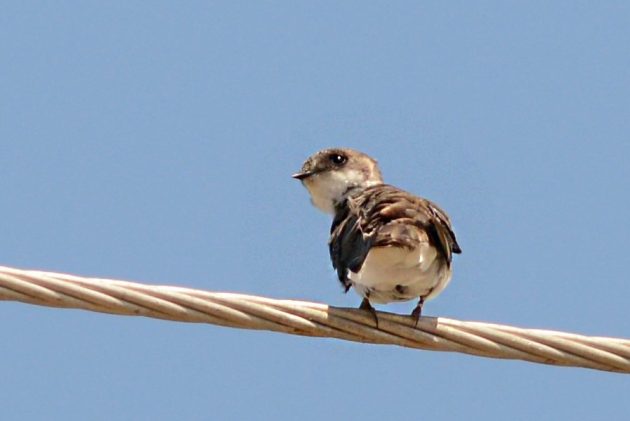
The Sand Martin is a rare migrant to Sri Lanka, and Bundala is once again one of the best places to come across this species. This is also the only proper rarity I saw during my visit, in the form of two individuals in a small flock of Barn Swallows. While I know this species from South Africa and Europe, it’s always fun to see migrants in different places. Sand Martin has recently been split to Riparia riparia (Sand Martin) and Riparia diluta (Pale Martin) and I’m sure that the latter species may also occasionally winter in Sri Lanka.
I did feel as if I could not adequately explore the park given that there are so many species that can be seen here. I would definitely say that two full days would do this park justice, especially as mammals such as sloth bear and leopard are also always a possibility.






Blatant Self-advertisement: For more on Bundala, see https://www.10000birds.com/birding-bundala-np-sri-lanka.htm
Wow I should’ve linked this post – way better photos! Thanks for sharing!