

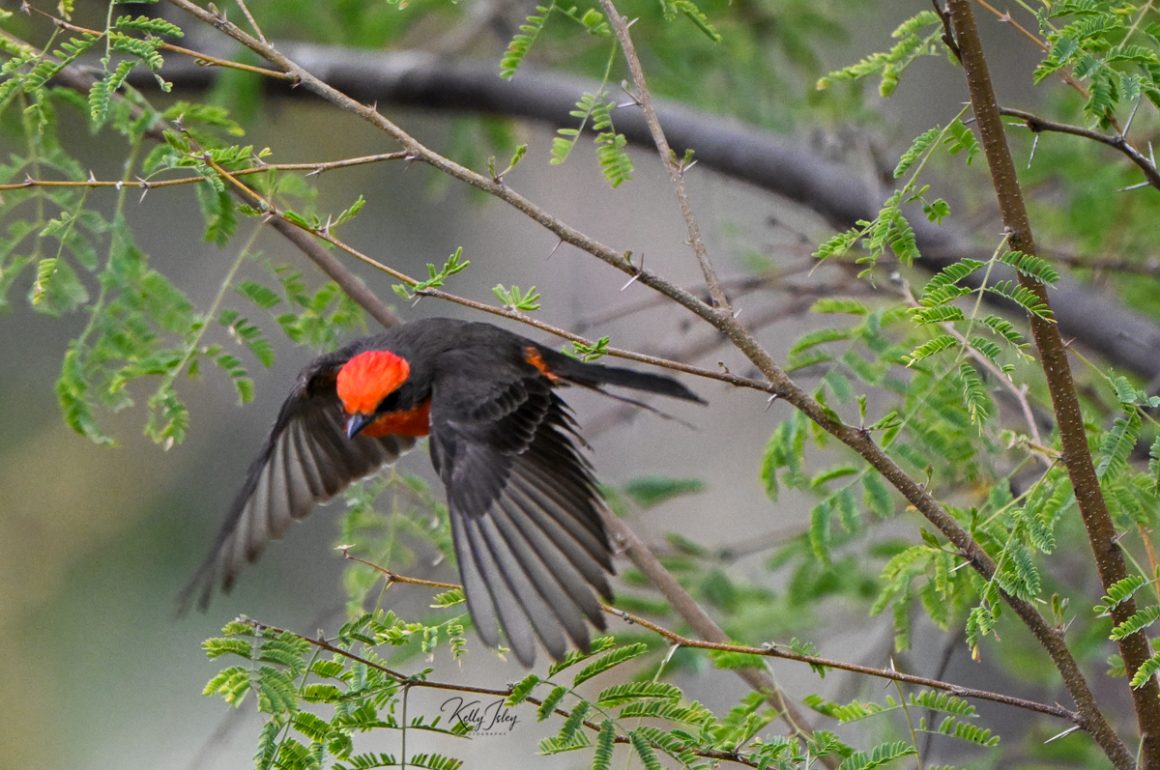
There are birds you notice. And then there are birds that stop you in your tracks. For me, the Vermilion Flycatcher belongs to the latter category. A sudden flash of red, almost vivid, these beauties seem less like birds but more like a spark brought to life.
Although they can be found perched quietly among willows, cottonwoods, sycamores, or mesquites, the male Vermilion Flycatcher glows like an ember against the green. His plumage is a brilliant crimson, set off by deep brown wings and a dark mask that highlights his expression. A dashing songbird carrying the intensity of a spectacular sunset.
Appearance is one thing, and strategy is another. It is normal for males to wait on a perch while they evaluate the air. After a pause, he will quickly move forward to capture an insect mid-flight, before returning to the same area as if pulled back by an invisible thread. This predictable approach is and can be useful for photographers. Why? Once you identify a favorite perch, you can potentially anticipate where the bird will return and prepare your shot in advance.
Lighting plays a crucial role in capturing the Vermilion Flycatcher at its best. One of the simplest and most effective techniques is to shoot into your own shadow. Position yourself so the sun is directly behind you, casting your shadow toward the bird. This ensures even illumination across the subject, helping to preserve the rich reds without harsh contrast or blown highlights. A quick way to do this is to glance at your feet. If your shadow points straight to your subject, you’re in the right position.
It is clear that you can’t photograph what you can’t find. So what is the solution? A valuable starting point is tapping into eBird. If you are new to this clever resource, it is easy to get started. Just search for “Vermilion Flycatcher,” then view results by your own location. Look closely for recent sightings. They also identify hotspots where the species is reported. Reviewing individual checklists can also reveal helpful notes about perching locations, behavior, or habitat. This collective research can save you time and increase your chances of locating these beautiful songbirds.
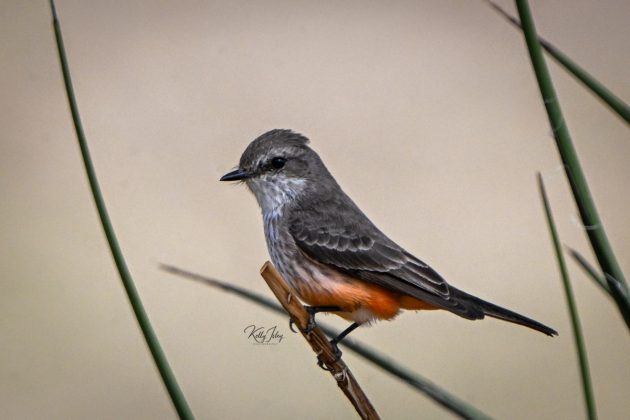
While the male embodies fire, the female Vermilion Flycatcher offers a quieter beauty. One that rewards a more attentive gaze. Covered in soft brown above with a warm, peach-toned underside, she easily blends into the landscape. There is subtle elegance in her coloration that contrasts with the male’s intensity. If you can photograph both together, you can create a compelling visual story of contrast and balance.
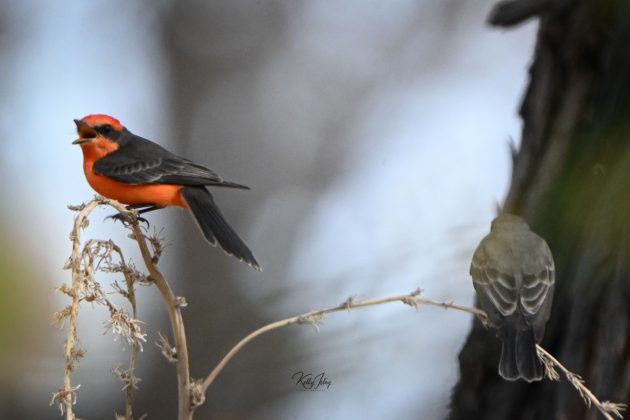
As a reminder, these birds are often found in open habitats with trees and nearby water, where insect life is prominent. I have had the most success in riparian corridors, those green ribbons tracing streams and washes, which provide ideal conditions.
Timing is critical. Spring offers excellent opportunities. Why is this important? Their mating season typically runs from late winter through early summer. You may find males performing looping display flights and repeatedly returning to prominent perches, giving photographers opportunities to capture both stillness and action. Another bright spot: during this window, their plumage glows in the strengthening seasonal light, appearing vibrant.
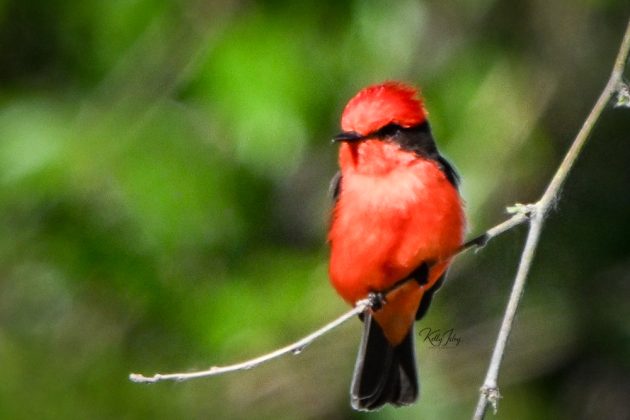
Since they move quickly, photographing them can feel like trying to capture a flicker of flame. Early morning and late afternoon provide the most flattering light, deepening the male’s reds and warming the female’s softer tones. Using a wide aperture can help blur the background into soft greens and golds, allowing these beauties to look their best.
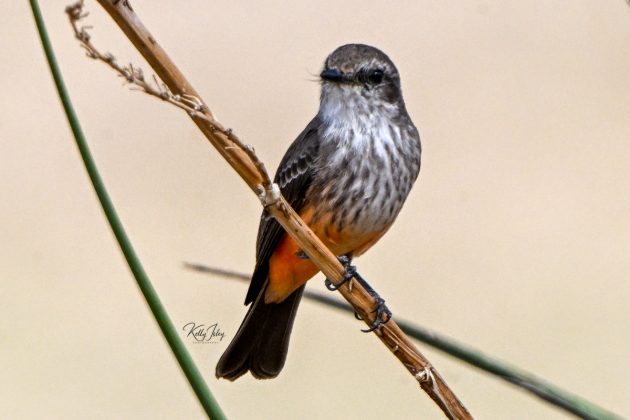
Still, it is challenging to say that a photograph can fully replace the experience of seeing one in person. The quick lift from a branch, the flash of red against open air, the return to stillness all unfold in a rhythm that feels deliberate.
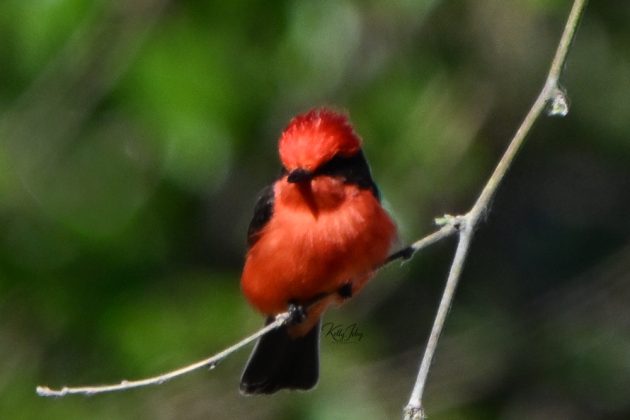
Personally, the Vermilion Flycatcher is more than just a striking bird. It is a study in contrast that includes fire and softness, boldness and subtlety, motion and calmness. To encounter one is to witness a small, vivid moment of wonder, a reminder that beauty in nature often arrives unannounced, glowing quietly until you happen to look its way.








This piece beautifully captures that moment when a single subject transforms how you see a place. The “flash of red” isn’t just about the Vermilion Flycatcher, it’s about contrast, timing, and presence. What stood out is how the article goes beyond technique and highlights patience and awareness. These kinds of images come from understanding behavior and being ready for fleeting moments. A great reminder that powerful photography often comes from slowing down and truly seeing what’s already in front of you.