

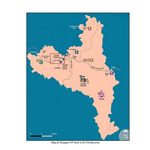
Kaeng Krachan is the largest national park in Thailand, and Wikipedia also claims it is a popular park owing to its proximity to the tourist town of Hua Hin. Frankly, I cannot confirm that – at least on weekdays, it sometimes seemed the only tourists in the park were a few guests of the Baan Maka Nature Lodge, where I stayed as well. But maybe it was the wrong season (it tends to be, wherever and whenever I go birding).
Anyway, the park was still quite productive for me, mostly due to the help of competent bird guides from the lodge (without such guides, I would probably have given up birding long ago and started a more fruitful hobby, such as knitting sweaters, carving soap bars, or learning to play air guitar).
Without them, I would not have found any broadbills at all, though regrettably, I still missed my major target, the Dusky Broadbill (which looks a bit like a hybrid between a broadbill and a frogmouth – so, a very attractive bird).
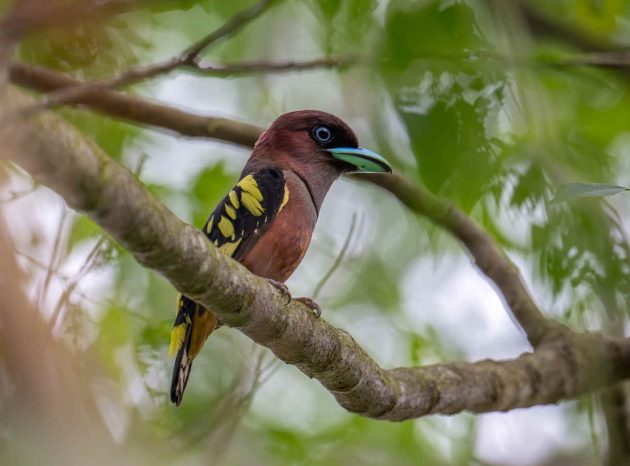
But I did see a Banded Broadbill, a bird that the HBW rather vaguely calls “remarkable-looking”.
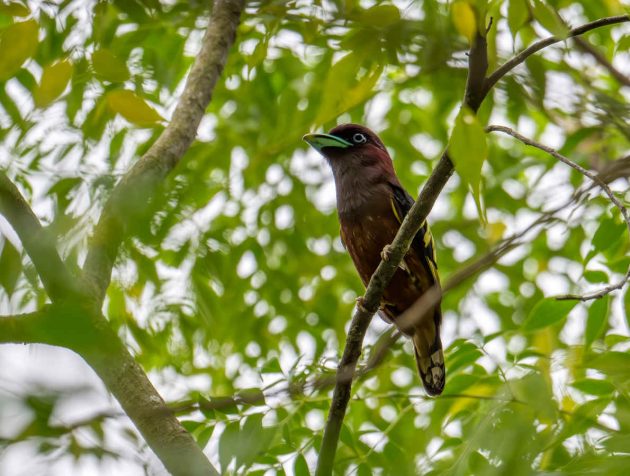
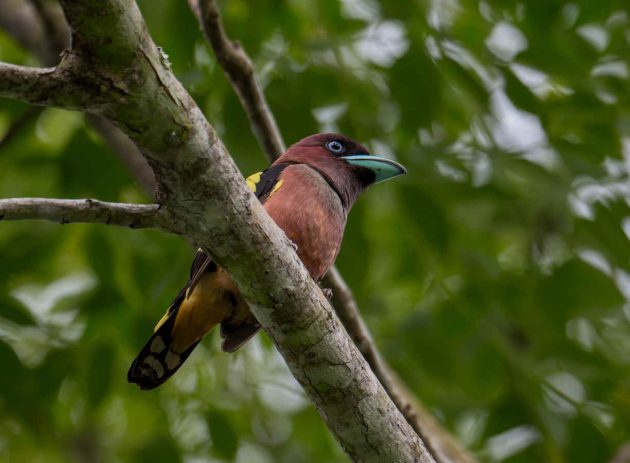
The males (at least in Thailand) have a narrow black band across the upper breast, which the females lack.
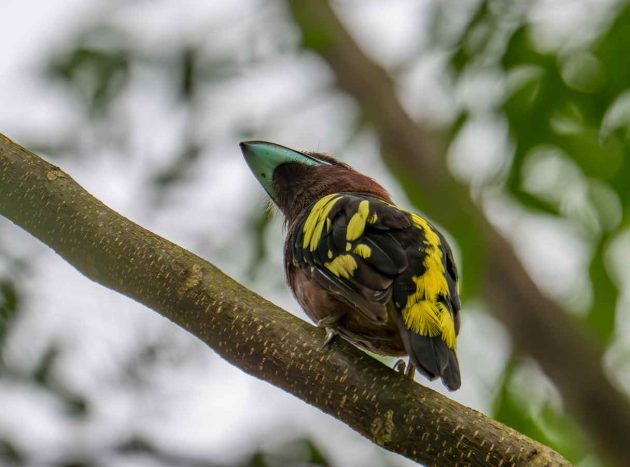
A nice report on a nesting pair of these broadbills, along with good photos, can be found here.
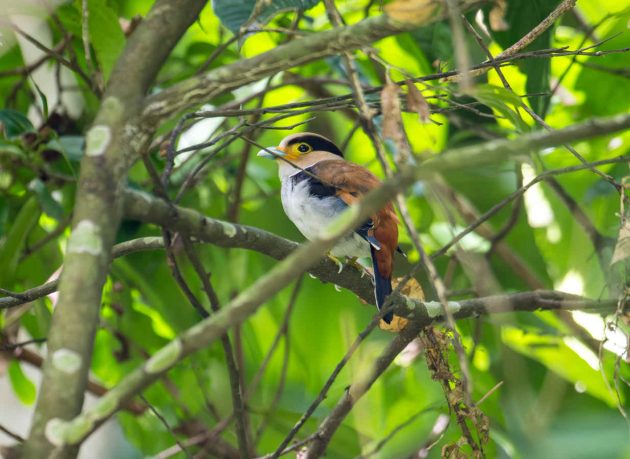
The second broadbill I saw was a Silver-breasted Broadbill.
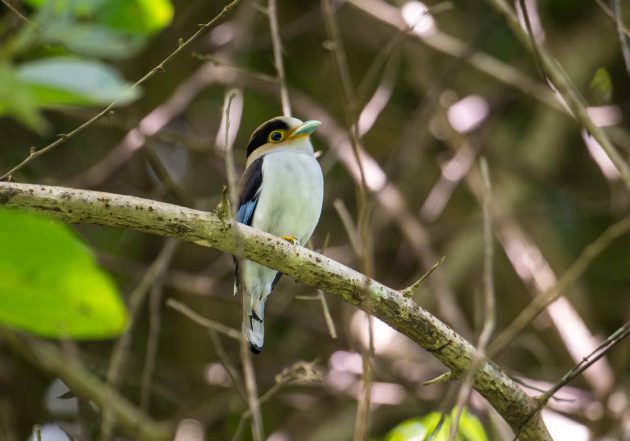
The HBW calls it “one of Southeast Asia’s most iconic forest birds”.
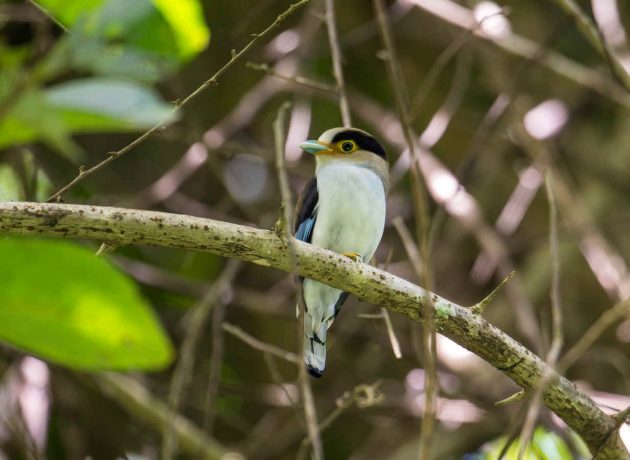
The silky-white line across the breast indicates that this is a female.
No such gender distinctions are available for the Blue-eared Barbet.
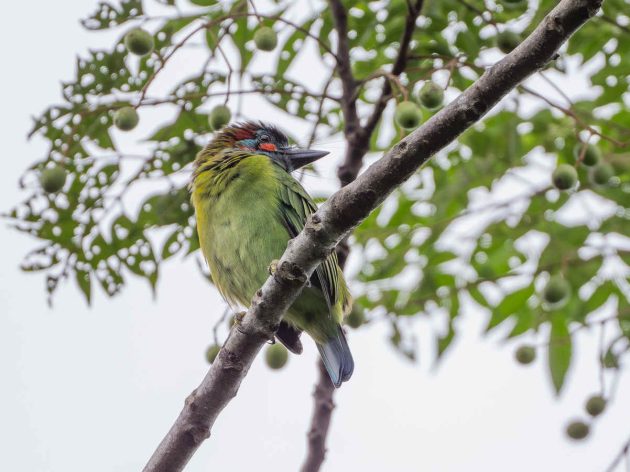
Have you ever had to stop an outdoor conversation because the cicadas were too loud? Birds like this barbet do the same – but only if the bird vocalized in a frequency band completely overlapped by the cicada noise, and the cicada noise saturated the majority of that frequency band (source).
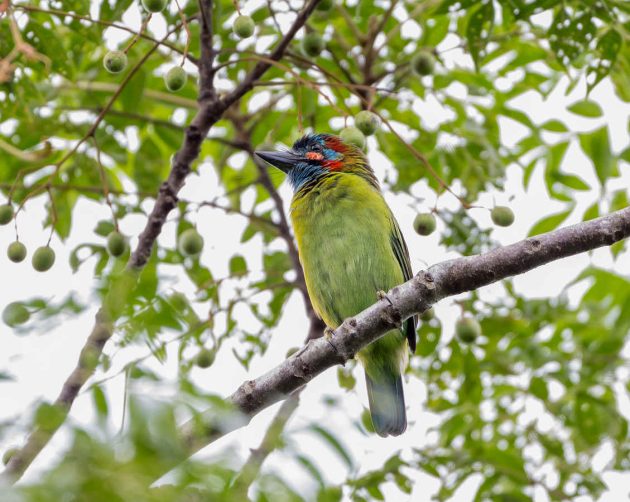
(If you have trouble imagining the cicada scenario, transfer it into a discotheque with very loud music, but please do not take the poor bird along).
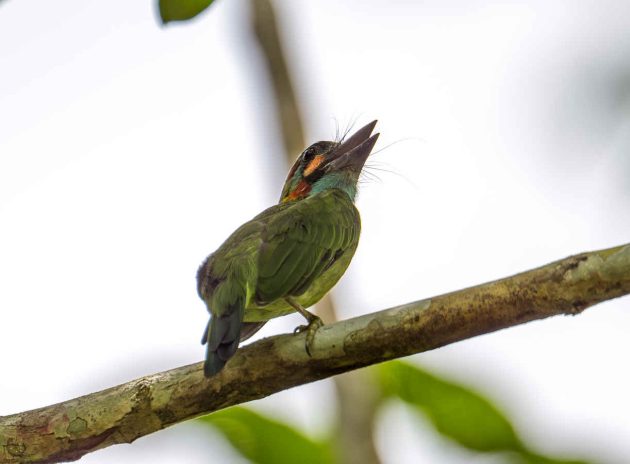
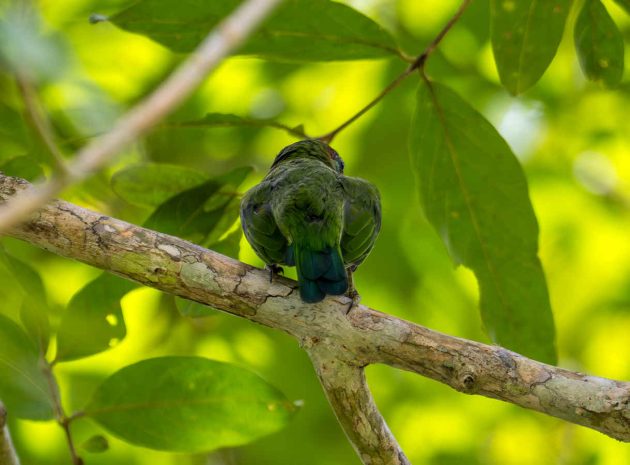
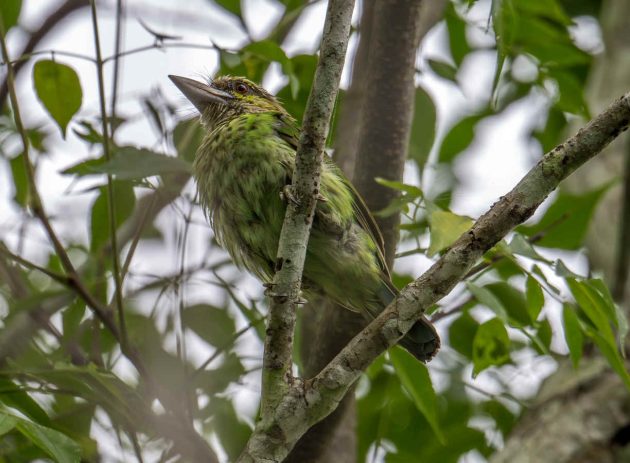
If you dislike the idea of a barbet with a blue ear, evolution has provided an alternative: the Green-eared Barbet.
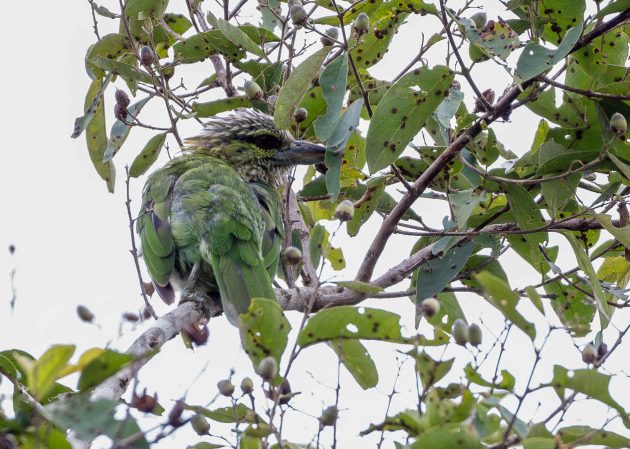
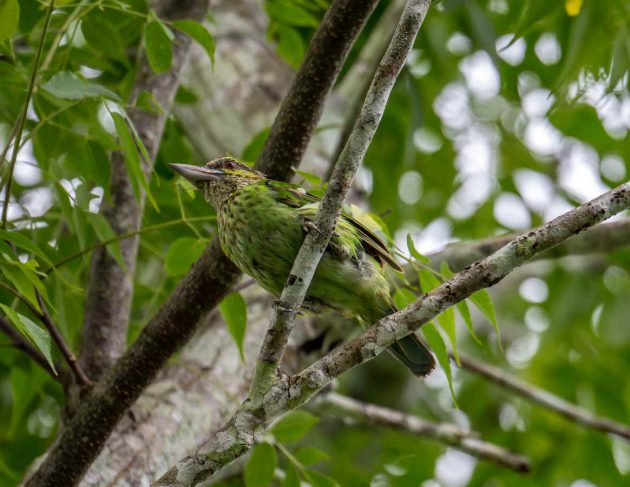
The authors of the HBW entry for the species seem to be a bit frustrated by it: “Seems generally difficult to locate, probably because it favours canopy of evergreen forest, where not easy to detect.” And they are probably not even photographers.
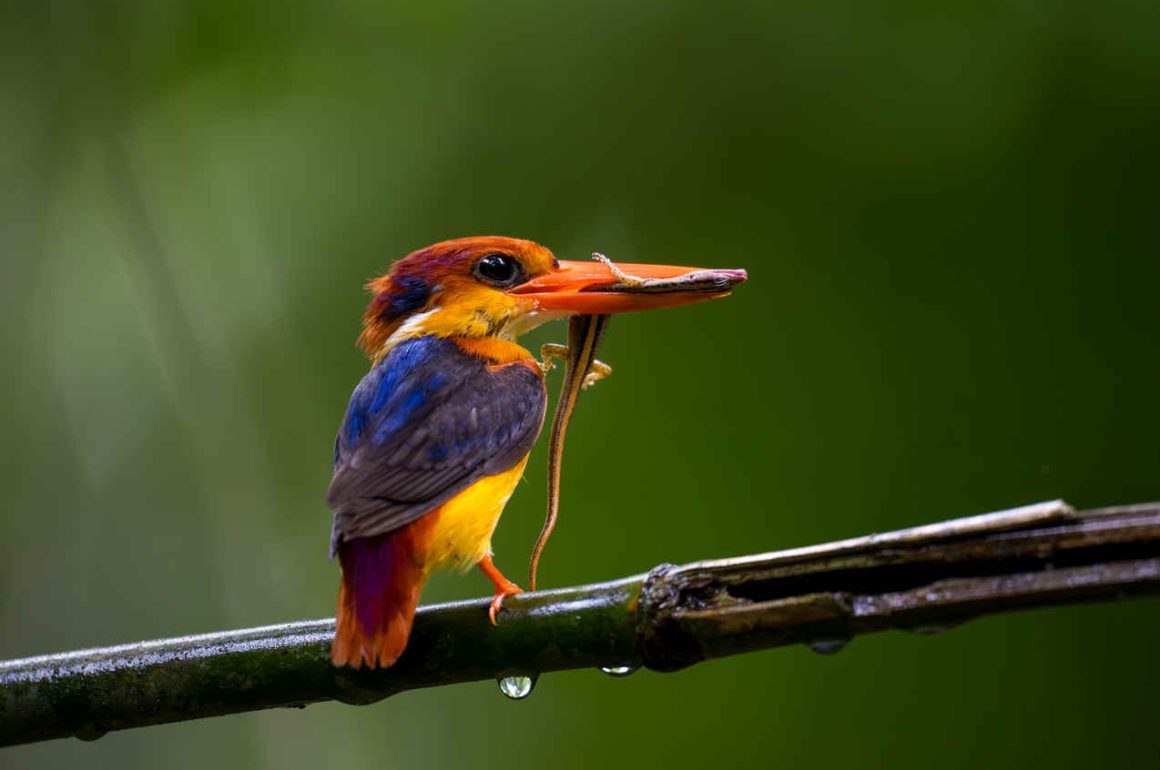
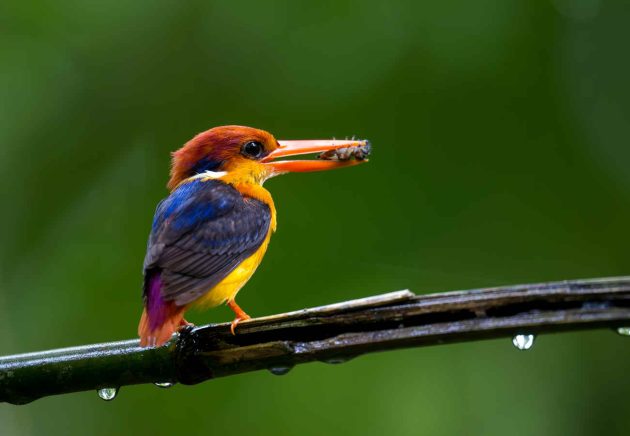
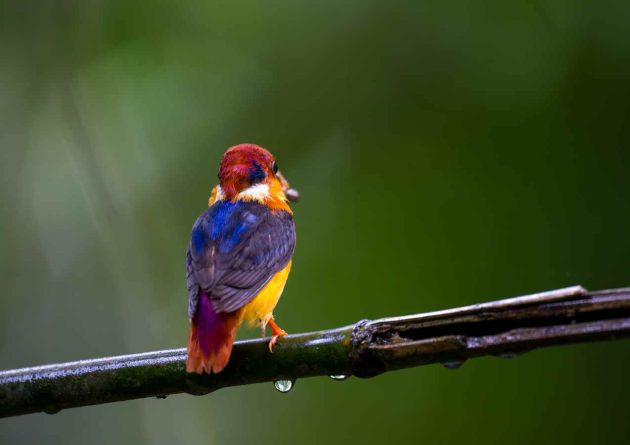
Possibly the most beautiful bird I saw at Kaeng Krachan was a Black-backed Dwarf Kingfisher.
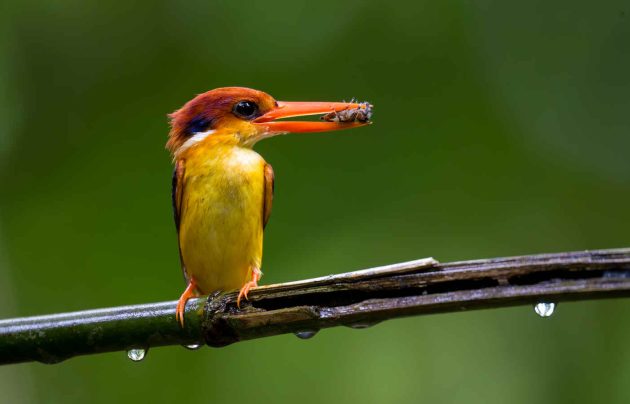
Apparently, somebody had found a burrow of a nesting pair and set up a little hide in front of it. Fortunately, this did not keep the parents from bringing all kinds of interesting little lizards to their (invisible) chicks.
(Unnecessary editorial note: Grammarly always wants me to delete the word “apparently” in sentences such as the above. Presumably, it thinks the word makes me seem weak and indecisive, while I like it exactly for its implication of vagueness and uncertainty. End of unnecessary editorial note).
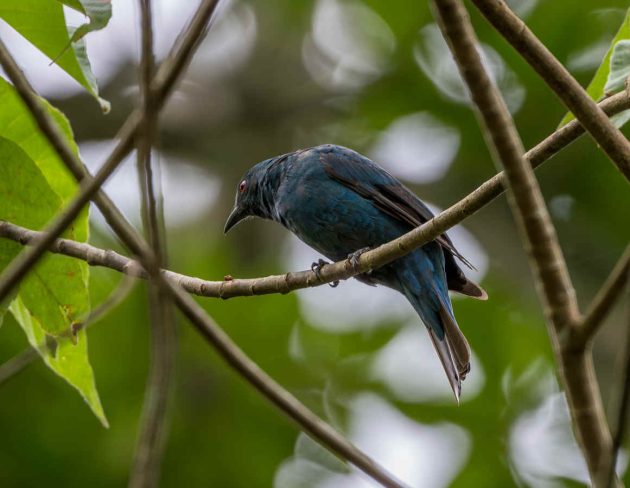
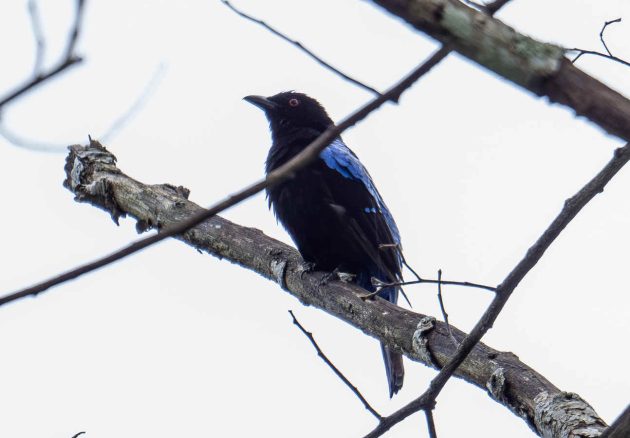
By now, I have seen the Asian Fairy Bluebird in at least four, probably five, different countries, but I still haven’t gotten a satisfying photo of it. Unfortunately, the visit to Kaeng Krachan did not change this.
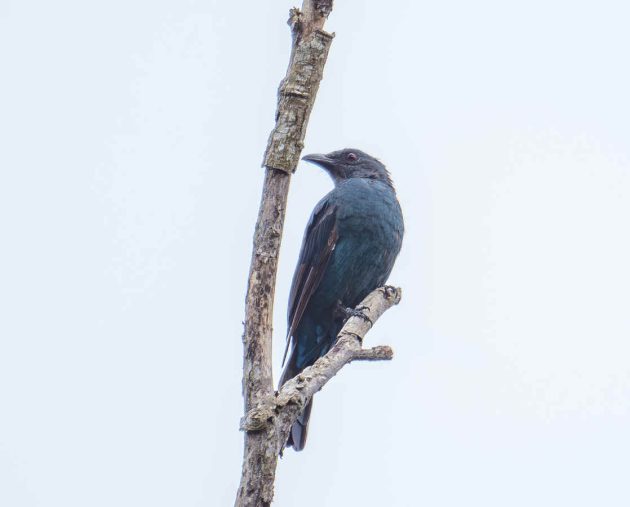
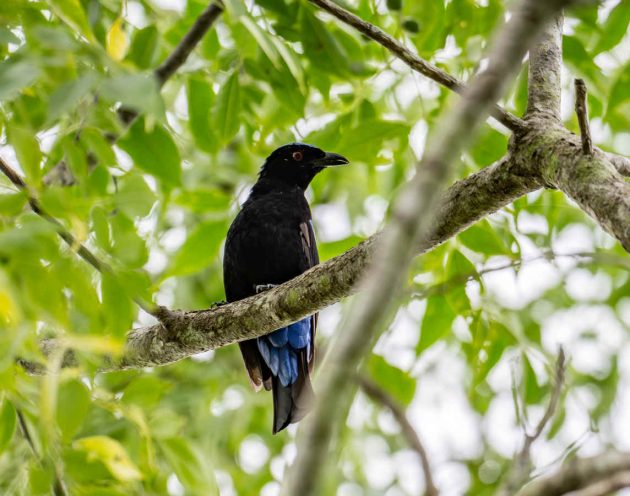
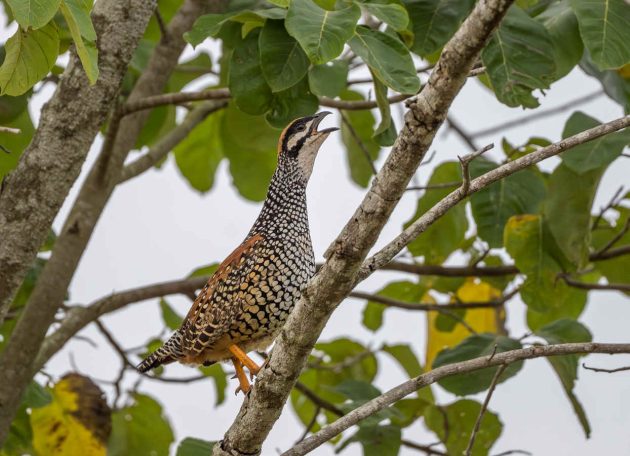
Instead, I somewhat unexpectedly (given the name of the bird) saw a Chinese Francolin …
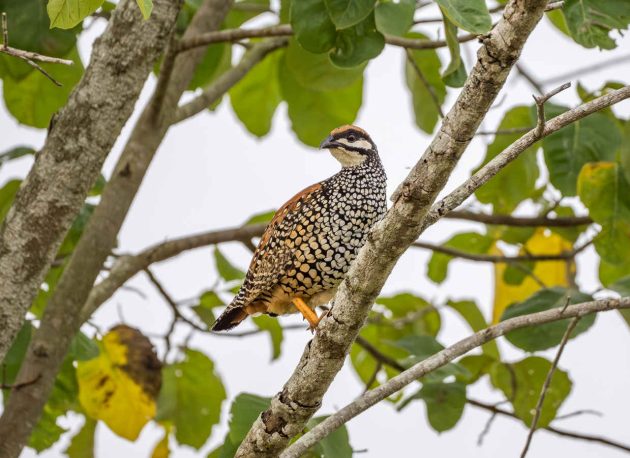
… a rather vocal male calling from a relatively exposed tree perch, indicating its expert knowledge of acoustics.
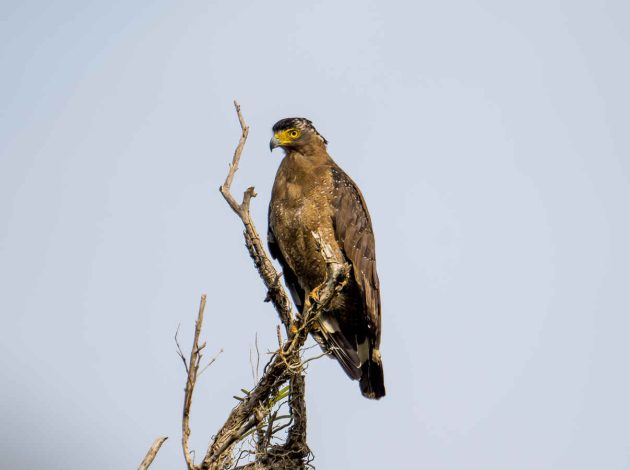
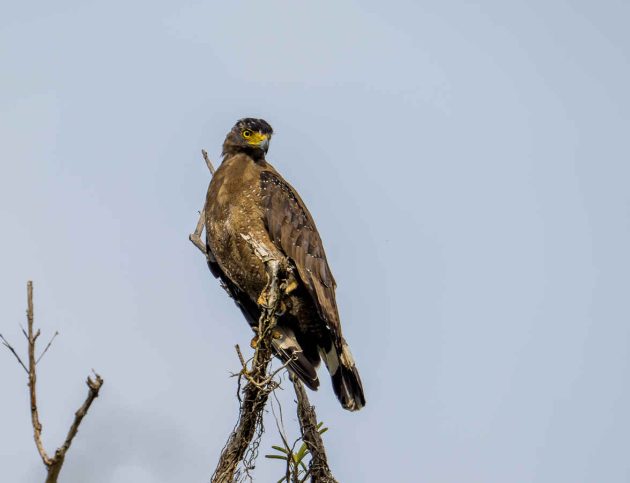
I did not see many raptors at Kaeng Krachan. One I did see was a Crested Serpent-eagle, a very common raptor in large parts of Southeast Asia as well as China and India.
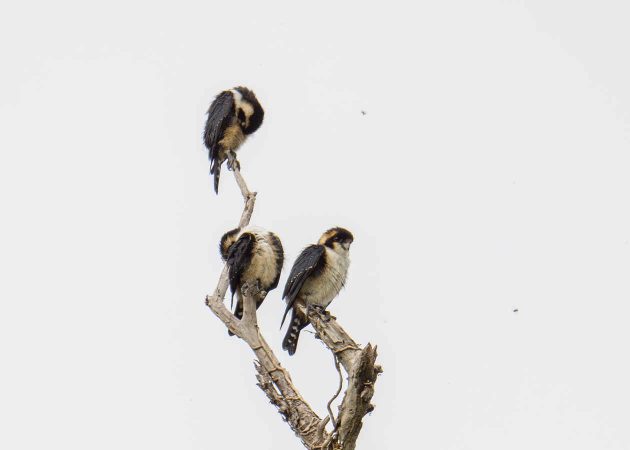
The other was the Black-thighed Falconet, one of the 5 falconets in the well-named genus Microhierax (“small falcon”).
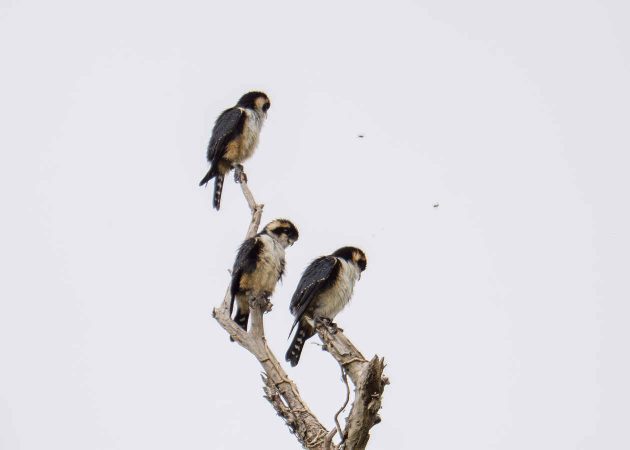
Given that I saw the species in this little group of three birds, I found this part of the HBW species profile interesting: “Feeds communally, with up to four falconets eating from single prey item; communal hunting and feeding may be important for young to learn which insects are suitable prey.” So, maybe I watched a kindergarten there?
In cuteness, these little raptors are matched by the Barred Buttonquails, which seem to be fairly common in the farmland close to the national park.
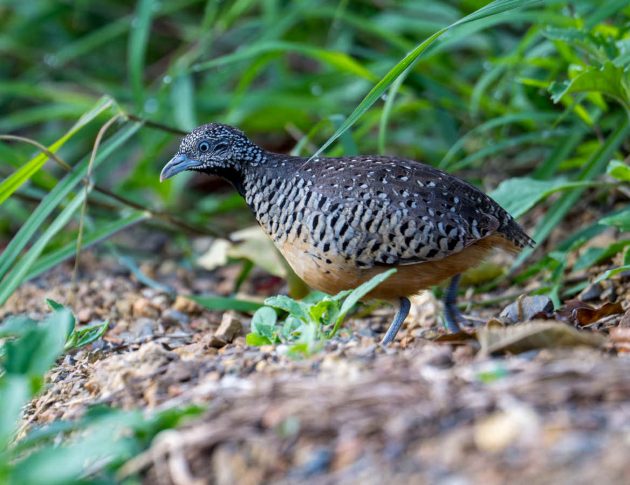
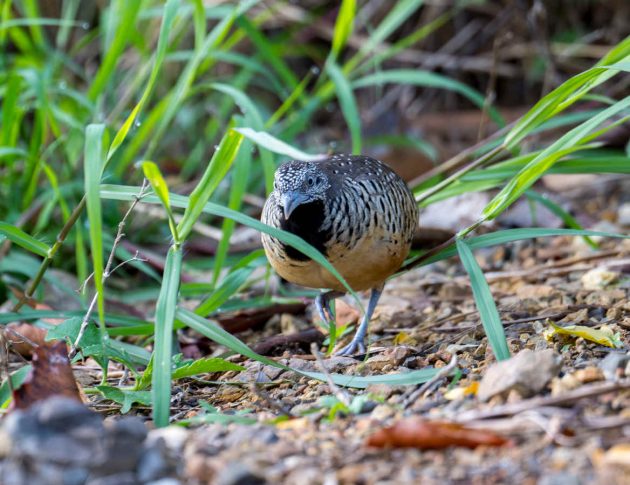
They share their habitat with the Indochinese Bushlark.
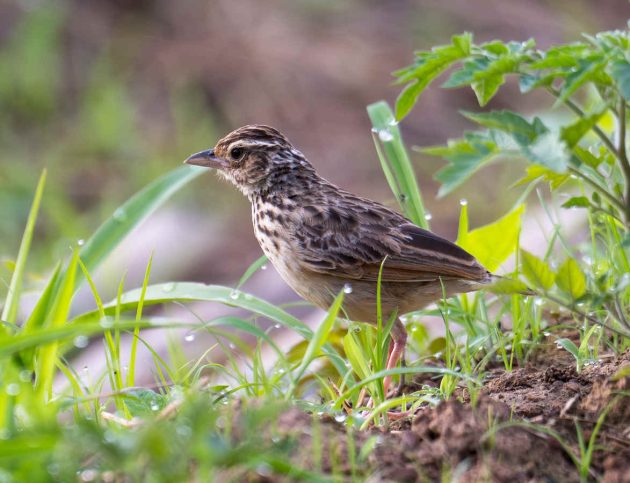
Its scientific name Plocealauda erythrocephala indicates that the bird is red-headed (erythros red; kephalos -headed) – false advertising, if you ask me.
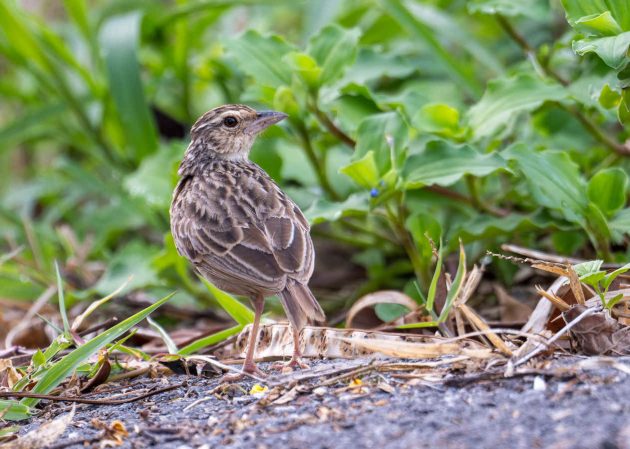
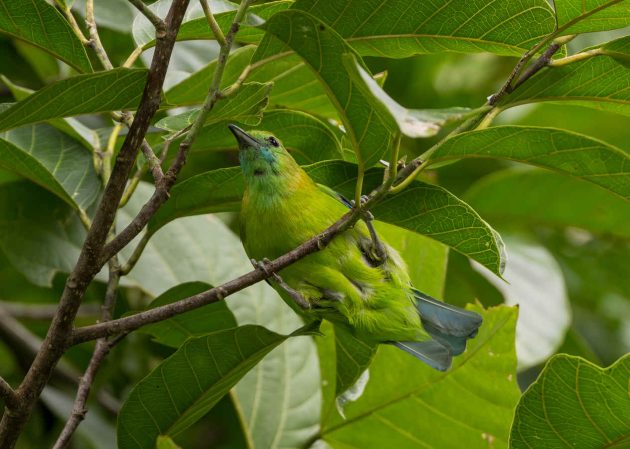
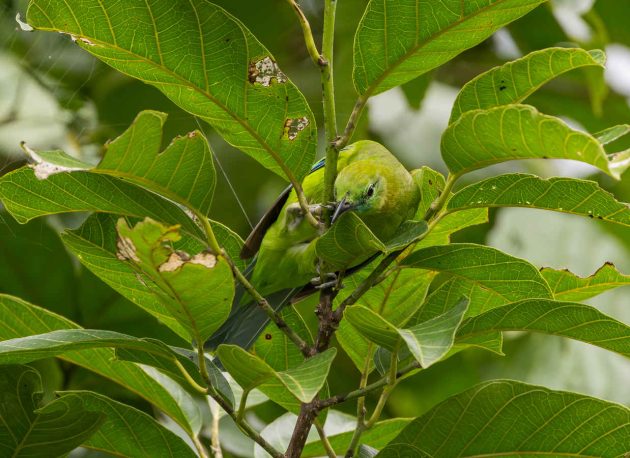
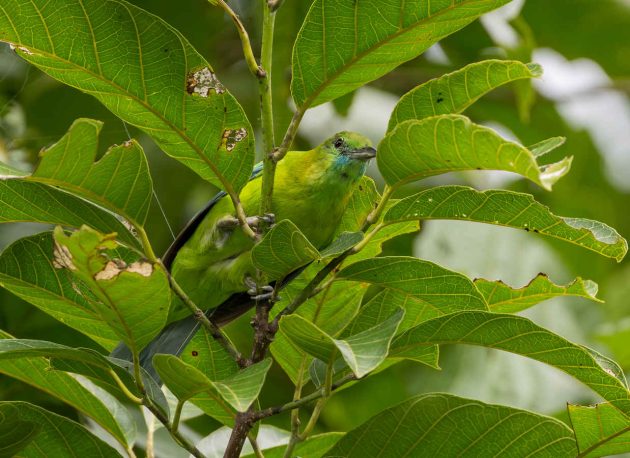
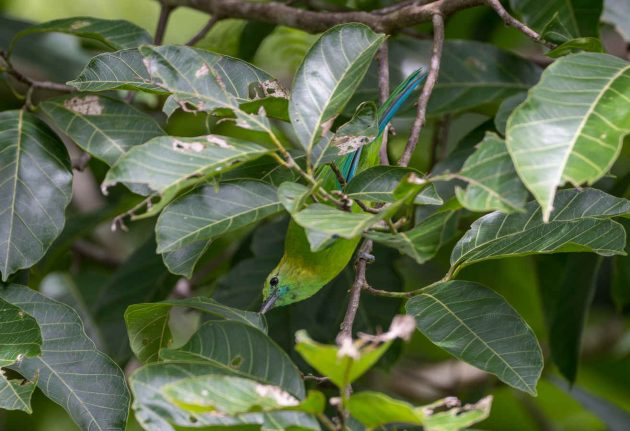
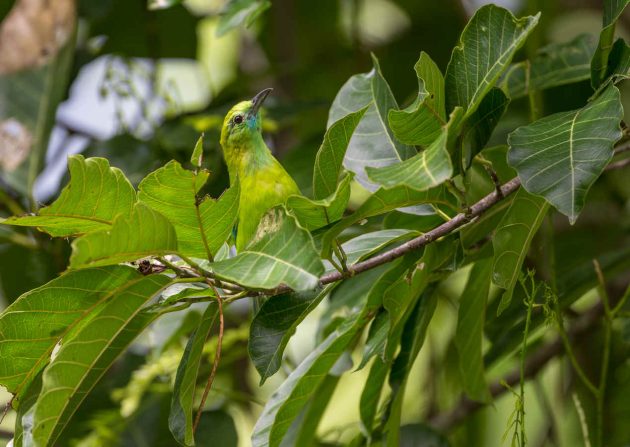
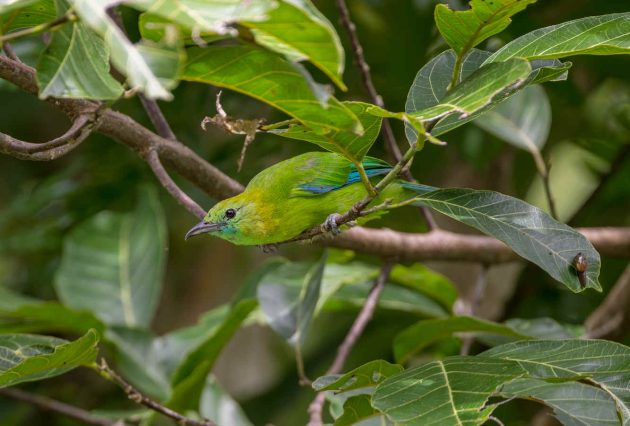
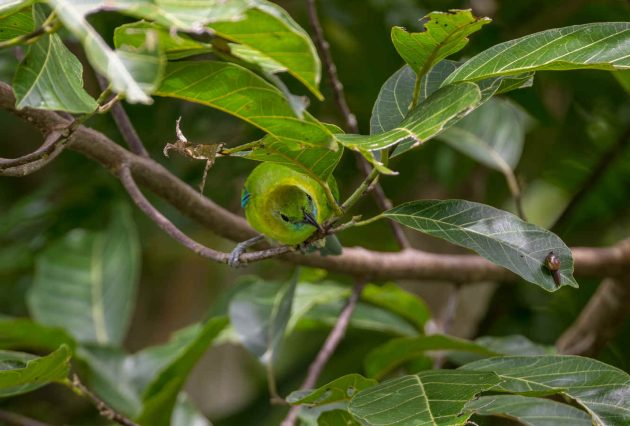
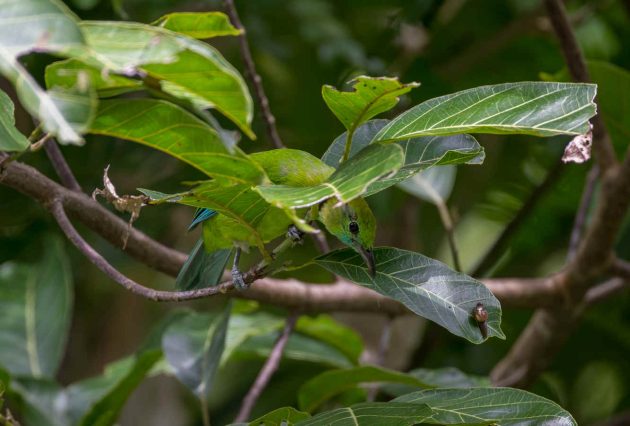
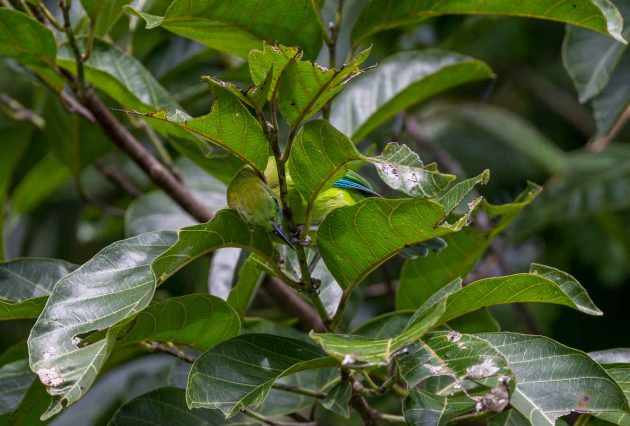
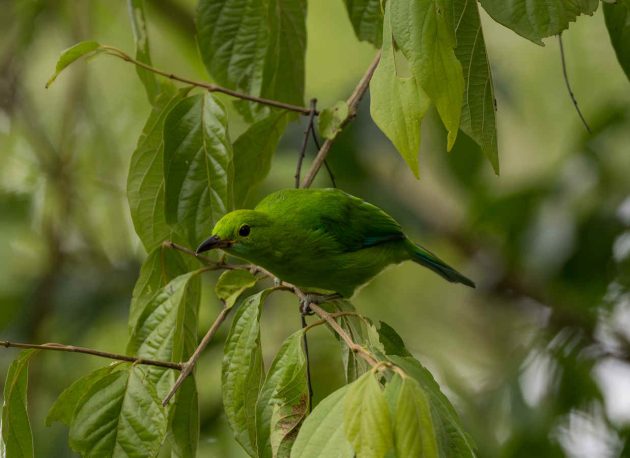
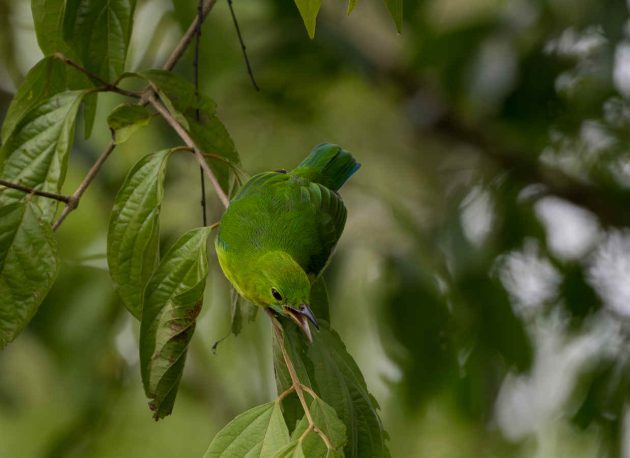
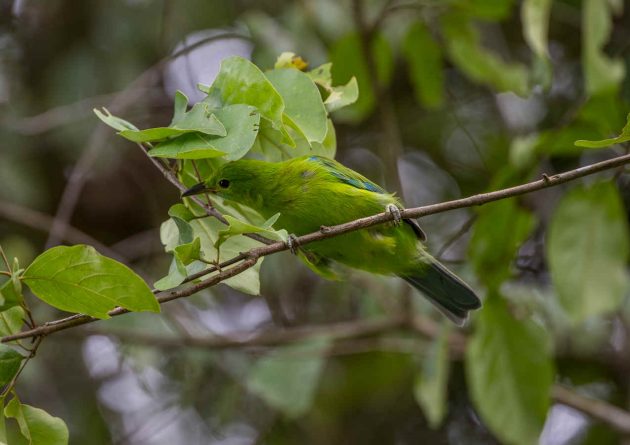
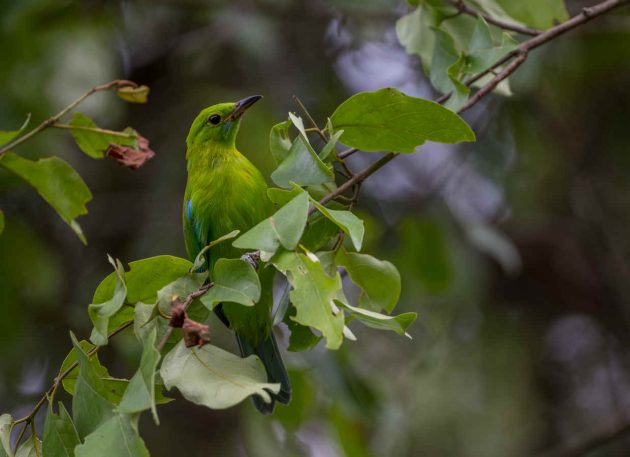
While these bushlarks can be difficult to see unless moving, they are no match for the camouflage of the Blue-winged Leafbird. “BE THE LEAF!”
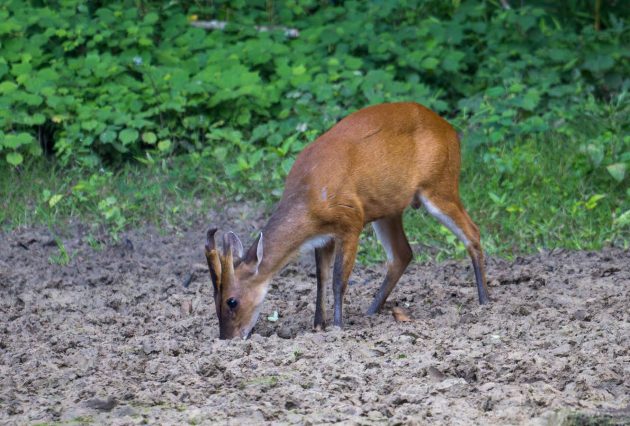
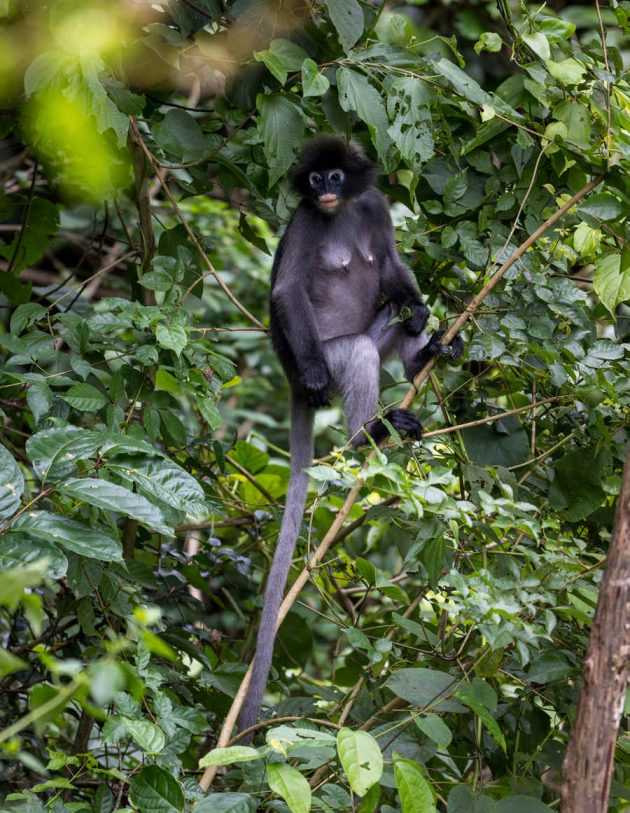
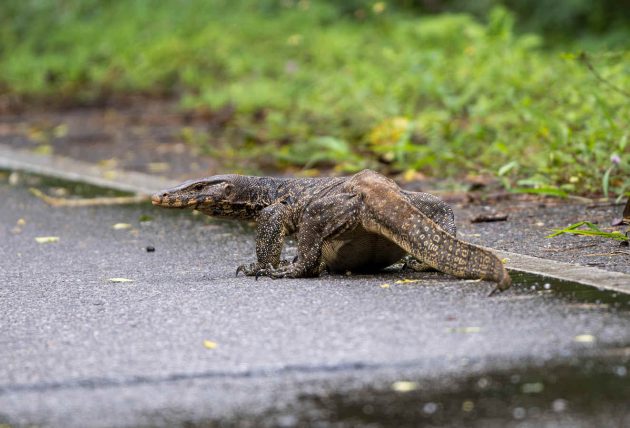
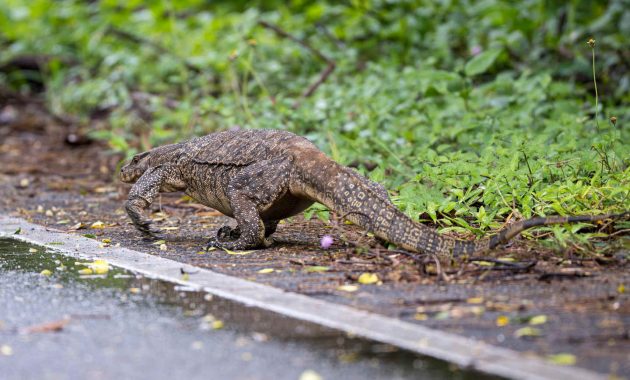
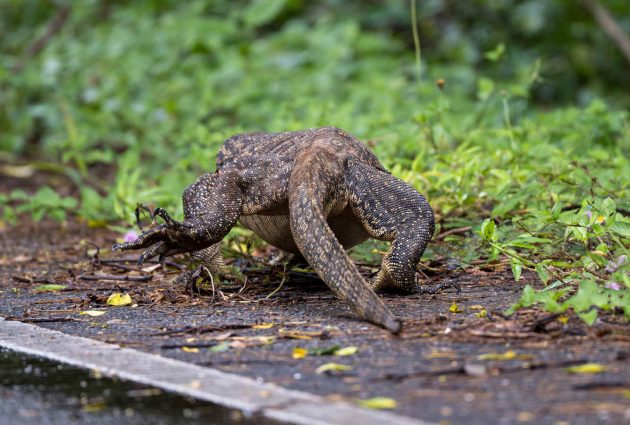
In the “Other” section of this post, there are a few reptiles and mammals – one looking ok, the other extremely ugly (hint: not the deer but the one looking like Charles Manson in a Halloween costume). Part two covering Kaeng Krachan NP will have much nicer photos – of butterflies.




Leave a Comment