

Over the past year, we’ve profiled about 60 bird guides from 35+ countries. Each of them brings unique knowledge of their own local conditions.
Now, while continuing the series as before, we add another format. In this one, instead of one guide answering many questions, many guides answer just one. Hopefully, by putting the same question to many professional birders from around the world, we will see patterns emerge. This time, we asked
Ask a Bird Guide: What makes birding in your region unique compared to elsewhere?
Hungary: a variety of habitats within a week. Costa Rica: many high-elevation specialties.
Gabor Orban, Hungary/Costa Rica
Tanzania has a variety of birding hot spots with different bird species. Furaha Amiri Mbilinyi, Tanzania
Endemics & restricted species — Souss Massa is the only reliable place for Northern Bald Ibis.
Mohamed Bargache, Morocco
Uganda: extremely high diversity, Albertine Rift endemics, easy access, good infrastructure.
Magada Haily Miriam, Uganda
Infinite possibilities of connecting with guardians of territories — magical birding often in humble places. Asherita Viajera, Colombia
Huge elevation range in Sikkim/Arunachal, yielding hundreds of species in one tour.
Dibyendu Ash, Sikkim, India
China has 1500+ species, many endemics and localized specialties like pheasants and parrotbills. Steven An, China
Cuba has 28–29 endemics, many Caribbean endemics, and >400 species total.
Ernesto Reyes Mouriño and Tania Piñeiro, Cuba
A wide variety of different habitats that are easily accessible. Tom Tarrant, Australia
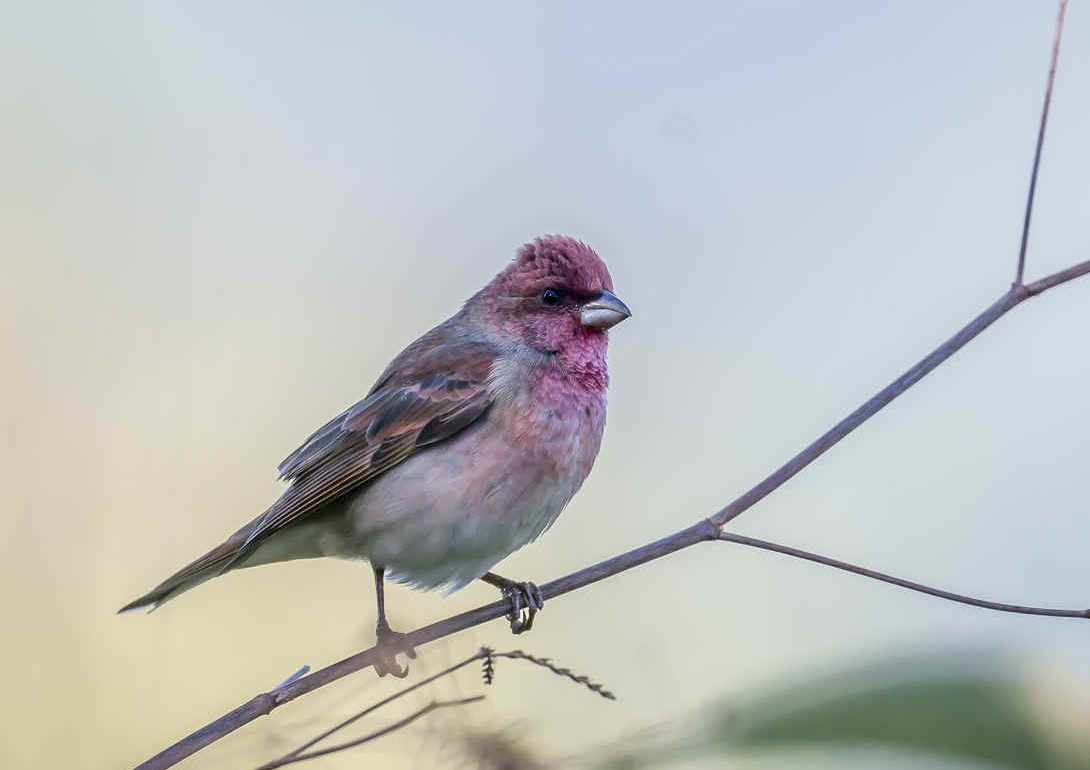
The landscape in northeastern Germany was shaped by the last Ice Age. Hundreds of lakes, large forests (e.g., the Schorfheide), small, glacial pools, streams, the Havel and Oder rivers (border river with Poland), small moors, and dry, sandy areas offer a wide variety of habitats for birdlife. More eastern bird species are found here, such as the Lesser Spotted Eagle (Clanga pomarina), River Warbler (Locustella fluviatilis), Common Rosefinch (Carpodacus erythrinus), and Thrush Nightingale (Luscinia luscinia). Migrants and winter visitors from Scandinavia and Russia, such as the Rough-legged Buzzard (Buteo lagopus), Bohemian Waxwing (Bombycilla garrulus), northern race of White-throated Dipper (Cinclus cinclus cinclus), and Taiga Bean Goose (Anser fabalis), can also be found here. That’s what makes this region of Germany so unique. For me personally, being able to live here offers a high quality of life. Rolf Nessing, Germany
We not only have high endemicity of not just bird species, but people can also enjoy endemic floral species, insects, moths and butterflies, reptiles, and amphibians. We also have a wide range of migratory shorebirds that people can come to see. Irene Dy, Philippines
More endangered migratory waterbirds than in other flyways. Even some common ones are in sharp decline, although certain endangered ones are more than the global population estimates due to our practice of counting. Zhang Lin, China
In this magnificent part of Africa, birding is something else; you will see other things other than birds, different cultures, breathtaking landscapes, unique mammals, and you will have a chance of eating local delicacies. Issac Kilusu, Tanzania
Hey, birding in Goa is something truly special! Thanks to some unique geological features, this little state—only about 3,700 square kilometers—packs in an incredible variety of habitats like seashores, mangroves, freshwater wetlands, estuaries, gardens, orchards, paddy fields, rocky grasslands, tabletop plateaus, deciduous and evergreen forests, and even Western Ghats forests reaching up to 1,500 meters. That diversity gives us around 500 bird species, which is about 40% of India’s birds and roughly 5% of all the world’s birds! Plus, Goa’s a world-famous beach destination with top-notch hotels from every major chain, all within a quick 90-minute drive to prime birding spots. That means you can easily spot 100–150 species in just 3 days, 150–200 in 5 days, or 200–250 in 8 days. It’s a birder’s paradise! Savio Fonseca, Goa, India
Birding in the Kibale region is truly special due to the incredible mix of Albertine Rift endemics, lowland and montane species, and the chance to observe birds in a pristine tropical forest setting. It’s not uncommon to hear chimpanzees vocalizing as you scan for pittas and broadbills — the combination of rich primate life and exceptional avifauna makes this area uniquely immersive. Ronald Twinomugisha, Uganda
Birding experiences differ across different regions and countries. In East Africa, where we run most of our birding tours, we are very fortunate to have some factors that play in our favour. One major aspect is the weather and seasonality, whereby we have the same average temperatures across the year (with no extremely cold winters or extremely hot summers). This means that you can travel to our region any time of the year and be able to enjoy regular day lengths and comfortable weather. Being a famous safari destination, the roads and tourism infrastructure are great, and this makes birding here much more comfortable. The species diversity of our region is also one of the highest globally. East Africa has close to 1,500 species of birds. This huge diversity is made possible by the varying habitats that we enjoy here, and therefore, a tour to any part of East Africa is guaranteed to score many species. Washington Wachira, Kenya
Nyungwe offers a truly immersive forest birding experience. The combination of high biodiversity, endemism, and breathtaking scenery makes it unique. You can spot forest species in the morning and then drive just a few hours to see wetland and savannah birds elsewhere in Rwanda. Few countries offer such variety within such a short distance. Jacques Habimana, Rwanda
The possibility of reaching amazing places with public transportation or a bike. Usually, I meet my clients on site, and that means they have to arrange transportation themselves. With sustainability in mind, I guide them towards the metro and the buses, and though it might be daunting at first, they are usually delighted to see how easy it is to travel around Helsinki without a car! Samuel Bloch, Finland
Birding in my region is unique because of its incredible habitat diversity — from wetlands and grasslands to dense forests, alpine zones, and the stark mountain landscapes of the Himalayas. This variety supports a remarkable mix of resident and migratory species, offering birders the chance to experience rich biodiversity within a relatively compact area. Rofikul Islam, India
Our bird guides highlighted that what makes birding in their regions unique is primarily the diversity and richness of habitats and species. Key points include a wide range of ecosystems—from forests, wetlands, and grasslands to mountains and coastal areas—which support both endemic and migratory birds. Many regions feature high species diversity, rare or restricted-range species, and opportunities to encounter other wildlife.
Photo: Common Rosefinch







Leave a Comment