

We asked several of our writers the same questions. Here are the answers to the one above.
—
Wood Thrush (Hylocichla mustelina) for its beauty. I also like the Great-tailed (Quiscalus mexicanus) or Greater Antillean Grackles (Q. niger) because that means I am in Mexico or the Caribbean (Peter Hinow).
—
My favorite is the Siberian Rubythroat for the variety of its song and its sometimes jazzy appeal. Though I generally think jazz is overrated – music for people who want to demonstrate their IQ via their music taste (Kai Pflug).
—
Difficult one. The conventional answer would be Nightingale, the bird that is generally regarded as the best songster in Europe, and one which I delight in listening to. However, to hear the wonderfully melodic notes of the first Blackbird of the year singing on a February evening is a moving experience. European warblers are generally unexciting to look at, unlike their North American counterparts, but several have very beautiful songs. Orphean Warbler is particularly pleasing to the ear, but I love the song of the Blackcap, which I can hear in my own garden. I also rate Skylark and Woodlark very highly. It’s never just the song – it’s also the location, the weather, the season.
—
Blackbird by The Beatles (Peter Penning).
—
One of the most beautiful bird songs here is that of the Common Nightingale. I am also captivated by the song of the Marsh Warbler or the quiet song of the Red-backed Shrike; both imitate the songs of other bird species and even bring back songs and calls from their African wintering grounds to their breeding areas. Fascinating for me (Rolf Nessing).
—
The melancholy flute of a Mistle Thrush in a quiet forest at sunset is hard to beat (Jochen Roeder)
—
I am duty bound to say, Common Nightingale. The track Nightingales and Bombers would be on my Desert Island Discs list. I’m not talking the song by Manfred Mann either, but a BBC recording from WWII that features a singing Nightingale when squadrons of Allied bomber aircraft fly over. It’s a haunting piece on so many levels. War is just crazy and the loss of life on all sides horrific; the fact that so many aircrew would have never returned from that mission and the devastation the bombers would have caused in Mannheim is brought to life by that beautiful, melancholic song. Listen to it here: https://www.youtube.com/watch?v=q2AhKTOF1S0 (John Hague).
—
For me, it is difficult to beat a tropical dawn chorus. I cannot always tell who is singing what, but the combined performance is better than any alarm clock, although it starts much earlier. So, in other words, I do not have a clue (Fitzroy Rampersand).
—
I like the sound of Bobwhites and American Crows that imitate dogs/coyotes barking (Mary Alice Hayward).
—
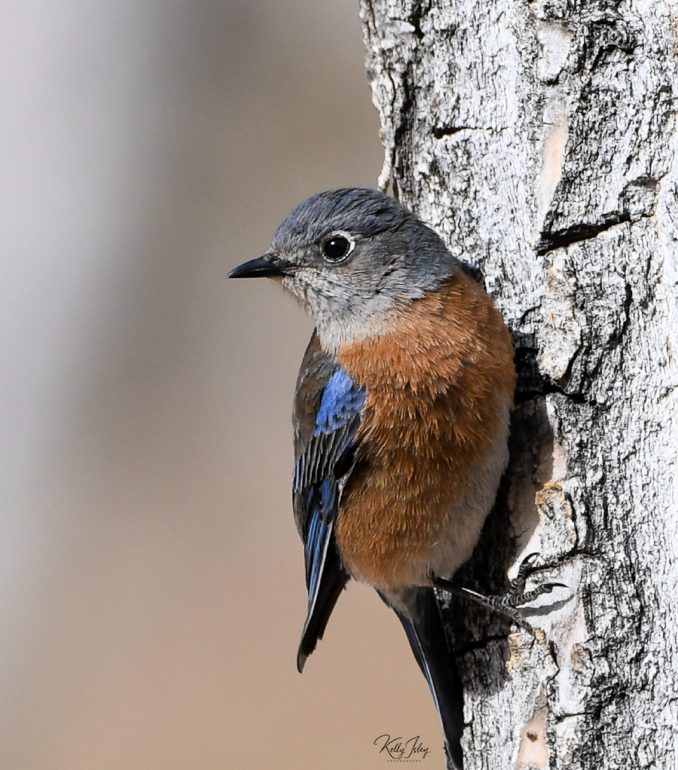
It’s hard to choose just one. The cheerful song of a Western Bluebird always makes me smile, while the rich, varied song of the Crissal Thrasher and the soft, high-pitched chatter of a Bushtit are favorites for very different reasons (Kelly Isley).
—
Isn’t every bird’s song the most beautiful? (Rhea Alaudra)
Cover Photo: Western Bluebird (Kelly Isley)









Leave a Comment