

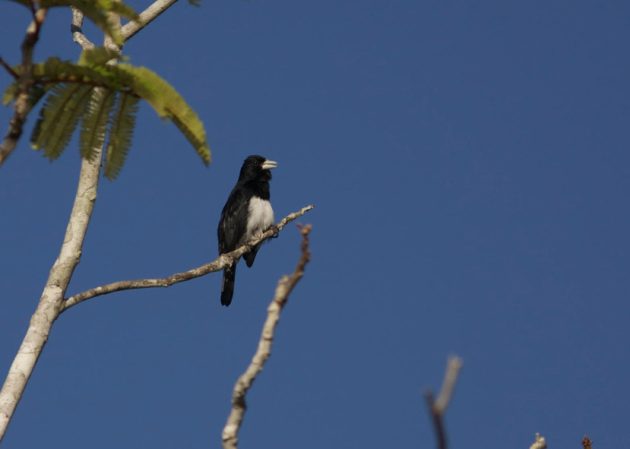
Which bird species do you think is the biggest attraction to visitors of your lodge (please only name one species)?
Cone-billed Tanager (Conothraupis mesoleuca). Photo by Jhonata Araujo
What is the name of your lodge, and since when has your lodge been operating?
Jardim da Amazônia Lodge. The lodge has welcomed guests since 1997, while the Zanchet family has preserved the forested property since 1986.
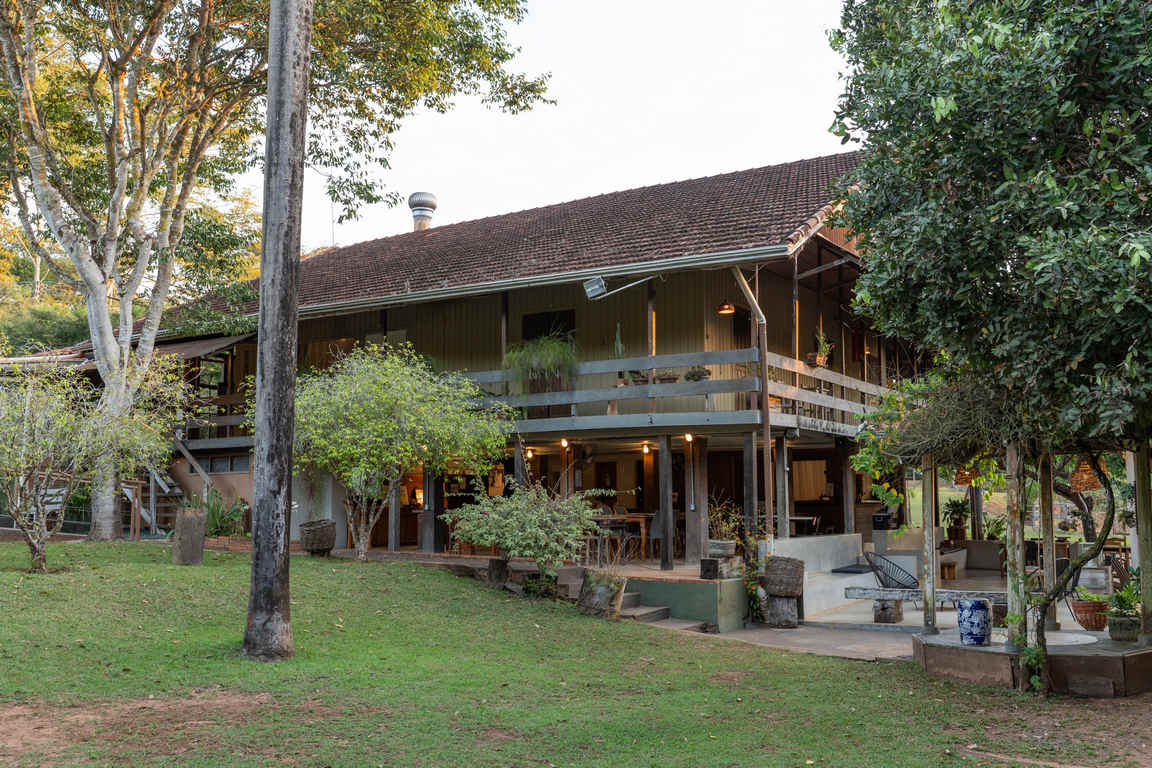
Photo: Kiko Silva
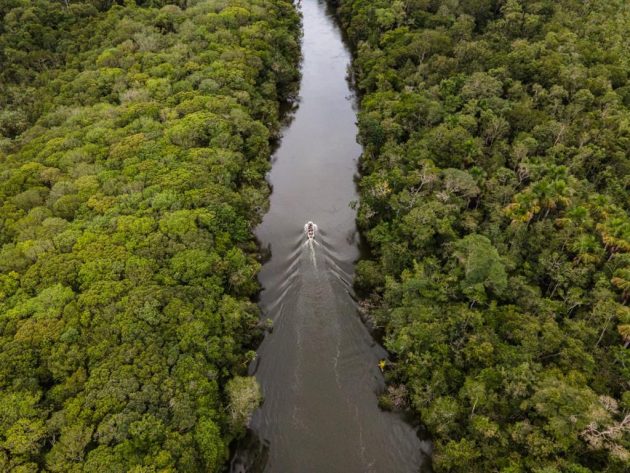
Photo: João Vilela
How best to travel to your lodge?
The main gateway is Marechal Rondon International Airport (CGB) in Cuiabá. The lodge is 290 km from the airport, about 3.5 to 4 hours by road, depending on conditions. Guests should collect a rental car or arrange a private driver; the lodge does not operate its own transfer from Cuiabá. Sinop Airport (OPS) is an alternative, 340 km away. We recommend travelling in daylight, downloading offline maps, and confirming the route with our team before departure.
What kind of services – except for accommodation and food – does your lodge offer to visiting birders?
We offer complete birdwatching itineraries of 3, 4, or 5 days, with guided outings organized around the stay. Activities include dawn excursions, boat navigation on the Rio Claro and to Cone-billed Tanager Lagoon, forest trails, and observation points around the lodge. Programs are adjusted to weather, season, recent records, and guests’ species or photography interests. Local guiding is in Portuguese; an English-speaking specialist guide can be arranged separately through partner guides.
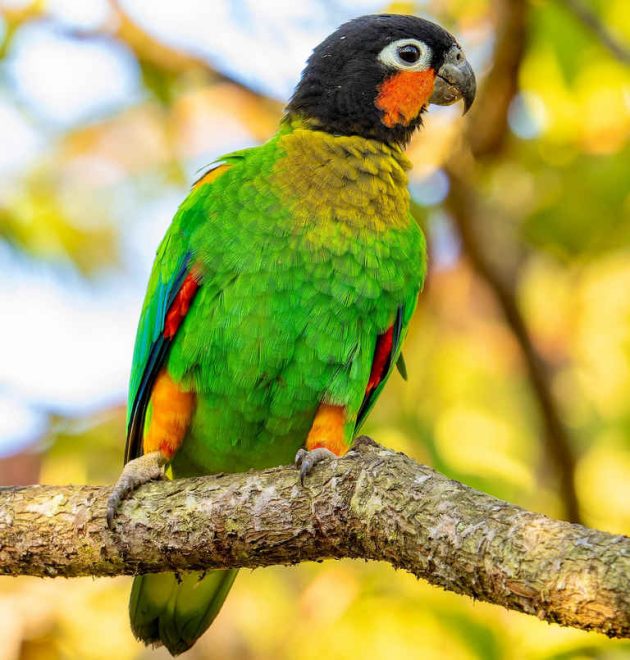
Orange-cheeked Parrot (Pyrilia barrabandi), photo by Cibele Manfredini
What makes your lodge special?
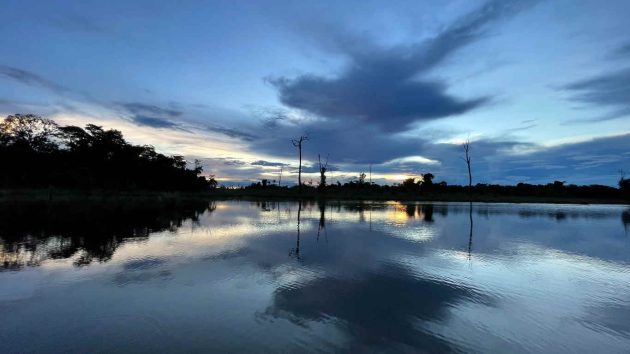
Answer: Jardim da Amazônia lies where Amazon and Cerrado habitats meet. Riparian forest, lagoons, forest edges, buriti palm habitat, and the Rio Claro create exceptional variety in a compact area. More than 590 bird species have been recorded here. The lodge is an eBird hotspot (L968651) within the Rio Claro KBA landscape, and it combines small-scale family hospitality, full-board stays, local knowledge, and an active research and conservation base.
What are the 10 – 20 most interesting birds that your lodge offers good chances to see?
Answer: Among the species we most often target and highlight are
- Cone-billed Tanager (Conothraupis mesoleuca)
- Orange-cheeked Parrot (Pyrilia barrabandi)
- Amazonian Umbrellabird (Cephalopterus ornatus)
- Black-girdled Barbet (Capito dayi)
- Flamecrowned Manakin (Heterocercus linteatus)
- Tooth-billed Wren (Odontorchilus cinereus)
- White-throated Toucan (Ramphastos tucanus)
- Dot-eared Coquette (Lophornis gouldii)
- Point-tailed Palmcreeper (Berlepschia rikeri)
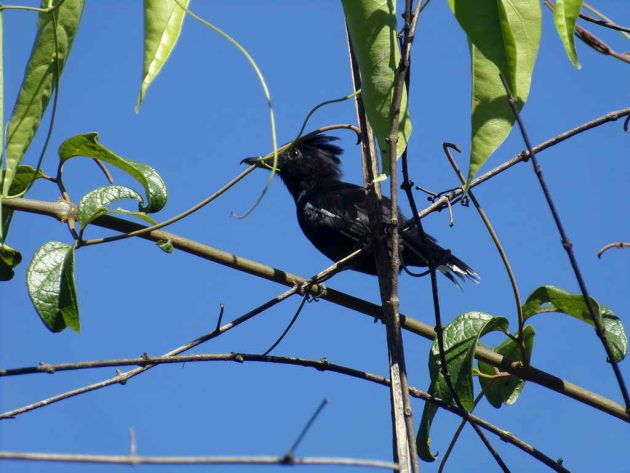
- Glossy Antshrike (Sakesphorus luctuosus)
- Blue-and-yellow Macaw (Ara ararauna)
- Razor-billed Curassow (Mitu tuberosum)
- Screaming Piha (Lipaugus vociferans)
- Cryptic Forest-Falcon (Micrastur mintoni)
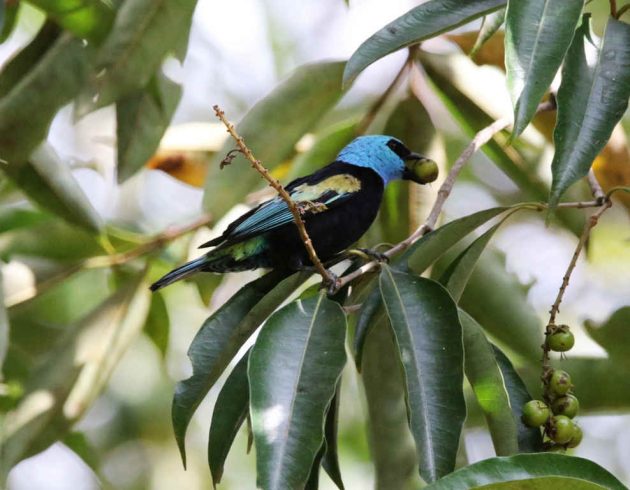
- Blue-necked Tanager (Stilpnia cyanicollis).
Sightings vary with season, weather, habitat, and observation effort, so no individual species can be guaranteed.
Blue-necked Tanager (Tangara cyanicollis), photo by Vincent Kurt Lo
What is the best time to visit your lodge, and why?
Birdwatching is possible year-round. May to September is usually the easiest period for field logistics because trails are firmer and there is generally less rain. From October to April, the landscape is greener, rainfall is more frequent, and water levels change, creating a different experience. On any visit, early morning and late afternoon are usually the most productive times of day.
Is your lodge involved in conservation efforts? If yes, please describe them.
Answer: Yes. The Zanchet family has preserved forest in the Rio Claro Valley since 1986, and hospitality has helped sustain that work since 1997. The lodge supports bird and habitat protection initiatives, including SAVE Brasil, maintains an eBird hotspot with more than 590 recorded species, and operates a Research Station that supports field teams and partnerships focused on birds, primates, jaguars, and wildlife monitoring. Citizen science, camera traps, solar energy, local sourcing, and low-impact tourism are part of our day-to-day conservation approach.
Glossy Antshrike (Sakesphorus luctuosus), photo by Jhonata Araujo
What other suggestions can you give to birders interested in visiting your lodge?
We recommend staying at least three nights and sharing target species, photography interests, and preferred pace with us in advance. Bring binoculars, a camera, lightweight rain gear, neutral quick-drying clothing, closed hiking shoes, insect repellent, and sun protection. Download Merlin Bird ID and offline maps before travelling.
Be ready for early starts, move quietly, avoid flash and artificial sounds, and follow the guide’s instructions. The lodge provides required trail gaiters and boat safety equipment.
Do you have activities for non-birders? If so, please describe.
Yes. Non-birders can enjoy guided primate observation, ecological trails and short walks, boat safaris on the Rio Claro, general wildlife observation, the spring-fed natural pool, quiet time in the forest, and regional full-board gastronomy. These activities also work well for couples and small groups with mixed interests.
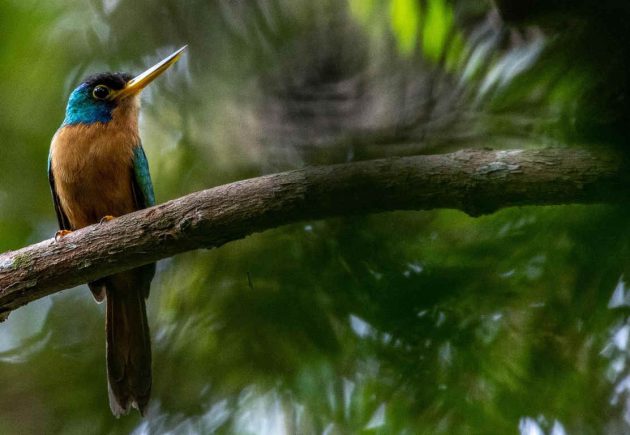
Motmot photo by Acervo Jardim da Amazônia
If any reader of 10,000 Birds is interested in staying at your lodge, how can they best contact you?
The easiest options are
- WhatsApp at +55 65 4042-0595
- email at atendimento@jardimdaamazonia.com
- website at https://jardimdaamazonia.com/.
Please share your dates, length of stay, group size, and birding or photography interests so we can suggest the most suitable itinerary.
Is there anything else you would like to share with the readers of 10,000 Birds?
Many visitors first come for the Cone-billed Tanager, but the wider experience is the meeting of Amazon and Cerrado habitats, the Rio Claro, and a forest cared for by three generations of one family. We hope every visit deepens respect for this landscape. Wildlife is free-ranging, and sightings are never guaranteed, so each outing follows the conditions and rhythm of the forest.
Cover Photo by Raquel Zanchet









Leave a Comment