
Several of the 10,000 Birds regular writers are working or have worked as professional bird guides. How did they get there? Here are their stories, in their own words.
David Tomlinson
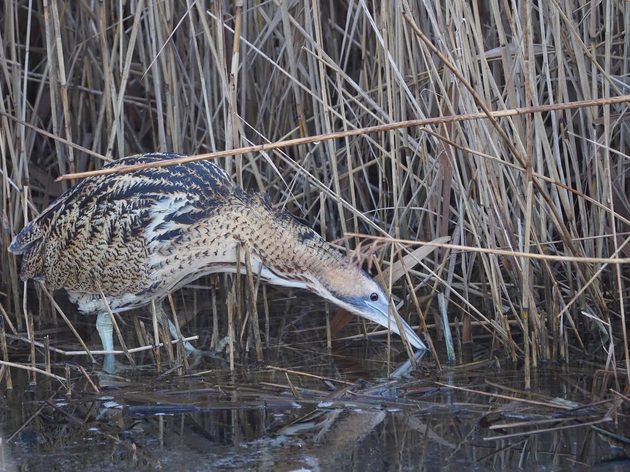
I doubt if there has ever been a school careers advisor who has suggested that becoming a bird guide is a realistic job prospect. Certainly nobody ever suggested it to me. Looking back, my guiding career started when I was in my late teens and helping as a voluntary warden at the RSPB’s Minsmere bird reserve in Suffolk. In those days, everyone visiting the reserve had to buy a pre-booked permit, while there was also the option of paying more and having a guided tour. For some reason the professional wardens disliked guiding visitors, which is why they asked me to do so. I found it satisfying, as I enjoyed showing birds to people. There were three species that everyone wanted to see – Marsh Harrier (then very rare in England), Bittern, and Bearded Tit – and I usually managed to find all three.
My bird-guiding career might well have ended there, but a few years later the magazine I was working on asked me to write a feature about the wildlife courses being offered by a charity called the Field Studies Council (FSC). In those days, wildlife holidays were still a novelty. The FSC’s main business was teaching field studies to students, but during the summer holidays it decided to expand into adult holidays, or courses. I stayed at Nettlecombe Court in Somerset, close to Exmoor, and spent a couple of days on two different courses (birds and wildflowers). I enjoyed the experience, and got on well with the centre’s director. “Why not come back next year and lead a birdwatching course?” he suggested.
I did just that, and continued to run the same course, named Birds of High Summer (it always took place in late July or early August), for more than 30 years. After a few years, I suggested to the FSC that it might be fun to run similar holidays in Europe. The first I led was to eastern France in winter, with the target birds White-tailed Eagles and Cranes, both of which were then almost impossible to see here in the UK. Having established that there was a demand for such holidays, I led trips to Gibraltar and southern Spain, and even a more adventurous visit to the Gambia.
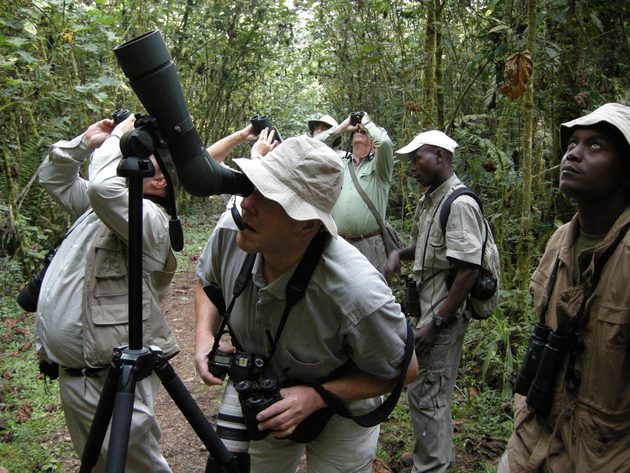
It was at this stage that I decided that it made sense to organise the trips myself, so I started my own company, Gourmet Birds. The name was always a bit of a joke, but I did give emphasis to eating well, though at some destinations that was tricky. The holidays were all-inclusive, with wine included at dinner.
I started Gourmet Birds while I still had a full-time job, but when I went freelance in 1991 I was able to expand and run more holidays. For the next 30 years I organised and led trips all over the world, from Kenya to Kazakhstan, Argentina to Australia. I never advertised, so I depended entirely on repeat custom and recommendations. During that period I showed my clients more than 3,000 species of birds.
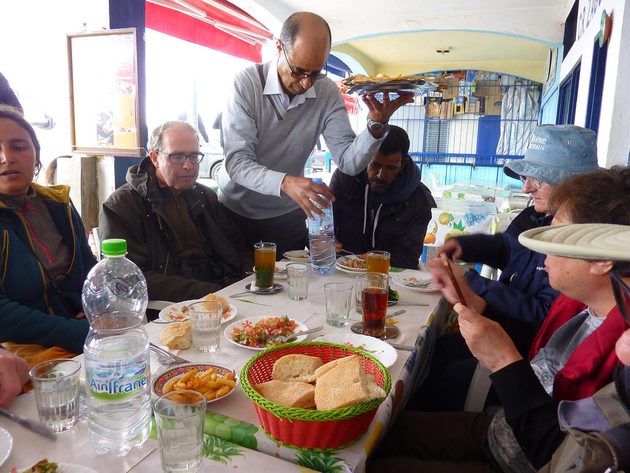
However, much as I enjoyed running the company and planning and leading tours, I never wanted to make it my full-time career. I am, and have always been, a writer on wildlife and country subjects. I ran my holidays as professionally as I could, but bird guiding never became my full-time occupation. I had the luxury of taking away people I knew and liked. One golden rule was that the clients must always come first, and the emphasis was on everyone seeing the birds. I used to hate it when I found a good bird but failed to show it to anyone. I also believed that serious photography was incompatible with guiding.
For full-time guides who are constantly away from home, it’s a challenging life, occasionally leading to alcoholism, and more often to broken marriages. In case you are wondering, my wife came on many of my holidays (she was popular with my clients) and we are still married today. Do I regret not becoming a full-time guide? No, though I do look with a touch of envy at some of the wonderful birding destinations visited by bird-tour companies today. I never did get to see a Torrent Duck or a Cock of the Rock, but I had a great time.
Faraaz Abdool
The journey begins many years ago: I grew up in southern Trinidad in the 1980s in what has ultimately become a crowded patch of suburbia. Back then, it was recovering from decades of sugar cane cultivation – gentle, undulating hills of eight-foot-tall grasses; the soil was for the most part pale brown, almost to the point of being yellow. Much of my youth was spent observing the natural world, not so much a result of boredom, but mostly because I was genuinely interested in it. I loved dinosaurs, and for me, birds seemed to be the closest thing to those extinct creatures. Science would later prove the similarities were no accident.
In those years, I had no binoculars or camera, but I pored over books that featured wild animals. Those books were mostly about North American and European wildlife, with some exotics from Amazonia and Africa thrown in. Here, I learned about Barn Owls, Blue Jays, and Roadrunners. Well, I knew a Barn Owl when I saw one, but we had Blue-grey Tanagers and Tropical Mockingbirds, which I ended up force-fitting into Blue Jay and Roadrunner, respectively. As a child, I’d be able to distinguish Turkey Vultures from soaring Black Vultures. I’d occasionally see hawks in the kettles; I distinctly remember the paleness of Short-tailed Hawks. I was struck by the beauty of that bird, but it never was close enough to see properly. A Ferruginous Pygmy-Owl on my fencepost that appeared and disappeared without me noticing its coming or going, a Blue-black Grassquit that would incessantly leap into the sky in the grasses next door, and a strident, dual-note whistle that took me several decades to decode together form a trio of bird-based core childhood memories.
But then there was school. Somehow, I was good at it – well, disproportionately so. While one of my teachers claimed that I had a natural knack for writing, my parents were keen to unlock my mathematical potential. It only took one exceptional teacher to get me to understand that mathematics was a language, and voila, the field became relatively straightforward for me after that. Notably, I stopped doing biology at the tender age of 13, heeding advice that biology is really “only if you want to be a doctor”. From that point onwards, I drifted further away from anything animal-related.
My immersion into the world of machines continued into tertiary level; I found myself studying for a degree in electrical and computer engineering in the mid 2000s. After a year, I wanted to switch degrees, but there weren’t many options. To do a strictly mathematics degree? I decided to tough it out and see what I’d be able to salvage afterwards. For my final year at the university, the faculty introduced a pair of courses: “The Science of Music” and “Acoustics”. I was an immediate sign-up for both. Some readers would know by now that I’m also a hobbyist musician, so it was really a no-brainer.
One of the options for my thesis was within these courses, and I was investigating opportunities to study how sound could be used to track marine mammals – but I was coerced (to put it mildly) into doing a project that was more “industry relevant”. The word “industry” referred to, of course, the petrochemical industry. Oil was big in Trinidad in the 1900s and lifted a couple of generations well out of poverty, and so was seen as the saviour. The thought of it made me balk, but I caved anyway, and hated every second.
When I graduated from university, I got a job working in the same university as a laboratory demonstrator. I was again coerced into getting a “real job” within the petrochemical industry – which I did. If I hated every second of my degree, well, I must have hated every millisecond of working as an engineer. Every weekend I’d try to get as far away from my place of employment as possible. Both in the physical and non-physical sense. Every Sunday at noon, the sense of dread would return, like a cold fog that drifts in under a shut door and grabs you by the ankles. Monday morning is next.
But in those moments, in the fairly remote corners of Trinidad, I began to see again. It started with white sand which gave way to the glorious, gorgeous Caribbean Sea, and eventually found its way to verdant hills and all which dwelled within. I was gifted a small bridge camera, and sought to identify some of the creatures which I had photographed. I had long dreamed of being a professional wildlife photographer after growing up with National Geographic Magazines, but I understood that it was no good to dream. When I began researching some of the animals I was photographing, I came to realise that there were so many people who were actively involved in not only photographing animals, but conserving them, visiting other places to see them, and making their lives around animals. Crucially, I understood that the same animals I would be reading about as a child being endangered were in a much more dire situation thirty years later.
Coming to the realisation that the natural world was being degraded at an unprecedented rate while being employed as an engineer in an extractive industry led me to feel like such a complete hypocrite – I was involved in the exact thing that was dismantling the only thing I truly cared about. And so, I left the field of engineering entirely. Not without severe opposition from the same forces who encouraged me to discard biology, study computing and engineering. But I pushed through. I didn’t know what exactly I was going to do, but I was already a birder by that point, and was already featured on a couple of major international platforms (BBC, Yahoo!). So I figured I’d give it a shot.
I tried using my photography to change minds, focusing on the beauty of wild places and creatures – but there was little effect. I then began blogging which, strangely, came naturally. Still, I was in my infancy. What I came to realise at that point was that the only hope of swaying the minds of authorities and decision-makers lay in economics. I’d have to prove that conservation is economically more valuable than exploitation.
After striking up a relationship with a tour leader who had brought hundreds, if not thousands, of visiting birders to T&T over many decades, he believed in my ability to guide people – and so he referred a couple of American birders to me. It was my first assignment as a guide, and I actually found their review only a few months ago. That was the beginning of a new chapter.
Today, I lead trips in multiple places, see lots of cool modern-day dinosaurs, and speak (both in words and economics) for the conservation of the natural world.
My first review from my very first trip: https://www.faraazabdool.com/
Rolf Nessing
Who is writing this? Rolf Nessing, born in 1959 in East Berlin, active in birdwatching since 1973, a freelance bird guide since 1992, and founder and CEO of Birding Berlin (www.birdingberlin.com) and the travel company www.vogelzug-reisen.de.
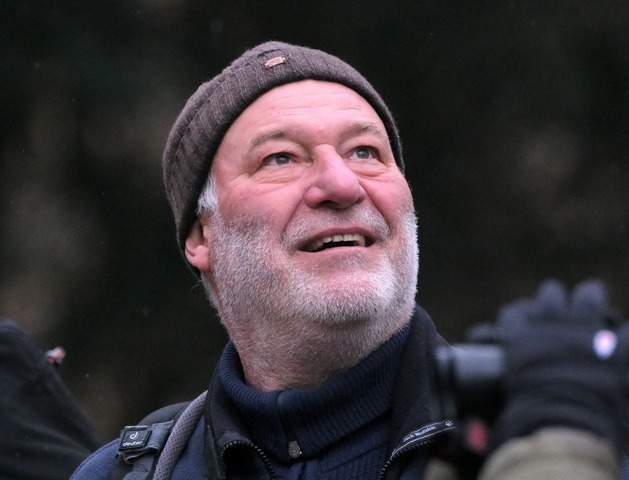
First of all: if YOU feel confident in your ability to show others the local birdlife—as well as plants and other wildlife—then go for it!
However, you must genuinely enjoy being around people. You need to be highly communicative (though that doesn’t mean you have to talk non-stop), and you must be capable of making clear decisions and conveying them to your clients. Here are a few practical tips:
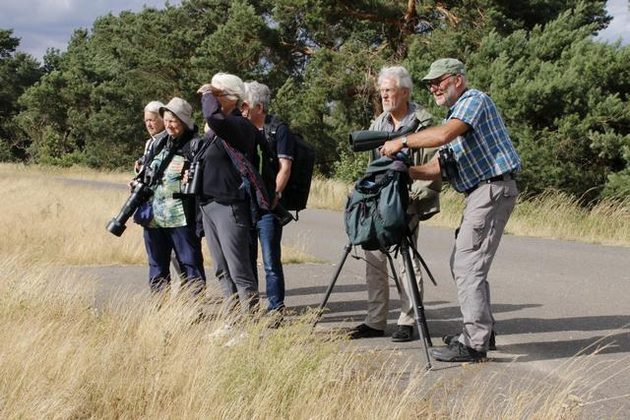
There is a reason they are called “guides” or “tour leaders.” They aren’t just mediators balancing the interests of the group; they set the direction. They possess more knowledge than the others and are experts in their field.
This means setting clear objectives and leaving little room for ambiguity (e.g., “we are departing at 8:30 AM”—not “around 8:30” or “sometime between 8 and 9”).
As a guide, you are the primary communicator for the travel company—your company. At every stop—both before and after—you should provide information. Typical questions that guests will expect answers to include:
Before a stop: How long will we be here? What equipment do we need? What can we expect to see? What should we look out for? Can I stay behind (at the bus)? What’s next on the agenda? How far or how long will we be walking?
After a stop: What did we see? How long until the next destination (or restroom)? What can we expect next?
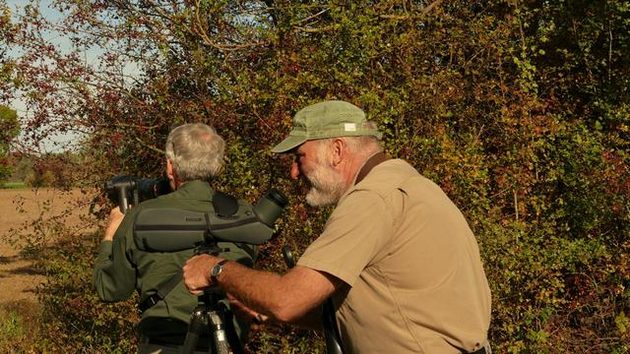
This naturally also applies to every dinner (discussing what was seen, and what the plan is for tomorrow) and every morning departure (where are we heading, why, and where will we stop for lunch?).
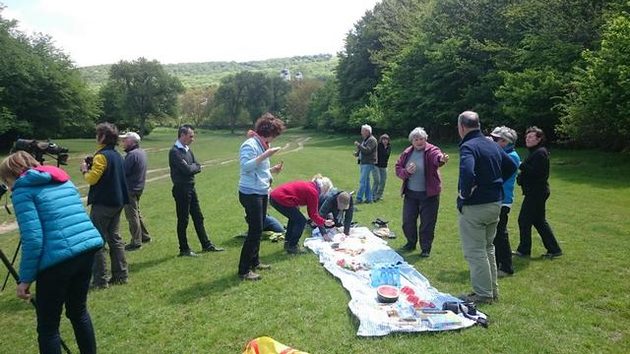
Birdwatching trips should be enjoyable and successful. It is certainly not fun for guests to be told that they happen to be among the “unlucky ones” who are seeing absolutely nothing. For this reason, it is poor practice to say, “We recently saw thousands of [species] here,” when the guests are currently seeing nothing at all. Such comments should be phrased differently, so as not to make the guests feel like they are particularly unlucky. A lack of birds—or the presence of only “boring” species—can actually be a great opportunity to point out interesting landscape-ecological phenomena.
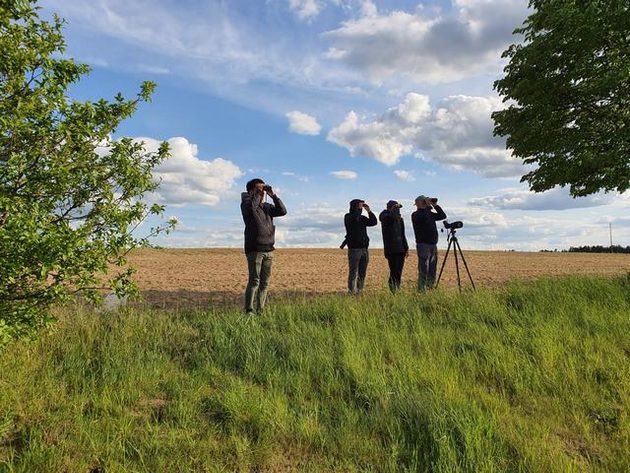
Contextual information: It is a good idea to use the time spent traveling (e.g., by bus) between destinations to share information about the region and its people. Topics such as land use—explaining why the landscape looks the way it does—as well as the underlying geology and vegetation, are usually of great interest. Guests are also generally curious about social and ethnic aspects. When traveling together, use breaks during the excursion to provide such insights—for example, by explaining what is meant by terms like moor, wet meadow, nutrient-rich meadow, hedgerow, orchard, litter meadow, maquis (scrubland), stream, or reservoir. This is also an excellent opportunity for the tour guide to demonstrate their expertise!
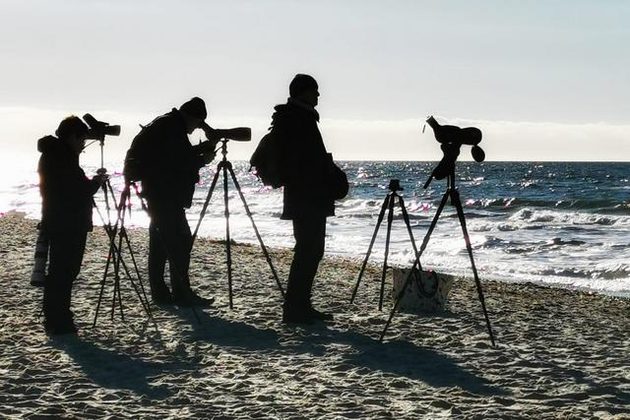
Too often, “secondary species” are not observed thoroughly because of the assumption that “there will be plenty more chances to see them later”—only for those opportunities never to materialize. This is frustrating for guests.
Daily itineraries should not simply consist of a string of locations; rather, they must account for daily activity patterns (including the position of the sun—crucial for photographers—as well as roosting flights, morning activity peaks, etc.). It is best to head purposefully to high-quality sites; wandering around without a clear plan is poor practice.
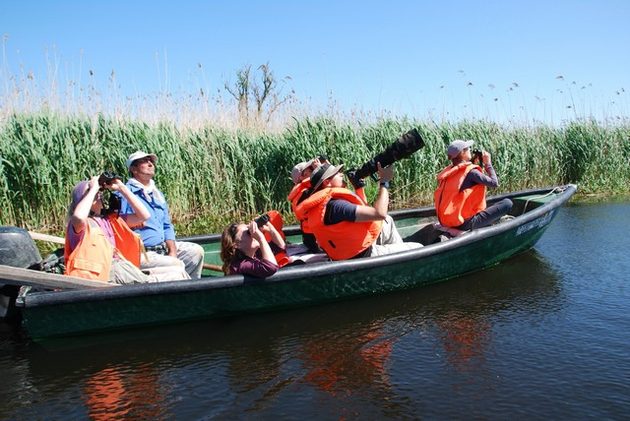
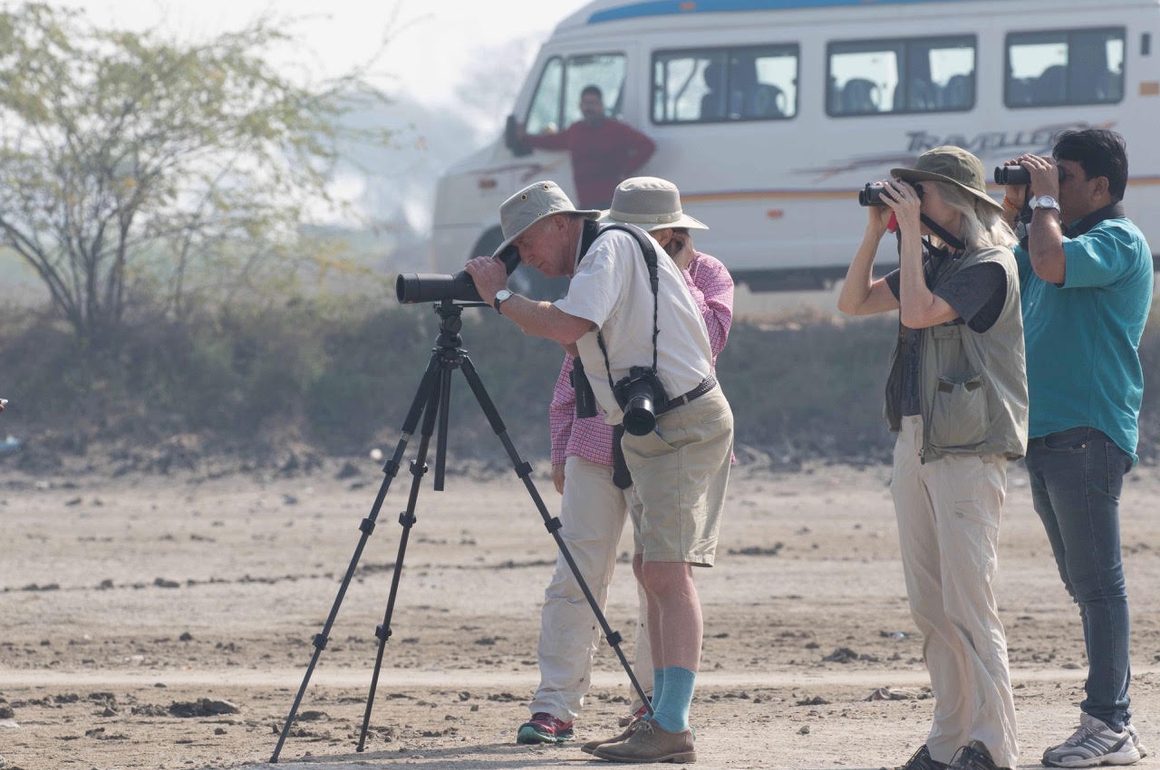
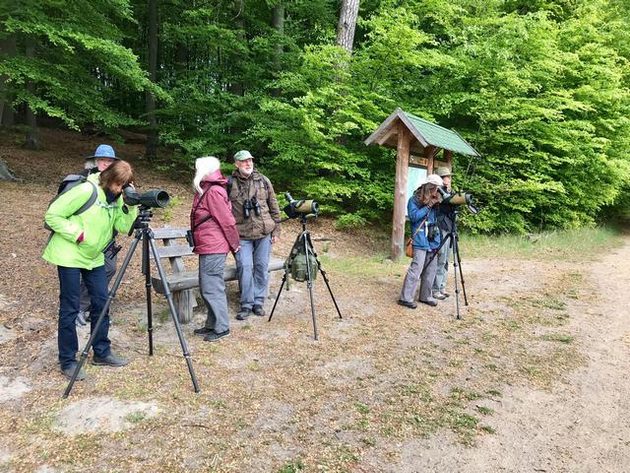
In the field: Guides should lead the group, not trail behind! I always tell people in such situations that I get “depressed” when I’m at the back. Discussions should be deferred until later. Whenever possible, the guide should face the group while speaking. After notable sightings, provide a summary—for example: “We’ve just managed an incredibly rare sighting…” or “I haven’t seen this species at all yet this year…”
Observing together means reporting and identifying everything, not just the highlights. Arrange the group, share special sightings via spotting scope—set up the scope, locate the bird, confirm the identification yourself, and IMMEDIATELY offer the scope to the guests. Keep inviting your clients to observe.
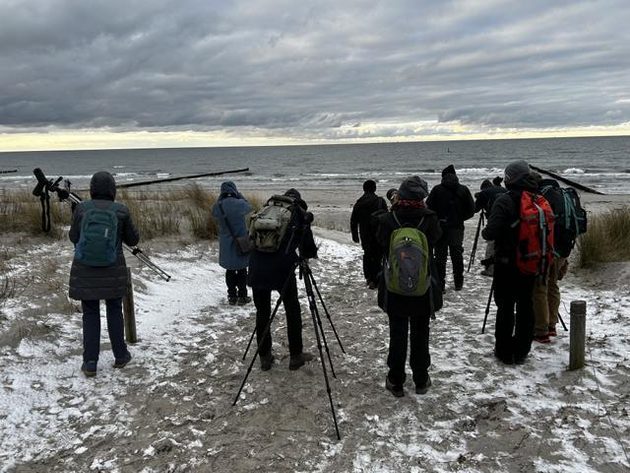
Keep a list. Only species seen by both the guests (at least one of them) and the guide should be included. When planning the trip, ensure there is a suitable setting—ideally a private, serviced room before dinner—for the group to review the list together. For day tours, I only email the daily list to clients who have provided a tip; I’m quite firm on that point.
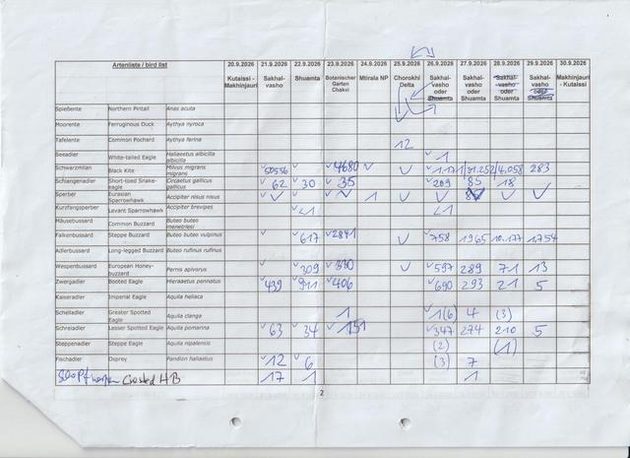
Guides must be punctual! They should also ensure that guests remain on schedule.
If complaints or issues arise, do not badmouth “the office.” Instead, document the concerns, pass them on, offer an apology, ask for understanding, and respond as quickly as possible. Using the informal “du” (addressing someone by their first name): It’s no longer the issue it was 15 or 20 years ago. Recommendation: During the round of introductions, say, “If you use the informal ‘du’ with me, I’ll do the same—feel free to address me informally. My name is Rolf.”
It is a good idea, before striking out on your own, to spend some time working as a freelance contractor for a larger tour operator. This helps you build a routine and boosts your confidence in dealing with people and the various situations that may arise. Along the way, you’ll also gain insight into how such companies handle pricing, advertising, and marketing.
I followed this path myself—until the evening I arrived in Romania with a group of 14, only to discover that the tour operator hadn’t booked any rooms. Ever since then, I’ve handled everything myself as an independent bird guide.
Crucially, you need your own website with a clear, memorable name—for example, www.birdingBerlin.com. This allows almost everyone interested in birding to find you while they are planning their trips. I can no longer imagine running a thriving business without a website.
Make sure you have a presence on websites that feature bird guides. Personally, I have never used platforms that take a commission (usually 5–10% of the trip price) for connecting guides with clients.
Pricing: For day tours, you need to determine what rate makes the work worthwhile for you. I always make it clear that other birders may join the tour; having multiple participants makes it more profitable.
For longer trips or birding weekend getaways, I look at what other companies are charging and generally set my prices €50–€100 lower. I have never calculated the costs for a birding trip—whether to Mongolia, Africa, or Central Asia—from scratch; I’m simply too lazy for that! Sometimes, if the total costs or travel arrangements for participants are still uncertain, I offer the trips excluding airfare.
Furthermore, tour itineraries offered by other companies are not protected by copyright—you are free to offer similar tours, make a few adjustments, and provide a better price. Other tour operators usually have an administrative staff—sometimes even two CEOs—all of whom need to earn a share of the profits. As a solo operator, you can consistently offer tours at a lower price point.
I only offer trips to destinations (www.vogelzug-reisen.de) that have genuinely interested me—and continue to do so. Before launching a tour, I always travel to these countries myself to scout observation spots and test hotels or guesthouses. I also assess whether I can manage the logistics for a small group on my own or if I need to hire a driver or a bus company.
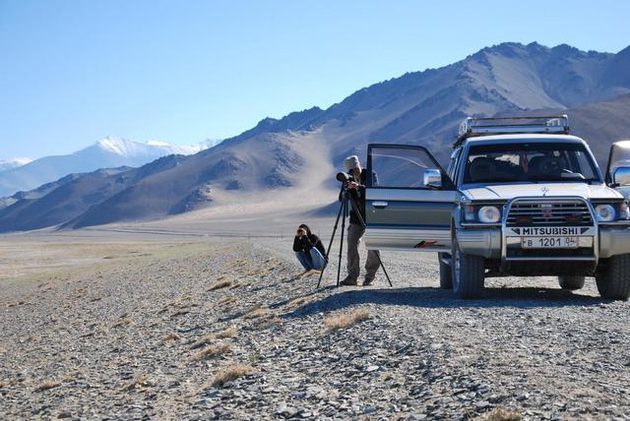
Matters such as travel contracts, bookkeeping, financial settlements, and annual tax returns are also significant—though discussing them in detail here would likely go beyond the scope of this conversation. However, you must ensure that your terms and conditions (T&Cs) are clearly displayed on your website.
Once again: YOU have to truly want it—then you will become a bird guide.

Leave a Comment