

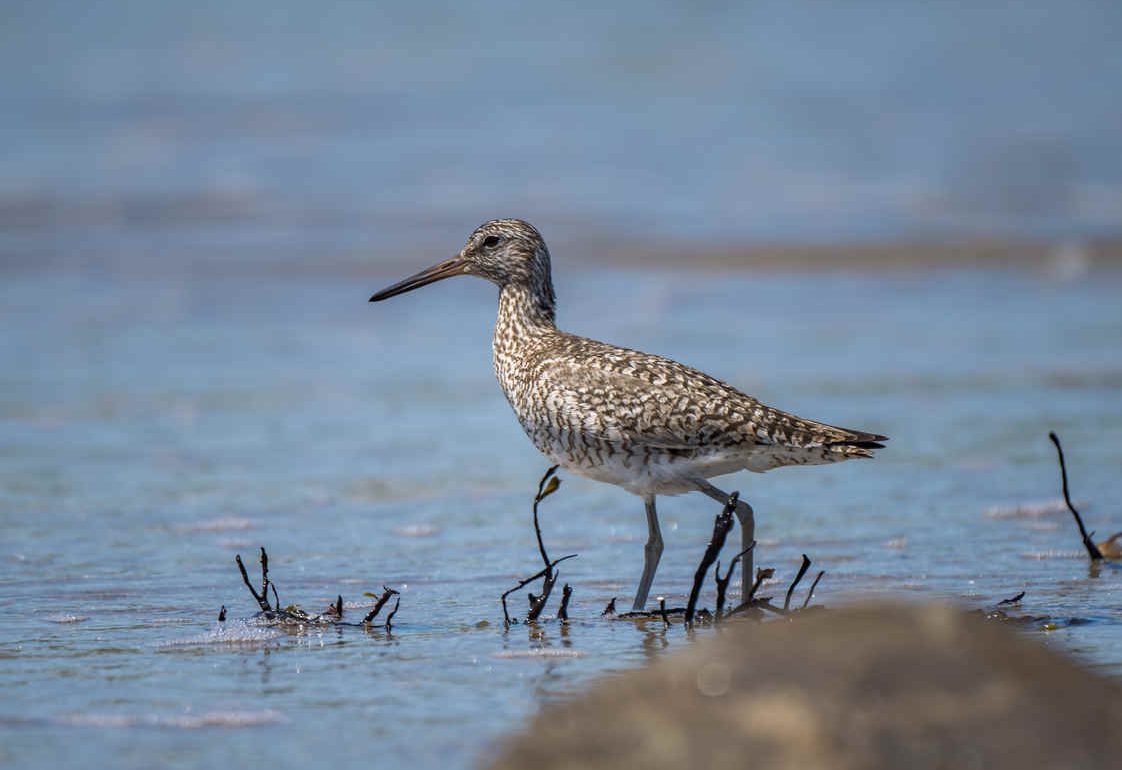
Seeing a Willet for the first time and realizing its relation to the sandpipers I am familiar with from Shanghai, I naturally turned to ChatGPT. And asked:
How does the willet compare to other sandpipers, particularly those I can see in China?
The answer:
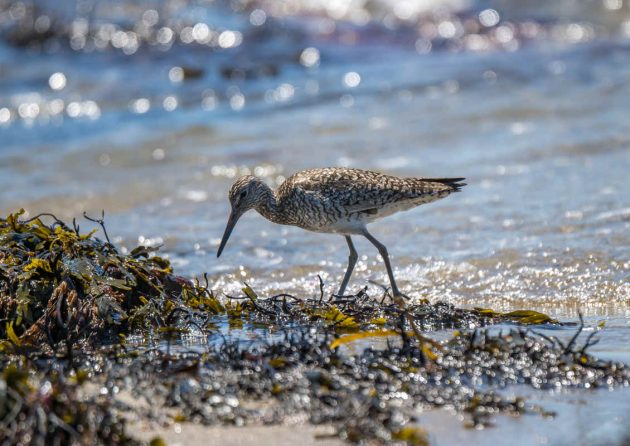
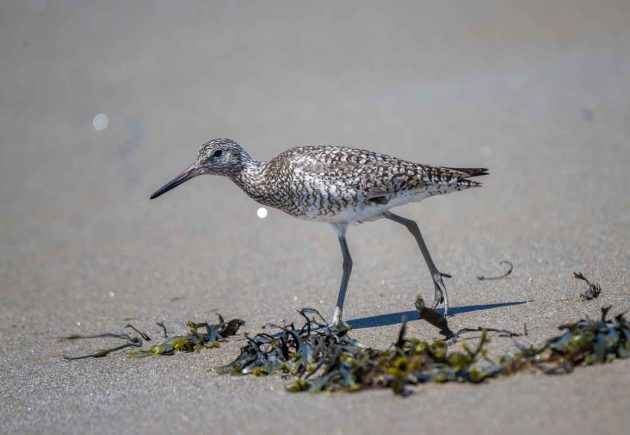
The Willet is an interesting bird because it feels a bit like a sandpiper that has been “scaled up.” It belongs to the same family as many of the smaller sandpipers, but in several ways it is closer to the larger Tringa species that occur in Eurasia.
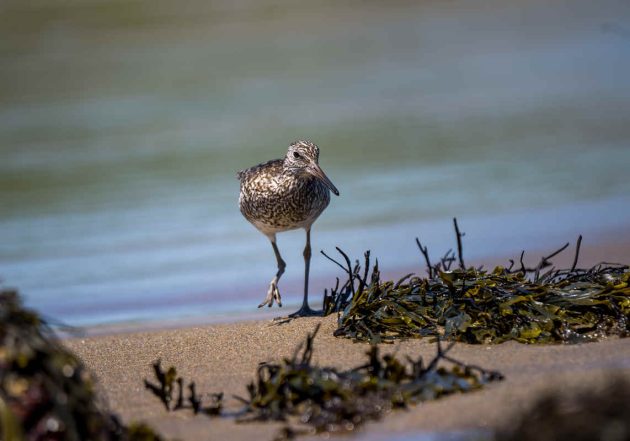
It also provided a nice little comparison chart with my local birds:
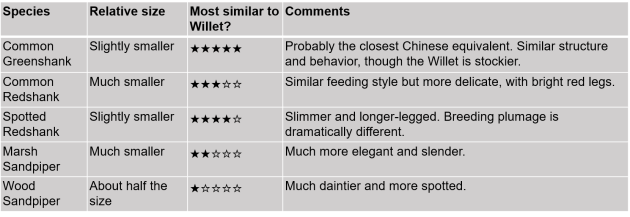
And continued to explain the overall impression of a Willet for a China-based birder:
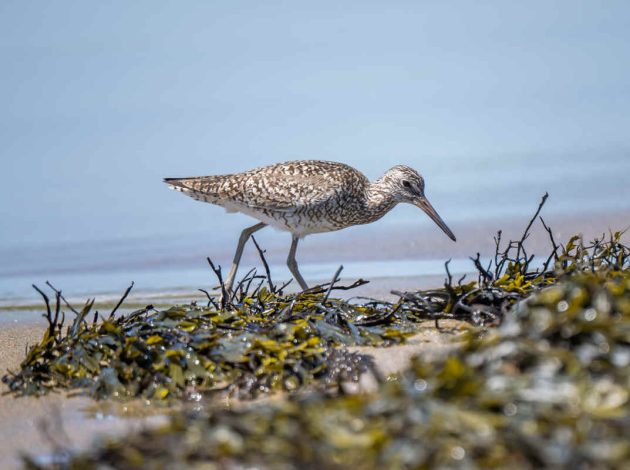
If I showed a Willet to someone who regularly birds in China without telling them where it was photographed, the most likely reaction would probably be: “That looks like a rather chunky Common Greenshank.” That isn’t far from the truth. The biggest surprises would be:
- its larger, sturdier build,
- its incredibly bold wing pattern in flight,
- and its loud, distinctive calls.
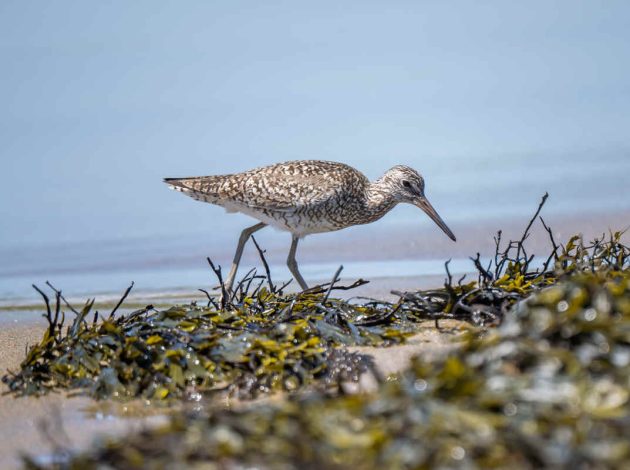
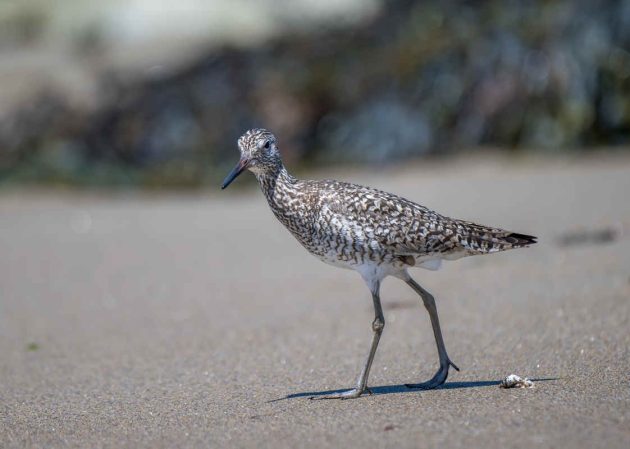
Even eBird somewhat unkindly calls it a large, stocky shorebird.
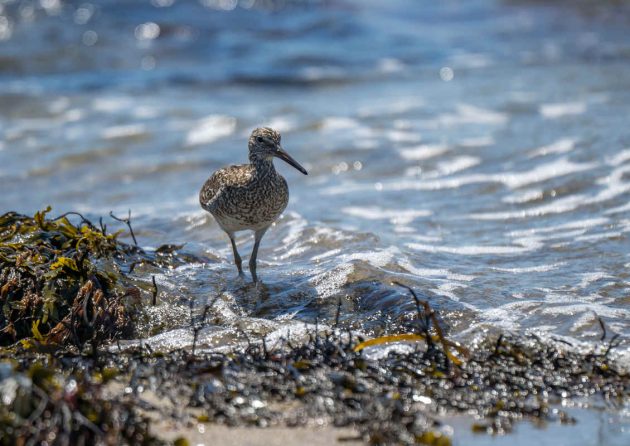
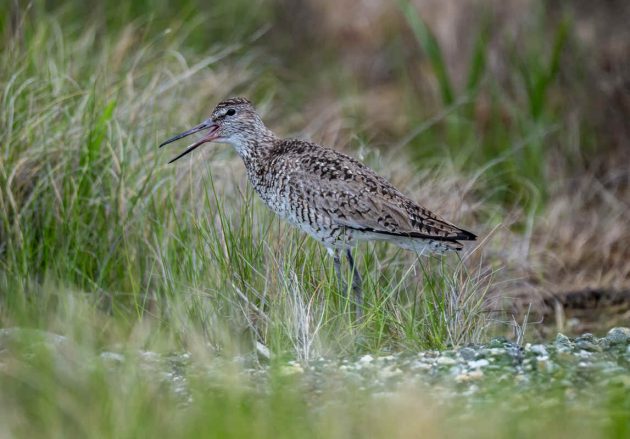
According to the HBW, the patron saint of US birders, Mr. Audubon, had some very positive things to say about the species: “Audubon wrote that ‘… eggs afford excellent eating’ and that young ‘… grow rapidly, become fat and juicy, and by the time they are able to fly, afford excellent food.’”
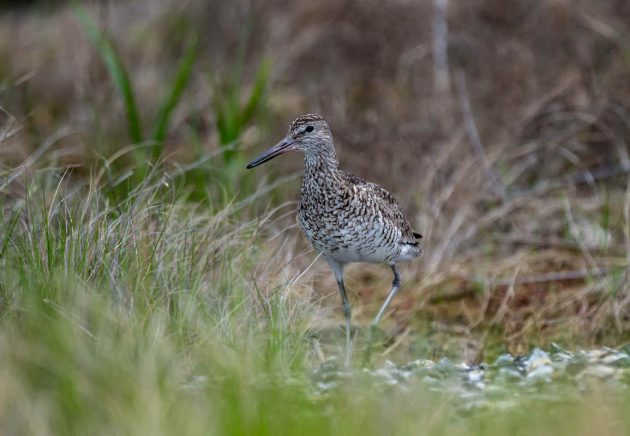
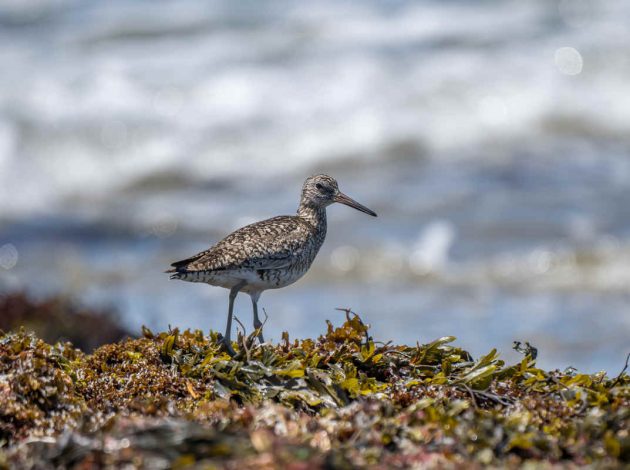
Nowadays, threats to Willets come less from gun-carrying people like Mr. Audubon and more from general human disturbance, as shown in studies of shorebird communities during migration and winter in places such as Ensenada de La Paz, a subtropical coastal wetland in Mexico. This is probably not surprising for a bird that depends on a fairly specific mix of habitats.
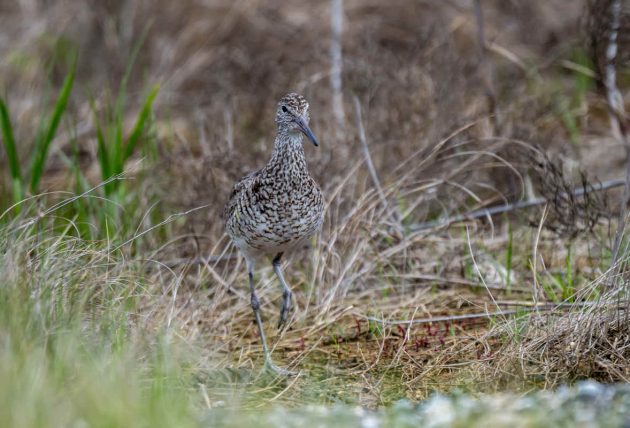
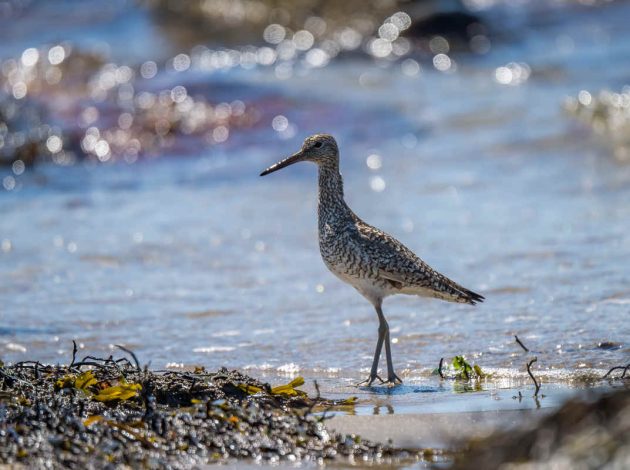
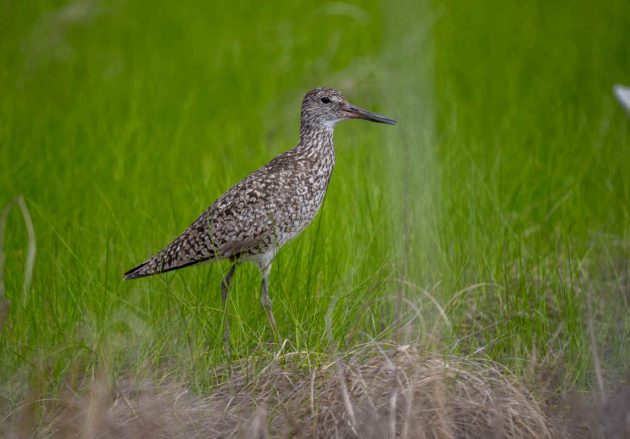
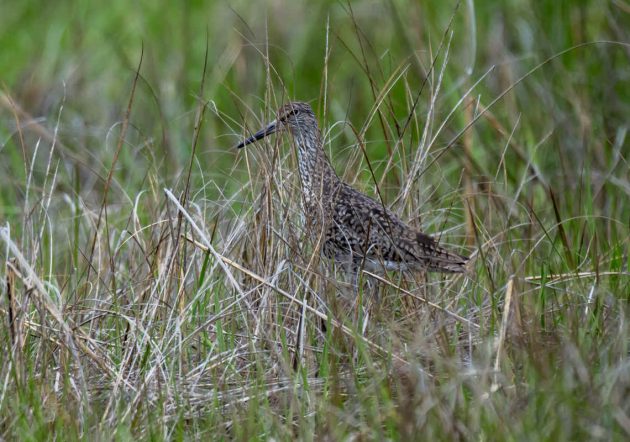
Apparently, Willets require short, sparse upland grasslands for nesting and foraging, but also wetlands for feeding, with chicks using taller, denser grass cover than adults (source). Not quite the simple “chunky Greenshank” impression they give in the field.
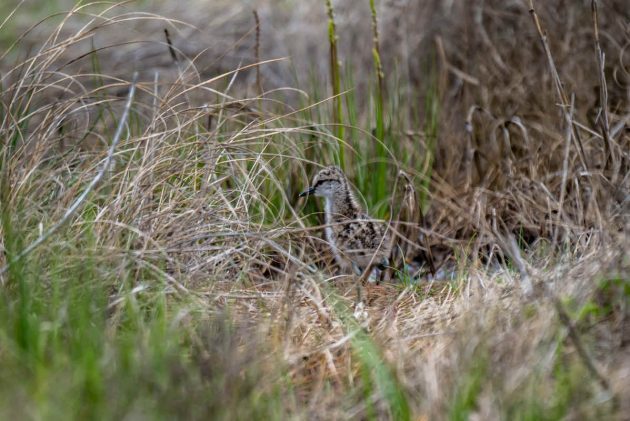
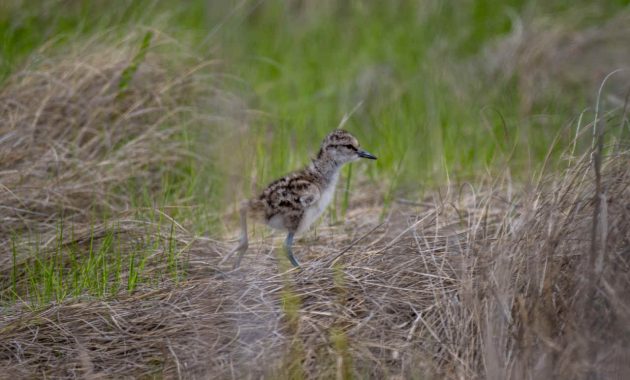
Photos taken at Popham Beach and Reid State Park in Maine, USA, in June 2026
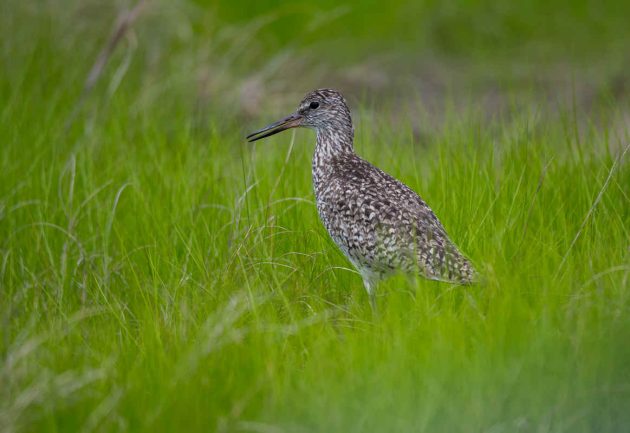
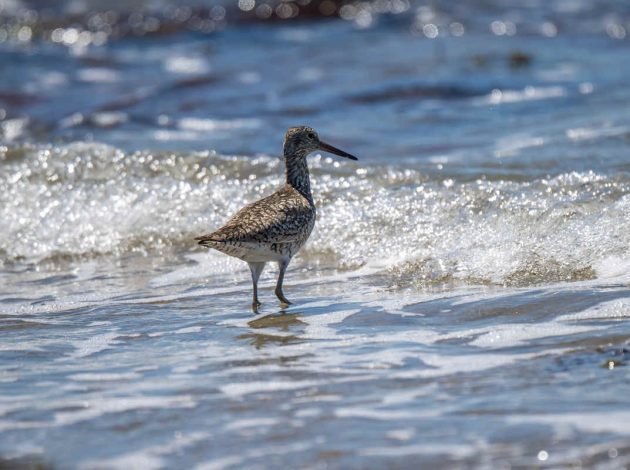









For the various calls and songs: https://xeno-canto.org/species/Tringa-semipalmata