

My Big Year Rotterdam entitles me to having an opinion on other people’s Big Year efforts. Our guide Mercedes Alpizar has done a Big Year Costa Rica, so I thought (and nearly said) such an endeavour would be easy-peasy-lemonsqueezy when you live in a biodiversity hotspot. Fortunately, I kept my mouth shut (for once) and avoided some serious egg-on-face because birding in Costa Rica is more difficult than it seems at first glance.
Why is birding so hard in Costa Rica, in the tropics in general? There are three big factors and they are all related to the landscape. First, there’s just an awful lot of vegetation. You can not see the forest for the trees.
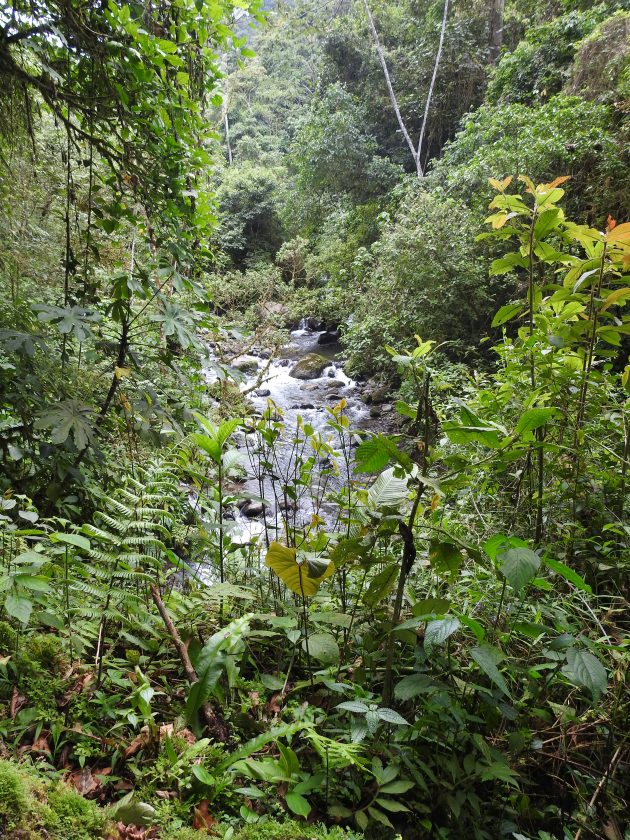
We saw our Resplendent Quetzal through five (!) layers of leaves, boughs, branches, ferns and other green stuff. And the bird was green too. Birds have the same visibility problem and that’s why their calls are so important, to them and to us. Birding in a tropical forest is birding by ear. Problem number two is now obvious: you need to know all these calls and in Costa Rica that’s a grand total of a thousand calls. Finally, there are not that many birds. The tropics may be biodiverse, but they are not biomassive. However, with a good guide birding in the tropics is a lot of fun.
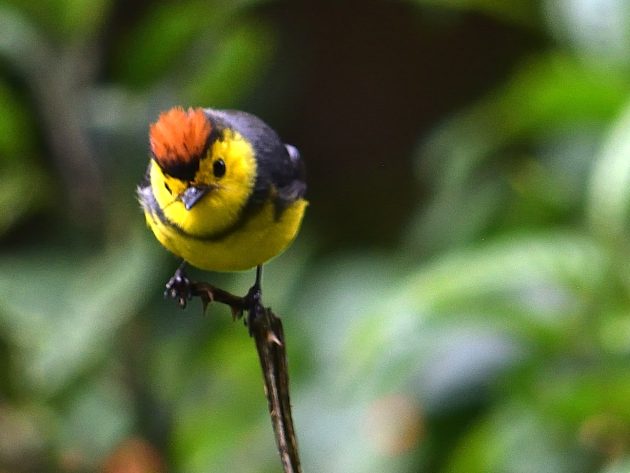
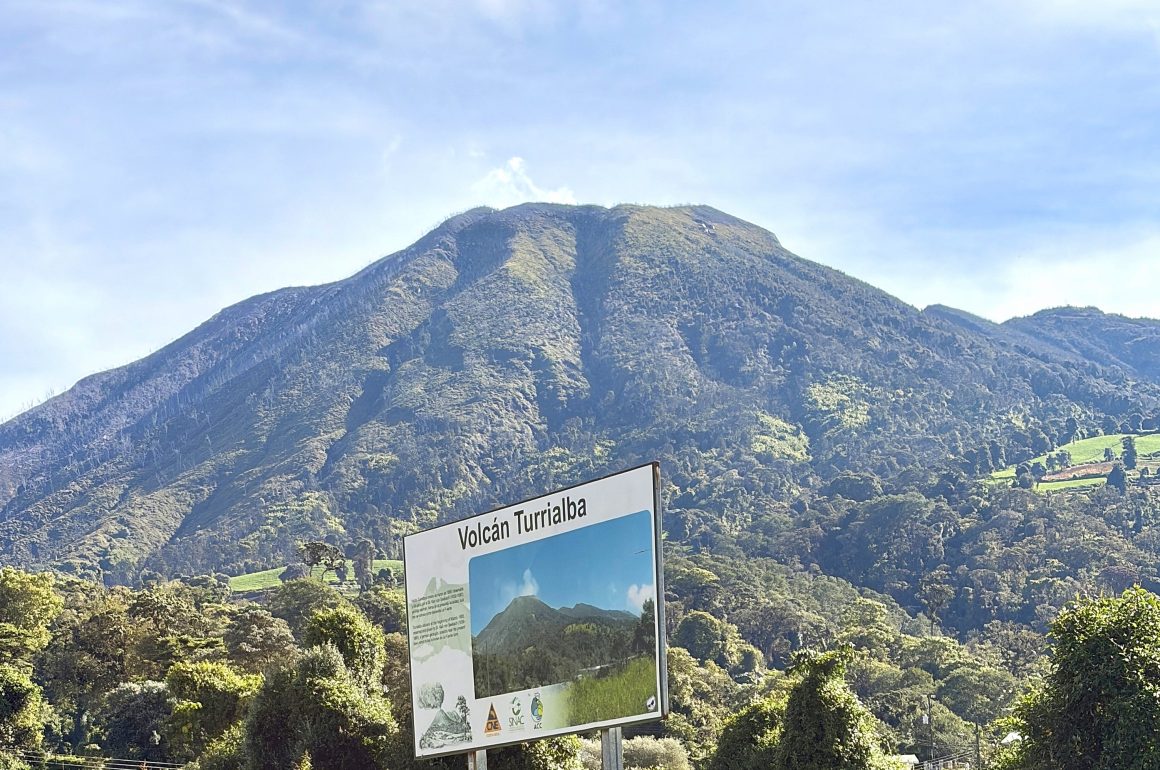
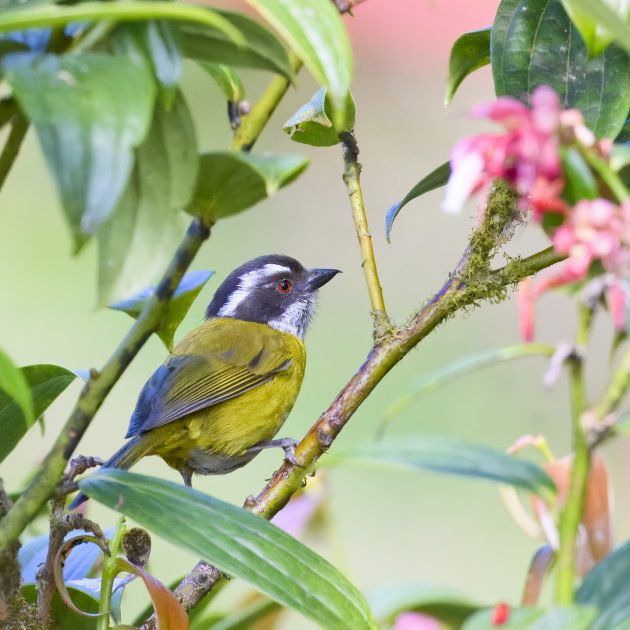
And we had a good guide. Mercedes took us up the Turrialba Volcano. We drove down into the town of Turrialba (ears popping) and then drove up the volcano (ears popping again). The volcano is active but fortunately the birds are below the business end of things. We saw hummingbirds (Talamanca Hummingbird, Fiery-throated Hummingbird, and Volcano Hummingbird), woodcreepers (Spot-crowned Woodcreeper, Buffy Tuftedcheek,and Ruddy Treerunner), tyrant-flycatchers (Mountain Elaenia, Ochraceous Pewee, Dark Pewee, Yellowish Flycatcher, and Black-capped Flycatcher), thrushes (Black-billed Nightingale-Thrush, Ruddy-capped Nightingale-Thrush, and Sooty Thrush), tanagers (Spangle-cheeked Tanager and Slaty Flowerpiercer), warblers (Flame-throated Warbler, Black-cheeked Warbler, Collared Redstart, and Costa Rican Warbler) and an assortment of bits and bobs (Red-tailed Hawk, Hairy Woodpecker, Yellow-winged Vireo, Rufous-browed Peppershrike, Long-tailed Silky-flycatcher, Black-and-yellow Silky-flycatcher, Yellow-bellied Siskin, Ochraceous Wren, Sooty-capped Chlorospingus, Yellow-thighed Brushfinch, Eastern Meadowlark, and Barred Becard). And then, the cream, icing and cherry on the cake: the aforementioned Resplendent Quetzal. The bird had been conveniently indicated by a road sign but that did not help in getting a decent picture. We ended up taking stills from a digiscoped video, not ideal and I am sure some photographers’ toes are curling as we speak.
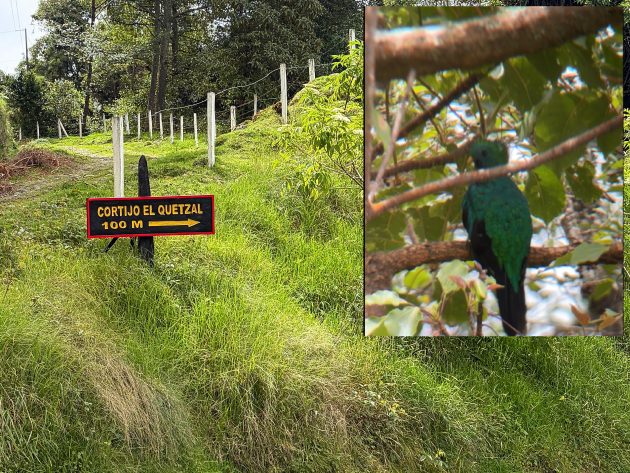
Maya rulers valued the Resplendent Quetzal‘s feathers as symbols of power, fecundity and such. It was forbidden to kill a quetzal and the feathers were taken from captured birds that were then released again. This historical anecdote demonstrates a behavioural trait of the quetzal: it’s a trogon and trogons do not do a lot, they’re sluggish and dare I say it, a bit boring. Colourful they may be, but if you are interested in behaviour (or just movement), there are many other birds in Costa Rica that are more worthwhile to seek out. I’m glad I saw the bird, but it is not my Costa Rican favourite. That honour can only be reserved for a manakin, the topic of my next post.
Sooty-capped Chlorospingus by lwolfartist, CC BY 2.0 https://creativecommons.org/licenses/by/2.0, via Wikimedia Commons
All other bird photographs by Brad Nelson.




Great post, as always! Love your writing.