

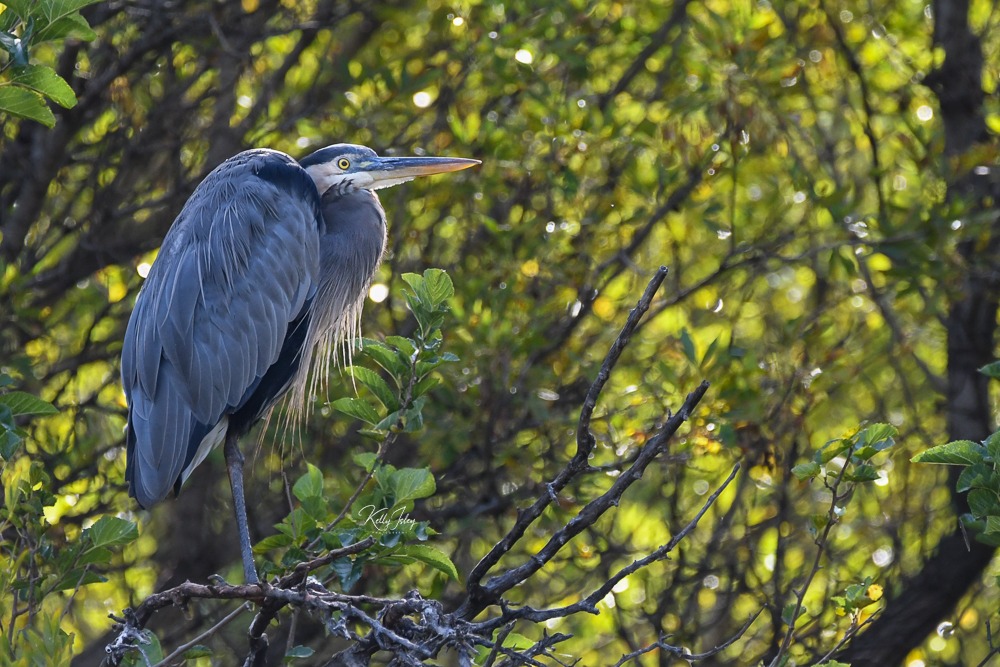
Few birds are as recognizable and captivating as the Great Blue Heron (Ardea herodias). Whether standing motionless at the edge of a quiet marsh or gliding overhead with slow, powerful wingbeats, this elegant wading bird embodies patience, precision, and grace. At up to 4½ feet tall and with a wingspan close to 6 feet, it is the largest heron in North America. Its blue-gray feathers, long legs, and sharp bill make it easy to recognize. When it flies, with its neck tucked in an S-shape and legs trailing behind, it stands out from any other bird you’ll see along wetlands, rivers, lakes, or coastlines.
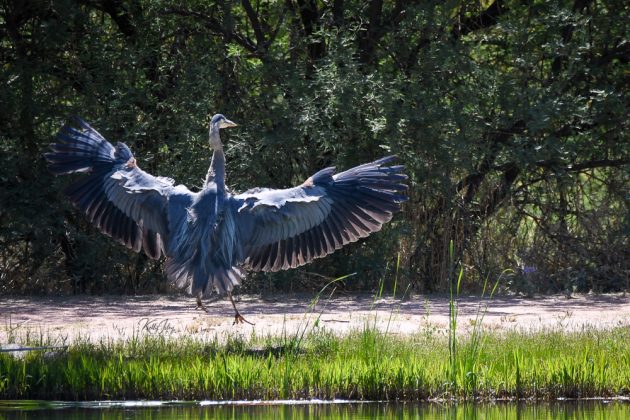
Even though it looks calm, the Great Blue Heron is a skilled hunter. It often stands still or moves slowly through shallow water, then strikes quickly to catch its prey. Fish are their primary prey, but they also eat frogs, reptiles, insects, rodents, and other small animals. Their excellent eyesight, with many rod-type photoreceptors, helps them see well at night, so they can hunt both day and night.
Great Blue Herons are found throughout most of North America and thrive wherever shallow water provides food. They inhabit marshes, estuaries, rivers, lakes, ponds, and coastal shorelines, but are just as comfortable around reservoirs, farm fields, and urban parks. Their ability to adapt allows them to flourish in habitats ranging from remote wetlands to neighborhood ponds and golf courses. Once you recognize their large silhouette and slow, deliberate wingbeats, you’ll begin noticing them almost everywhere.
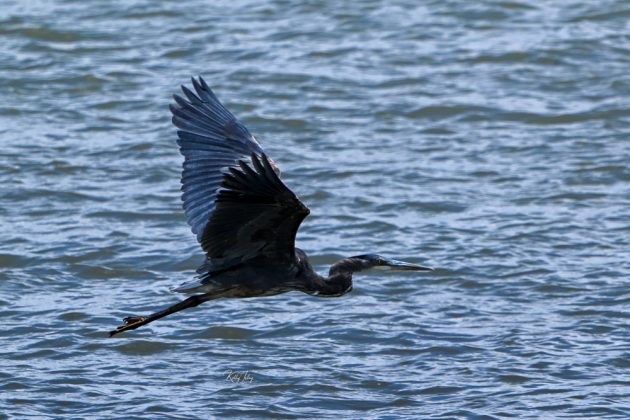
During the breeding season, Great Blue Herons gather in nesting colonies known as heronries. These thriving colonies may contain dozens or even hundreds of bulky stick nests built high in trees, on cliffs, in mangroves, or occasionally on man-made structures. Males arrive first to claim nesting sites before attracting a mate through elaborate courtship displays. Although pairs remain together for a single breeding season, they typically choose a new partner the following year. Once airborne, these impressive birds cruise comfortably at 20-30 mph, with bursts approaching 35 mph when needed. Their combination of size, strength, and graceful flight makes them unforgettable to watch.
The oldest recorded Great Blue Heron lived for more than 24 years, evidence of this remarkable species’ resilience. Yet despite their impressive size and longevity, they remain symbols of patience and quiet precision, often standing silently for minutes before making a single decisive strike. Whether seen stalking a quiet shoreline or soaring high overhead, the Great Blue Heron is one of North America’s most captivating birds.
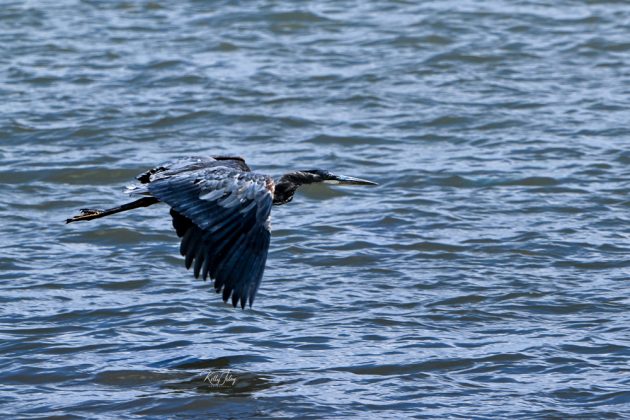
For photographers, the Great Blue Heron is an equally rewarding subject. While a tripod can be useful in some situations, handholding your camera often allows you to react quickly when a heron suddenly takes flight or changes direction. A solid shooting stance, with your elbows tucked comfortably against your body, creates a stable platform while allowing you to pivot smoothly and follow the bird in flight. If a tree or other sturdy object is nearby, using it for support can add stability without sacrificing mobility. Whether photographing a heron patiently hunting in the shallows or photographing its slender silhouette near the evening sky, patience and preparation are often rewarded with memorable images of these impressive birds.







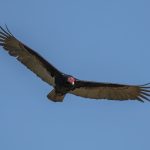



Beautifully done. The photography advice reinforces the article’s message: patience, preparation, and presence are rewarded. Whether you’re a heron hunting or a photographer waiting for the perfect moment.
I once saw a Great Blue land in a river and spear at fish. It seemed to be floating but bailed out quickly,probably before its feathers could get waterlogged. Great article and photos!