

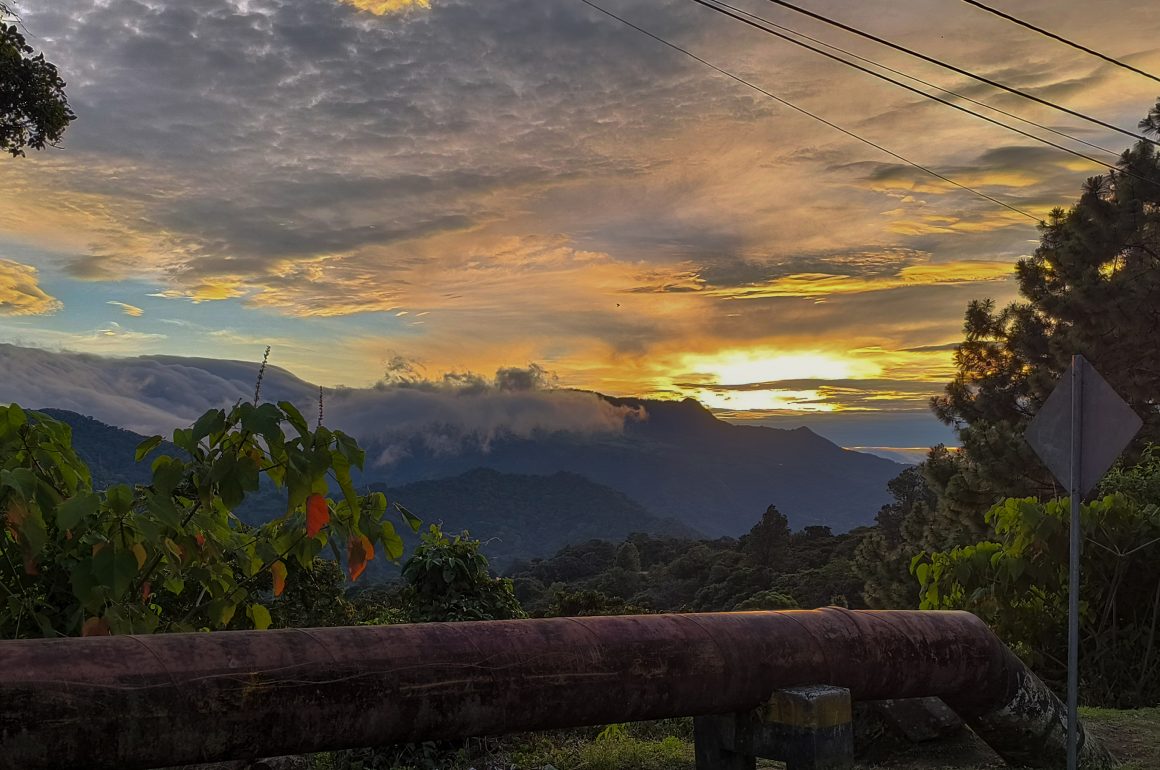
If you are wondering what on earth flavours have to do with feathers and forests, you are in good company. When the title first came to me, even I squinted at it.
Feathers and forests? Sure, birds and trees are basically lifelong partners.
But flavours?
That is where Boquete steps into the story with a flourish.
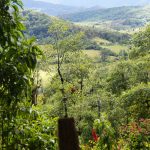
This lush mountain town in the Chiriqui Province of Panama is not just wrapped in cloud forests, it’s a birders paradise and it’s home to some of the most sought-after coffee on the planet.
Boquete is a region where the legendary Gesha coffee is grown, it is so legendary that in the 2025 Best of Panamá Auction, a washed Gesha lot fetched an eye-watering US $30,204 per kilogram. Yes, per kilogram. Suddenly “flavours, feathers, and forests” doesn’t sound so strange anymore.
Up here on these cool, misty slopes, those flavours don’t appear by magic. They are shaped, quietly, subtly, by the birds that drift through the coffee farms every day.
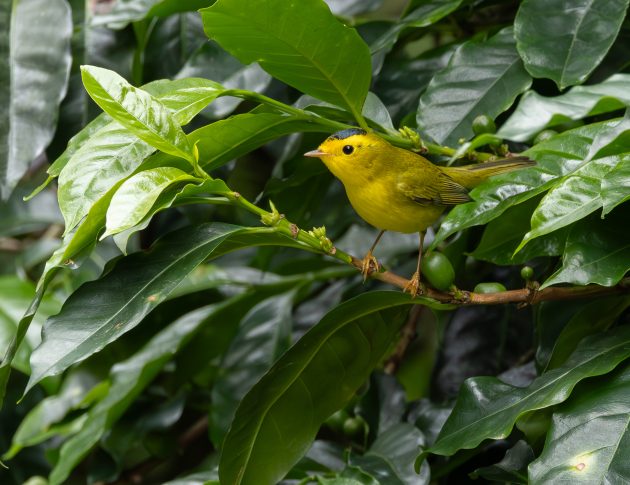
Take for example the Wilson’s Warbler and the Tennessee Warbler, visitors that come from up north during the winter, they can be seen busily flitting through the coffee bushes, picking off insects like tiny yellow and olive-green quality-control officers. They help to keep the fields pesticide free allowing the flavours of the pure earth and mountain air to be absorbed into the berries. The farmers here love them.
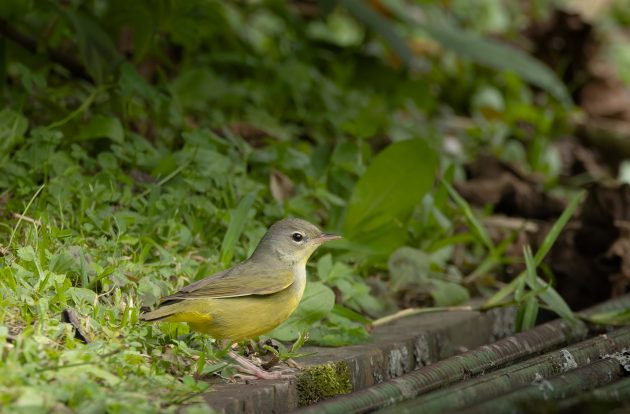
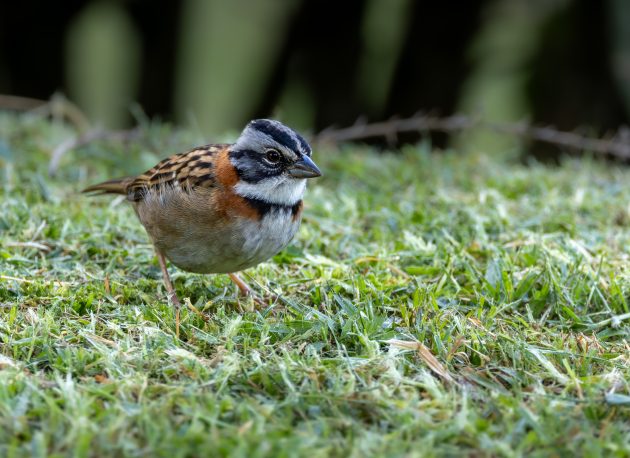
Other feathered helpers include the Clay-colored Thrushes that hop along the rows hunting beetles. Rufous-collared Sparrows grab whatever wiggles. Silver-throated Tanagers sweep in with their glimmering golden heads, as if doing a spot inspection. All helping to rid the coffee fields of insects and pests that affect the growth and flavours of the coffee.
Even the hummingbirds such as the Scintillant, Velvet Sabrewing, Ruby-throated and whoever else decides to show up, zip through the coffee flowers, pollinating the surrounding vegetation, keeping the whole system humming (pun intended).
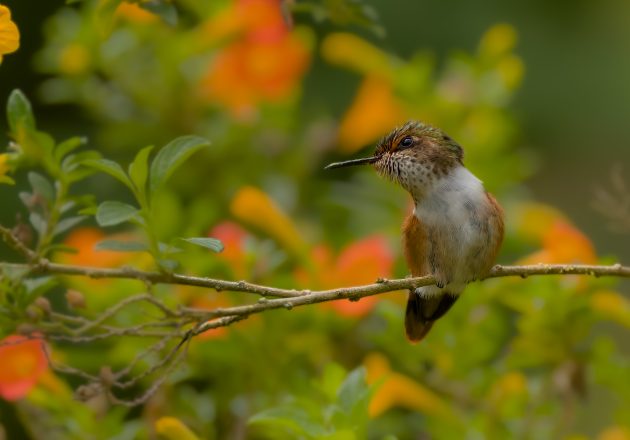
But of course, Boquete isn’t only about coffee flavours. Once you leave the coffee rows behind and step into the forest, the feathers part of the story swoops in immediately. And let me tell you, these forests don’t play around. Every corner, every mossy branch, every patch of shadow seems to hold a bird with a name that sounds like it came straight out of a fantasy novel.
Take the Wrenthrush. This little bird feels like someone mixed a Wren, a Thrush, and a mischievous forest spirit into one creature and then dared you to find it. It skitters around the forest floor like it’s late for a meeting it scheduled with itself.
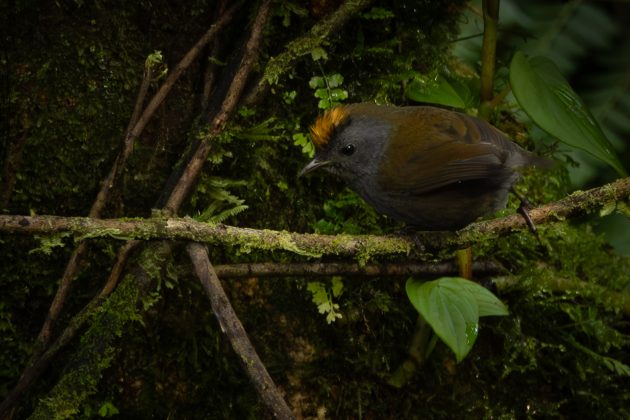
An interesting fact about the Wrenthrush is that it is neither a Wren nor a Thrush, this little fellow belongs to a family called Zeledoniidae, AND, it is the only species in this family. They can only be found in the highlands of Costa Rica and western Panamá, but spotting one? That’s a whole different adventure. I swear it spent more time teasing me from behind fallen logs on the forest floor than actually posing for a photo. Typical.
And then, the moment that still makes me smile: the Costa Rican Pygmy Owl. After years of birding, writing, photographing, and pretending I understand the difference between a chip note and a contact call, this trip was the first time I have ever seen or photographed an owl.
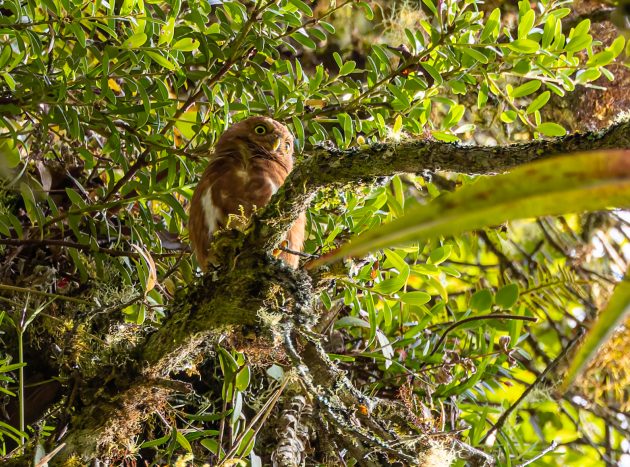
An actual, honest-to-goodness owl. Granted, it looked at me with the same expression you would give someone who accidentally walked into the wrong bathroom (I am not saying that I ever did that), but I’ll take it. A lifer is a lifer, even if the owl thinks you are lost.
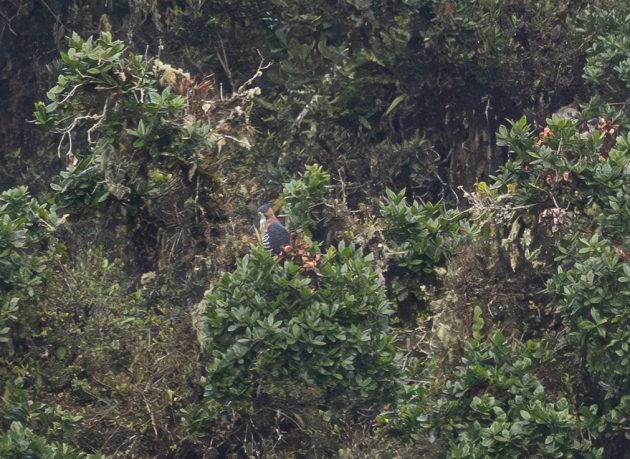
Speaking of lifers, the Ornate Hawk-Eagle made an appearance. Well… “appearance” might be generous. It was so far away that at first I thought it was a leaf with ambition. But with enough optimism, a steady hand, a bit of squinting, and confirmation from our guide we managed to confirm the ID. Nothing like photographing a powerful raptor from a safe, but slightly humiliating, distance.
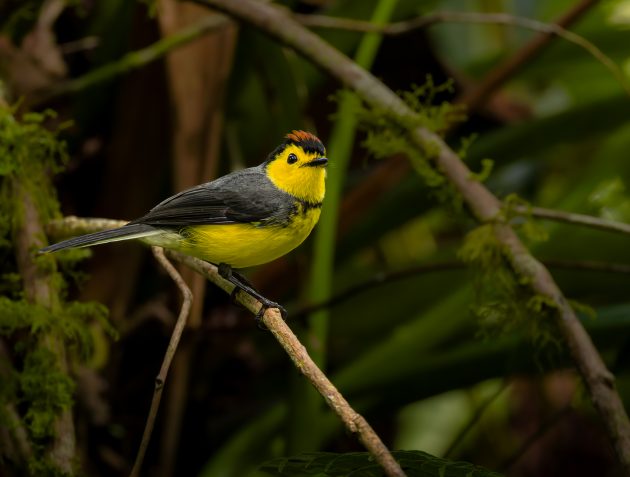
Then there is the Collared Redstart, the brightest little feathered sunrise you will ever meet. It hops around with the confidence of a bird that knows it’s cute.
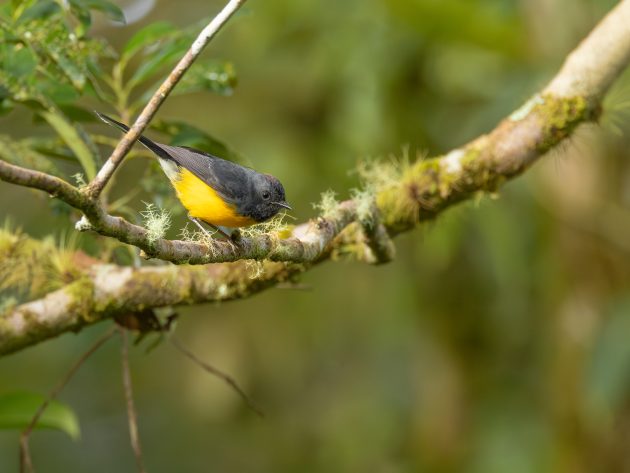
The Slaty-throated Redstart wasn’t far behind and just as impressive.
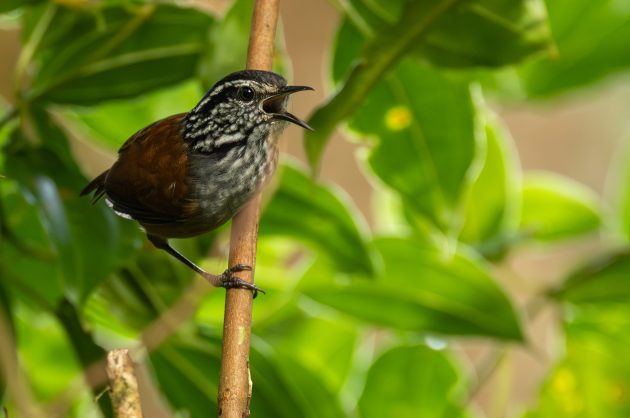
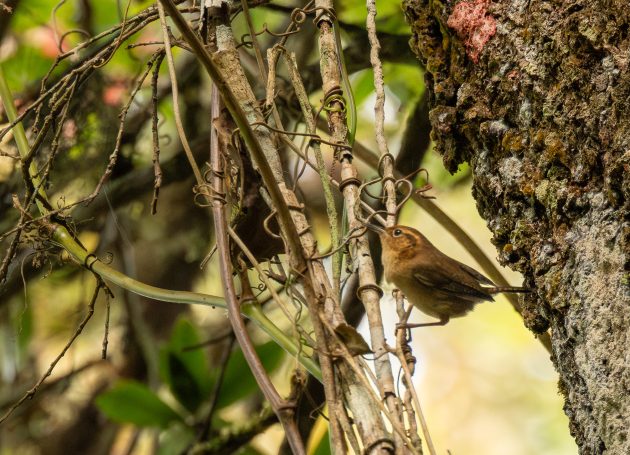
The Wrens also put on a proper Boquete welcome, bringing my total Wren species sightings to seven, you can read about the others here.
The Grey-breasted Wren popped out with that slightly offended expression wrens often have, as if to say, “Yes, I live here, can I help you?”
The Ochraceous Wren drifted through the branches and vines higher up, delivering that soft, echoing song that somehow fills the whole forest despite coming from something roughly teacup-sized.
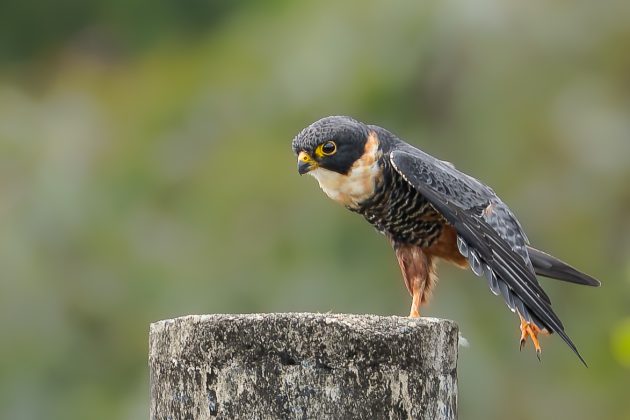
Two birds that we actually went in search of were the Bat Falcon and the American Dipper, and thanks to our guide, we went straight to their favourite hangouts.
The Bat Falcon perched exactly where he predicted, wearing that trademark expression that says, “Yes, I know you came all this way just for me.” There is something about a Bat Falcon that radiates confidence, it is such joy to observe this bird.
After checking the Bat Falcon off the list, we headed out in search of the American Dipper. Our guide again knew exactly which stream it liked to haunt, and once again, he was spot on. We had not even brought the car to a full stop when we spotted one bouncing on the rocks of a little roadside waterfall, looking like it was rehearsing for a river-themed musical.
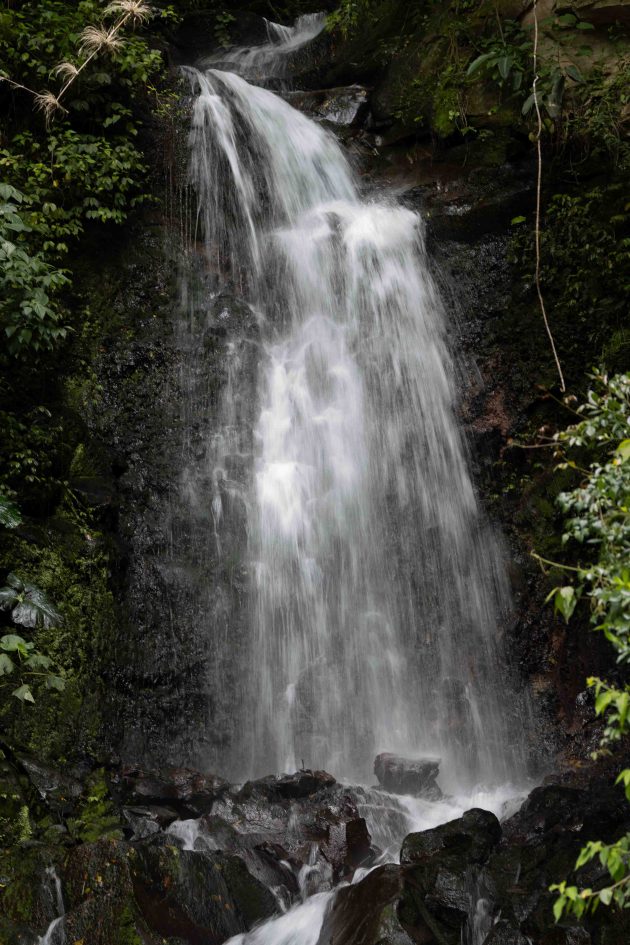
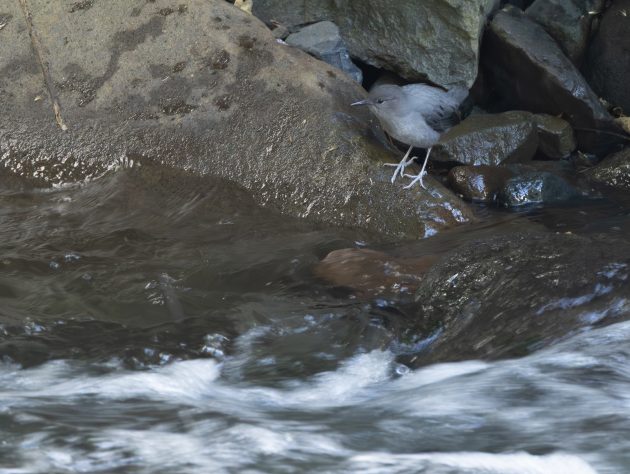
The American Dipper is the only songbird on the continent that feeds underwater, cold rushing water. They hunt by swimming, diving and even walking under water.
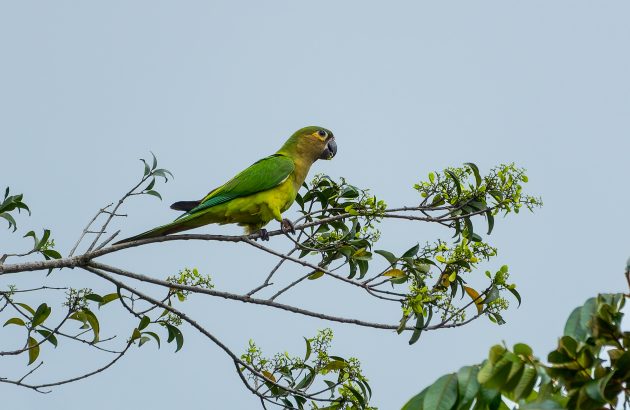
Before heading back to our lodge we spotted the Brown-throated Parakeets, well the chaos was heard first then the sighting.
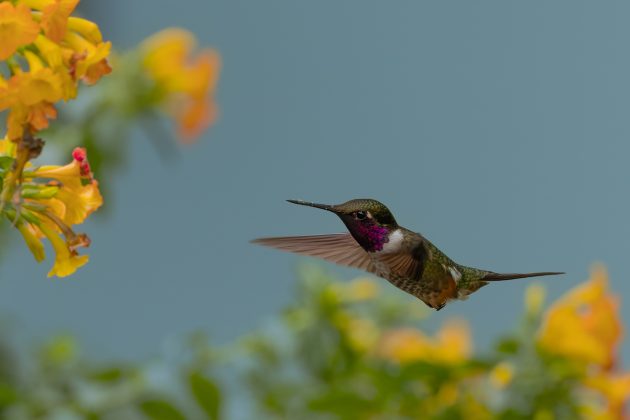
And just when you think the colour palette can’t get any richer, the Magenta-throated Woodstar buzzes into view like a tiny gemstone with wings. For a bird the size of a thumb, it knows how to make an entrance.
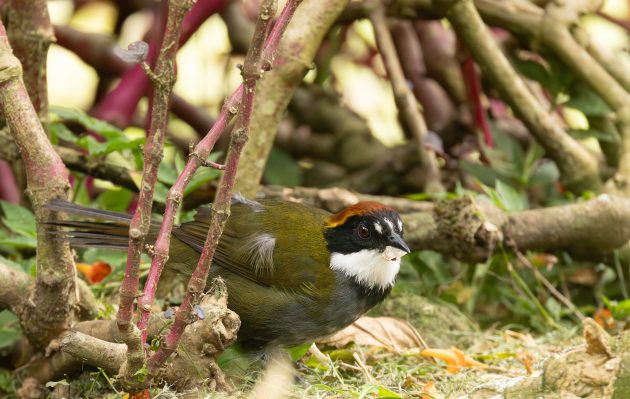
Back at the lodge the garden was still alive with birds The Chestnut-capped Brushfinch was foraging between the roots of the shrubs with its handsome chestnut crown.
The White-naped Brushfinch ,formerly known as the Yellow-throated Brushfinch wandered around the garden.
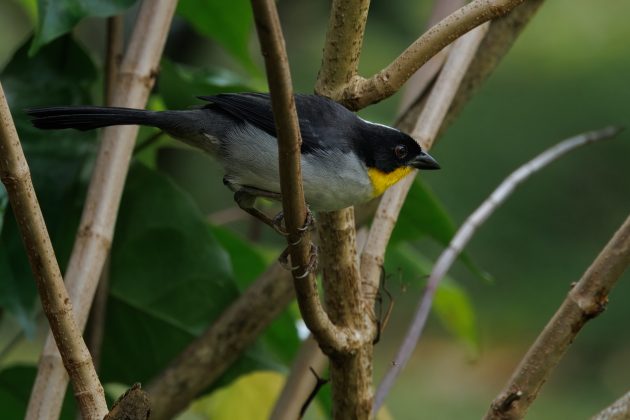
Both birds were lifers, and both were the kind of birds that make you grateful you don’t always have to hike up a mountain to find something spectacular.
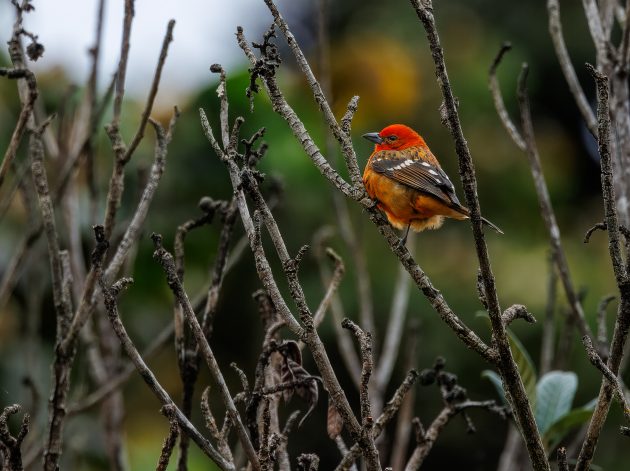
And the garden didn’t stop there. A brilliant Flame-colored Tanager lit up the branches like someone had plugged in a bird-shaped neon sign. Every time it landed, the whole tree seemed to glow.
A small flock of Sulphur-winged Parakeets screeched their way in, because parakeets never simply “arrive,” they make an entrance. They brought their usual chaos and charm, dangling from branches, arguing loudly about things only parakeets understand. All lifers, all right outside our lodge room.
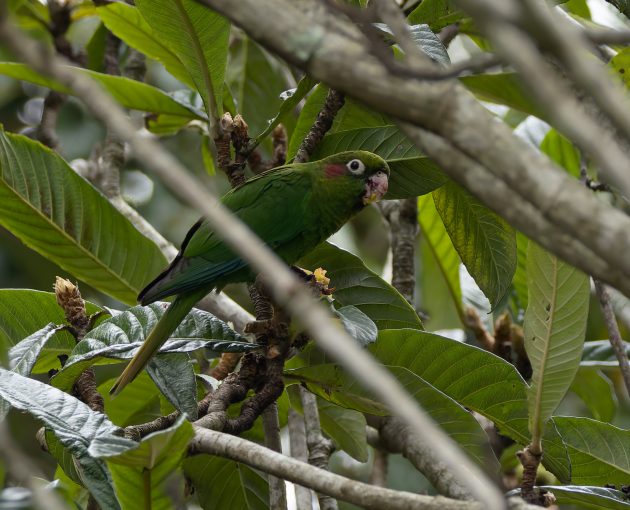
These were just a small sampling of the birds we saw on this trip, some like the Common Chloropingus, Black-cheeked Warbler, Blacked-Thighed Grosbeak, Dark Pewee, Salty Flowerpiercer, Hairy Woodpecker, Red-eyed Vireo , Crested Flycatcher and others all made appearances. I had about 25 lifers and was delighted to have come on this birding trip.
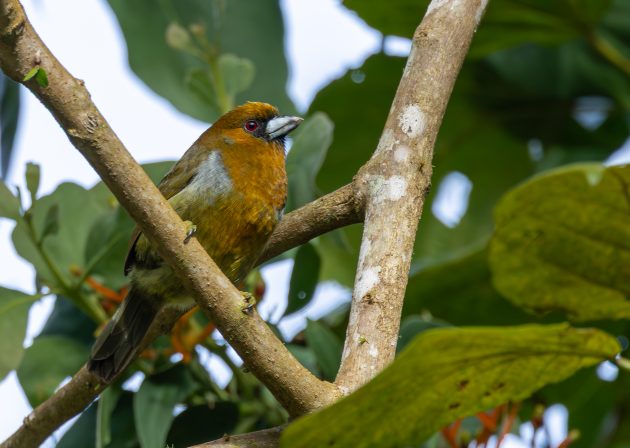
Boquete may lure you in with its coffee, cool temperatures, mountains and lush greenery, but it keeps you here with its forests, alive with feathers, songs, surprises, and the kind of moments that make you whisper, “Just one more photo”, even when you have already taken thousands.





Great birds, great photos, and great writing: This is a great article!
To echo Paul’s comment: Great photos, great birds, and the writing makes me wish I was birding there with you rather than on my own (which is my usual preference).
Thanks Paul, I’m really glad you enjoyed it, it was a fun trip to write about, lots of birds to see and the good weather helped.
Thank you, Kai! Appreciate that a lot. It was a fun trip, and I’m glad the piece made you feel part of it. Birding alone is my usual style too, but sharing these stories with the 10000birds.com community makes the adventure feel much bigger.