

Before we get to a slightly more substantial answer to the question, here is a shortcut – an analogy to illustrate the difference.
Eric is an office worker. In the evening, he sometimes sings at karaoke bars as he thinks that might impress the ladies. He even occasionally practices some more difficult songs at home (though usually only in the bathroom) – but of course, the main point for him is to sing in front of an audience, preferably a female one. His dream is to one day participate in a bigger singing contest and get a bit famous – or at least be known as the best singer in his neighborhood.
However, when working in the office, Eric does not sing (it would probably be used against him in his performance review). But of course, he talks to his colleagues, whom he knows well – mostly just very simple things, like asking them to join him for lunch or warning them that the boss is approaching. Most of this talk is brief, and of course, he does not need to practice it.
A bird watching Eric would say that karaoke Eric is practicing SONG while office Eric is practicing CALL. And our highly educated bird would then explain that bird song is
- Mainly used to attract mates and to claim a territory (Eric is proud to think he is the best singer in his local bar)
- Mostly practiced by male birds (and Eric), particularly in the breeding season (which for Eric means more or less all year round)
- Relatively complex and longer, often containing repeated patterns and tunes
- Learned (often from older birds, though in Eric’s case, at least partly from a YouTube video)
And our friendly and wise bird would continue to explain that, in contrast, bird calls are
- Mainly used to communicate something (e.g., danger, hunger, coordinating actions like a joint expedition to have lunch)
- Practiced by both male and female birds (Eric – who is not particularly woke – would probably add that it is his impression that females communicate much more in this manner than males)
- Relatively short, simple, and functional
- Not learned but innate (which does not apply to Eric – he had to learn this as a child – but you get the point. Can’t expect a bird to fully understand all of human behavior).
Now, going out in the field and trying to understand whether a bird sound is a song or a call, you would not want to take this bird along for help (it is frequently very busy anyway). So, for these occasions, here is a handy checklist with some additional items.
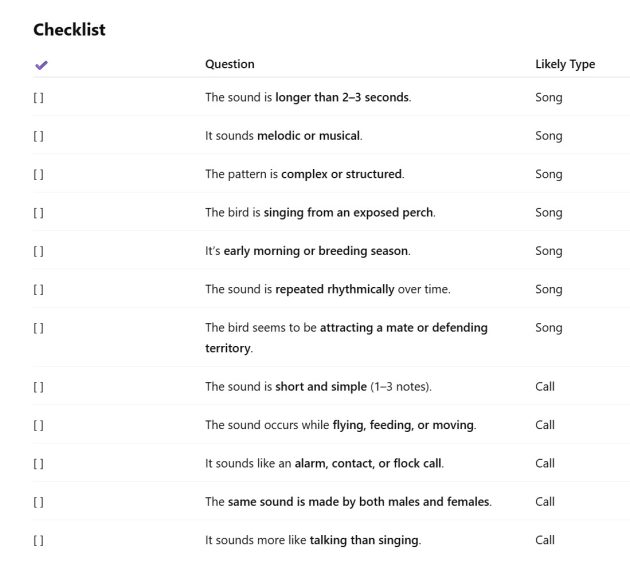
But what if you end up getting a mixed result – a few ticks indicating song, a few indicating call?
That can indeed happen, as nature sometimes is not as digital as we might like it to be. A mixed result may indicate one of the following:
- Subsong: The mumbling and messy (though charming) sound of young birds or birds practicing their song
- Whisper song: A quiet version of a song, often heard in courtship (particularly if the females are very romantic)
- Flight song: Some birds sing while flying, which often sounds like a mix of song and call.
- Female song: In some species, females sing too – making for a great Ph.D. topic for female ornithologists (seems I am not that woke either, though hopefully I am a bit better than Eric)
- Alarm calls that sound melodic: Some alarm calls sound almost like songs.
And if you did not bring the checklist above to your birding outing, just try to judge whether the bird you are hearing reminds you more of office Eric or karaoke Eric.
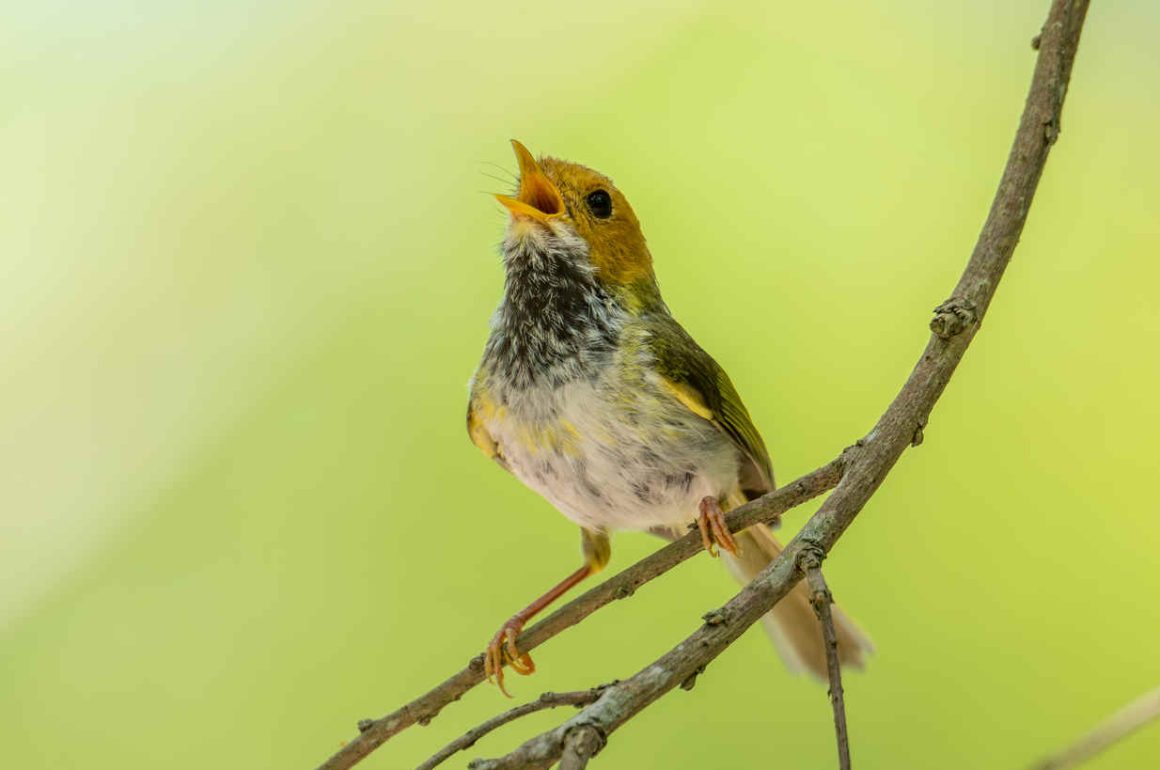
Photo: Rufous-faced Warbler, Shanghai, July 2025









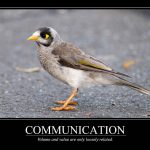



One more point: When Eric is on winter vacation in Mexico, he never sings. But he calls just as much as ever. Which is why his American friends call him a Warbler, but his Mexican acquaintances know him as a Chipe (cheep-cheep-cheep).
Wow, thank you! The analogy of Eric will be something I return to often.
I am very forgetful with regard to such definitions, so I created Eric as a reminder …