
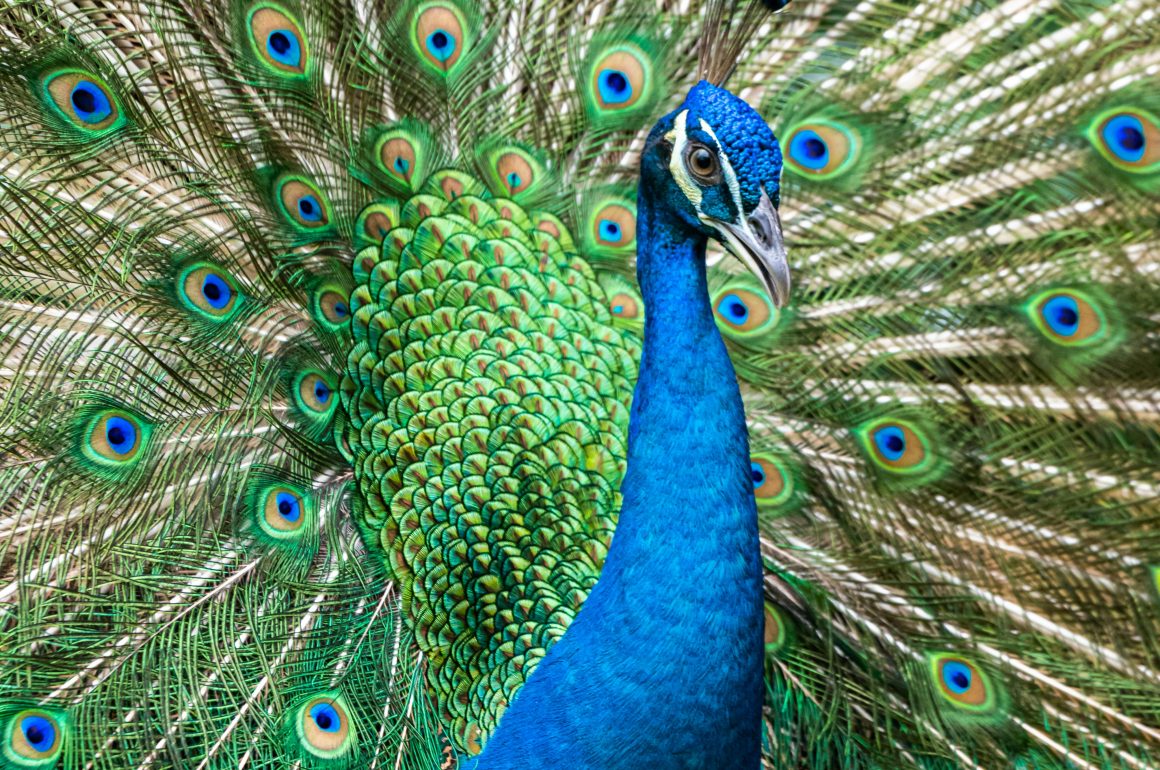
In today’s post, I would like to introduce you to a special guest: Bibo the Peacoock. His purpose for being here will be revealed later. For now, I would simply ask you to slowly read a description about Bibo, paying special attention to the details. Please don’t mind the somewhat strange image I am about to present to you, it has been crafted like this intentionally. Without further ado, let’s begin:
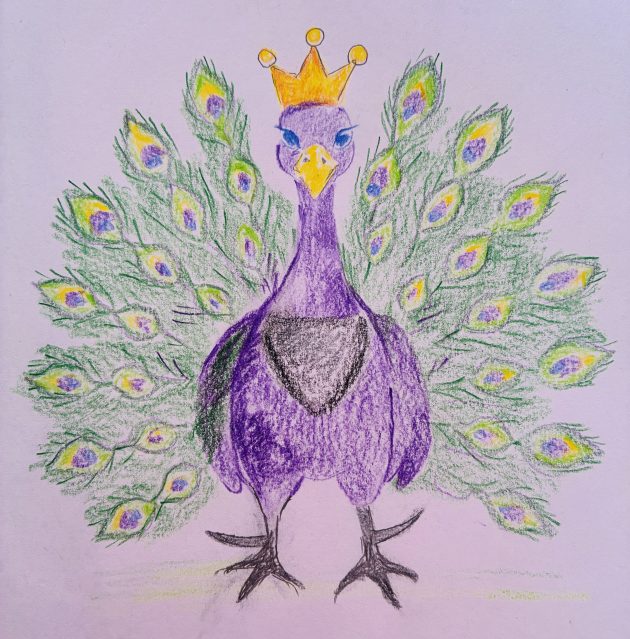
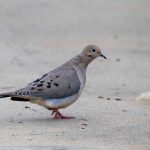
Bibo the Peacock has impaled red cherry tomatoes into those sharp pointed tips of his crown, the juice dripping onto his face. Tomatoes with mozzarella is a tasty combination, so he just stacked the mozzarella on top. Instead of pupils, he has raisins and each time he blinks one falls out leaving behind a trail of raisins. As part of a TikTok trend, he’s blocked both nostrils with carrots, and then forgot to open its beak to breathe, so it started swelling and looking as if it had been stung by a bee. Next, imagine the beak had time to deflate, and he dove beak-first into a half-watermelon, ultimately getting stuck there, frozen in a strange acrobatic-like pose. Now, as he is feeling a little jittery today, he tucked a book under his bib so he can secretly read while eating, a habit frowned upon by his mother. Under his left wing he’s got a giant pen jutting out, enough to make a passer by think it was a rocket and duck on instinct. Because he’s afraid of height, he carries a broom under the other wing, for balance, in case walking on a rope at high altitude might arise casually during the day as a possibility. A skateboard is hanging by one of his talons, which is very big and curved and pokes out like a dagger. And he’s using sim cards as a toe separator while painting his nails a metallic blue. Under the tail he’s got a socket where a pink fluffy powerbank is plugged in, making him walk in a funny way.
What does this description of Bibo the Peacock help us achieve? It helps us memorise! In this example, I wanted to memorise a list containing the following items (the items are bolded in the description above):
- tomatoes
- mozarella
- raisins
- carrots
- watermelon
- book
- pen
- broom
- skateboard
- sim card
- powerbank
Could one use birds as memory palaces? This question has been on my mind for some time. A memory palace is an ancient technique that helps store information for later recall by linking it to stations in a familiar environment. No rote memorisation needed! It is also known as the method of loci or mind palace. No, it’s not just for nerds or quirky people, that’s a myth! Memory skills are accessible to everyone.
I came up with the following list of stations while creating our character, Bibo the Peacock:
- crown
- left eye
- right eye
- left nostril
- right nostril
- beak
- bib
- neck
- left wing
- right wing
- left foot
- right foot
- left spur
- right spur
- tail
Now, let’s return to our list of items: Are you able to recall the items in the list by navigating through the stations? Starting with the crown and all the way down to the toes. Simply take a mental walk and see if Bibo the Peacock brings the items back. You might be surprised to find out that you will be able to recall our list even days later just from reading the description once. What about people with aphantasia (the inability to visualise mental images)? From my quick research, some aphantasiacs report that they have managed to make this technique work for them by focusing on the story aspects as opposed to the visual cues. Also, please don’t feel discouraged to use more traditional memory palaces, such as houses, if you are so inclined – sometimes people remember places better than they realise.
I’d love to know how well the technique worked for you. Would you use this technique in your daily life, and what type of things would you memorise with it?
Image attribution:








Wow! What an incredibly brilliant post—not at all what I was expecting when I started to read. I’d been working on activities to do with children following reading books about birds, and look forward to adding a memory palace bird description. Thanks!
Thank you, Susan – that is very kind of you. I love the idea of introducing science topics to the little ones in a playful way (I just learnt the STEM acronym from one of your posts). Who are the lovely kids, and how’s that been for you?
As for Bibo – he insists it’s pronounced “Beeb-o” – he has three other buddies who are in the process of figuring out fresh ways to put their newly acquired memory tricks to use…