

In matters concerning jobs of the little brown variety, woodcreepers are solidly entwined within that fabric. They aren’t “almost brown”, they are properly, richly, brown. They occupy a world that scoffs at gravity – if you’ve never seen a woodcreeper hopping upside down, have you ever truly seen anything? Some are large, others diminutive. The vast majority are loud, thankfully, as knowing what they sound like proves to be an invaluable identification tool in the field. I felt as though they do not nearly get as much love and adulation as they should, and while I haven’t seen all the woodcreepers in the world, I figured I’d share a few here in an effort to stir some affection for these often under-appreciated birds.
Thanks to an array of adornments – spots, stripes, and scallops – woodcreepers aren’t plain brown. Except for the Plain-brown Woodcreeper, of course, which isn’t entirely plain brown as its name suggests, but is the proud owner of a grey face; its only distinguishing feature. Well, they can’t all be as straightforward as the Olivaceous Woodcreeper, one of the smallest woodcreepers. The Olivaceous Woodcreeper is one of my personal favourites to observe, as they tend to recall a mouse running up the trunks of massive trees in the rainforest. As many woodcreepers do, they prowl these trunks in an ascending spiral, floating across to an adjacent trunk much like a leaf wafting to the ground.
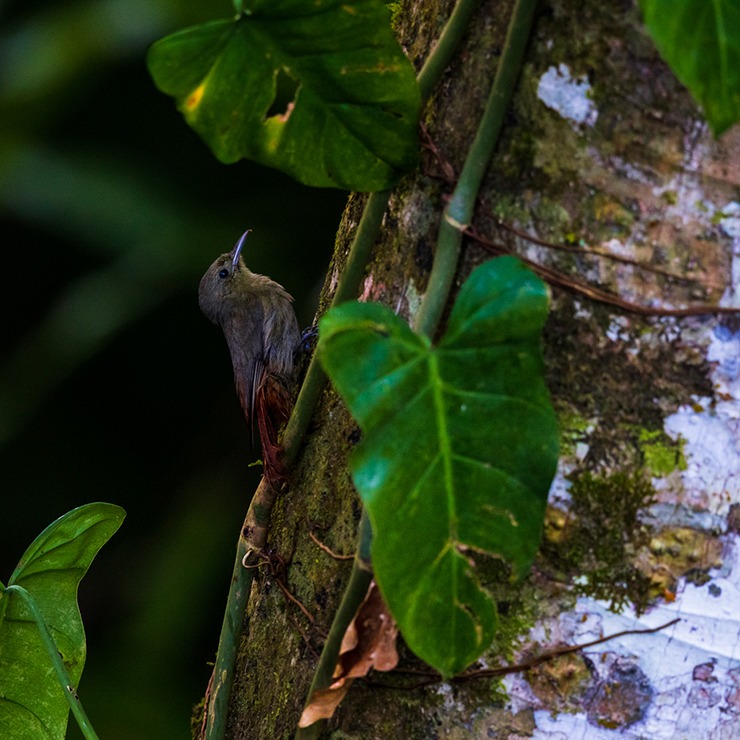
Olivaceous Woodcreeper
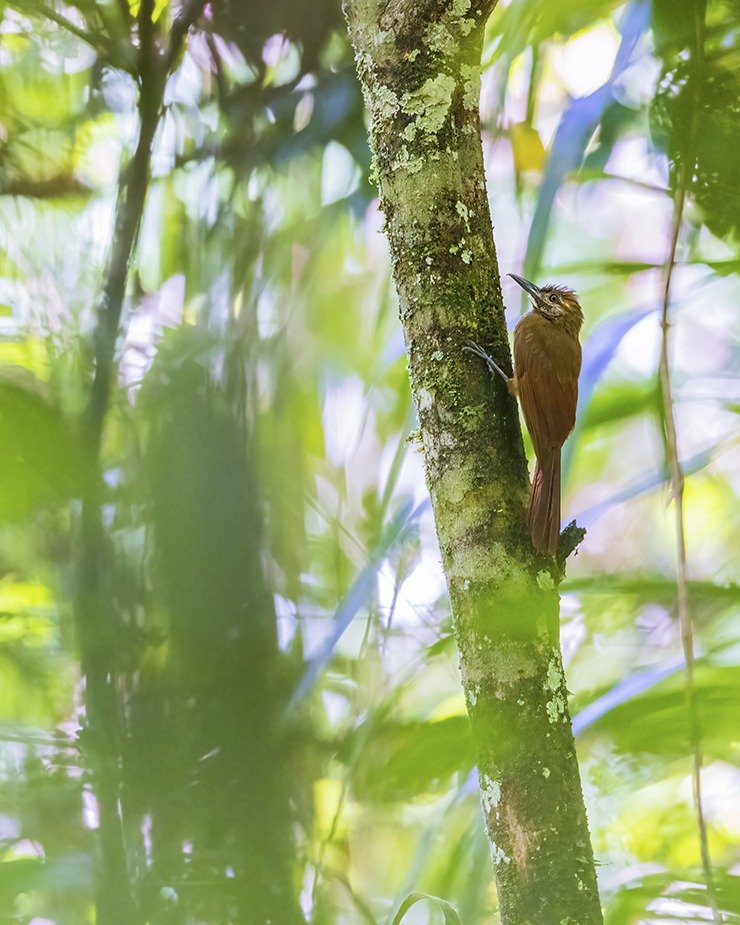
While this White-chinned Woodcreeper may seem to have some notable field marks, nearly all other photos of this species on eBird are of much more nondescript birds.
Woodcreepers also have a strong penchant for being in the darkness of the understory. While it may seem as a spiteful move toward humans ill-adapted for low-light conditions, species like the Plain-brown Woodcreeper spend their time following swarms of army ants coursing across the forest floor. Much like antbirds in attendance, these wily woodcreepers wait patiently on low branches for small arthropods attempting to flee the rivers of ants.
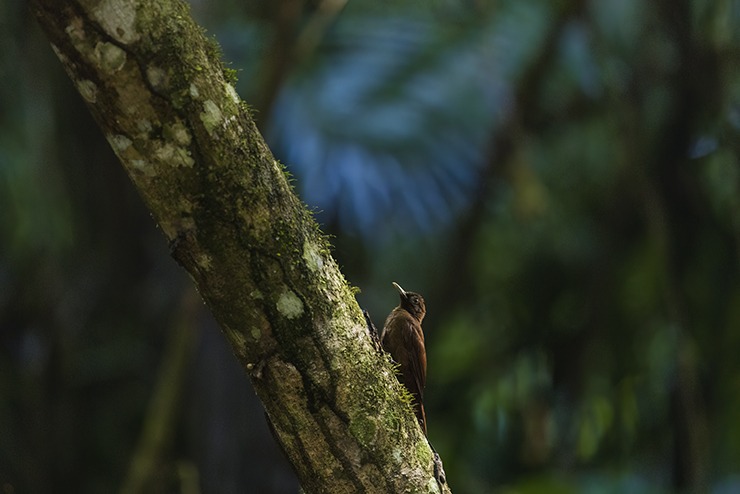
Plain-brown Woodcreeper
The reality is that few woodcreepers are this distinguishable. When there are many species inhabiting the same regions, it can easily become far too complicated – especially when views are fleeting. Fortunately, many woodcreepers can be quite confiding and tolerant of ogling birders. If the feeding is good, they will stick around for quite a while. When they do fly off, they often alight on a tree that isn’t too far away. And if they happen to catch something they typically dispatch their prey immediately, as opposed to flying away with it to eat privately, as many raptors frustratingly do.
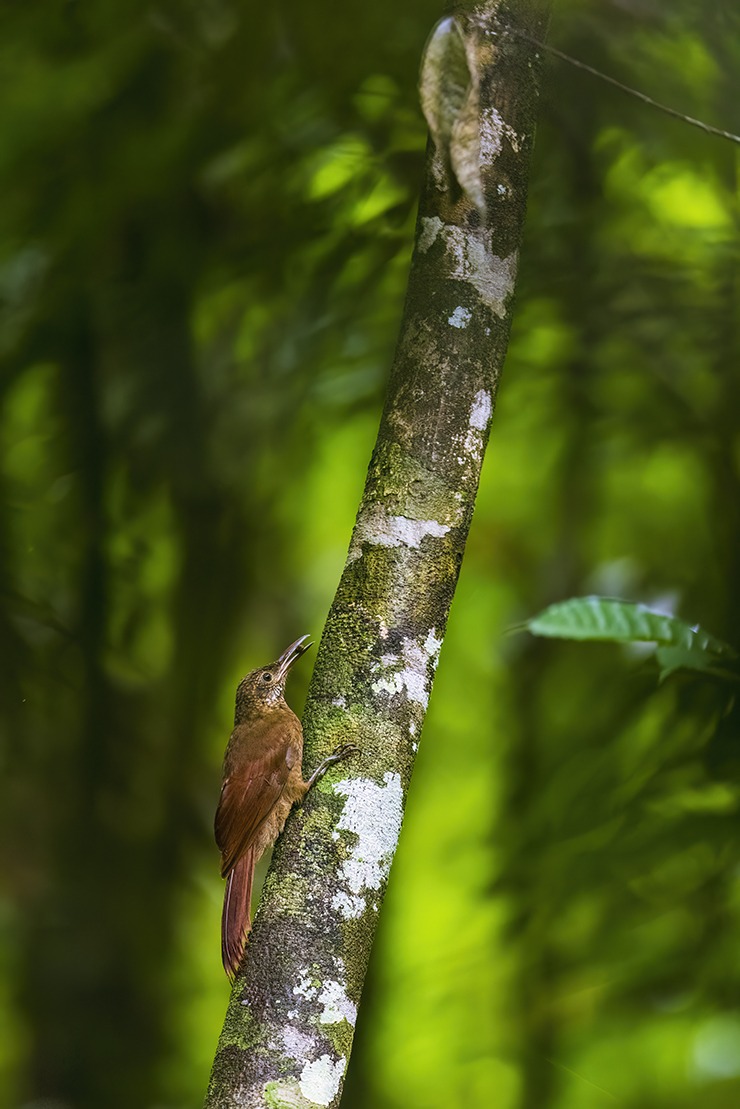
This combination of behavioural characteristics helped us identify this as an Amazonian Barred-Woodcreeper, almost identical to Black-banded Woodcreeper, which occupies the same habitat.
It certainly helps to be birding with someone who knows their woodcreepers. Without experience, I may be able to narrow a sighting down to genus, but even at that point it can become a bit treacherous. Instead of associating with ant swarms, some woodcreepers become part of mixed insectivorous flocks. Imagine encountering one of these such flocks, with a variety of antwrens, antshrikes, wrens, woodcreepers, and maybe even a xenops or two – pure pandemonium for the few minutes it takes for the flock to pass through. Confusingly, there could also be more than one species of woodcreeper in the fray.
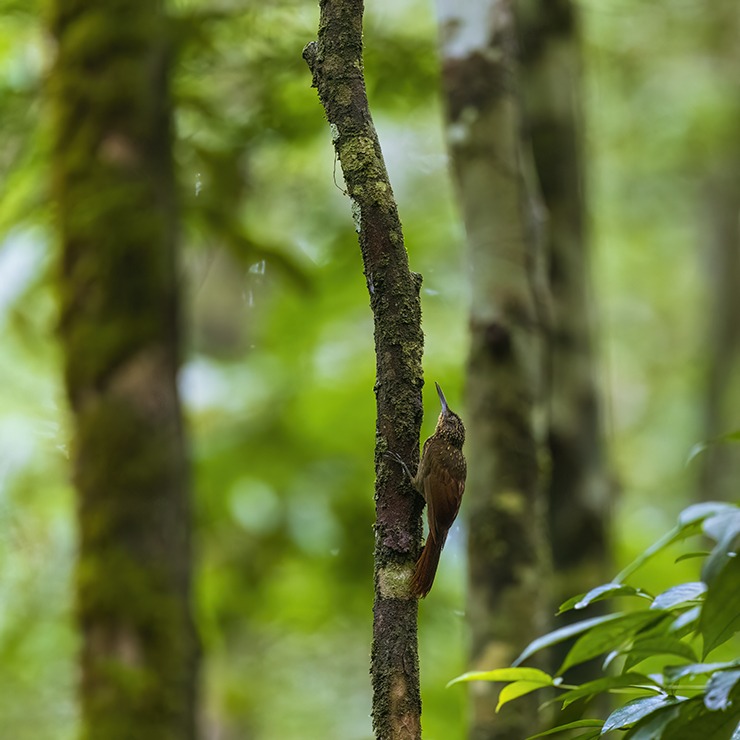
The Chestnut-rumped Woodcreeper often associates with mixed flocks.
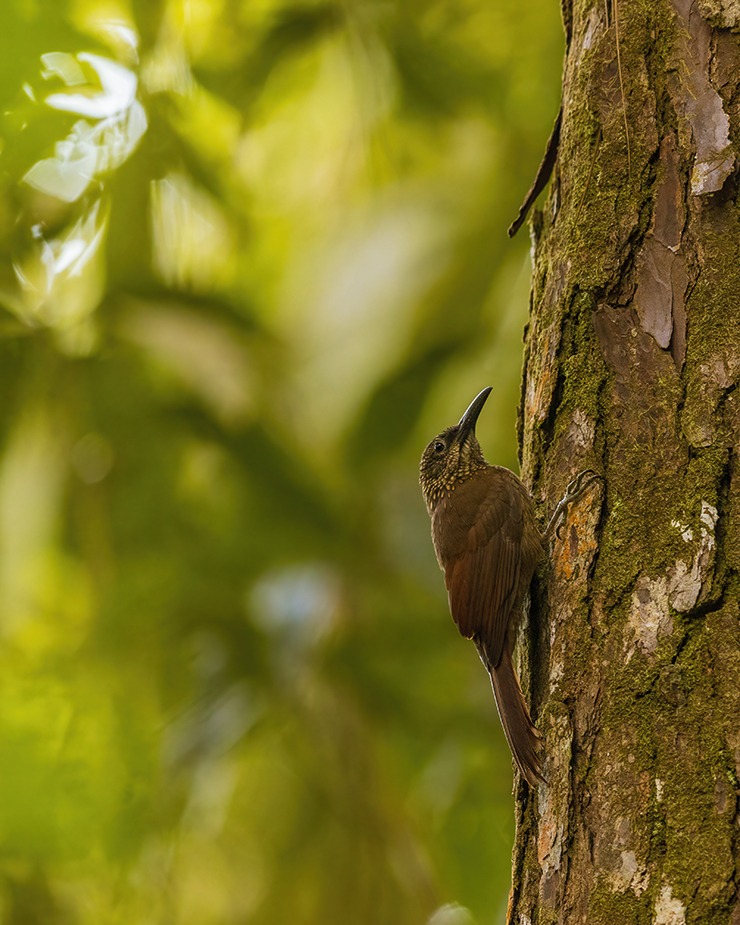
Cocoa Woodcreeper has a thick, mostly dark bill in some parts of its range. Other subspecies have a light-coloured bill, and much more resemble the closely related Buff-throated Woodcreeper. In the future we may see a shuffling of subspecies between these two, it seems.
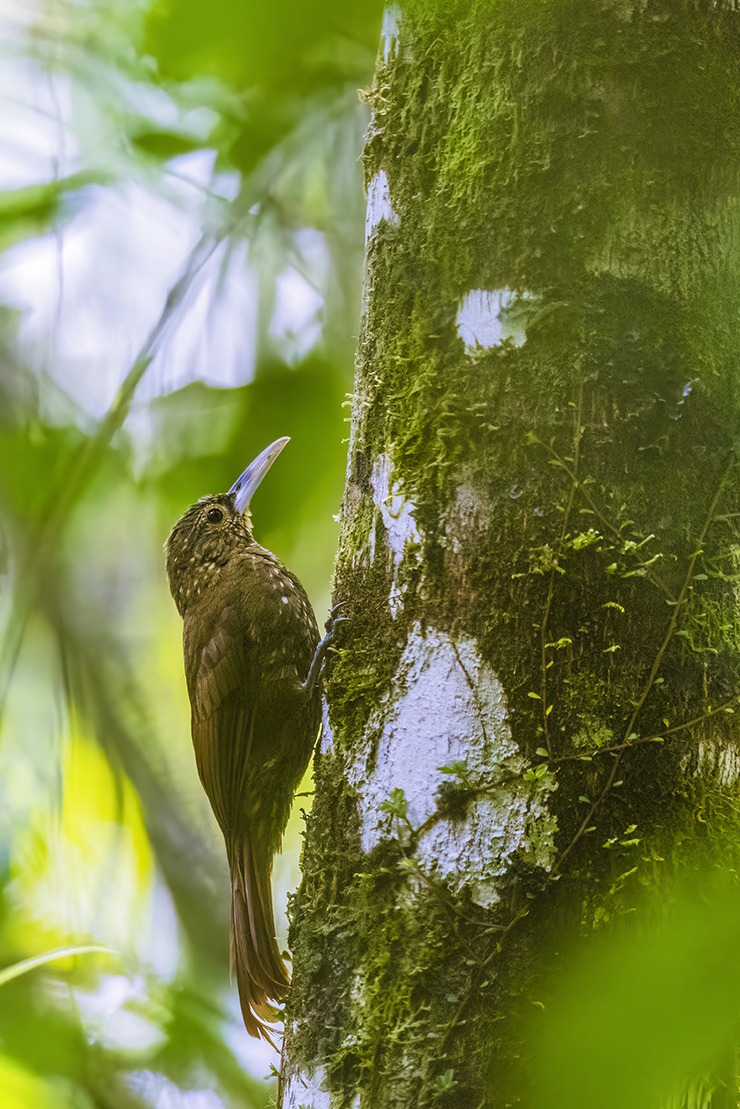
Despite its considerable range that extends from western South America through Central America all the way to eastern Mexico, the Spotted Woodcreeper is – like many other woodcreepers – still poorly understood.
As you may have realised by now, most woodcreepers have bills that curve downwards to some degree. Apart from the xenops-like Wedge-billed Woodcreeper, very few have straight bills. None straighter than the descriptively-named Straight-billed Woodcreeper, its namesake feature actually proving to be its most noticeable and defining.
Straight-billed Woodcreeper
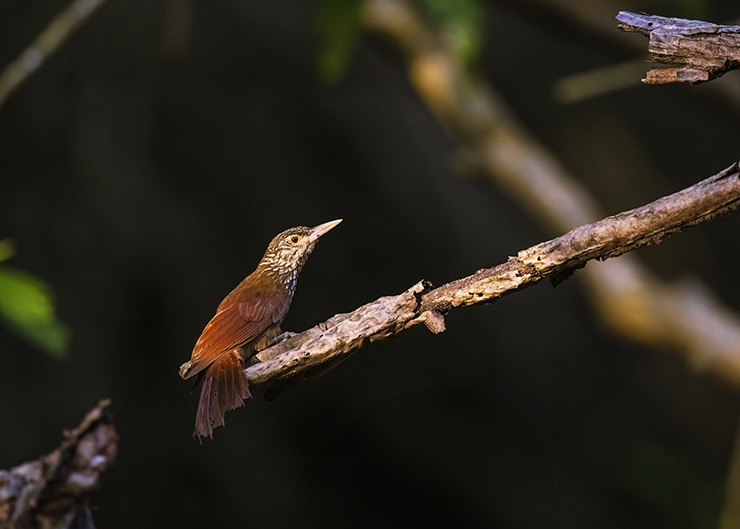
I remember seeing my first Streak-headed Woodcreeper in southern Trinidad, and at that time it was still considered a relatively uncommon species on the island. It was the first woodcreeper I had ever seen; I recall struggling to photograph it as it wound its way around the thick branches of the tree I was under. Since then, Streak-headed Woodcreepers have expanded their range, their predilection for open habitat allowing them to colonise recently cleared areas. I consider them to be one of the more attractive of woodcreepers, in a dainty, regal, hand-carved sort of way.
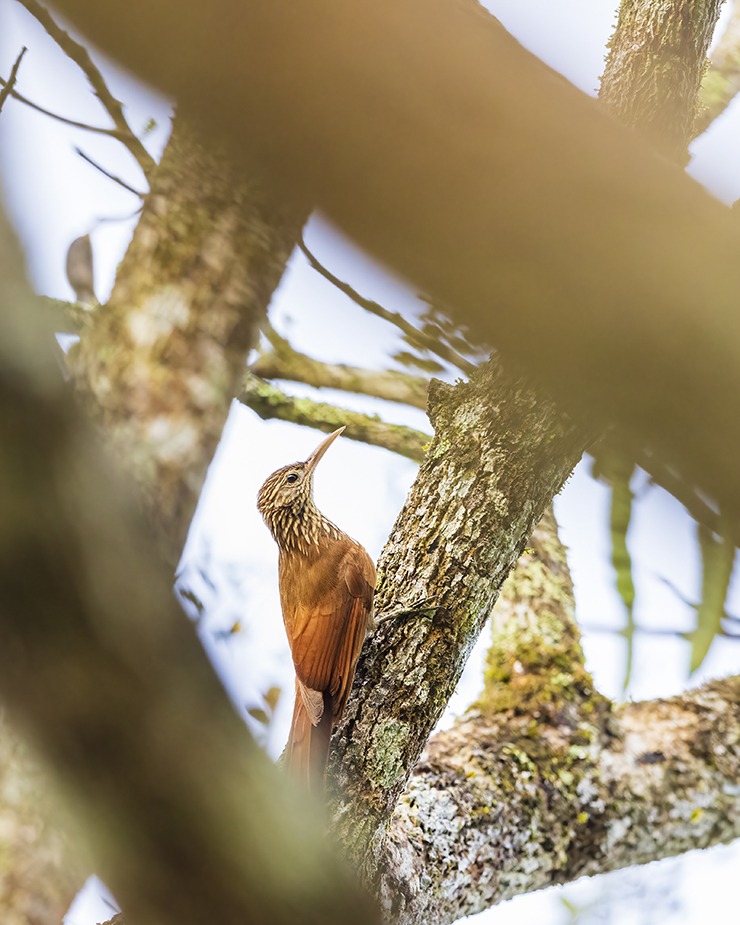
Streak-headed Woodcreeper
I still can’t quite understand how some people consider browns, olives, and greys to not also be legitimate colours – I’ve seen people not pay attention to woodcreepers foraging at near point blank range. Their intricate patterns and subtle variations only add to their appeal, and I hope that this encourages you to cast an extra eye for the woodcreepers in your life.












While preparing for my trip to Panama some years ago I feared Woodcreepers but it turned out to be less of a challenge than I had thought. They do “pose” patiently for you to figure it all out and their calls are distinctive, as Faraaz points out. In dim light they still look like their rendering in the guidebook, unlike hummingbirds I hasten to add (merely to annoy the hummer crowd).
Thank you for this delightful introduction to a species of bird I’d never heard of.