

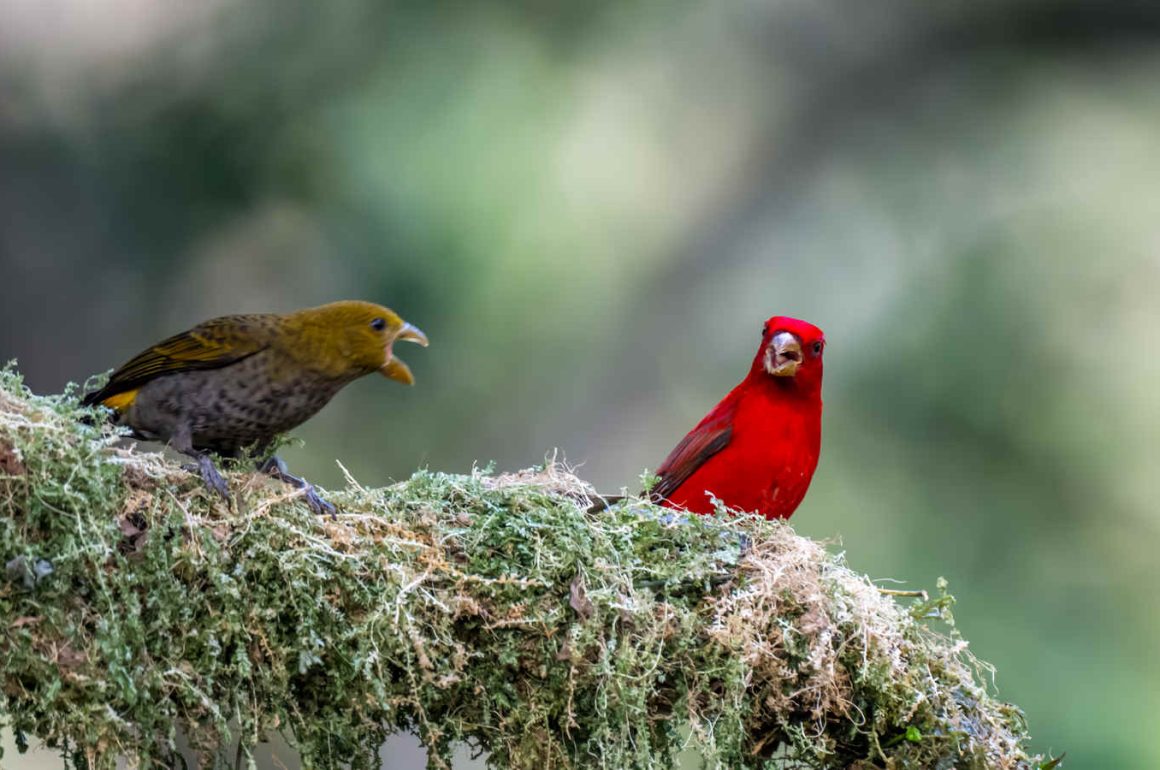
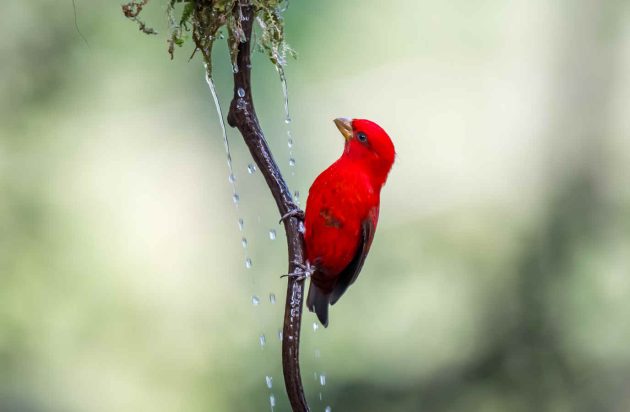
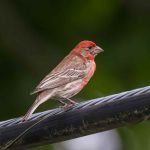
For reasons not entirely clear to me (and most likely completely obscure to any readers of this post), seeing the Scarlet Finch at Baihualing, Yunnan, reminded me of a song by a now-defunct German band. Specifically, “Irgendwann Regen” (“Rain Someday”) with the German lines
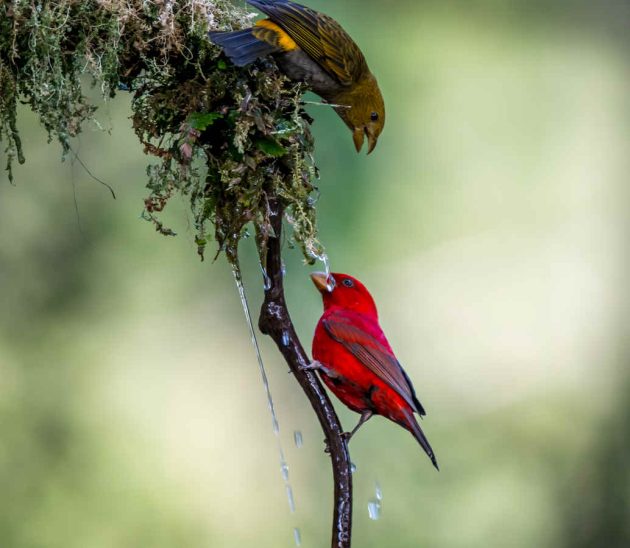
manche stehen auf einer leiter
und die anderen sehen rauf
und ich weiss die unten warten
und die oben tun es auch
which translates as
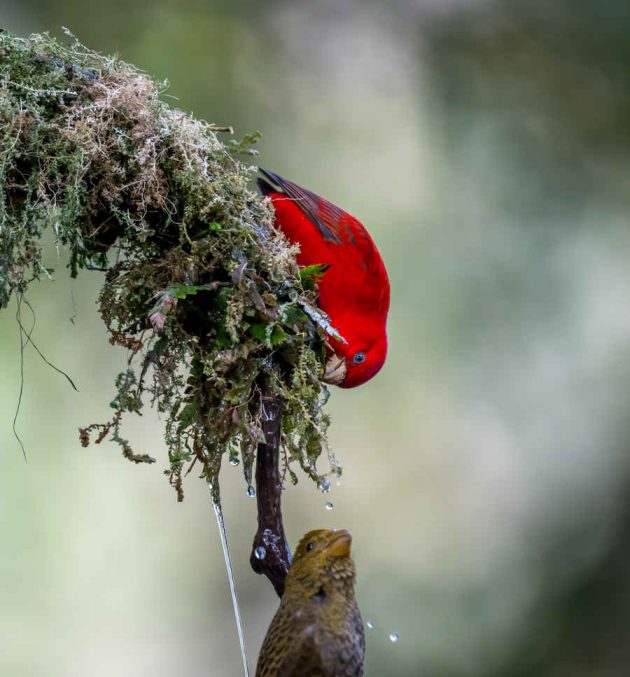
Some are standing on a ladder
And the others are looking up
And I know those below are waiting
And those above are too
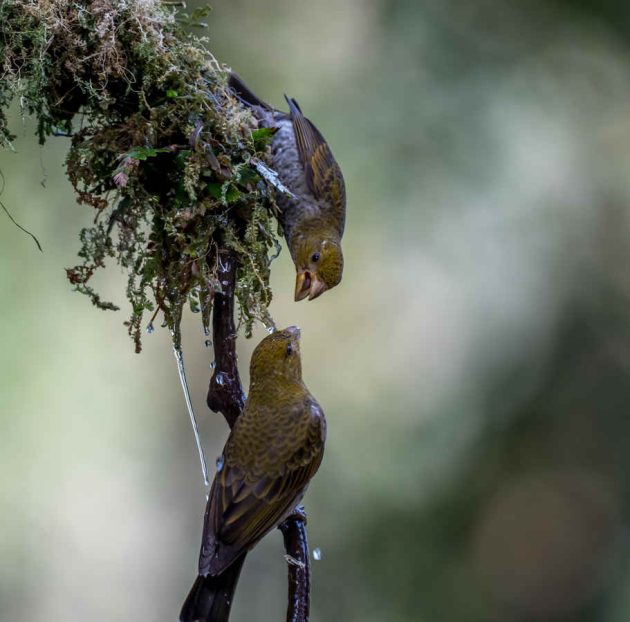
Curiously, the name of this band is Fink, German for finch.
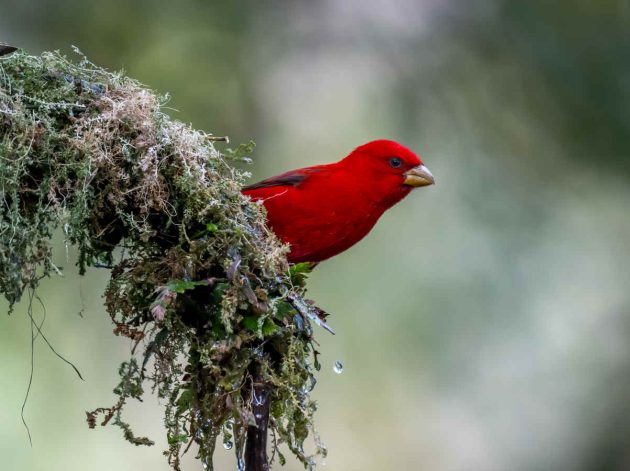
And I know, following a writer’s nonlinear stream of thoughts tends to be unrewarding unless you are in love with the writer, which I hope you, the reader, are not. Take it just as the price you have to pay for getting to see some bird photos.
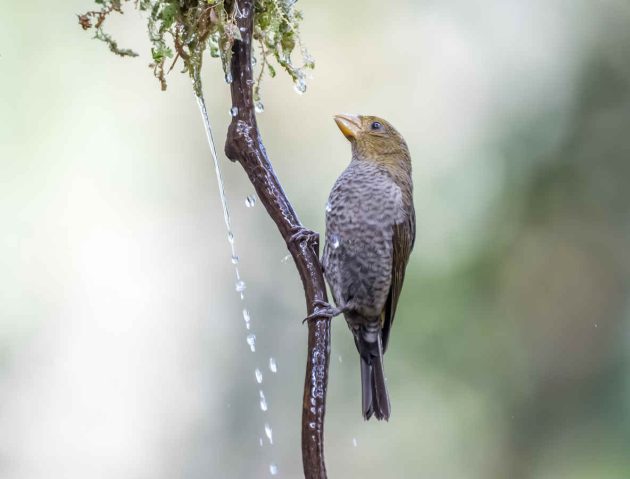
Anyway, taking these photos is a more prosaic affair. You just join about 25 Chinese photographers and pay 100 RMB (about 14 USD) to the people who organized the setup.

For some reason, Chinese birds seem to be relatively tolerant of noise – if it weren’t this way, no birds would ever come to such places. In this case, the attraction is the water source in close proximity to a flowering tree, which seems to provide food for the finches.
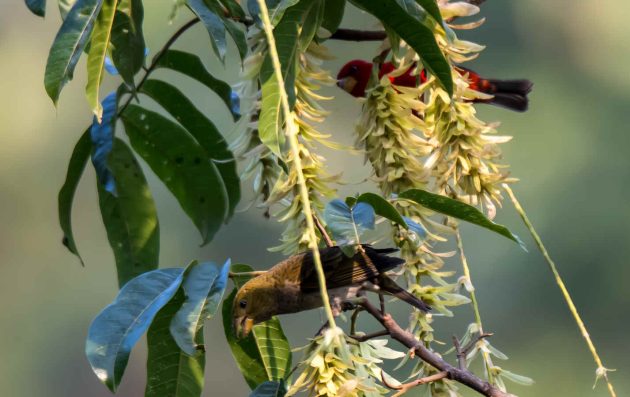
In other such locations, food is often added. This model has spread from Baihualing to a number of locations in China, as outlined in a detailed paper that also mentions the Scarlet Finch and even shows it in an illustration (used with permission of the author).
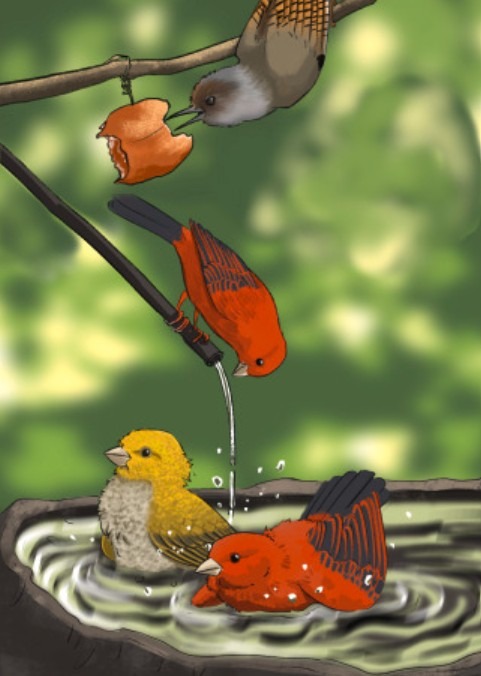
The paper concludes that such locations (which the paper calls Hide-in-Bird Pond) “can serve as an integrative socio-ecological platform that aligns conservation objectives with sustainable rural development”, and indeed, most of these locations are in poor, remote rural areas, often close to natural reserves (the cynic in me assumes that the birds only survive there because of the limited development).
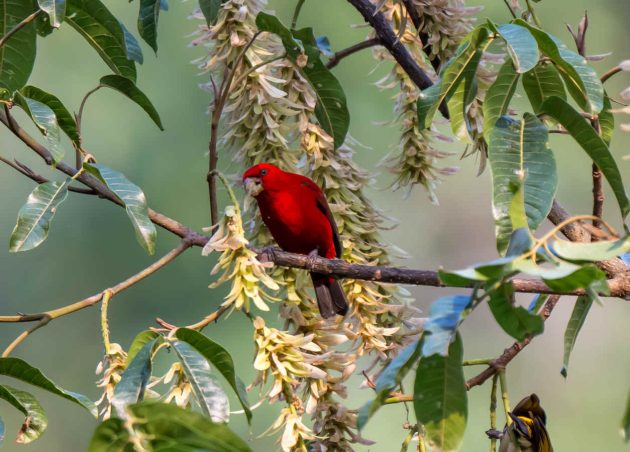
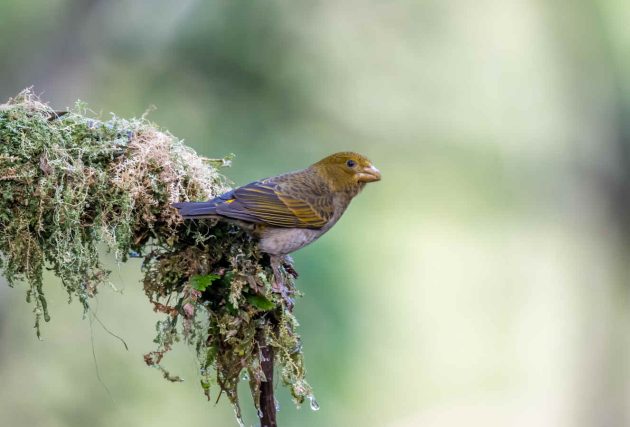
An obvious feature of this finch is that it is sexually dimorphic, which makes me sound rather more knowledgeable than saying that the males and females look different. I guess the bright red of the males would not work too well when incubating, but it is probably regarded as an absolute must for the choosier among the females.
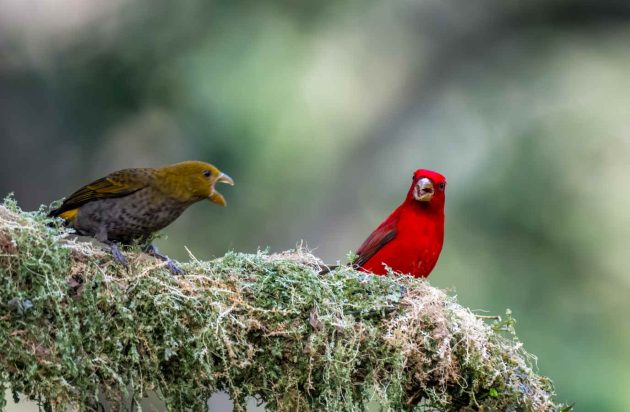
Given its bright color, the finch is also a highly visible bioindicator. In one study on reforestation in the western Himalayas in India, the species was only found after the reforestation (and the overall number of bird species found in the research area increased substantially as well, though the numerical increase indicated in the paper makes me think that the authors of the paper have an understanding of calculating percentages that is comparable to that of one D. Trump).
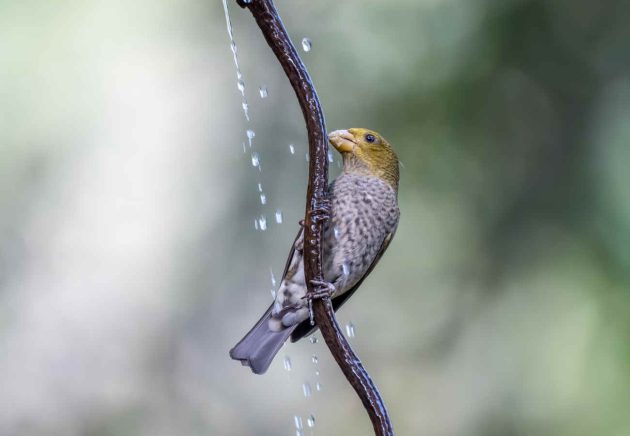
Finally, the scientific name Carpodacus sipahi refers to the Urdu word Urdu sipahi, which means soldier. It does not actually mean red (as one might think), but apparently, the association goes something like soldiers – distinctive uniforms – often red – bright red bird.









Leave a Comment