

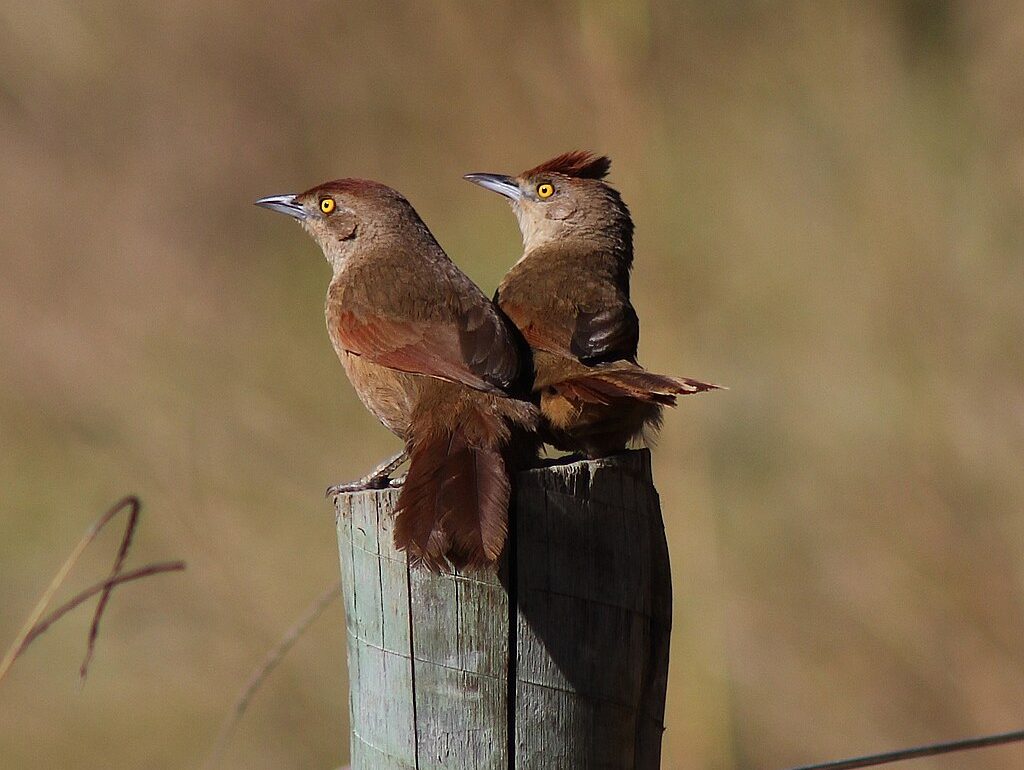
Last week I read David’s article about his life list. In it, he muses about the Firewood Gatherer, the Greater Thornbird and the Buff-bellied Flowerpecker. Hang on, I thought, I have seen these birds in Brazil. I should write about the trip I saw them on.
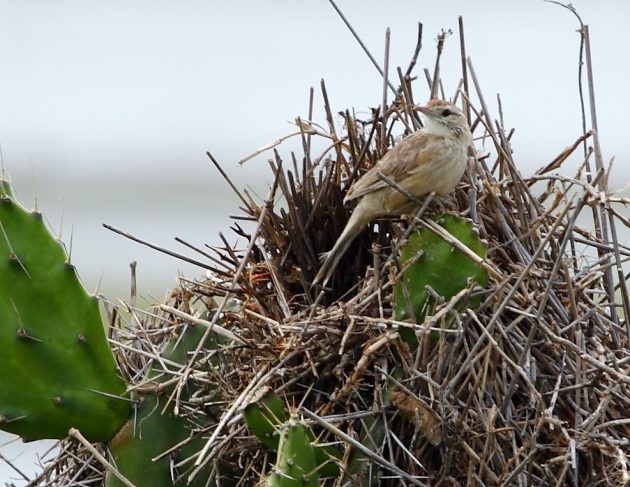
Well, turns out I have seen the Rufous-fronted Thornbird in Brazil, not the Greater. Never even saw the Firewood Gatherer, and the Buff-bellied Flowerpecker is now called Fire-breasted Flowerpecker and I have seen it in Malaysia, not Brazil. Flowerpiercers are Brazilian, peckers are not. Pause for giggling.
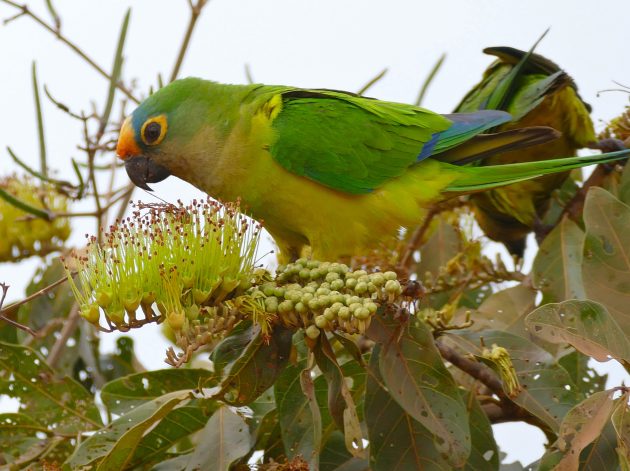
The memories may have been false but I really want to tell you about my trip to Lapa Vermelha. I was in Minas Gerais for business and as usual I planned for a birding trip while there. Right next to the airport is the Área de Proteção Ambiental do Carste de Lagoa Santa, a natural reserve. I was there with my friend, business partner and compadre Hilton, who is an obsessive numismatic – a kindred spirit. As such, he understands the priority of matters, so our first stop was of course the reserve. As a professional geologist, my Brazilian friend was mostly interested in the archaeology and karst landscape, but he enjoyed the overflying American Black Vultures, the anonymous Buteo sp., the Crested Caracara and the American Kestrels. The screeching Yellow-chevroned Parakeets and Peach-fronted Parakeets were hard to miss too.
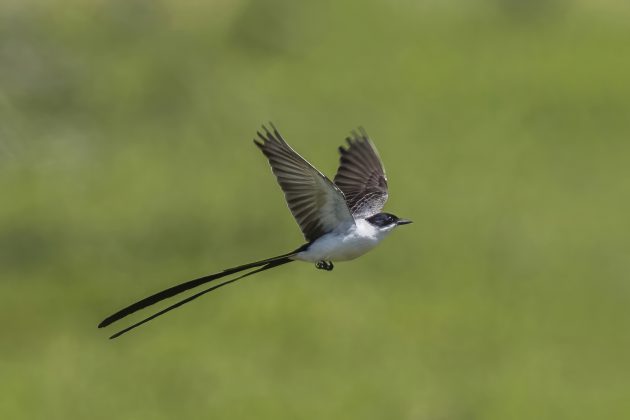
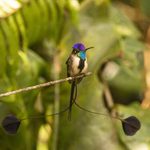
Our walk took us through a wooded area to the caves for which the reserve is famous. It is here that Luzia was found – the earliest human remains found in South America. Location, location, location – this place looked like a nice piece of real estate, even 13 thousand years ago. The feathered denizens of these woods included Green-barred Woodpecker, Narrow-billed Woodcreeper, Rufous Casiornis, Saffron-billed Sparrow, Cocoa Thrush and the common, but delightful Swallow-tailed Hummingbird. We also saw Cliff Flycatcher, Streaked Flycatcher and Fork-tailed Flycatcher on the forest edge.
Just outside the natural areas were some farms and open fields. It is here we encountered more common birds, like the world-conquering House Sparrow. We were in Brazil so the cow-loving Cattle Tyrant, Western Cattle-Egret and Shiny Cowbird held no surprise. Brazilians like their bovines dead and on a barbeque, but birds prefer the defecating form. Sayaca Tanager and Great Kiskadee near the farm houses, and Blue-black Grassquit in the grassy meadows. We also spotted a single specimen of White Monjita and two Masked Water-Tyrant. The Rufous-fronted Thornbird that had triggered my memory had built a massive nest in a tree along the country path. These birds are members of the Furnarid family – mainly brownish birds that compensate for their dull looks with interesting behaviour. I have mentioned the Rufous Hornero before, a species after which the family has been named. Not all Furnarids are potterers. David’s Firewood Gatherer and my Rufous-fronted Thornbird break every fire safety regulation by stockpiling flammable sticks and twigs up in a tree. They then sit back, look proudly at their work and call it a nest. These bad boys are so confident and charming that females fall for the ruse and lay their eggs in the contraption – I am not saying feminism is dead, but…
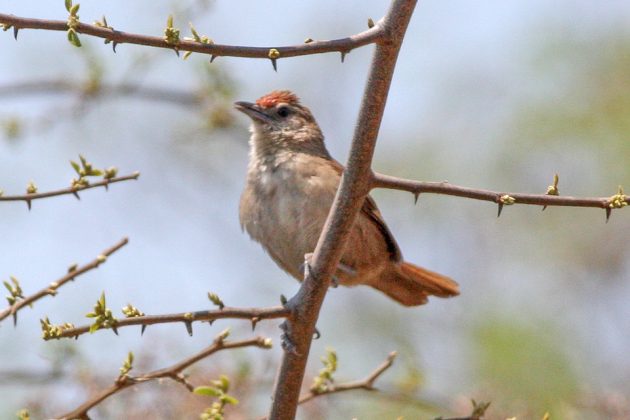
Photo credits all via Wikimedia Commons:
Firewood Gatherer by Hector Bottai, CC BY-SA 4.0 https://creativecommons.org/licenses/by-sa/4.0
Peach-fronted Parakeets by Bernard DUPONT from FRANCE, CC BY-SA 2.0 https://creativecommons.org /licenses/by-sa/2.0
Fork-tailed Flycatcher by Charles J. Sharp, CC BY-SA 4.0 https://creativecommons.org/licenses/by-sa/4.0
Rufous-fronted Thornbird by Ron Knight from Seaford, East Sussex, United Kingdom, CC BY 2.0 https://creativecommons.org/licenses/by/2.0
Greater Thornbird (header) by Under the same moon…, CC BY 2.0 https://creativecommons.org/ licenses/by/2.0








Leave a Comment