

Highlights
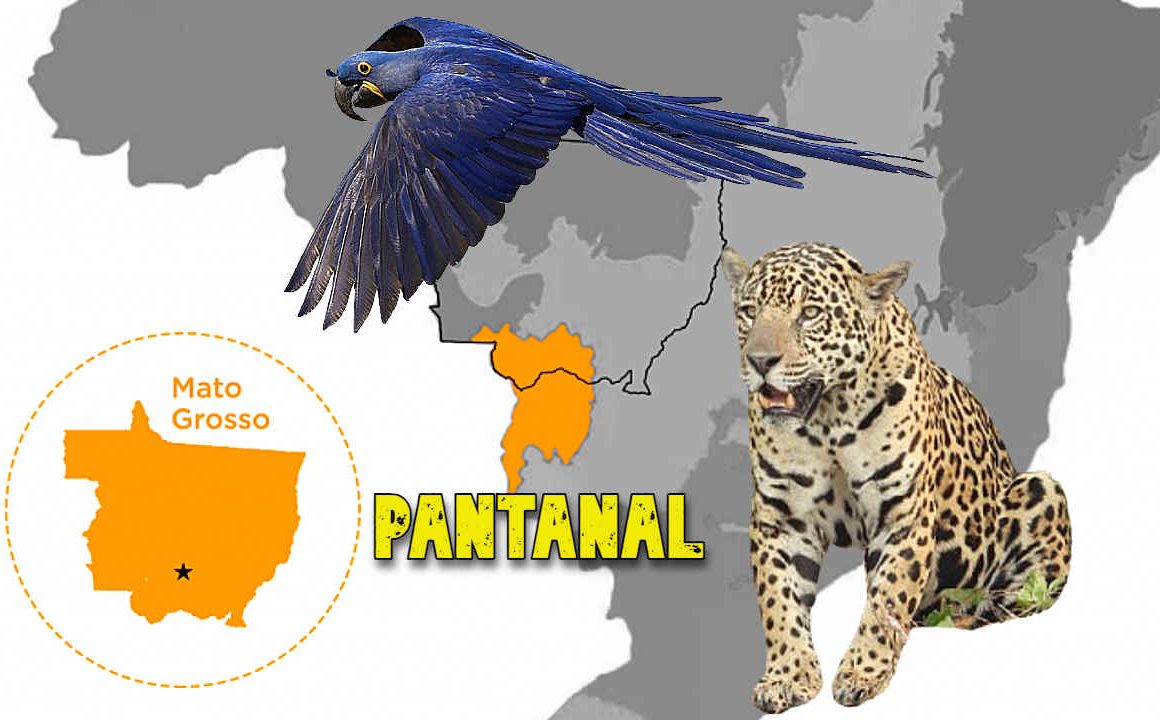
Pantanal is the world’s largest tropical wetland, covering around 150,000 square kilometers. It is home to an absolutely amazing diversity of wildlife, including the highest density of jaguars anywhere on Earth! It is often called the “Kingdom of Waters” because of its seasonal floods that shape the ecosystem. Declared a UNESCO World Natural Heritage Site and Biosphere Reserve for its ecological importance.
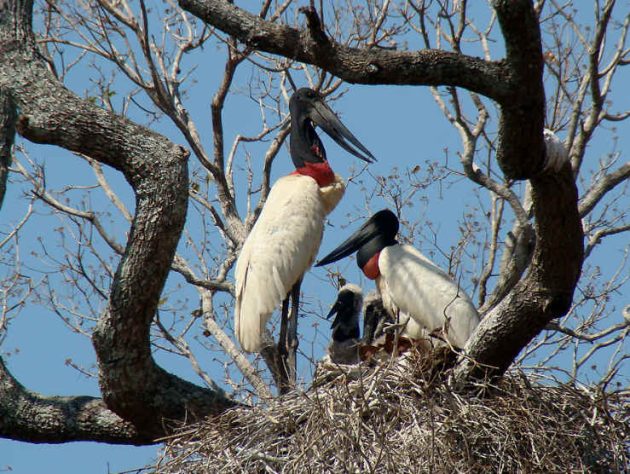
This is the busiest hotspot for bird watching and wildlife photography in Brazil. Over 650 bird species, including the Jabiru Stork, the symbol of the Pantanal, can be easily seen at the many marshes and lagoons. Although the Hyacinth Macaw, the largest parrot in the world, might be the most wanted by birders and photographers. Pantanal is not made only of birds but Jaguars, Anteaters, Tapirs, Capybaras, Coatis, Monkeys, Deers, Caimans and Anacondas are all part of the environment. A true Wildlife Safari in South America!
Jabiru Stork (Photo Luis Vargas)
Key Bird Species and Families
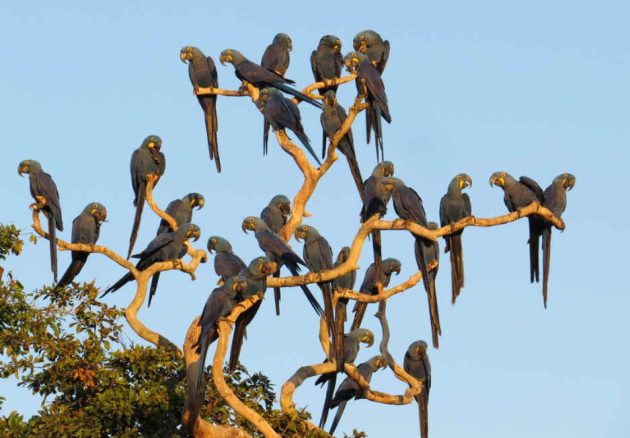
- Hyacinth Macaw
- Blue-and-yellow Macaw
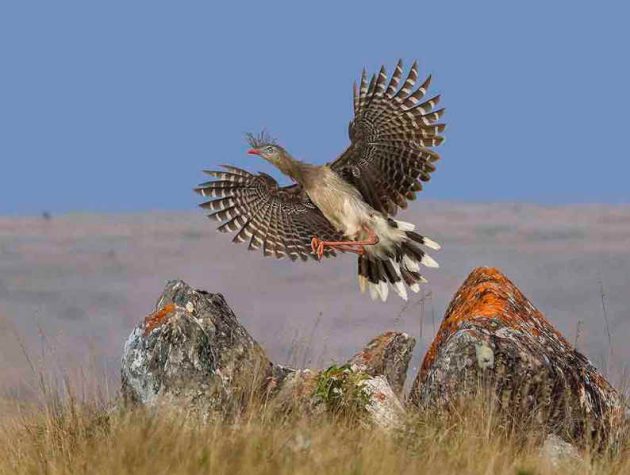
- Red-legged Seriema
- Toco Toucan
- Sungrebe
- Streamer-tailed Tyrant
- White-fronted Woodpecker
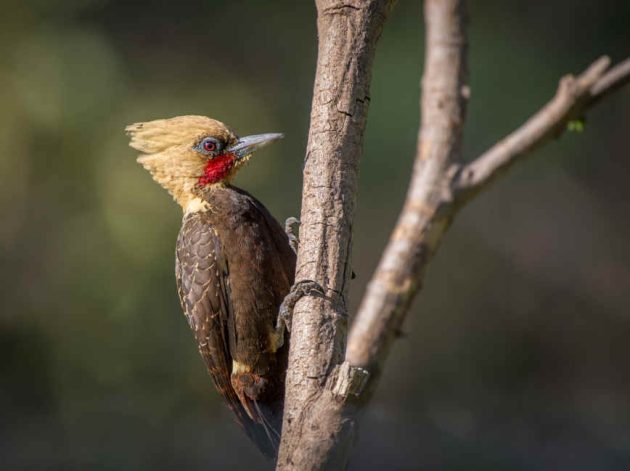
- Pale-crested Woodpecker
- Blaze-winged Parakeet
- Yellow-faced Parrot
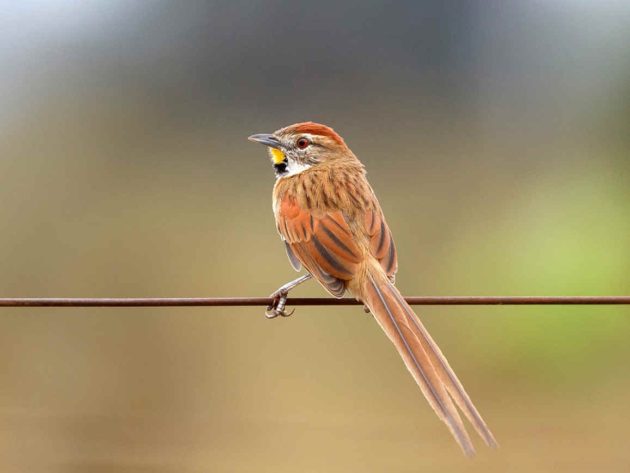
- Chotoy Spinetail
- Chaco Puffbird
- Jabiru Stork
- Boat-billed Heron
- Capped Heron
- Southern Screamer
Pale-crested Woodpecker (Photo Carlos Goulart)
Best Regions for Birding
Pantanal is divided almost in half by the Cuiabá river. On South Pantanal the best places to bird are (all of them offer truck safaris and boat rides):
- Aguapé Lodge is one of the best “pousadas” of South Pantanal. Located in Aquidauana, which is quite close (3 hrs drive) from Campo Grande, the capital of Mato Grosso do Sul State. This super hotspot for bird watching and wildlife photography has outstanding food, and the accommodations are really great. “Aguapé” means water-hyacinth, and is a farm that transformed itself into a charming lodge. Red-legged Seriemas and Yellow Armadillos give welcome to the visitors on their arrival! Toco Toucans will try to snatch your papaya at breakfast! The fauna is everywhere you turn. Parrots and parakeets hang from the mango trees completely disguised. If you really want to see a Giant Anteater in the wild this is your place to stay.
- Pequi (local fruit) Lodge is Aguapé ‘s neighbor and has a very similar structure. A true paradise for nature lovers with all the convenience that a nature lodge can provide in the middle of the wilderness. Just like Aguapé lodge, Pequi’s main activities are the Safaris on modified trucks and jeeps and boat rides. Those activities are the best way to maximize the number of wild animals in your list. What a great place for birding, as we can see many parrots like Scaly-headed, Orange-winged, and Turquoise-fronted Parrots. Lots of tyrant-flycatchers like Streamer-tailed Tyrant, Bearded Tachuri, White and Grey Monjitas, Vermillion Flycatcher, and many others can be seen every day.
- Just head west on the same road from Aquidauana, and you will find signs to turn to this amazing farm and nature lodge. This is the fancier option in South Pantanal. “Refúgio Ecológico Caiman” has everything you need to have the trip of your life. Diurnal and nocturnal Safaris will render incredible sightings and pictures of a super-rich local fauna! You might get lucky and find a Tapir, or maybe an ocelot, or even the mighty jaguar. Or maybe you get all of them on your first outing!
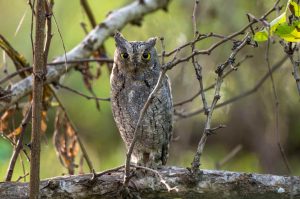
- “Fazenda São Francisco” is another farm transformed into a hotspot for birding and wildlife photography. After a busy morning in the field, you will be so pleased to have a nice and cool swimming pool waiting for you at the lodge. The food is local and typical, fried fish ribs are always on the menu, impossible to resist. Birding on the Safari trucks can render many birds to your list such as Undulated Tinamou, Ferruginous Pygmy-owl, Greater Rhea, Golden-green Woodpecker, Yellow-collared Macaw, Nanday Parakeets, Plush-crested Jay, Thrush-like Wren, Plumbeous Ibis, Saffron-billed Sparrow and many others. The sheer diversity of birds might get a bit overwhelming to some people.
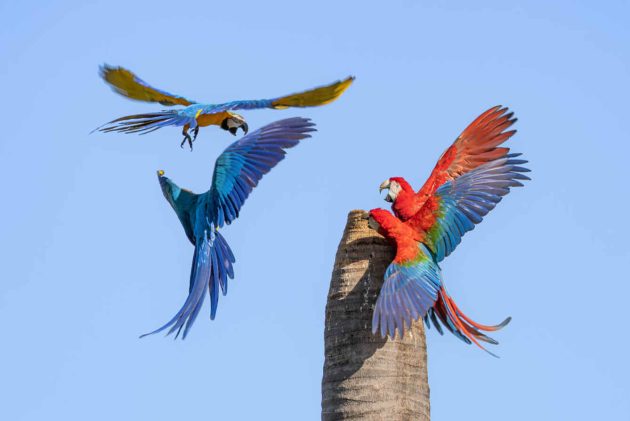
- Further to the west the wilder it gets. That is when you will find the ”Xaraés” Lodge. Be prepared to be completely blown away by the sight of a bunch of Hyacinth, Blue-and-Yellow, and Red-and-green Macaws sitting on the same tree! The boat ride on the Abobral River is a true delight in the afternoons. From the comfort of the boat, you might get all five species of Kingfishers, other birds could be Sunbittern, Yellow-billed and Large-billed Terns, Long-winged Harrier, White-winged Swallow, Pale-legged Hornero, Tawny-bellied Seedeater, and several others.
Blue-and-yellow and Red-and-green Macaws (Photo Francisco Bezerra)
Best Birding Season
Pantanal in the rainy season doesn’t work for obvious reasons. The dry season is from June to October. The very best months (and also most busy) are July, August, and September as flocks of birds gather on drying creeks and ponds, a true feast. Good to look for Anacondas crossing the road.
Red-legged Seriema (Photo Lester Scalon)
Birding Trip Suggestion(s)
To visit Pantanal, you don’t need to pay an entrance fee. You can rent a car and drive for 2 hours to Aquidauana and Miranda, the entrance of South Pantanal.
Remember to make reservations at least one year in advance, as Pantanal is busy. Same thing regarding hiring a guide. Please give preference to Brazilian guides. Also, make sure your guide is provided with a private accommodation, otherwise he will be sleepy and exhausted after the first couple of days of your tour (as there is no proper rest in shared rooms with bus drivers).
Chotoy Spinetail (Photo Richard Stubing)
Practical Tips
Even if you are not planning to visit Pantanal in the rainy season, it is advisable for you to rent a 4×4 car, as rain can be unpredictable. Be very careful driving at night on the dirt roads. During the day, when in a stop for a picture, don’t stay too far from your car, van or group. Same thing for trails, avoid having solo strolls, especially at night. Jaguars are very big cats.
It can be quite warm on some days, so always bring a bottle of water with you and wear a hat. Wear long pants if you are hiking through trails, and bring insect repellent. If you are allergic to insect bites, bring your proper medicine.
The outings must be made very early (5 am), as around 9 or 10 am, it might be too warm to have any bird or wildlife activity. The afternoons only start after 3:30 pm and usually are boat rides combined with a night safari.
You will take thousands of pictures a day everyday, so be prepared in regard to batteries and memory cards. Bringing an universal outlet plug adaptor might save you.
Hyacinth Macaw (Photo Willian Menq)
Books
- Birds of Brazil: a Field Guide – Ber Van Perlo
- Birds of Brazil: Pantanal and Cerrado – Martha Argel
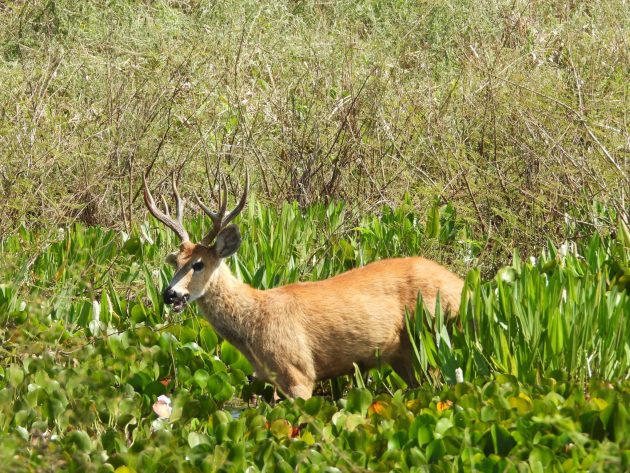
Marsh Deer (Photo René Santos)
Links
- Aguapél Lodge – www.pousadaaguape.com.br
- Pequi Lodge – Pousada Pequi | Sua autêntica Pousada Pantaneira
- Caiman Ecologic Refugee and Lodge –Caiman, Pantanal
- São Francisco Lodge – Fazenda San Francisco Pousada no Pantanal do Rio Miranda
- Xaraés Lodge – Pousada Fazenda Xaraés Ecoturismo – Corumbá – Mato Grosso do Sul
By René Santos
René Santos is a bird guide based in SaoPaolo, Brazil. René can be reached at renearara@gmail.com and has been profiled in our series on global bird guides. He is also present on YouTube.








Fazenda São Francisco is fantastic. Great food too.