

What is your favorite bird species?
Sword-billed Hummingbird, because it ranks up there as one of the bird species with the most surreal appearance.
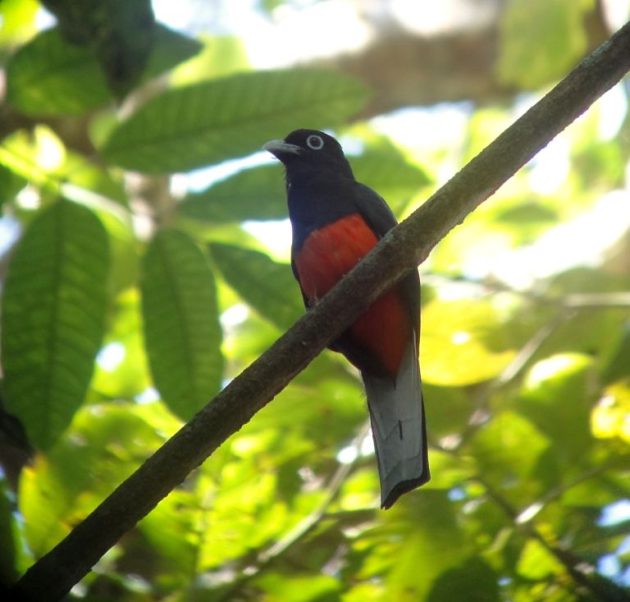
Baird’s Trogon
What is your name, and where do you live?
Patrick O’Donnell, Costa Rica
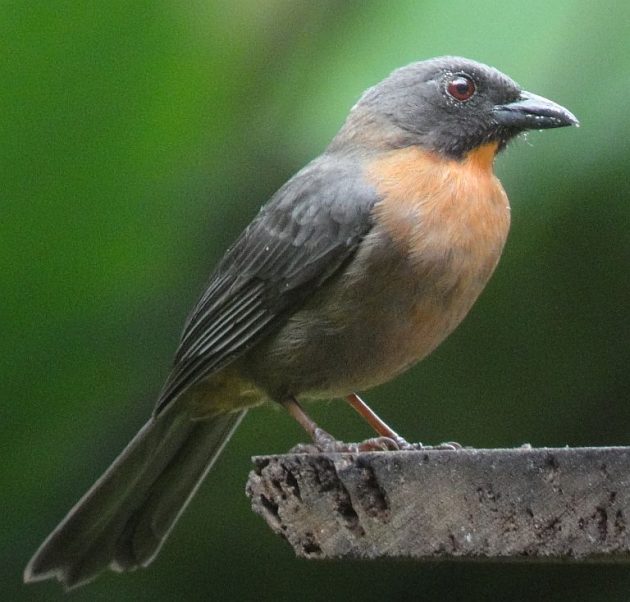
Black-cheeked Ant-Tanager
What are the main regions or locations you cover as a bird guide?
Anywhere in Costa Rica, but especially day trips out of the Metro San Jose area.
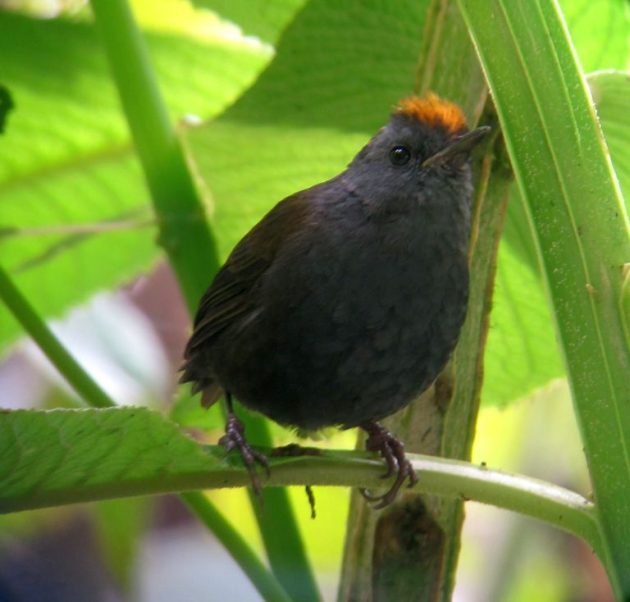
Wrenthrush
How long have you been a bird guide?
I have been guiding birders since 2000.
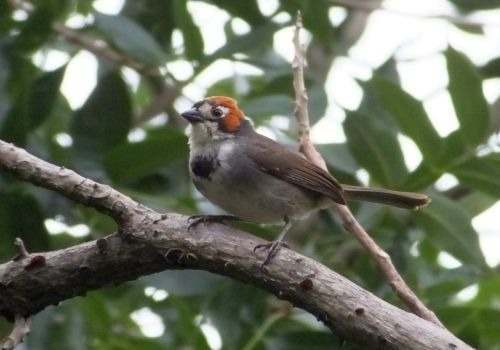
Cabanis’s Ground-sparrow
How did you get into bird guiding?
Birding has long been an essential part of my life (I started when I was 7 in 1978), and I enjoy helping people experience birds.
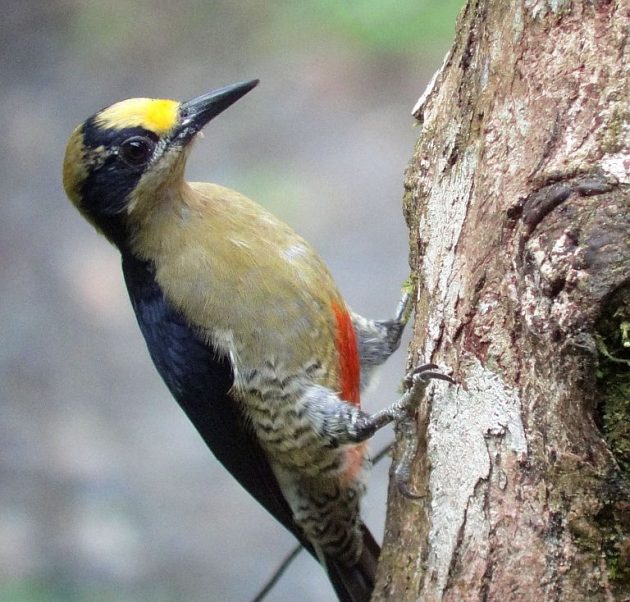
Golden-naped Woodpecker
What are the aspects of being a bird guide that you like best? Which aspects do you dislike most?
What I like best is helping people discover birds and see species they have always wanted to see. If there’s anything to dislike, that would be when we visit a site that has been essentially destroyed. Although this doesn’t usually happen in wilder parts of Costa Rica, it is sadly commonplace in the heavily populated Central Valley region, where remaining green space is seriously threatened by urbanization.
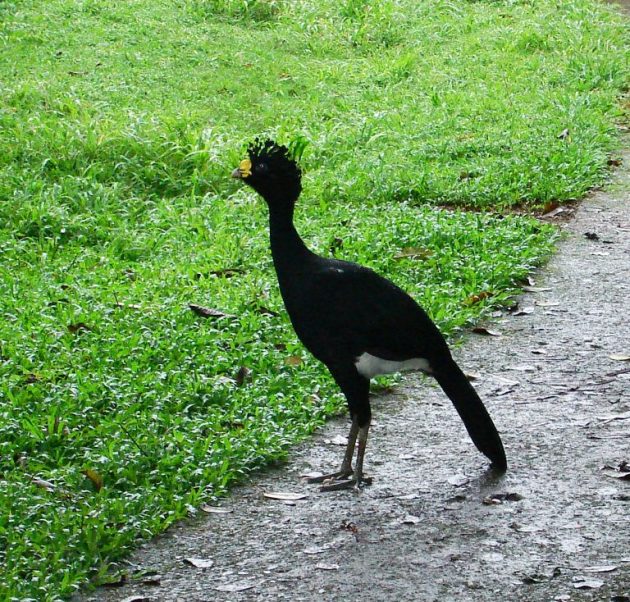
Great Curassow
What are the top 5-10 birds in your region that are the most interesting for visiting birders?
With hundreds to choose from, that’s not the easiest question to answer, but I’ll give it a try. I’ll pick these ones:
- Great Curassow – Very rare and often locally extirpated by hunting in other parts of its range, thanks to protection, Costa Rica is one of the easiest countries to see this magnificent bird (the other is Belize).
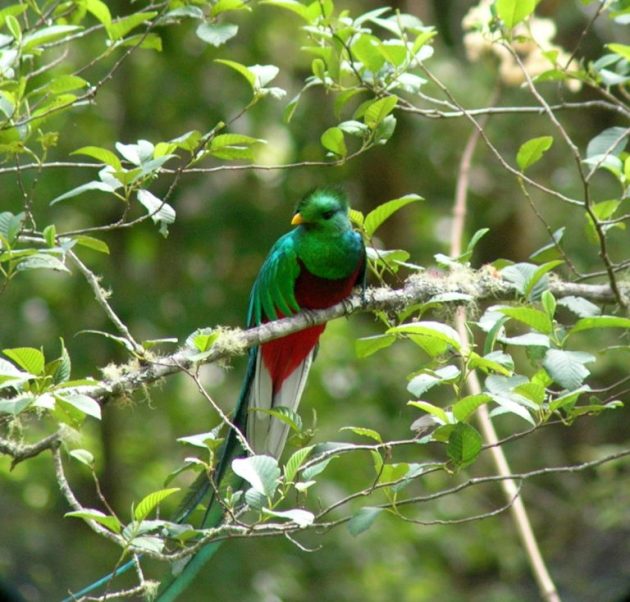
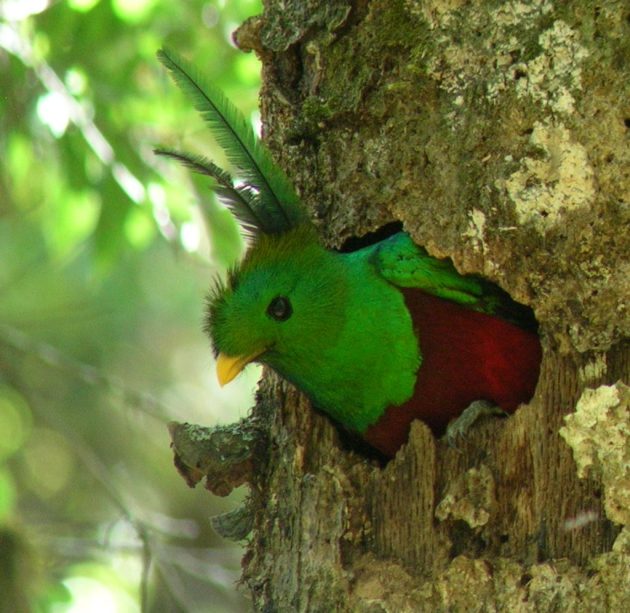
- Resplendent Quetzal – Costa Rica provides several easily accessible sites to experience this mega spectacular species.
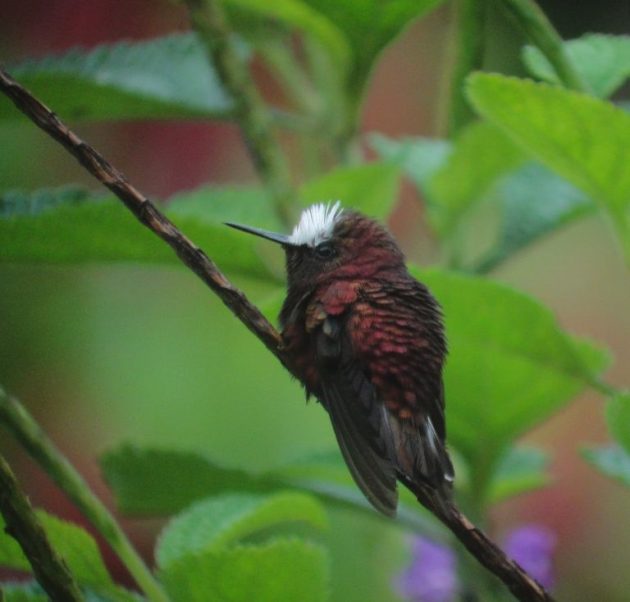
- Snowcap – Of the 50-plus hummingbird species in Costa Rica, this small gem is at the top of most visiting birder’s wish lists and with good reason; the male looks like it was soaked in burgundy and then had the top of its head dabbed with reflective white paint!
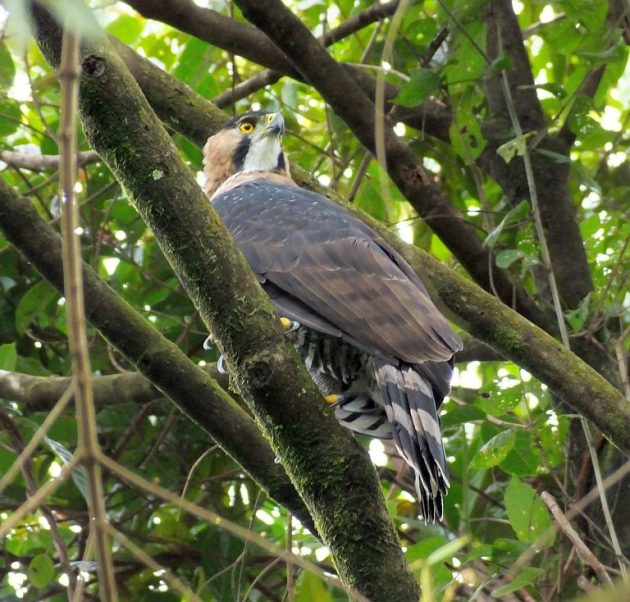
- Ornate Hawk-Eagle – Although this fancy rainforest eagle has a big range, it seems to be easier to see in Costa Rica. It’s sort of like a goshawk on steroids (a frightening yet tantalizing concept).
- Baird’s Trogon – A real stunner in a family of stunning birds, this species is nearly restricted to southern Costa Rica.
- Golden-naped Woodpecker – Another beautiful bird nearly restricted to southern Costa Rica.
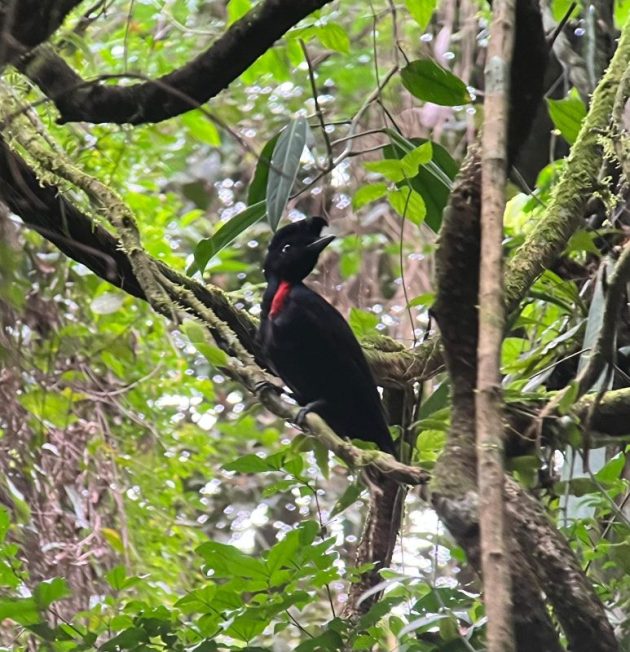
- Bare-necked Umbrellabird – Rare and endangered, laying eyes on one of these crow-sized cotingas is always an achievement. It might take some trekking on muddy trails, but if you are lucky enough to see an umbrellabird, you’ll probably get really good looks. Most seem fearless and can forage in the upper understory, sometimes at fairly close range!
- Cabanis’s Ground-Sparrow – Essentially a tropical towhee, this fancy sparrow is uncommon, skulky, likely threatened, and only found in Costa Rica.
- Black-cheeked Ant-Tanager – This uncommon bird with the salmon-tinged throat is a local species of humid forest in and near the Osa Peninsula.
- Wrenthrush – This montane skulker is in a family of its own and endemic to the Costa Rican and western Panama highlands.
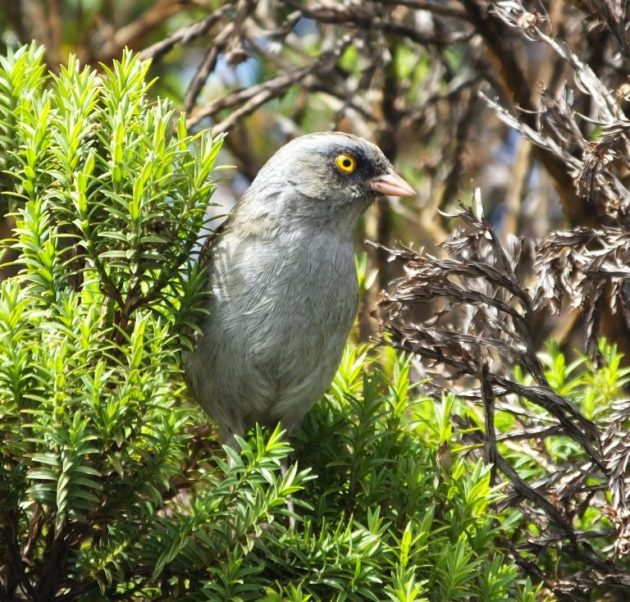
- Volcano Junco– I include this as a bonus 11th species because it is nearly restricted to Costa Rica; you have to look for this junco in high elevation “paramo” habitat, and it has piercing yellow eyes that give it a perpetual angry appearance.
Bare-necked Umbrellabird – Image taken by Niall Keogh
Can you outline at least one typical birdwatching trip in your area? Please briefly describe the locations, the key birds, and the approximate duration of such a trip
Costa Rica might be small (think Wales or West Virginia), but it has a wealth of birding opportunities. One of the more common routes is one suitable for a week to ten days and touches on several major habitats. I have organized and guided this route on several occasions, and we have usually seen more than 400 species. With that in mind, I’ll only list a few key birds for each location.
- After starting in the Central Valley (San Jose metro area), we look for high elevation and cloud forest species in the Poas Volcano-Varablanca area. All birding is from good roads adjacent to the highland rainforest. Some key species include Volcano and Fiery-throated Hummingbirds, along with several other hummingbird species, Resplendent Quetzal, and many species endemic to the highlands of Costa Rica and western Panama.
- The next few days are spent birding lowland rainforest habitats in the Sarapiqui region. This area consists of banana and pineapple farms, small towns, and lowland rainforest, mostly in private reserves. It’s a birding wonderland where energized birders can see 150-plus species in a day. Some key birds include Great Green Macaw, toucans, Snowy Cotinga, Green Ibis, and Great Potoo. Several fruit feeder setups are also an option for fun bird photography.
- After two or three nights in Sarapiqui, we drive an hour or so west to the Arenal area. This popular tourist destination has a lot of visitors, hotels, and other tourist infrastructure, but also offers fantastic birding, especially in the foothill and middle elevation rainforest near Arenal Volcano. Key species include Keel-billed Motmot, Bare-crowned Antbird, raptors like Ornate Hawk-Eagle, antbirds, and lots more.
- Next is a four-hour drive back up and over the mountains to head to the hot Pacific Coast lowlands near Carara National Park. This is yet another excellent area made extra birdy by the meeting of major habitats: tropical dry forest, southern Pacific slope rainforest, mangroves and other wetlands, and edge habitats. Key birds include Scarlet Macaw (common), various parrots, Double-striped Thick-knee, Orange-collared Manakin, and many more. After this, you make the hour and 40-minute drive back up to the Central Valley feeling rather mindblown by the 350-400 species you saw during the past week.
Ornate Hawk-eagle
What other suggestions can you give to birders interested in your area?
- Keep in mind that high elevations have pretty cool weather, especially at night, and that it will be hot and humid in the lowlands.
- Bugs aren’t too bad, but it’s still a good idea to use repellent in the lowlands.
- Bring waterproof binos, a dry bag for photo equipment, and a small foldable umbrella (it can still rain in the dry season).
- You don’t necessarily need to change money to Colones at the airport (and they’ll give you a criminal rate anyway). Nearly all places accept cards and dollars (although nothing bigger than a 20, and it has to be in good condition).
- Most birders visit from January to March to escape winter and visit during the dry season. However, it still rains on the Caribbean slope and in the mountains, and the resident bird species are still here all year long. Visiting during the wet season can still be very good for birding, especially during breaks in or after rain.
Resplendent Quetzal
If any readers of 10,000 Birds are interested in birding with you, how can they best contact you?
I am best contacted at my email: information@birdingcraft.com
Snowcap
Is there anything else you would like to share with the readers of 10,000 Birds?
I hope you make it to Costa Rica, there’s a lot to see here!
Volcano Junco







Patrick is an excellent guide and the trip is amazing! You see so many beautiful birds and the habitat is fun to explore! I highly recommend him! You will not be disappointed.
I spent 4 days in the Pacific lowlands with Pat in November, he put together a great experience and that even included a Costa Rica first sighting of a Sandhills Crane on a Tarcoles river boat trip. Whether you need advice (his book is great) or a guide Pat is the place to start in Costa Rica. Highly recommend him!
Patrick’s knowledge and enthusiasm make him an amazing guide! We couldn’t ask for more. We highly recommend him!