

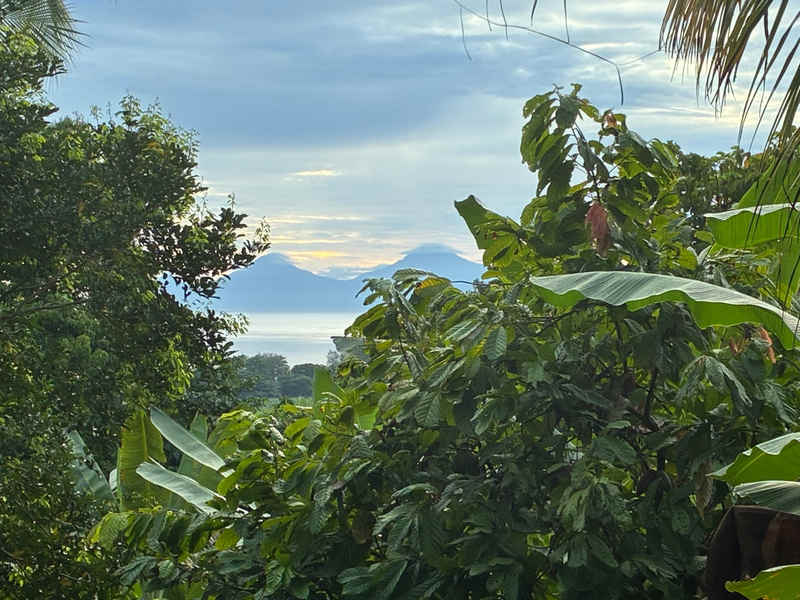
Steve lives mostly in south-western Victoria, Australia, but has had semi-regular residences in Tanzania and Uganda since 2010. He is a retired agricultural scientist and enjoys travelling for birds as long as his health and funds hold up. Recent trips have been to Papua New Guinea, Indonesia, Argentina, Ecuador, Namibia, Botswana and Tanzania. Aiming to see half the world’s birds before he’s done. He is an eBird reviewer for Tanzania. Steve is currently working with The Australian Volunteers Program for 12 months in Lae, Papua New Guinea and hopes to add a few new species.
My wife and I have been living in Lae, Papua New Guinea, for a few months. Despite the enticing nearby forested mountains, we have been under such tight security that we have had no opportunity for serious birding. Before I went entirely crazy with this frustrating situation, we booked ourselves a few days’ holiday on the island of New Britain to our east.

New Britain has a small avifauna and lacks many of the special PNG families – no Birds of Paradise, for example. It does, however, have a good number of endemic species and one of the best lodges in the country. It is noticeably more laid back than other parts of PNG we have visited, and security is not as tough.
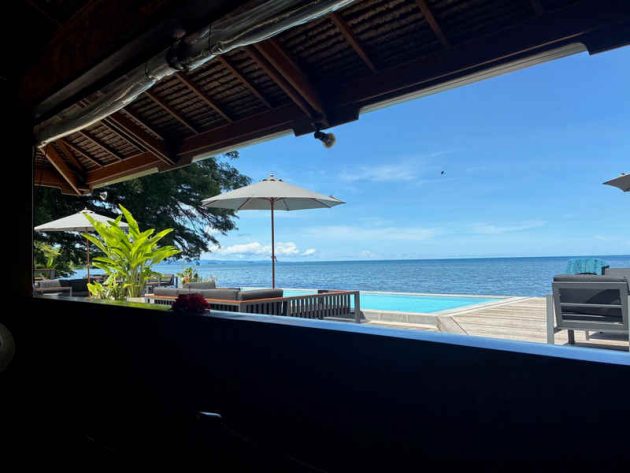
Black-capped Paradise Kingfisher
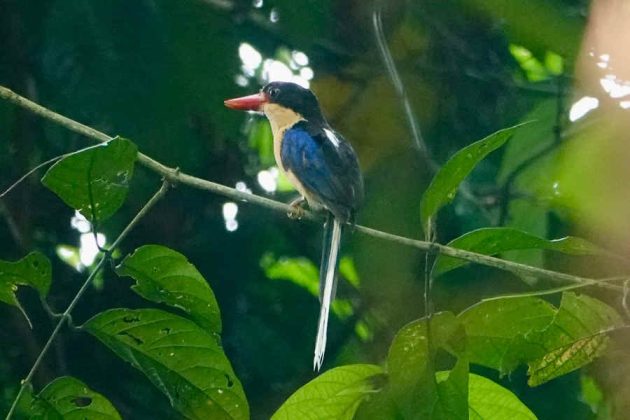
Walindi Plantation Resort is on the north coast in West New Britain and is accessible from Lae and Port Moresby via Hoskins Airport. Although it is primarily a resort for scuba diving enthusiasts, it has a couple of dedicated bird guides and caters to visits by many of the world’s major birding tour companies.
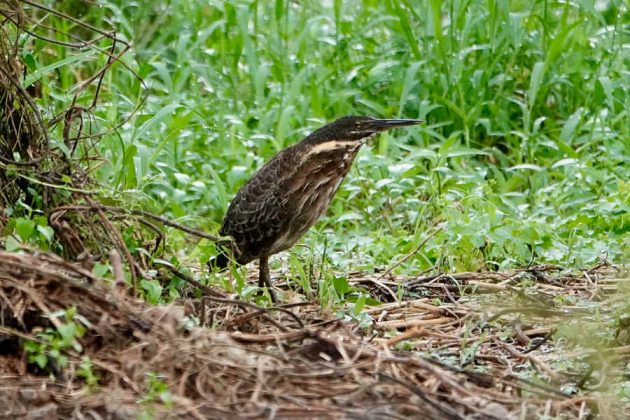
Black Bittern
We spent 4 nights there and went out each day with guides Joseph and David to chase down some of their special birds. In all, I saw 67 species, and 20 of these were lifers for me. Species in the grounds of the lodge included Red-knobbed Imperial Pigeon, Island Imperial Pigeon, Eurasian Whimbrel, Grey-tailed Tattler, Common Kingfisher, Papuan Eclectus, Purple-bellied Lory, New Britain Friarbird, Willie Wagtail, Shining Flycatcher, Bismarck Crow, Pacific Swallow, Metallic Starling and Black Sunbird. Offshore, we had Common and Greater Crested Terns, Lesser Frigatebirds, Pacific Reef Herons and Osprey.
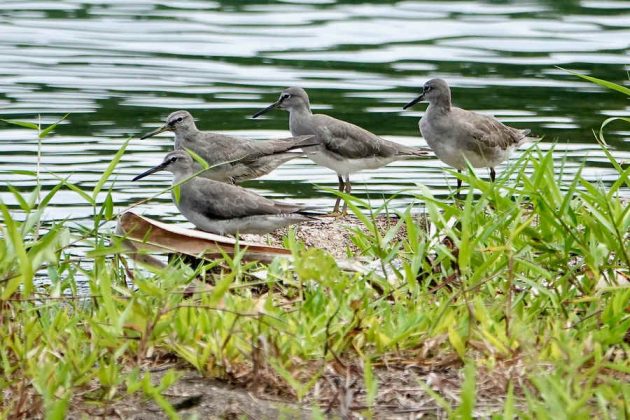
Grey-tailed Tattler
Excursions to nearby cattle and palm oil areas produced Wandering Whistling Duck, King Quail, White-rumped and Uniform Swiftlets, White-necked Coucal, Violaceous Coucal, Oriental Cuckoo, Stephan’s Emerald Dove, Yellowish Imperial Pigeon, White-browed Crake, Grey and Pacific Golden Plovers, Swinhoe’s Snipe, Black Bittern, Variable Goshawk, Black-capped Paradise Kingfisher, Common Kingfisher, Blue-eyed Cockatoo, Papuan Grassbird and Buff-bellied Mannikin.
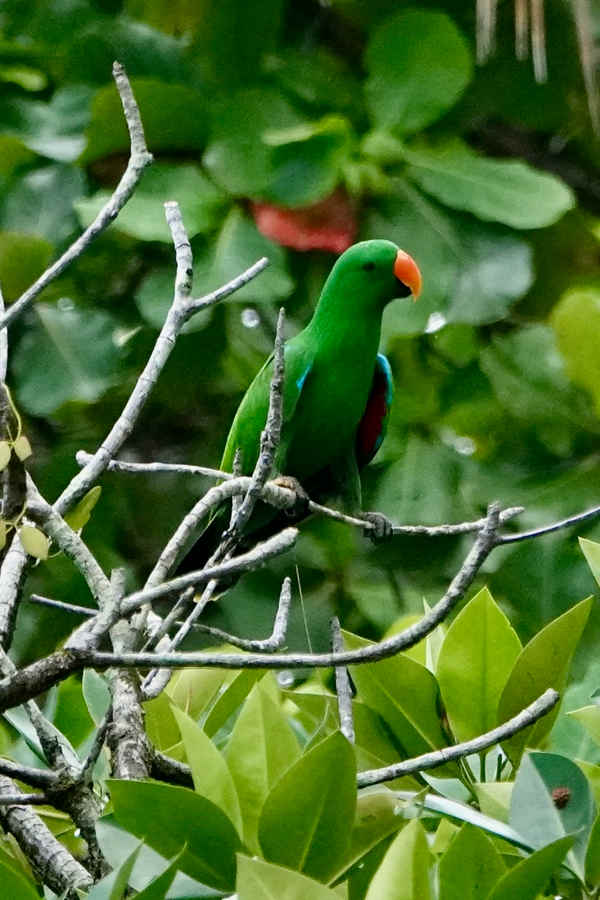
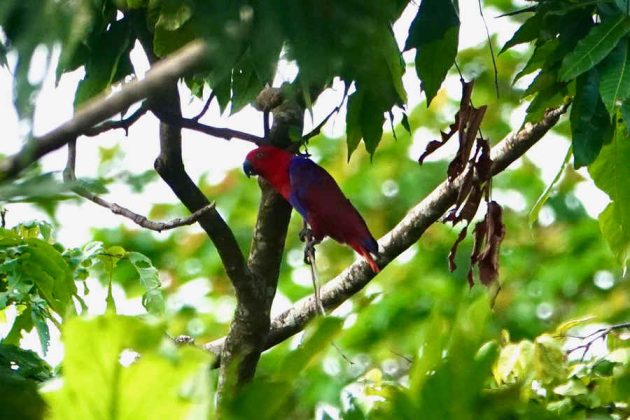
Papuan Eclectus – male and female
A morning walk through village gardens to lowland forest on the slope of Mount Garbuna added Pacific Koel, Amboyna Cuckoo-Dove, Blyth’s Hornbill, Sacred Kingfisher, Song Parrot, Red-flanked Lorikeet, Ashy Myzomela, Varied Triller, Spangled Drongo, Northern Fantail, Long-tailed Myna and Red-banded Flowerpecker.
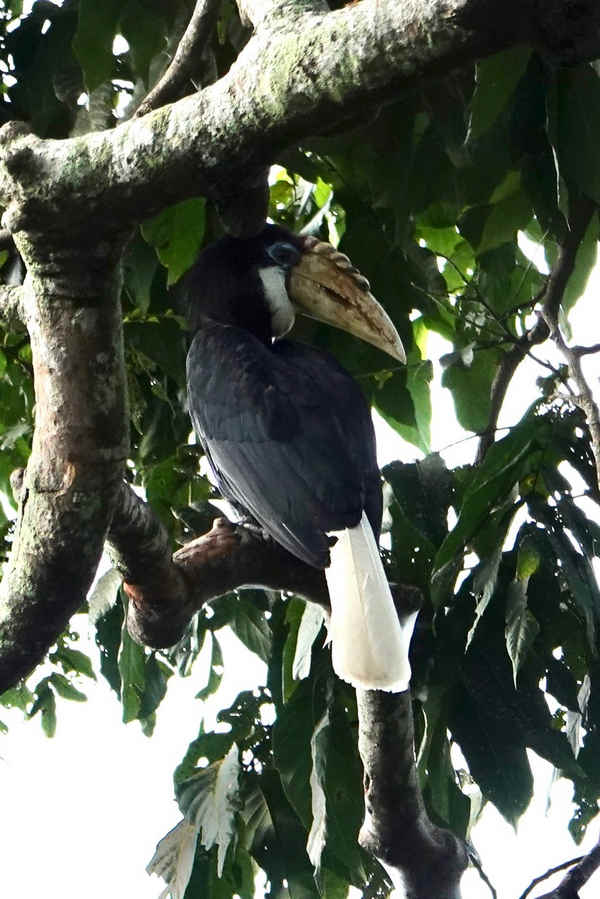
Blyth’s Hornbill
A major highlight was a flyover by a Nicobar Pigeon as we were heading back to the lodge one morning. These are usually only seen on dedicated boat trips from the lodge to nearby small islands.
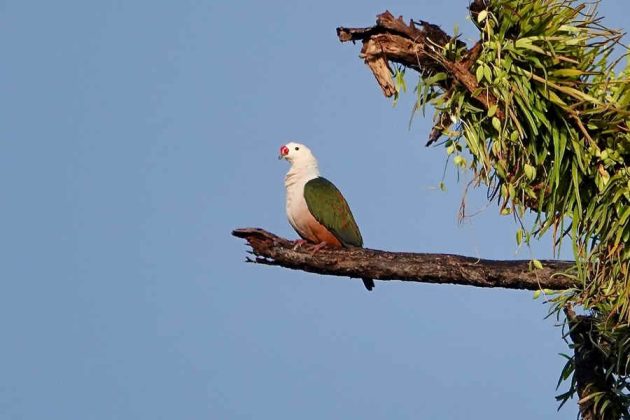
Red-knobbed Imperial Pigeon
A final, pleasant surprise was a couple of Siberian Sand Plovers on the tarmac outside the departure lounge at Hoskins Airport.
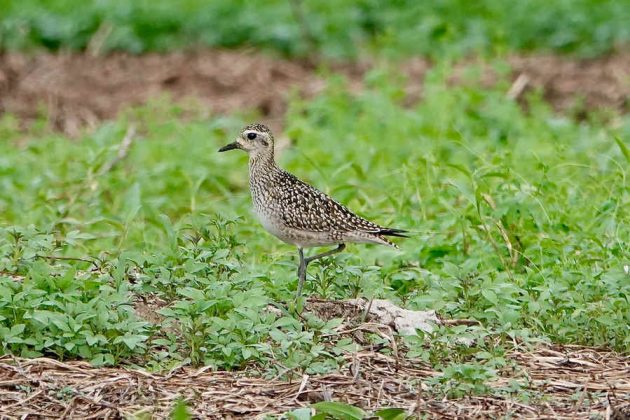
Pacific Golden Plover
We didn’t do any birding by boat and didn’t venture out in the evenings to look for the endemic Golden Masked Owl, but we are thinking of a return visit, maybe in May or June.
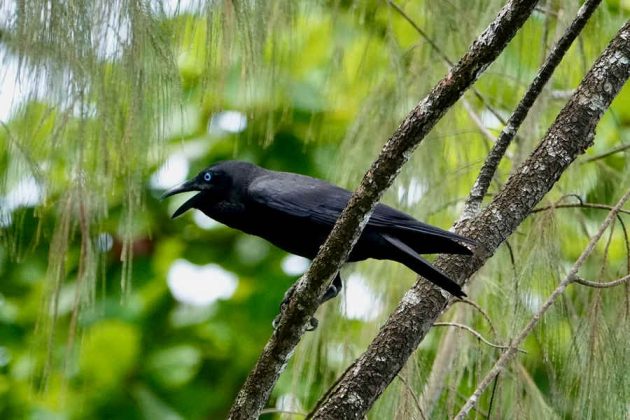
Bismarck Crow
The Lodge was among the nicest we have stayed in, with lovely staff, accommodation, great food and facilities. The gardens are extensive and are full of birds and butterflies. Joseph and David know their birds and were good company on our excursions. The only fly in the ointment was multiple plane cancellations, which meant we stayed on the island for 2 days more than planned. Both airlines that support this route let us down.
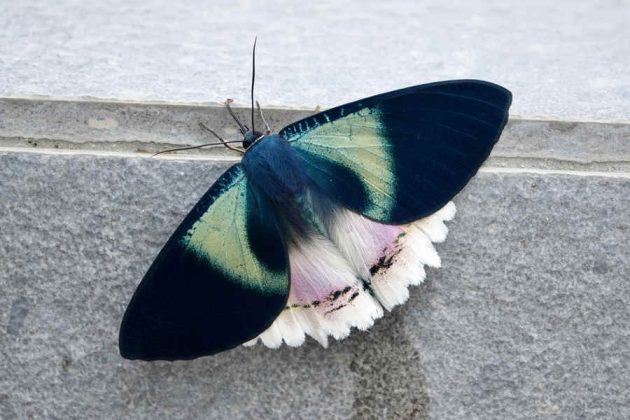
Alcides aurora – a Swallowtail Moth
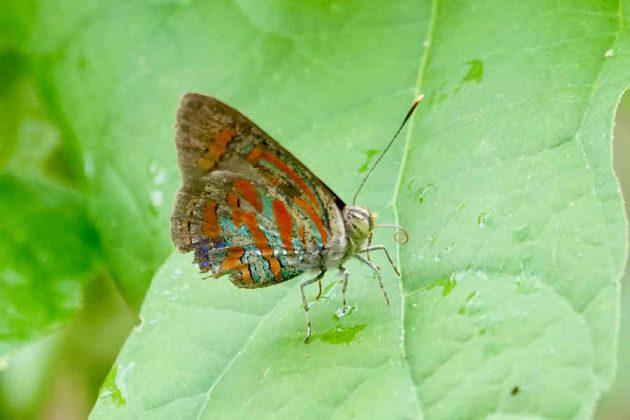
Hypochrysops scintillans – the only record of this Jewel Butterfly in iNaturalist
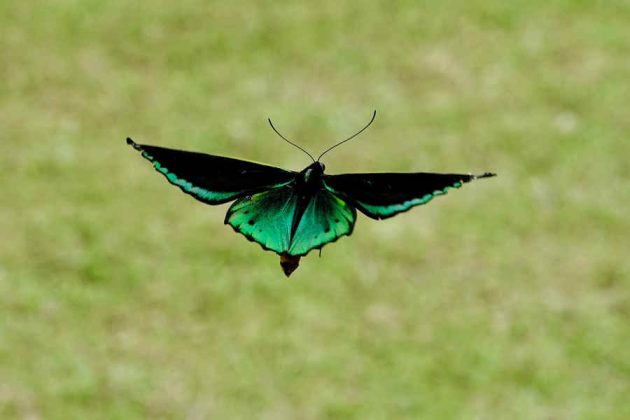
Endemic form of Common Green Birdwing







Leave a Comment