

In her response to a recent post of mine, one of our writers expressed her admiration for my having seen 67 species in one day, with the help of one of my ornithologist friends. And yes, I am very aware that seeing that many species would be unusual in the more northern latitudes where I was born. But down here in central Mexico, a little effort can take one quite a way beyond that number.
Brent is an American who once spent a year teaching in an educational center here in Morelia. He married a Morelian woman, and they have now lived some ten years in Portland, Oregon. He is an avid birder, and a mutual friend had recommended me to him. When I took him birding on a previous visit, we went down to the Hot Country, where our most colorful endemics are concentrated. So this time, in the last days of December, I decided he should experience the classic pine-oak forest that surrounds Morelia. I let him know that at my chosen spot, around the Morelia-adjacent town of Las Mesas, we had once managed to see more than 100 species in a single day. Of course, it must be winter to do so, to include winter migrants on our list. Not a problem in December. My botanist friend Nacho took advantage of the academic break to come along as well.
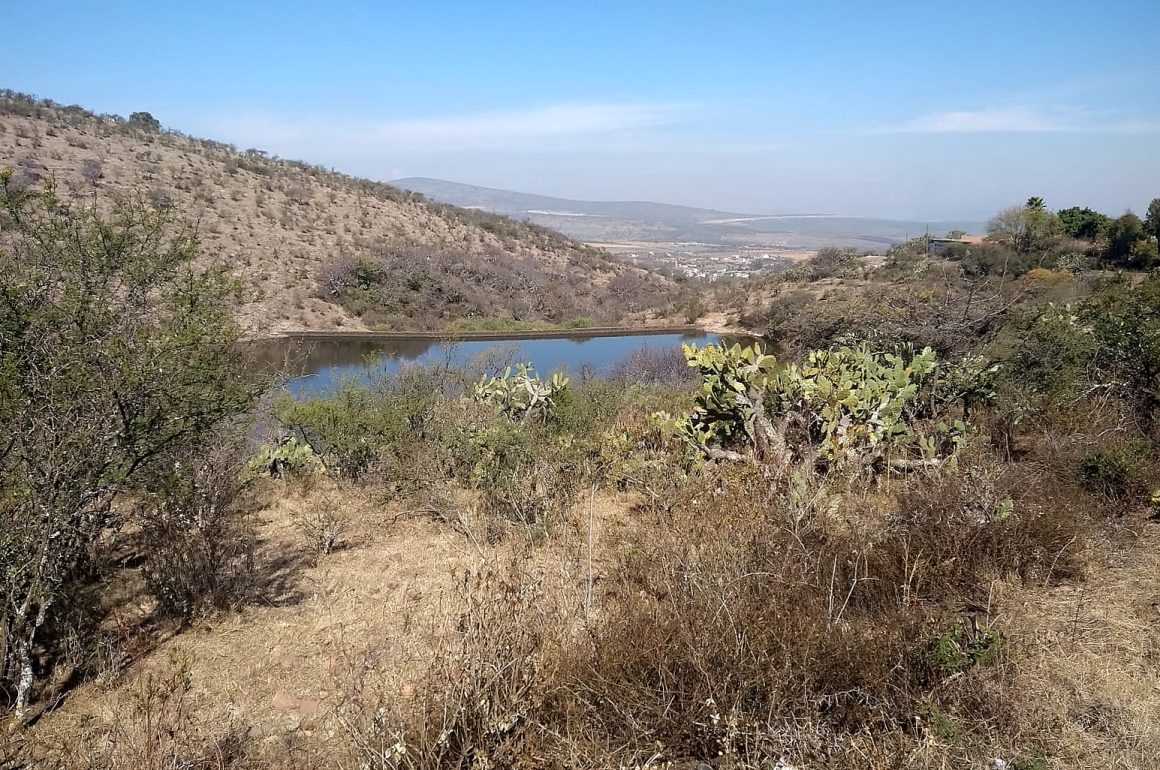
The key to Las Mesas’ species count is its habitat diversity in a relatively small area. Our visits here always start at a small reservoir surrounded by a thorn forest full of spiny acacias, prickly pears, and other plants. that would like to hurt you. (A leather jacket is recommended.) But it attracts quite a few water-loving birds, and all the thorns seem to actually be a plus for small perching birds. By the time we left this area, we already had a total of 51 species.
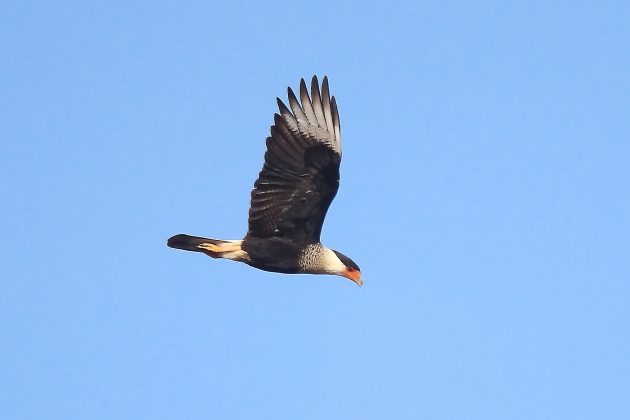
A Crested Caracara looked dapper while flying overhead.
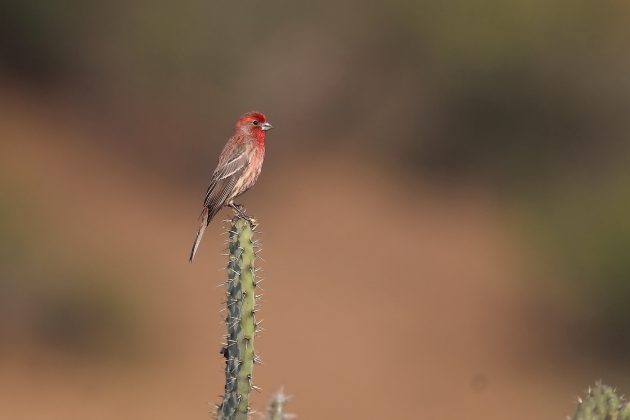
House Finches are everywhere. Prickly Pears don’t bother them at all.
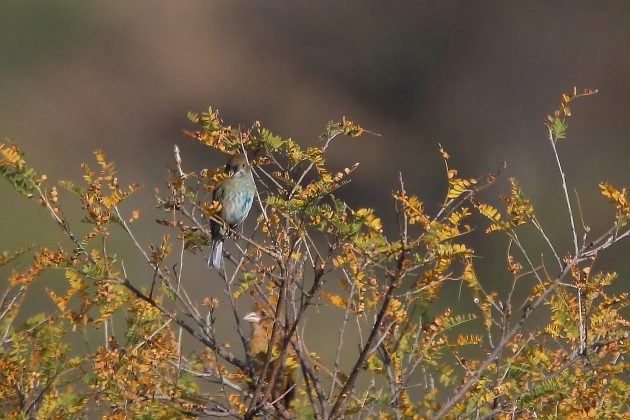
Migratory Indigo Buntings are also quite common by the reservoir. Most males, like this one, in winter have only remnants of their indigo summer finery.
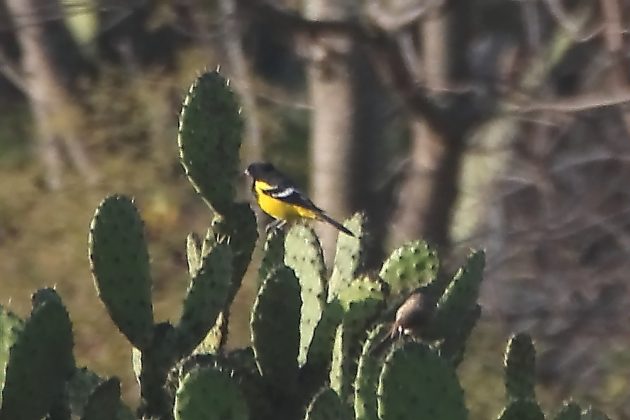
Scott’s Orioles, unusual among New World orioles for their pure yellow tones on males, don’t just put up with prickly pear plants. They like them so much that they are called Calandrias tuneras (Prickly Pear Orioles) here in Mexico.
Eventually, one must move on from this intriguing habitat, as several more await. I drive less than three kilometers, park in town, and we begin the long walk in the direction of the pine-covered Pico Azul (Blue Peak). The first section is mostly open, with lots of oaks and other trees in arroyos and on hard-to-log steep slopes. Already, pine-oak birds begin to dominate.
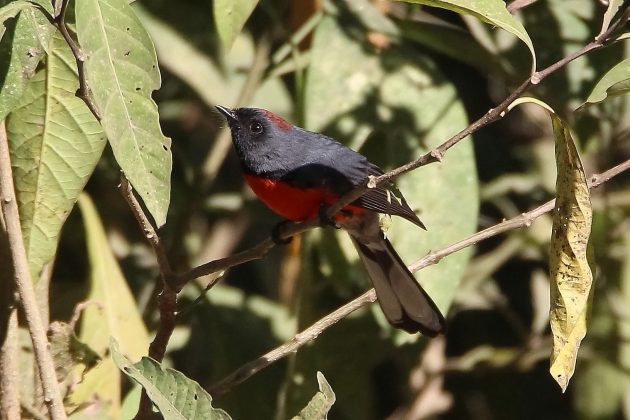
You know you are into pine-oak territory when you hear the Slate-throated Redstarts singing. This one had an especially visible reddish crown. They are wood warblers.
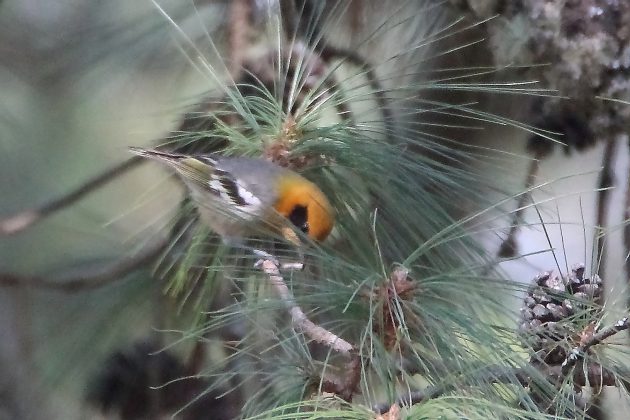
Olive Warblers, which are not wood warblers, are very unusual in that they prefer pines over oaks. This is not a great photo, but it’s better than most of my other attempts.
The middle section of this long walk must have some great groundwater, because its Salvia patches are still in wild bloom long after most such patches have gone to seed. It had been more than two months since our summer rains ended. But don’t tell these Salvias. And since those are the favorite nectar sources for our hummingbirds, the action was fast and furious. We counted 29 individuals from 5 species there. (The reservoir area had gifted us 7 more individuals from 3 species, all different from the 5 forest species.)
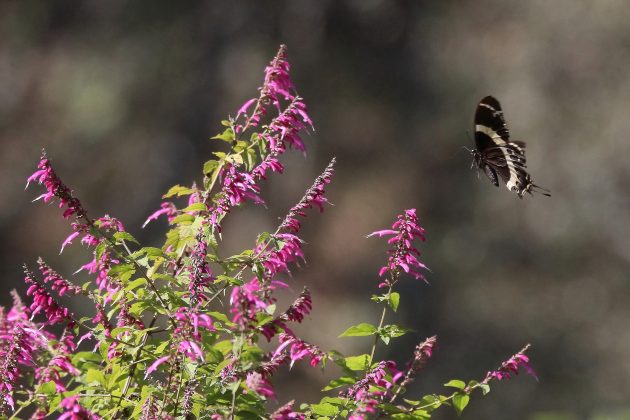
Salvias, Salvias, everywhere.
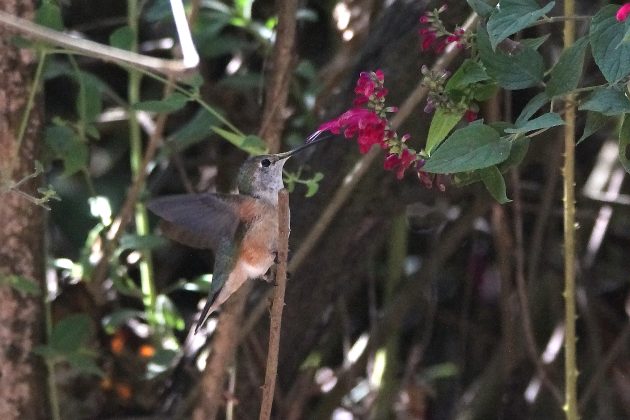
Broad-tailed Hummingbirds and other smaller hummers prefer the extremely numerous Salvia iodanthes here. Larger hummers prefer the less abundant, but larger, Salvia longistyla.
When we reached the mature pine forest at the end of this walk, I was a bit disappointed that I had been unable to introduce Brent to my absolute favorite pine-oak bird, the beautiful and quirky Chestnut-sided Shrike-Vireo. But we were running out of time, so we started back towards town. And that is when we heard the Shrike-Vireo’s siren call in the distance. A few whistled answers, and there it was, as close as I have ever seen this species.
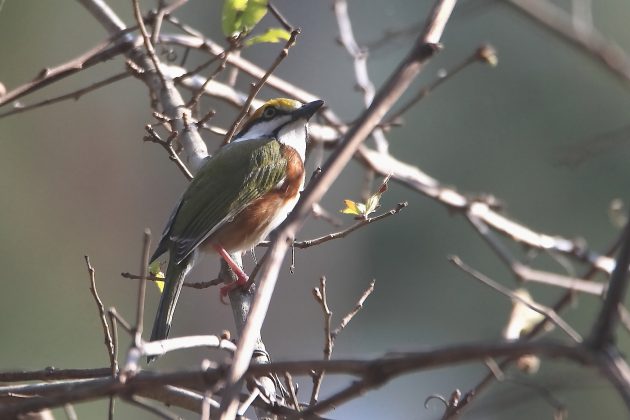
I’m not in the habit of taking videos, but Nacho is. And what happened when he did was just one of those moments… I have never linked to a video, but I dearly hope you can access this one. The first few seconds show our Shrike-Vireo acting nonchalant, as if it weren’t only a few meters from us. But at 19 seconds, you can here Nacho gasp with delight as the bird began to quietly give its distinctive call. I confess that the camera shutter sounds are mine, as I had not previously managed photos with the proper light level. And so it continued, until Nacho decided he had filmed enough. Our bird kept on singing, oblivious to our presence. For all we know, it may still be there, singing away.
In the end, we did not manage to see 100 species that day. When we reached my car, we had seen a respectable 55 species on our woodland walk, with only 15 repeats from the reservoir walk, for a day total of 91 species. And the last two species? Those would be the invasive House Sparrows and Eurasian Collared Doves we saw on our way back into town.











Sounds like a wonderful day. Thanks especially for sharing the video. Couldn’t help but smile!
It is my dream to make it down to Morelia someday. We were in Yucatan birding in early January, easier to get to with a nonstop flight to Cancun, then picked up by the excellent bird guide, Joel Ortega, but I’m still curious about Morelia.
Thanks for inspiring this post with your comment, Sanjana. And Joan, ¡venga! (Come on down!)
Thank you for a wonderful post. I could image the habitat as you described it. The bonus was the video. What a spectacular bird! Thank you and Nacho for sharing it.
What a fascinating bird! Thank you and Nacho for sharing.