

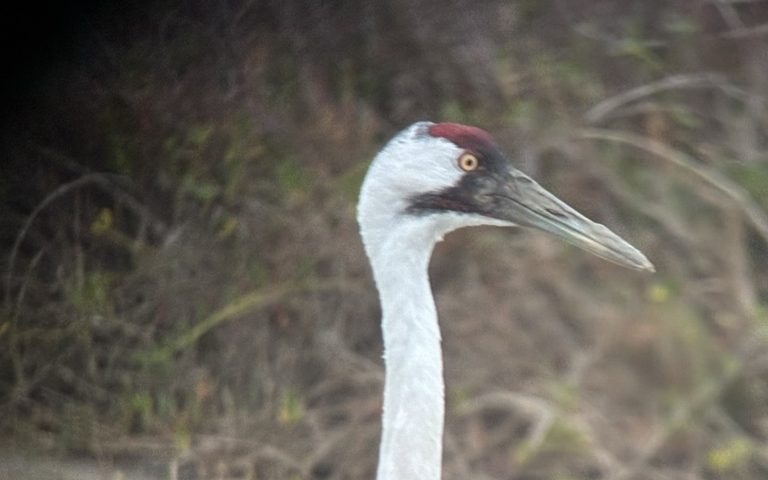
In February I took a trip to the Texas coast to see the Whooping Cranes. These beautiful birds winter in Texas and breed in Wood Buffalo National Park in Alberta, Canada. I have actually seen them flying north over my house. My home town is on their migratory pathway so a sighting is not that unusual but I wanted to see them in their terrestrial habitat. They are considered endangered due to habitat loss, illegal hunting and other man made threats, however their story is considered a conservation success. Over the years many people have collaborated to provide a place for these birds to thrive. The Aransas National Wildlife Preserve near Rockport, Texas was established primarily for this purpose. The population has been gradually increasing over the years and currently numbers a little over 500, up from a nadir of 18 in the 1930’s.
The Whooping Crane is quite distinctive. It’s the tallest bird in North America, is primarily white with black wing tips and has a red patch of skin that is visible on the forehead and crown. When not feeding, they often stand with their necks fully extended and can be spotted peeking over the reeds and grasses along the shoreline. The best view is from the deck of a boat. We hired Captain Tommy of Rockport Birding and Kayak Adventures to take us across Aransas Bay and into the intercostal waterway between Aransas National Wildlife Refuge and Matagorda Island.
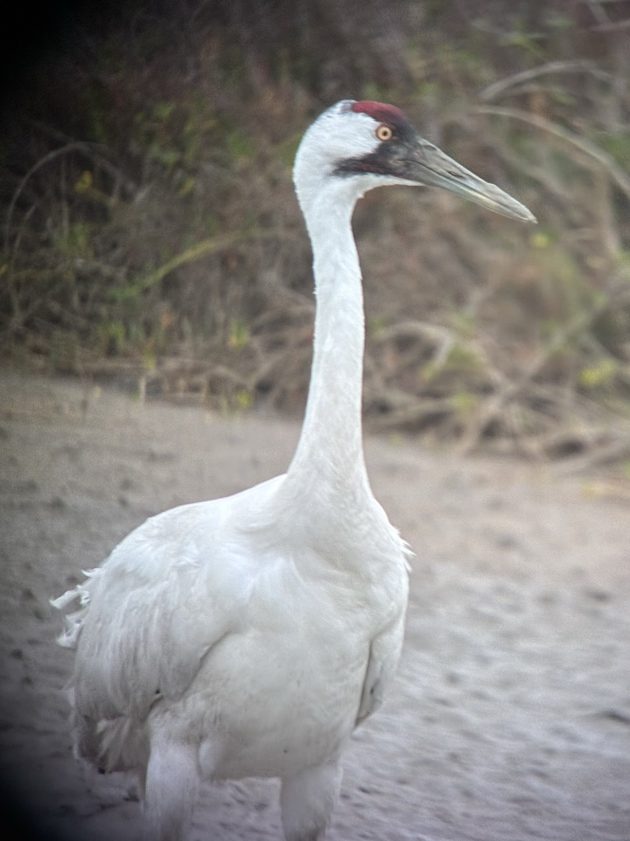
The day we embarked was windy, cool and overcast. The waters were pretty choppy and I wondered if I’d have any trouble with sea sickness but fortunately did well in that regard. We saw several Common Loons on the way out. A new bird for me but not a rare one on the Texas coast. We had no difficulty finding some “Whoopers”. There was a pair feeding on the mudflats near the shore. We got so close I could have thrown a rock and hit them (I would never). They were completely unconcerned by our presence and calmly feasted on crab while we took pictures and talked in hushed tones. We had plenty of time to observe their behavior in the wild, which was quite a thrill. Afterwards we cruised around enjoying the other birds and wildlife then headed home for supper at a local seafood joint. I ordered crab.
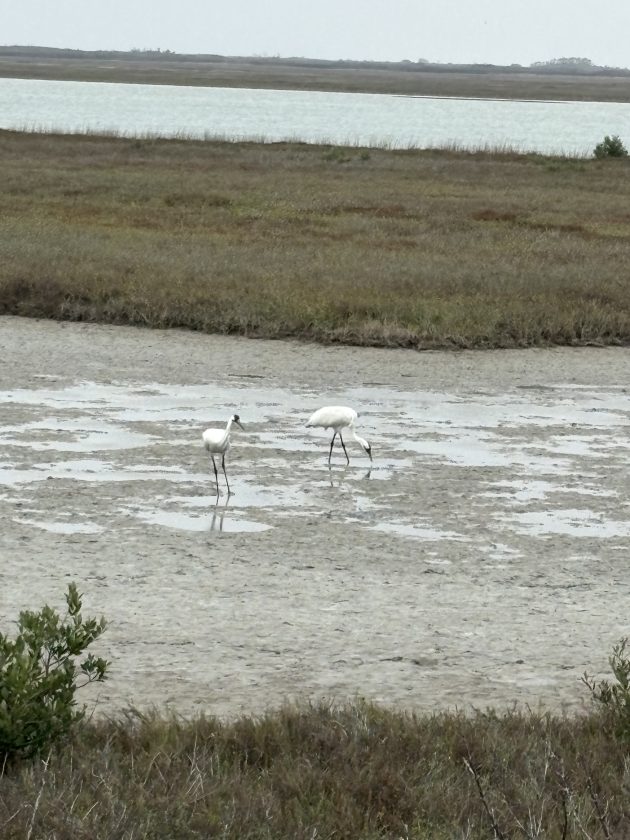
The following day we were treated to a bonus viewing. Approximately 10 Whooping Cranes were congregating in a field with several Sandhill Cranes, Great Blue Herons, Great Egrets and a herd of cows (breed unknown). A mixed species flock, for sure. We could hear the Sandhills calling as three more Whooping Cranes flew overhead. Were they warning them off or was this a friendly greeting?
On the drive home I couldn’t help but think about the long trip these cranes will make in about a month, flying almost 3,000miles to reach their breeding grounds in Alberta. And I know there are people like me in Canada awaiting their arrival. If I knew an interested Canadian I would call with a status report, “They’re on their way! We’re sorry to see them go! They made friends with the cows. Call me when they get there.”








My first sighting of Whooping Cranes was at Aransas NWR. We were driving through the refuge, when my non-birder husband said there was an egret on the side of the road. We had a fabulous look at the crane, but got a lousy picture of it, because we couldn’t leave the safety of the car. The mosquitoes were vicious and throwing themselves at the car windows, trying to get us.
It’s encouraging to see how conservation efforts have helped the Whooping Crane population recover from such low numbers. Experiences like your trip to Aransas National Wildlife Refuge really show how important protected habitats are for these fantastic birds. Many thanks for sharing the great article.
I saw my first (and last) Whooping Cranes at Aransas in March 1980. If I remember rightly there were only about 50 birds in the wild then. It’s encouraging to hear how their numbers have increased. Great birds.