

Approaching Bwindi Impenetrable Forest felt as though we were nearing some form of final frontier. Aware that it is much tamer now than it was in the fairly recent past, the excitement and anticipation was palpable, often bubbling over as we cruised over gentle undulations and around languid bends. We had been stationed in Entebbe then at Lake Mburo prior to this westward journey into the eastern end of Africa’s emerald heart; and so despite getting looks at a monstrous Shoebill and the ever-elusive African Finfoot, it felt as if the trip was only just getting serious.
Naturally, we were headed to Bwindi for the Mountain Gorillas. To say I was astonished at the plethora of birdlife would be false, I figured that there must be billions of birds in that jungle waiting to be seen and photographed. Along one of the bends, a sighting of a pair of Black-and-white-casqued Hornbills vying for our attention next to a Red-tailed Monkey seemed to set the tone. What would really take up our attention? Birds or primates?
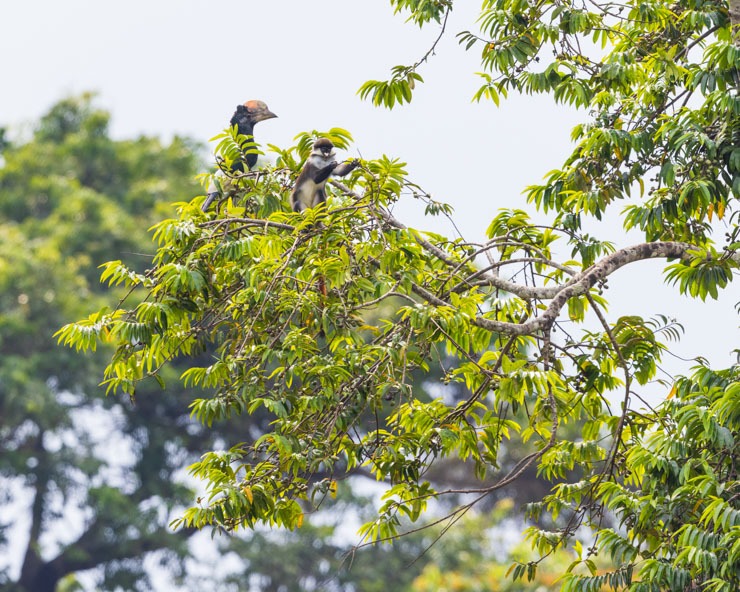
A Black-and-white-casqued Hornbill dwarfs a preoccupied Red-tailed Monkey.
Okay so we did what we had to do – if you’d like to see some of my gorilla images from our trek on the first morning in Bwindi (plus lots more) you can check this post on my personal blog: 10 Reasons Why I’m Returning to Uganda in 2026 – but I still had a poke around the lodge as we arrived in time for dinner. Just in front of our room there was a small group of Black-necked Weaver, as well as an immature Cinnamon-chested Bee-eater on a lofty perch with a Bronze Sunbird slipping in and out of cover. Within a few seconds, I knew this was going to be a birdy couple of days.
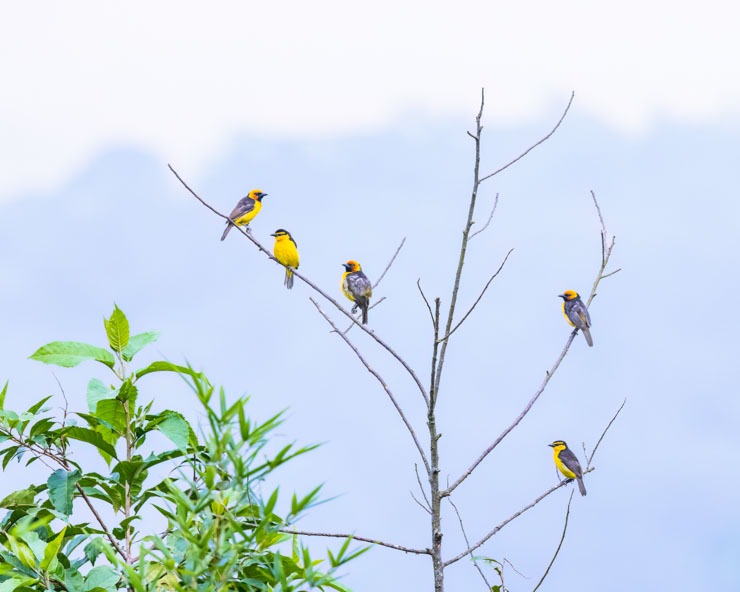
Black-necked Weavers, the females are strikingly patterned with a strong yellow eyebrow.
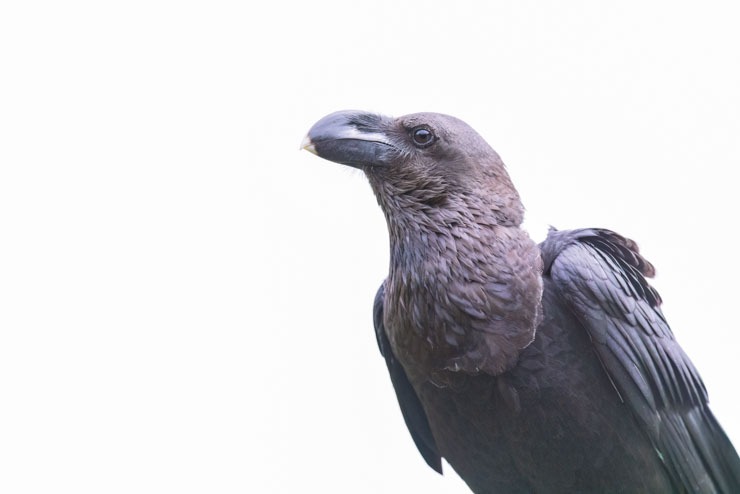
We returned to the open verandah of our lodge post-gorilla, and settled for lunch. It was as if it were all planned, thick, dark clouds rolled through the valley and blanketed the hills with a glorious African chill that made us don our sweaters and reach for the pot of steaming coffee. Another Cinnamon-chested Bee-eater stood sentry at one end of the verandah as we tucked into our hot meal. Without warning, a pair of White-necked Ravens wheeled past. Huge, thick-billed, with a distinctive white hind-collar, it was only my second time seeing this massive corvid. My first was whizzing past a roadside pair somewhere between Samburu and Nairobi on the final day of a 20-day trip. I could have barely mustered the saliva to form words as we passed that pair, this time I had a little more energy – evidenced by me leaping from the table as the ravens disappeared behind some trees. I was a little disappointed that I didn’t get a single photo – I wasn’t even able to reach my camera in those fleeting moments – but to my amazement the ravens reappeared seconds later, this time heading directly for the verandah.
The pair of White-necked Ravens ultimately alighted on the roof and what followed was an experience which may be a topic for another blog post altogether.
Shortly after lunch, the clouds let loose their water, and curtains of rain wafted over the landscape. Cozy and dry, our huddle was momentarily interrupted by our guide who was ready for us to go birding. Well. I did what any self-respecting birder would do in that weather. Get wet.
Suffice to say the afternoon’s session was unavoidably curtailed by the combination of rain, little light, and low clouds. Mist rolled in as well, making visibility difficult. Not before we spied a few species on some flowering bushes, including the Albertine Rift endemic Purple-breasted Sunbird.
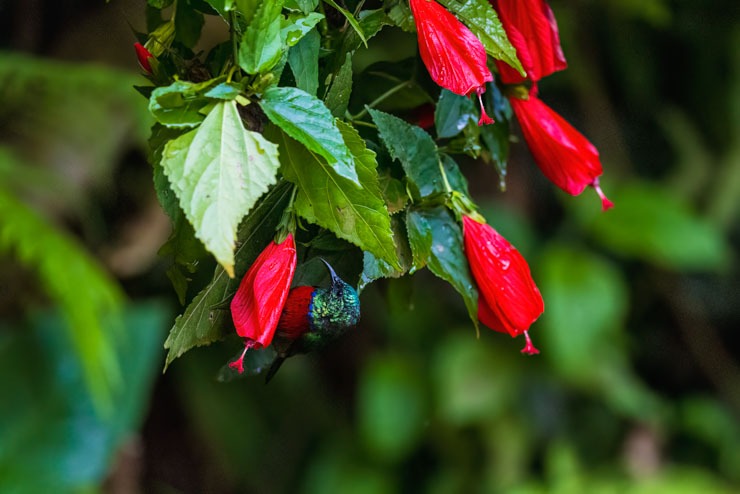
Northern Double-collared Sunbird
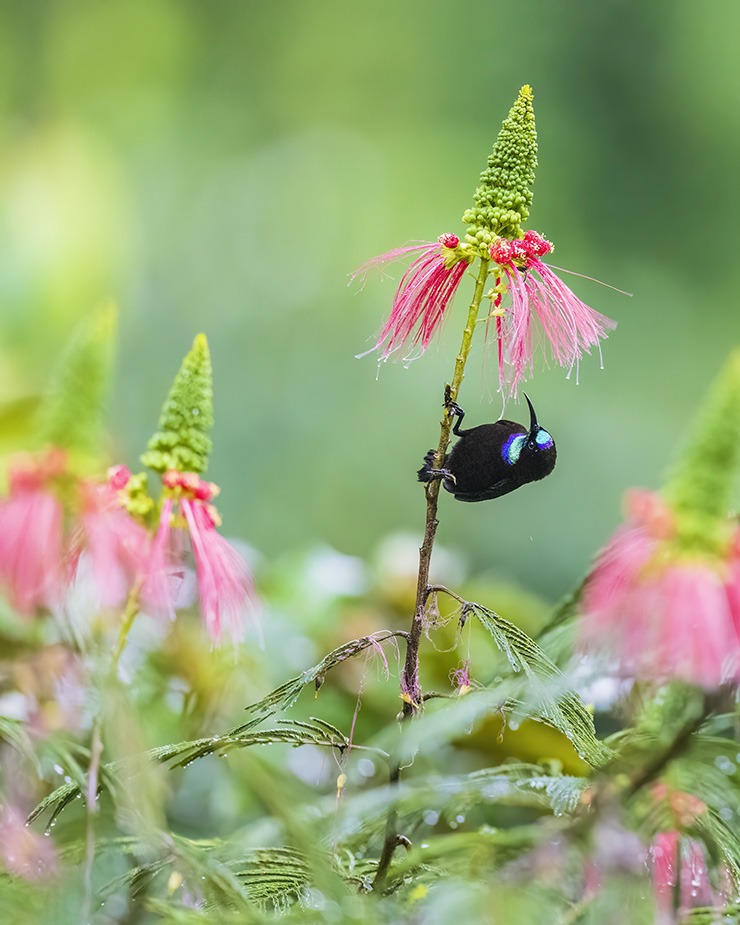
Green-throated Sunbird
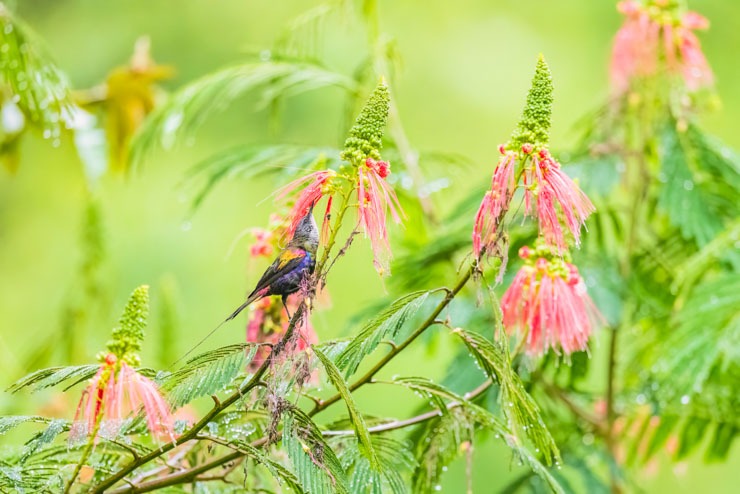
Purple-breasted Sunbird
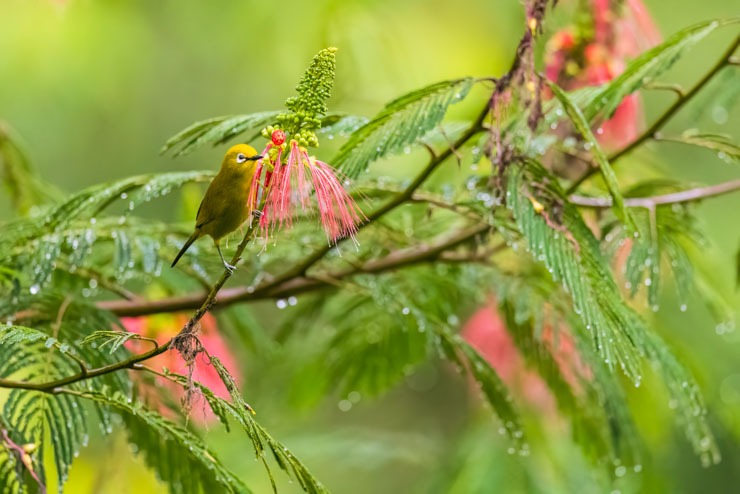
Green White-eye
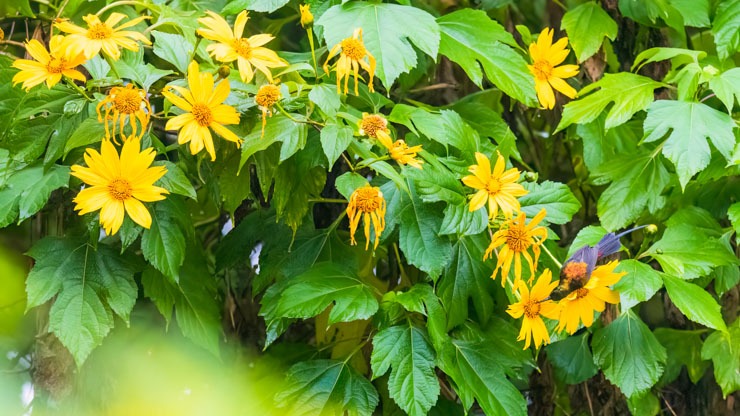
Bronze Sunbird
We returned to the lodge with a couple hours of “daylight” left. The clouds and rain were unrelenting, only lessening in their intensity but never entirely loosening their grip on the afternoon’s proceedings. We were tethered to the shelter of the buildings, but I did manage to pick up a curious sight: a Bronze Sunbird on a sanchezia bush – I’m much more accustomed to seeing this plant in its native Neotropics!
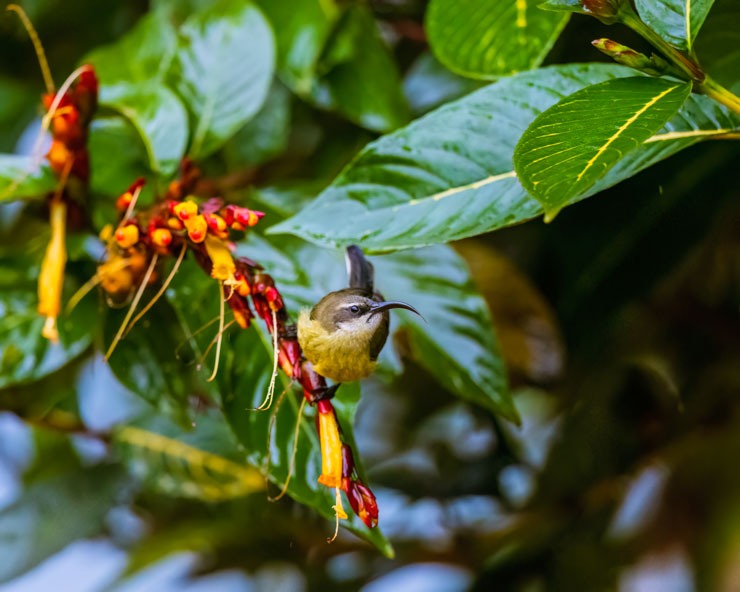
Bronze Sunbird
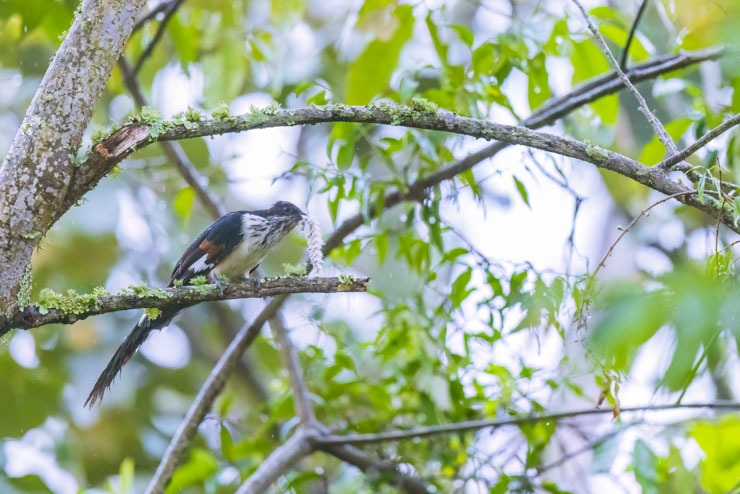
A looping movement in a nearby tree turned out to be a large, long-tailed, black-and-white bird: my first good look at a Levaillant’s Cuckoo. By this time we were firmly battling the encroaching mist.
I returned to the verandah as everyone else retreated to their rooms, the dismal surroundings proving to be a little too daunting for photography. Truth is that it was fairly slow, bird-wise, and I’m sure that porch lights were already being turned on. It was then when I noticed a flash of white that belonged to a Yellow-fronted Tinkerbird, that was followed by glints of red, blue, green, and effectively any imaginable colour as a mixed flock steamrolled through the foliage. That mixed flock was covered in a previous post on this blog: The Magic of a Mixed Flock.
Sunshine dominated the scene the following morning. Having truncated the previous afternoon’s birding jaunt, we set out downslope with vigour. Properly rested, then appropriately caffeinated, we soon picked up more Cinnamon-chested Bee-eaters as well as a Golden-breasted Bunting. A Blue-spotted Wood-Dove gave us excellent looks along the road before an unsuspecting passerby flushed it. The bushes effused birds – just as I had imagined. More bee-eaters, more sunbirds, more white-eyes, higher in the trees were Little and Slender-billed Greenbuls as well as a Buff-spotted Woodpecker. My heart was full, my shoulders burned.
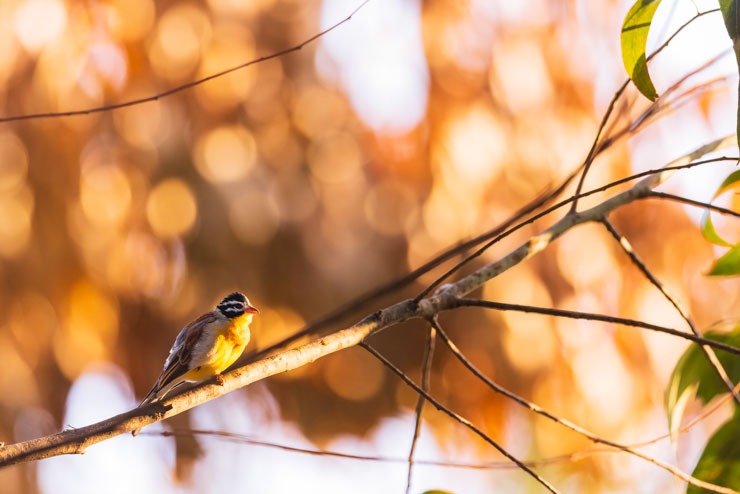
Golden-breasted Bunting, in golden light.
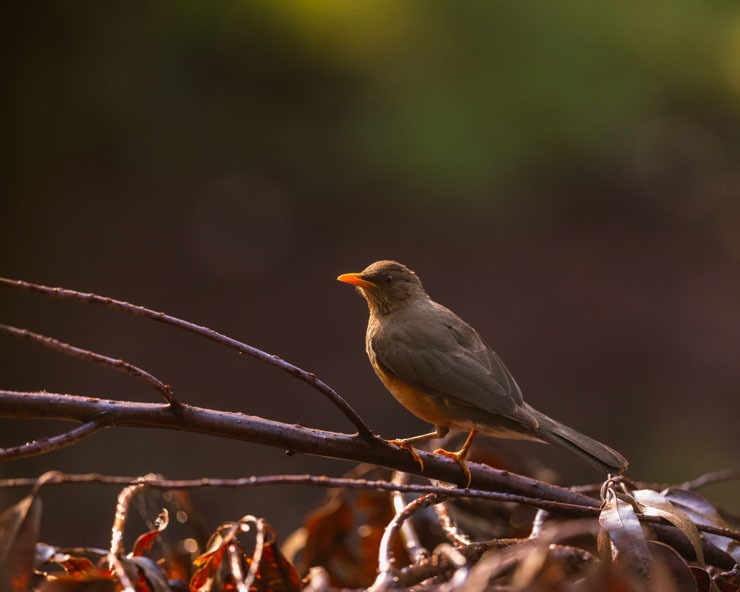
An African Thrush posed nicely.
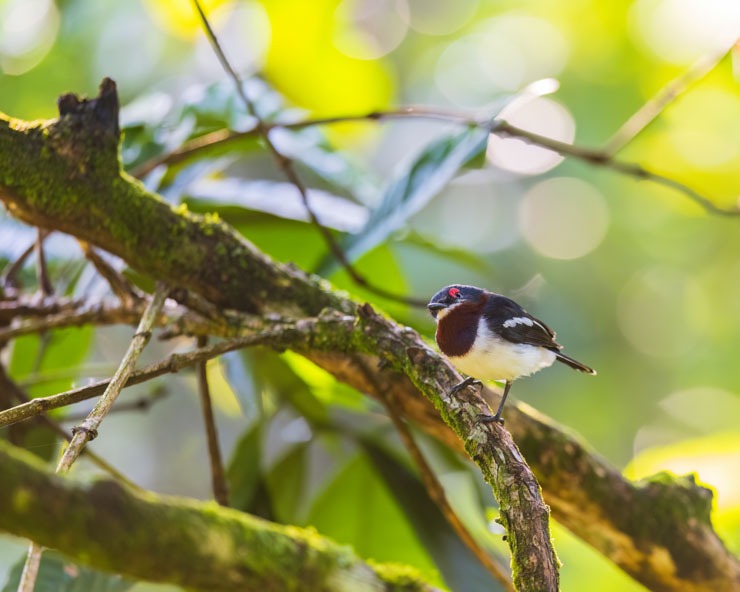
The Brown-throated Wattle-eye is one of the few birds that was named after a distinctive feature visible on females. It is noted that her throat is dark maroon, and not brown, but again…
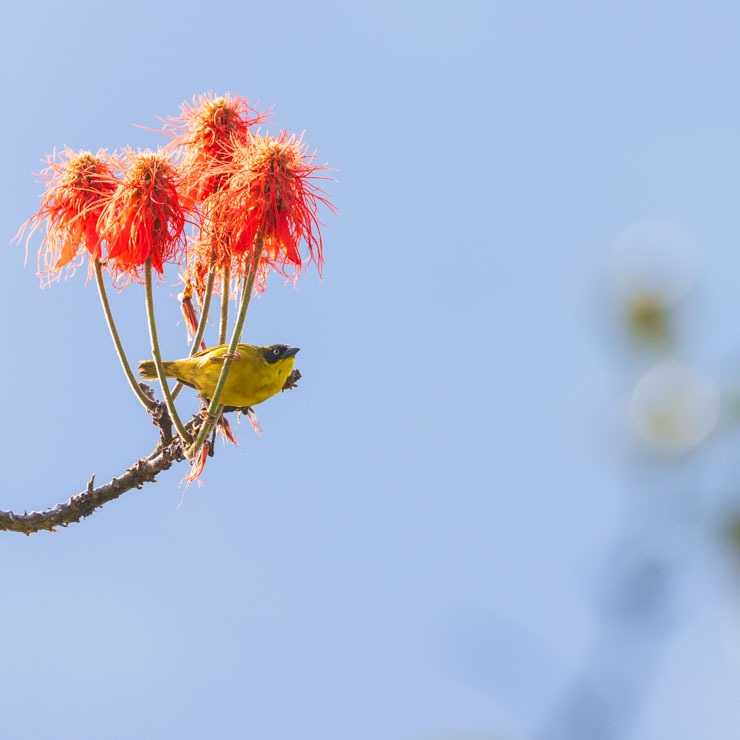
Common but always photogenic, a Baglafecht Weaver is as much fun to say as it is to see.
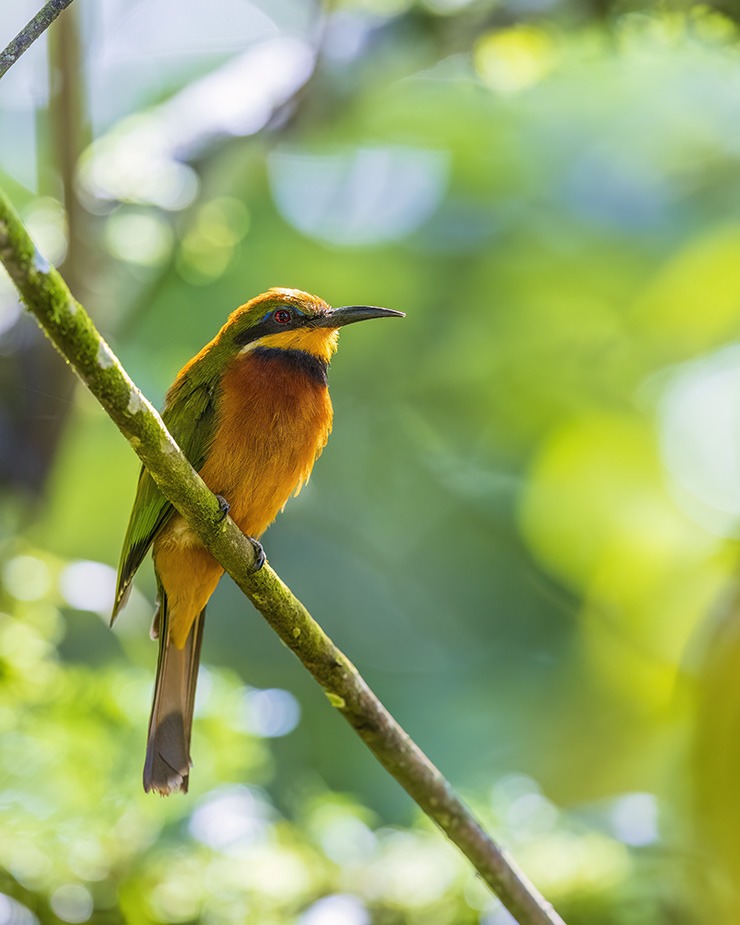
After ignoring many of the Cinnamon-chested Bee-eaters we encountered, I eventually gave in and photographed this individual at point-blank range.
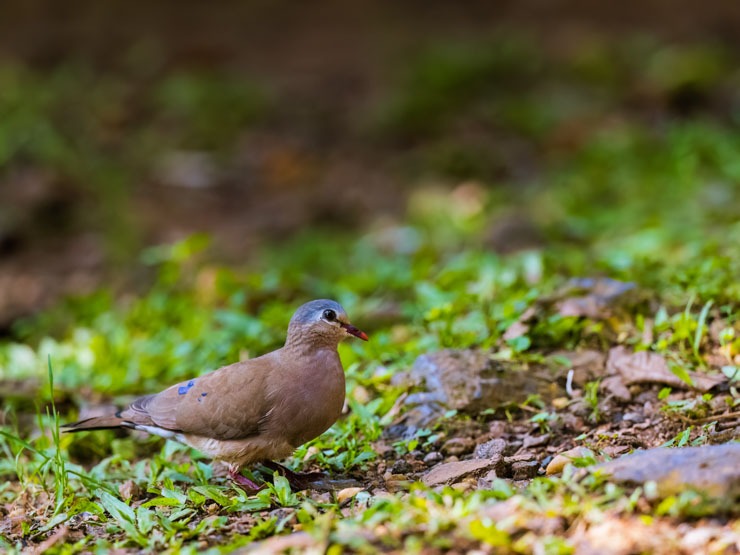
Thankfully we came across another Blue-spotted Wood-Dove after the first one disappeared before I could get a decent photo.
All things come to an end, as the cliché goes, and so we packed up and bid our goodbyes to Bwindi Impenetrable Forest. Not before stopping off at a known roost of a family of African Wood-Owls, however! A walk in a nearby field didn’t yield any views of singing Chubb’s Cisticolas, but there was a Long-crested Eagle that gave us some good looks.
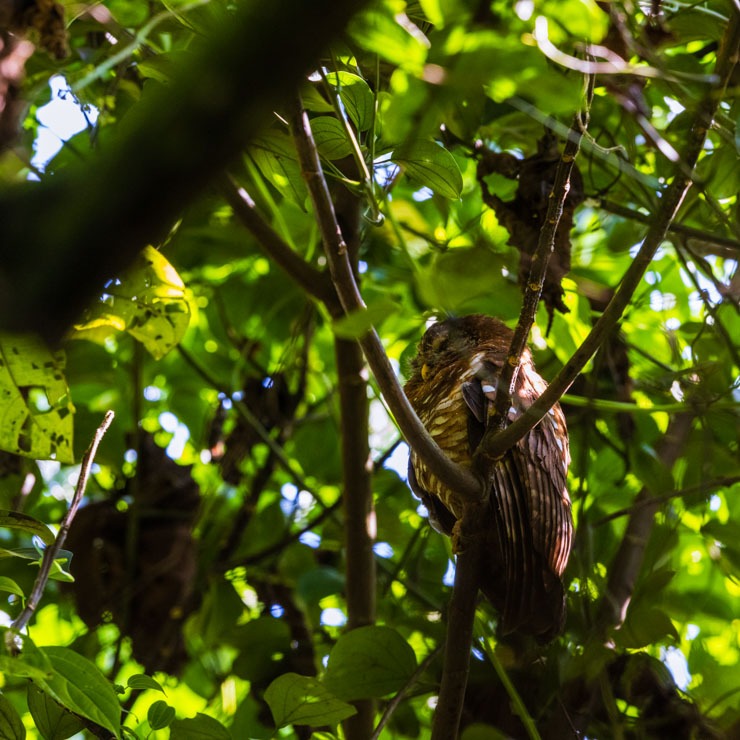
African Wood-Owl
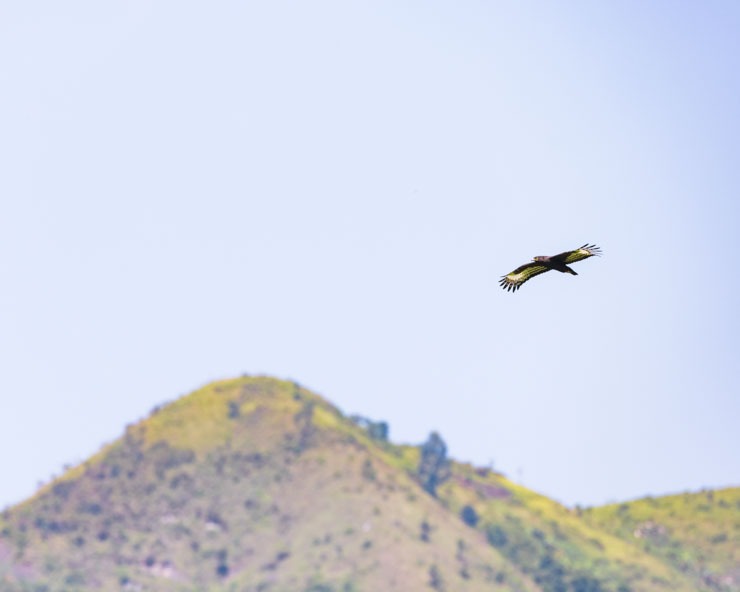
Long-crested Eagle
Until the next time, Bwindi.







Despite having spent many years in Uganda, I never made it to Bwindi. This post reminds me that I must move it higher on my list of places to visit! Thank you for writing this.
I have to admit that I found birding Bwindi very difficult, with many more birds heard than seen. Our three-hour trek to see Mountain Gorillas was also notable for seeing few birds, but that might have been because there were few opportunities to stop to look for them. The three-hour trek back (up the mountain) after seeing the Gorillas was even more like hard work. I found Chimpanzee watching (also in Uganda) to be much more entertaining.
I visited Bwindi back in 2008, so it’s encouraging to discover from Faraaz’s delightful account that the forest still exists!
Sanjana – yes, please! You must return and enjoy birding in Bwindi!
David – We got incredibly lucky with the gorillas – we made a loop that lasted just under two hours, stayed with the gorillas for an hour and then took a shortcut back that couldn’t have been more than ten minutes. I wouldn’t have been able to spot many of these without Apophia, our village guide. Flowering plants were convenient attractors for the sunbirds, many others remained in the canopy and were only barely discernible. I also found the chimpanzee experience to linger more strongly in my psyche.