

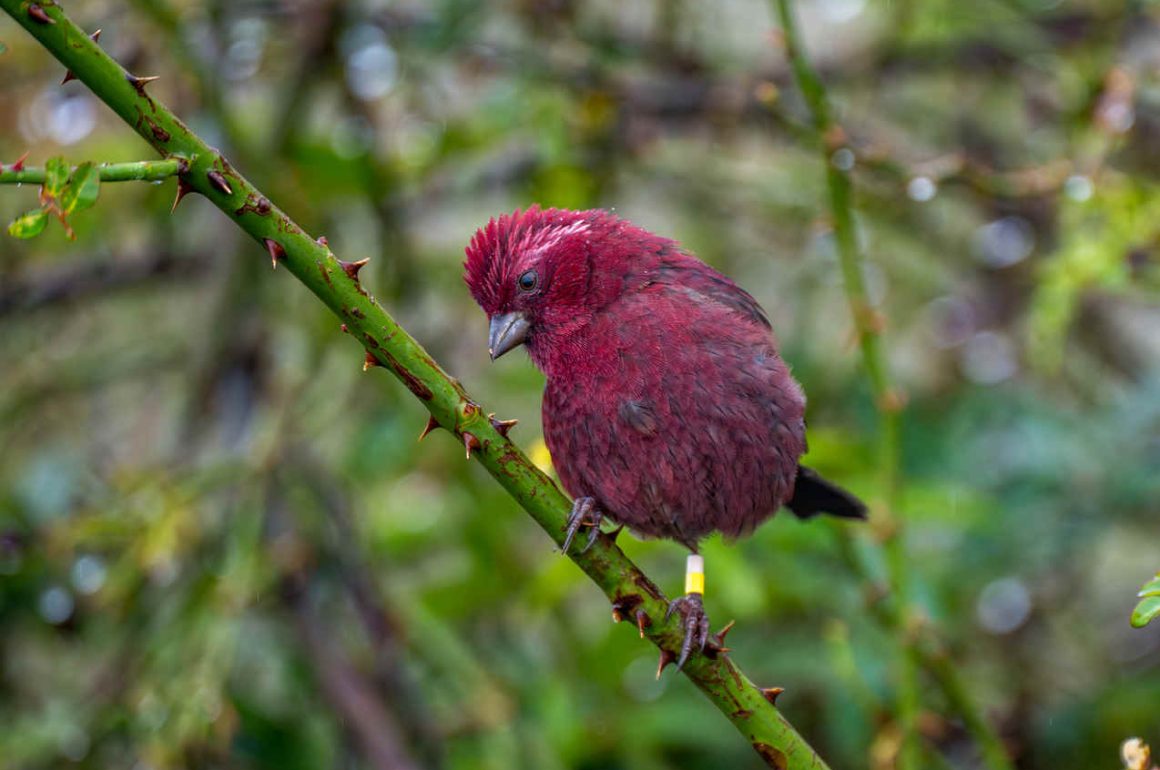
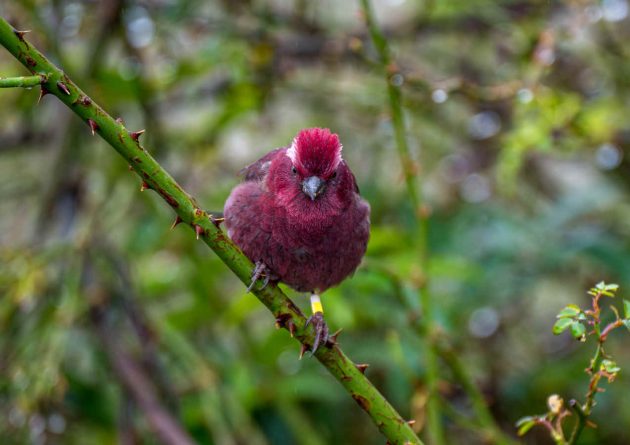
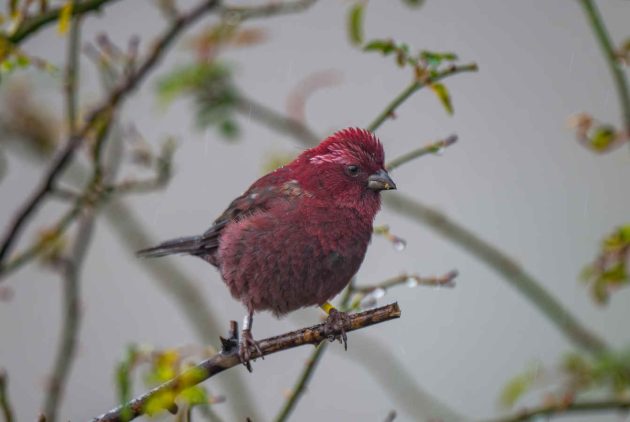
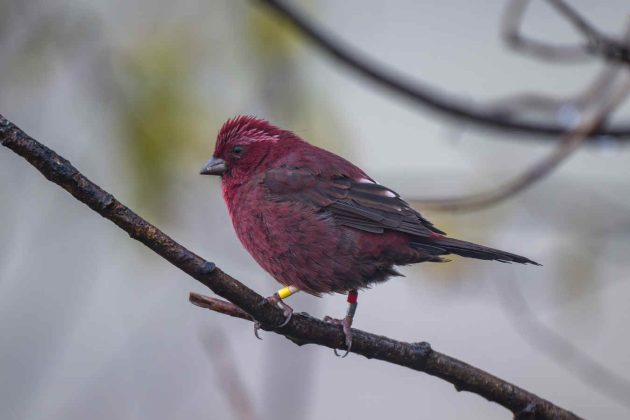
The rationale for declaring the Taiwan Rosefinch a species separate from the Vinaceous Rosefinch relies dangerously heavily on the word “slightly”, as per HBW:
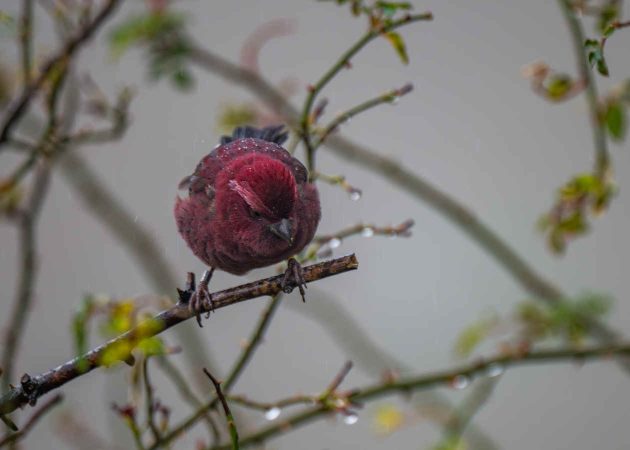
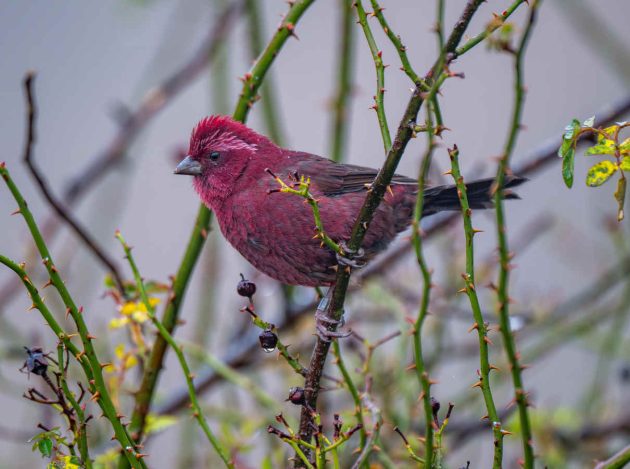
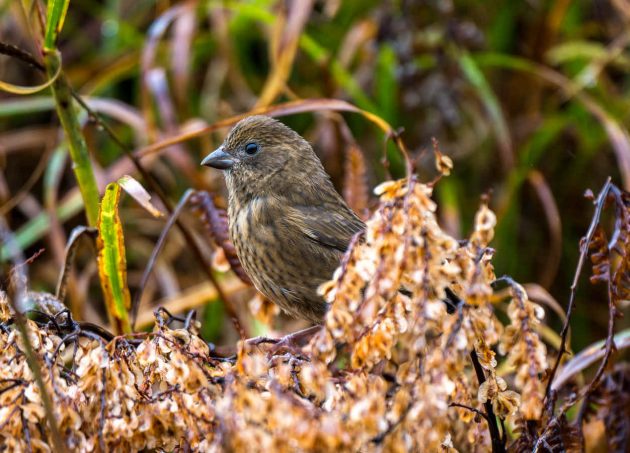
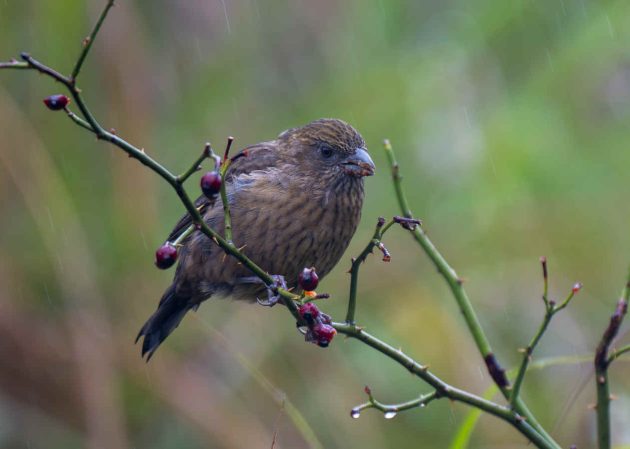
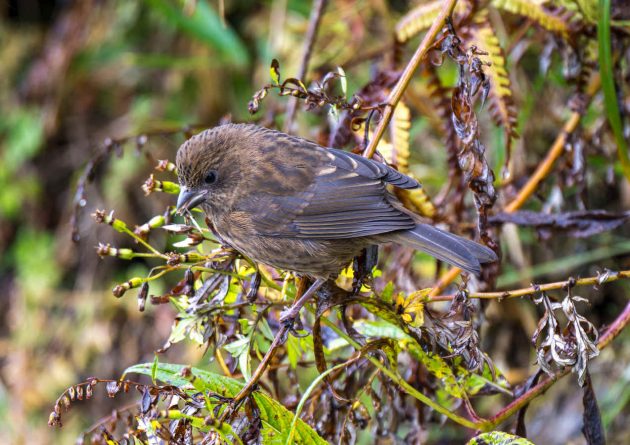
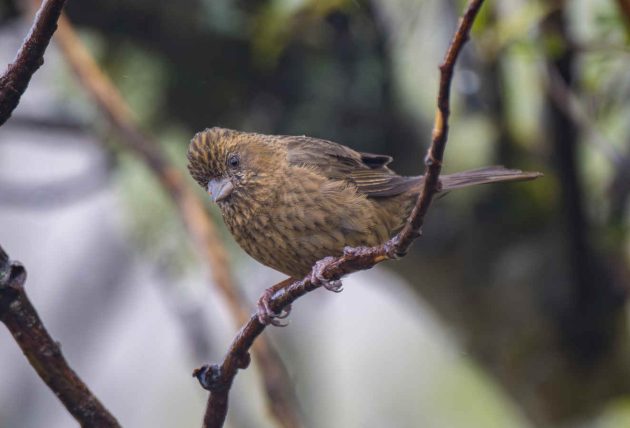
Until recently considered conspecific with C. vinaceus … present species differs in its overall slightly brighter red male; slightly more white in tertials in male; slightly heavier breast streaking in female; fractionally darker belly in female; … very brief “zip” call slightly longer.
I have to say, I was not too sure about this, but a moderate bribe from the Taiwan Association of Bird Guides convinced me.
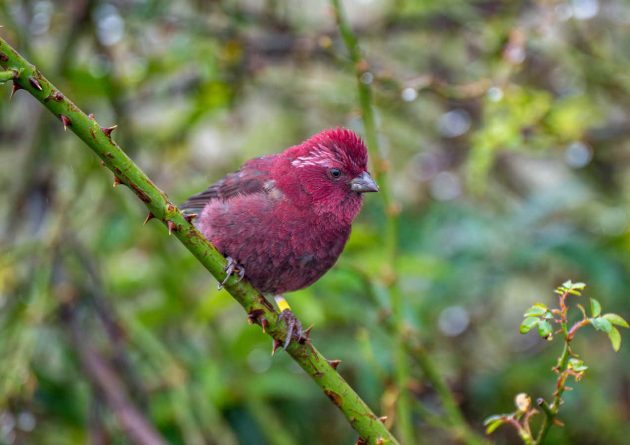
And in any case, it is a beautiful bird (and I am not going to say it is as beautiful as the Vinaceous Rosefinch, now that the money is in my pocket).
Even the female looks ok, as far as brown birds go.
The scientific name Carpodacus formosanus does not win any prizes for creativity, though.
It is a bit of an understudied species, though (maybe there are no university campuses at its preferred altitude) – as a consequence, population estimates are rather vague (“population estimated to lie within range c.10,000–100,000 breeding pairs”) …
… maybe to be safe rather than to be sorry, the species is listed as Near Threatened.









Leave a Comment