

Over the years, my reasons for birding have evolved. Back in my nerdy youth, I seemed to be attracted to many activities that could be done all by myself. And, I always did love nature. When I rediscovered birding in my later years, it was so exciting to encounter all the wonderful species to be found in central Mexico. After seeing all the risks to Mexico’s prime birding habitat, I started writing for 10,000 Birds with the hope of created a small counter-pressure to logging and agricultural economics. In the most recent years, it has been my privilege to pass on my bit of knowledge about our best sites and species to Michoacán’s growing birding community.
Recently, I have been going out regularly with my ornithologist friend Jonathan Vargas, and he has added a new goal to my list. Unlike me, Jonathan is a well-known birding guide, and he actually is bringing more and more clients to our area. This means that we now not only need to know which of the most attractive species are out there; we also must know where and when they are most likely to be found. Clients like to see what they hope to see.
I have been doing my part by showing Jonathan whatever remaining sites I had previously found promising. And if they are indeed promising, you can guarantee he will persevere until he has found everything they have to offer. (Jonathan is single, works only with birds, and goes out almost every day. None of those are true for me.) In turn, I get to enjoy the fruits of his labors, both the birds he finds at my sites, and by getting to go to the new sites he finds.
A few weeks ago Jonathan suggested we go to the area around Bosques de Altavista, a small development with lots and country homes in a wooded area along a road down into Michoacán’s Tierra Caliente (Hot Country). Over the past couple of years, we have determined that this site’s 2,100 m (6,900 ft) altitude is just right for seeing Mexico’s adorable endemic Slaty Vireo during the summer months. And indeed, our visit gave us not one, but three Slaty Vireos.
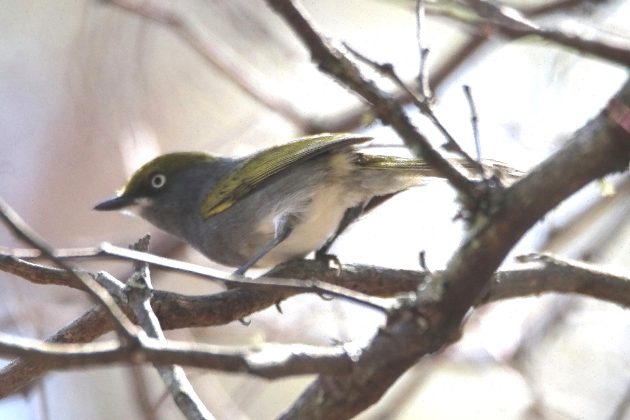
I’m still working on getting a top-notch photo of the Slaty Vireo.
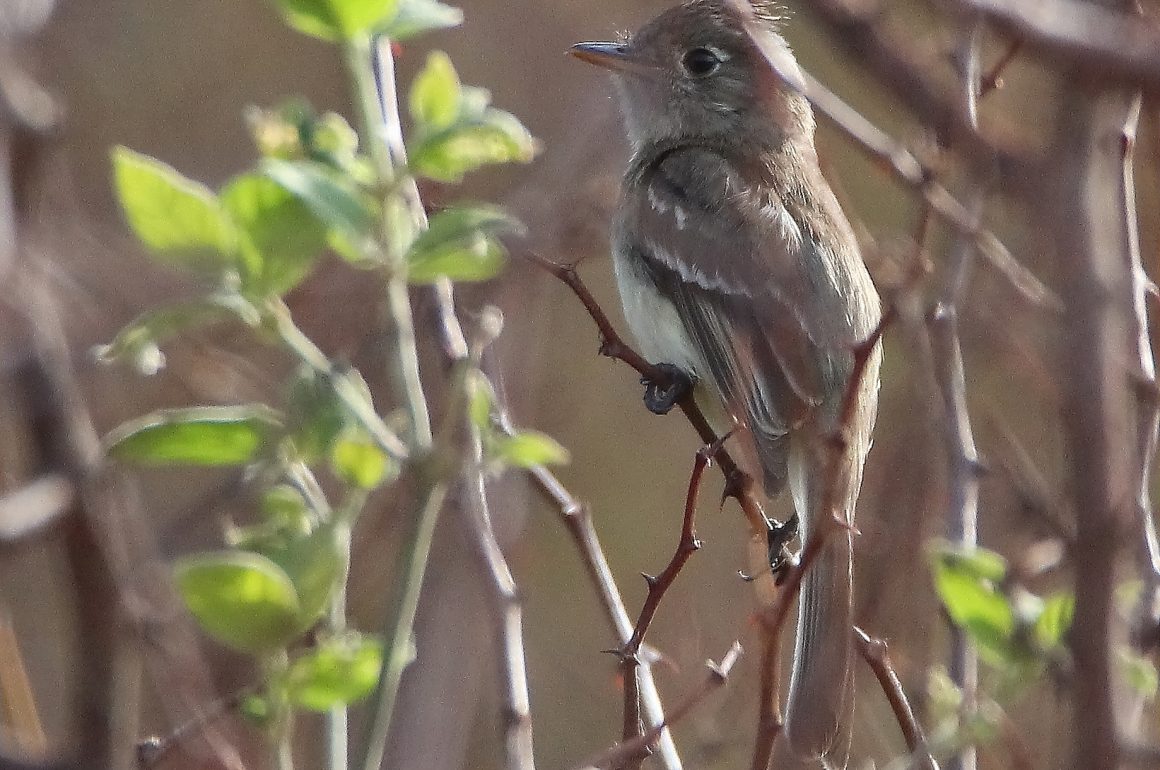
But days before our joint visit, Jonathan had also encountered a Pileated Flycatcher at this site, and his main reason for returning was to determine if that might be a reliable species there. The Pileated Flycatcher looks much like our many local members of the Empidonax flycatcher family, but is smaller and has as spiky crest that those species lack. It’s distribution is roughly equivalent to that of the Slaty Vireo (roughly from Guadalajara to Oaxaca, Mexico), but it is even rarer than that species (less than 1,500 eBird registries to date.)
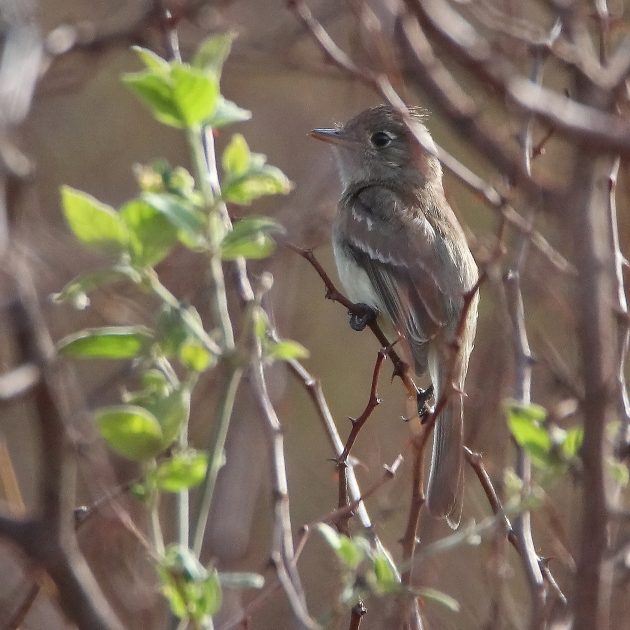
And there it was.
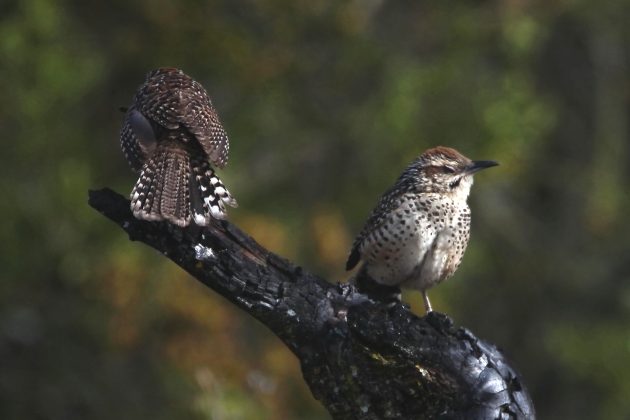
Of course, you can’t really bird in Michoacán without running into a good number of more common endemics. The Spotted Wrens we saw belonged to a common species with a distribution strictly limited to central Mexican pine-oak zones.
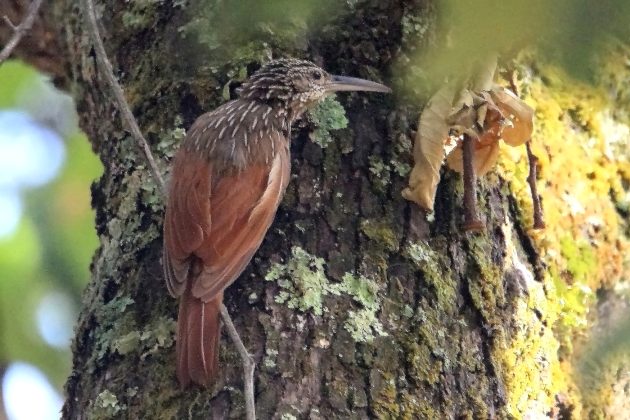
A semi-endemic Ivory-billed Woodcreeper (its range also includes much of Central America) gaves us decent views. American and Canadian readers would do well to imagine the members of the Woodcreeper family as Brown Creepers which have grown to twice their size. European readers can do the same with their Treecreepers. The Ivory-billed Woodcreeper is twice as large as these latter birds, but otherwise looks and acts quite similar to them.
Our biggest surprise was a Chihuahuan Raven flying overhead in the company of two much more-expected Common Ravens. The Chihuahuan Raven is essentially a desert species of the Mexican altiplano. What it was doing circling over dense pine-oak forest, we couldn’t imagine. But it was clearly smaller than the two Common Ravens, and lacked their diagnostic wedge-shaped tails. If we hadn’t had several minutes to compare it to its companions, we would not have dared such an unlikely identification. (We also sent our photos to trustworthy friends, just to be sure.)
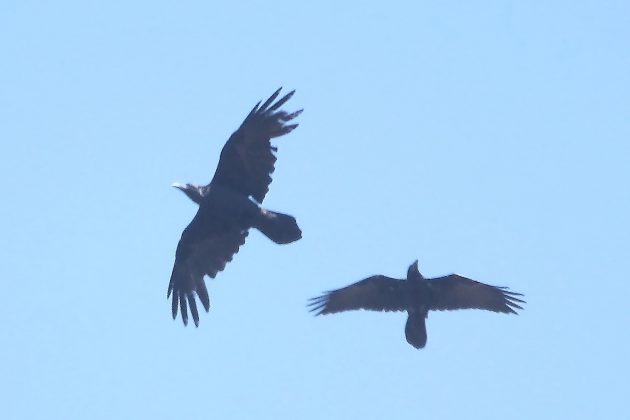
Wedge-tailed Common Raven on the left, smaller and rounded-tailed Chihuahuan Raven on the right.
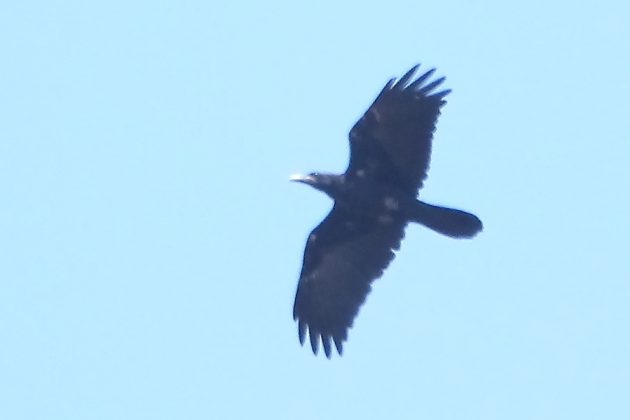
Chihuahuan Ravens can also be seen in the southwestern United States.
Another surprise had nothing to do with birds, as a beautiful Ruthven’s Kingsnake slithered away only a few feet from us. We were able to fully enjoy its gorgeous colors fearlessly, as the similar, highly venomous, but unrelated West Mexican Coral Snake is only found close to the Pacific Coast, far from where we were birding.
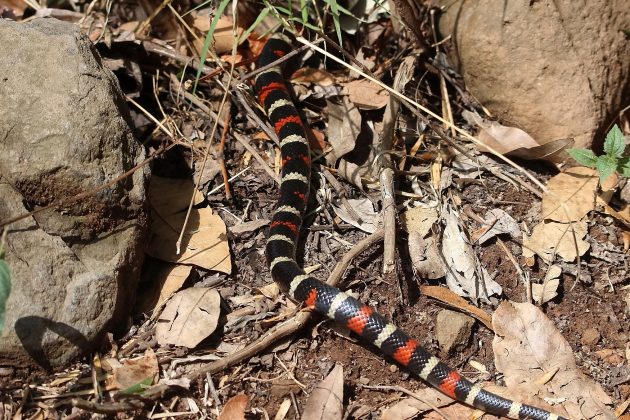
The Ruthven’s Kingsnake is… wait for it… an endemic.











Leave a Comment