

We sent out another list of questions to bird guides who have already been profiled on 10,000 Birds. In the eighth edition of this second series, we ask
Has birding changed for the better or worse in recent years?
Here are the answers.
It is better with more data, such as eBird. Gabor Orban, Hungary/Costa Rica
Worse. Zhang Lin, China
I don’t like how focused people have become on making lists- too much time looking at the screen in the field and missing the birds. I think people need to disconnect from time to time. Marc Cronje, East and Southern Africa
I love the fact that many more people are interested in birds. I am disappointed by the lowering standards of field craft and identification skills. The reliance on apps like Merlin can also be annoying especially when clients use it whilst on a tour. David Lindo, Spain
Worse, like everything else. Birds are harder to find, and they often fly away quickly, especially in areas where people regularly hunt the forest. Faraaz Abdool, Trinidad & Tobago
The internet has been a blessing and a curse. It enables people to get together easily, but on the downside, people post photos on social media demanding an ID without even trying to have a guess… then the Facebook ‘experts’ confidently get the ID wrong by… guessing. John Hague, UK
For the better in accessibility: apps, optics, and global networks make birding easier. For the worse in distraction: phones and checklists sometimes replace deep observation. The balance between technology and presence is delicate. Marcelo Carlos De Cruzky, Argentina
Birding has changed for the better in recent years after Covid, and many birders are coming to Ghana now since it’s very safe. Kwame Brown, Ghana
Birding has largely evolved for the better in recent years. Digital tools like eBird and Merlin Bird ID have transformed identification, data collection, and information sharing, making birding more accessible and informed. Training—both online and in the field—has strengthened skills and professionalism among guides and enthusiasts. At the same time, birding now plays a meaningful role in research, monitoring bird populations, and supporting habitat conservation. It has also created livelihoods through guiding, photography, and community-based tourism. Most importantly, birders today are more aware of the threats facing birds and their habitats, and many actively advocate for sustainable practices. Overall, birding has grown into a more impactful, informed, and conservation-driven experience. Magada Haily Miriam, Uganda
Better in terms of the availability of information and sharing it. Worse in terms of antagonism for eBird standings or better photo of a bird. Spyros Skareas, Greece
Here’s another article I could write! But to be brief, I would argue that the over-emphasis on competitive listing and the gamification of birding has changed birding in general in both good and bad ways. One, it’s opened the eyes of more people, gotten them engaged, and more easily disseminates the sharing of information without having to be in the “in-crowd.” But on the other hand, there’s less studying and enjoyment of the birds themselves, and less skill-building. Hitting a GPS coordinate to see a bird or posting a photo to an online forum for identification has been great for the masses, but does it really help you learn? If you want to really learn, that is, I offer zero criticism of those who are happy to just be enjoying the ride! Derek Lovich, Maine, USA
Especially on some of Papua’s smaller islands, such as Biak and Numfor, birdwatching has recently become difficult due to widespread forest destruction, and sought-after endemic species are also quite difficult to find, even with sound recordings. This forest destruction began after the COVID-19 pandemic and continues today due to the high price of timber harvested for sale, the establishment of new plantations by local communities, and the capture of some species for trade and as pets. Eko Lesomar, Papua New Guinea
Birding has changed for the better as new tech is helping so much. I do love Merlin on my phone, so I don’t need to travel with heavy books. I also love eBird, so I can send the daily lists to my clients from the comfort of my room, no need to do the “bingo” printed list after a long birding day! René Santos, Brazil
Birdwatching has had a positive impact on my professional career. I’ve also learned to observe other species in the natural world, such as butterflies. In terms of my health, it has helped me stay less stressed and appreciate nature more deeply, which is why we’ve created a Birdwatching Club to promote environmental education and conservation activities. Sandra Maria Plua Alban, Ecuador
It has undoubtedly changed for the better. Technology has revolutionized the field—apps like Merlin and eBird allow for real-time call identification and precision trip planning, while lighter, faster cameras with eye-tracking autofocus have made capturing the perfect shot accessible to everyone. But beyond the gear, the community itself is thriving. We’re seeing a beautiful demographic shift: younger generations are bringing high-energy “dopamine” to the hobby through social media sharing, while seniors continue to find peace and serenity in the craft. This balance of technology and diverse human spirit makes it an incredible time to be a birder. Savio Fonseca, India
There are certainly many more amateur birdwatchers in Germany than there were decades ago. That’s a good thing. However, it seems to me that the quality and the standards for birdwatching have declined. Not every birdwatcher, for example, reports their ornithological observations (even if it’s just the daily Great Tit on their balcony) to the relevant databases (e.g., ornitho.de). Even fewer report ringed birds to the (three!) bird ringing centers in Germany. Very few amateur birdwatchers research and publish their findings—not even every bird ringer does so. Rolf Nessing, Germany
The editor:
Most guides seem to agree that modern birding is both better and worse at the same time — which feels very appropriate for a hobby where people spend hours chasing tiny moving objects through bushes. Technology such as eBird, Merlin, better optics, and online communities has made birding far more accessible, social, and useful for conservation. At the same time, many guides worry that apps, listing culture, social media, and “gamified” birding are replacing patience, field skills, and simply watching birds. Several also point out that the birds themselves are increasingly under pressure from habitat destruction and disturbance. In other words: birders now have better tools than ever to find birds that are often becoming harder to find.
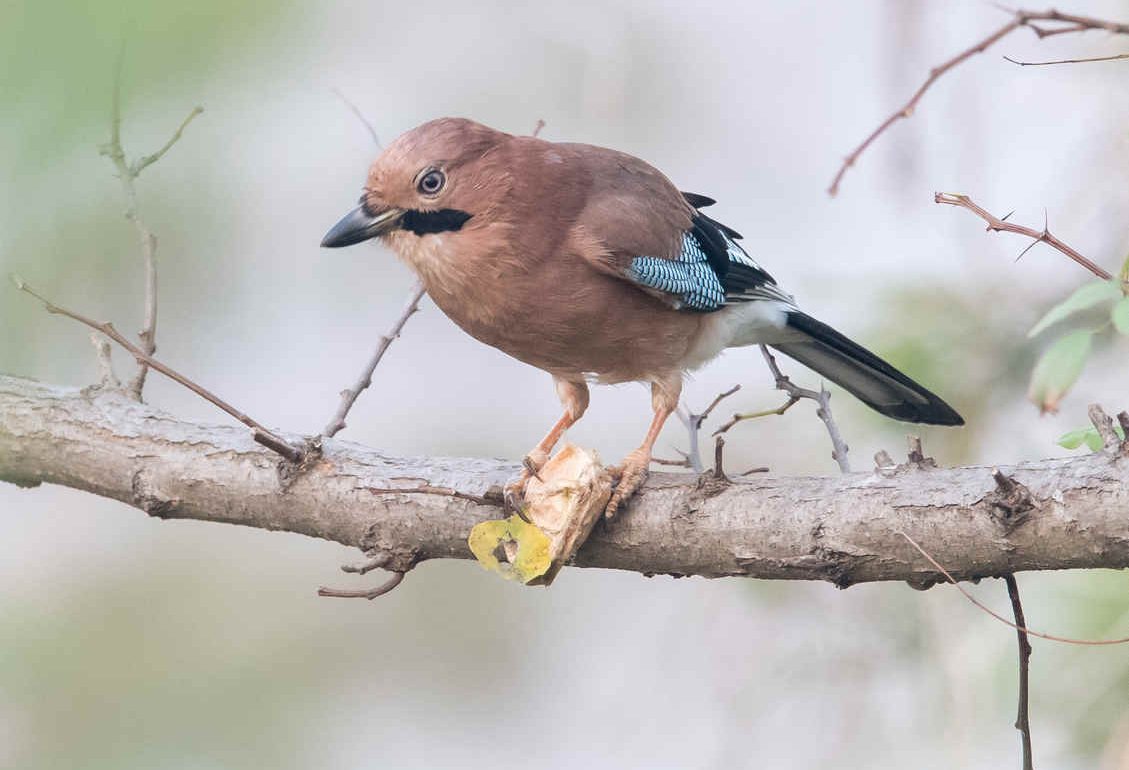
Photo: Eurasian Jay, Nanhui, Shanghai, November 2017






It’s wonderful to read the thoughts of so many birders from all over the world. I’m an amateur “backyard” birdwatcher who loves birds without ever really having the technical skill or equipment. My retired game warden brother told me about Cornell Lab of Ornithology and I do have fun looking up birds on their website. My brother and I share our love of birds…he can identify a bird just by the *song. I just love the way birds keep us company! My (now-adult) son told me he saw me talk to birds when he was around 3-4 years old. I said, “What did you think?” He answered: “Cool. My mom talks to birds!” Ha! Thank you all so much for sharing our love of birds!!
This is an excellent bird guide Q&A with very thoughtful answers. I was struck by the variety of responses. Some of the responses are geographically based which really does give insight into the larger world’s different challenges. While many may think first of technology, Eco Lesomar addresses deforestation. This surely much impact many of the other guides as well. David Lindo mentions the lowered standards of field craft. I love those two words together—field craft, they define so much. And, his observation is spot on. I, too, miss the diminishment of field craft; both my own and in others. I do occasionally use the tech birding tools, but overall I know I am not learning a thing. I was very recently in England; fully leafed out trees, very hot weather, and difficult to see birds. I was with a non-birding friend, and I used Merlin to identify the song. I then used my memory to see if I could remember the songs. We had fun, and became good at, identifying Eurasian Blackcap by voice. We had even more fun with the sing-song of the Chiffchaff, which I knew from prior visits. I considered doing an eBird checklist, but just couldn’t bring myself to do it. Not a huge eBird fan. I moved away from competitive listing a long time ago.