

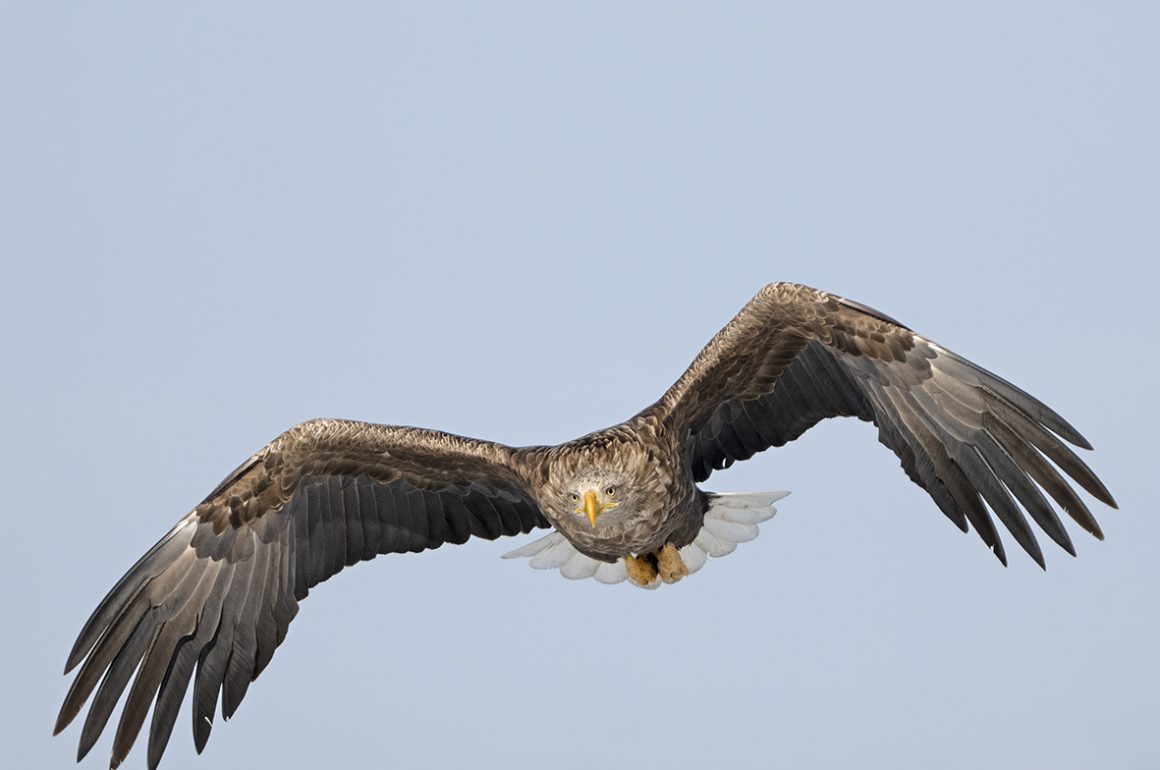
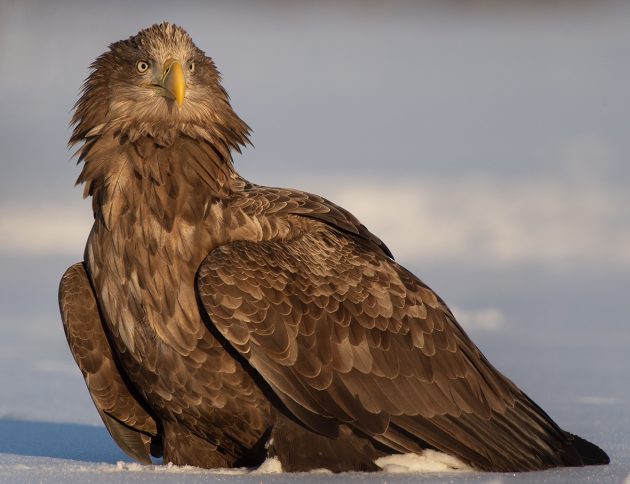
I attended a recent workshop which was being transmitted online. I was particularly interested to hear what was going to be said about a project which aims to release White-tailed Eagles (Haliaeetus albicilla) in southern Spain. Note that I say release and not re-introduce. The online listeners were invited to ask questions, so I did. Frustratingly, they were glossed over and my name, as author of the questions which I was obliged to give, was never mentioned. Instead, the comments about the validity of the claim for re-introduction went along the lines of: “well there are different opinions on the subject” and such like. Well, they are not opinions, they are facts as I will now enumerate.
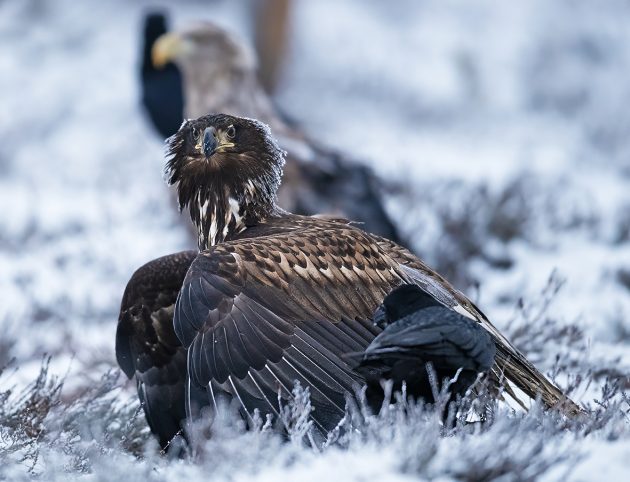
The historical evidence cited was a quote from an article “Notes on the Birds of the Straits of Gibraltar” the journal Ibis of 1879, in which the respected ornithologist Howard Irby stated “Mr. Stark, during the first week in May 1876, found a nest of the White-tailed Eagle on a cliff on the coast. I refrain from mentioning the exact locality for obvious reasons. The nest contained one young bird nearly able to fly.” That was it. No other historical evidence was presented at the workshop. Some of you may think that this is enough evidence to justify a re-introduction but note the following. Irby published the second edition of his book “The Ornithology of the Straits of Gibraltar” in 1895, that is sixteen years after the article. Irby’s book is thorough and detailed, a real reference work for those of us working in the region. Turn to the page on White-tailed Eagle and this reference is not there! In fact, Irby provides no evidence of this bird having bred in the region. Irby also avoids other references which he had cited previously from Mr Stark – in those sixteen years he had lost confidence on the veracity of these claims. Knowing how thorough he was, I am sure that he visited Stark’s cliff on the coast and found the claim not to be true but, being a courteous gentleman, chose to remain silent in the later work, rather than slur Mr Stark’s reputation.

The rest of the evidence presented at the workshop was based on fossil and sub-fossil material from caves in the Iberian Peninsula. Now that’s a subject which I know well! I’ve worked on this material for over thirty years and I know the sites. In what was adding insult to injury, I had to endure references being made to recent discoveries of White-tailed Eagle subfossils from Gibraltar’s caves – my own work! It was like hearing the devil quoting out of the bible! I sent further comments but these were not taken up either so I will say them here.
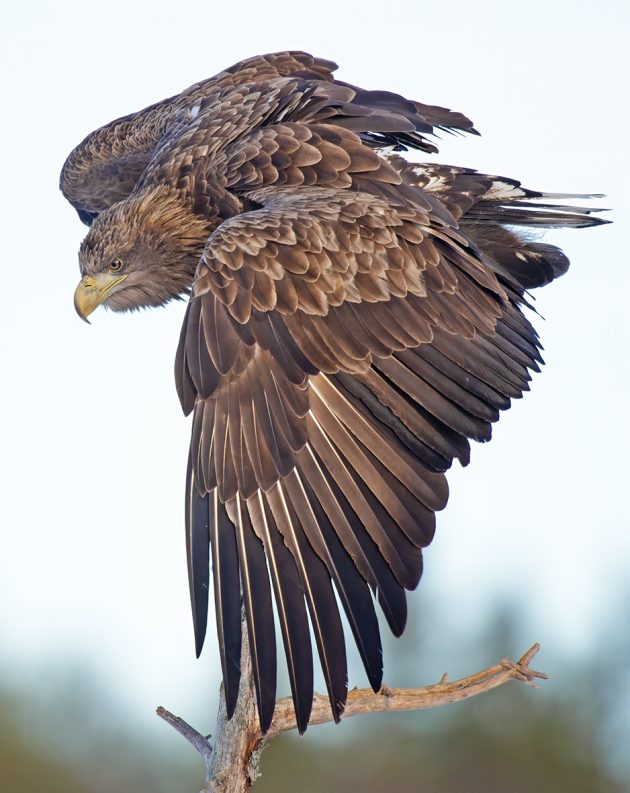
You cannot use subfossil bird material to argue for species re-introductions. These bones reflect the presence of these species thousands, even tens of thousands of years ago. In the case of the Gibraltar White-tailed Eagles, they go in some cases as far back as 100 thousand years ago! The remains are found alongside those of Snowy Owls (Bubo scandiacus), Little Auks (Alle alle) and Steller’s Eiders (Polysticta stelleri) and, yes, they were around alongside the Neanderthals! We don’t even know if these were breeding birds or perhaps just winterers. So, if you are going to use this kind of evidence for “re-introductions”, you might as well “re-introduce” Snowy Owls, or perhaps even Neanderthals to the south of the Iberian Peninsula!

Joking aside, there is absolutely no evidence in support of the presence of breeding of White-tailed Eagles in southern Iberia in historical times and the evidence from prehistory is inconclusive. If this project goes forward, people will have to understand that it is not a re-introduction. It establishes a dangerous precedent which might lead us to creating zoos in the wild, of species that don’t belong, with unknown ecological implications which could result.







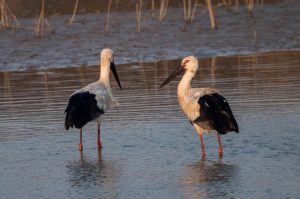





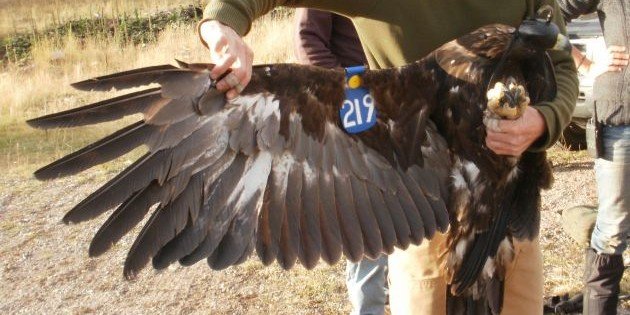


Great article Clive (and good to see you contributing again). Here in the UK we have at least two projects “re-introducing” White Storks, despite there being no evidence that these birds have ever bred in the British Isles. There’s even a project to release these birds in London this autumn, despite the fact that London can hardly claim suitable habitat for such a bird.
Spain already has five breeding species of eagles, so introducing another is crazy. The re-introductions of White-tailed Eagles into Scotland, and now England, do make sense, as the species was only exterminated in recent times.
Agreed David, and sorry to have been silent for a while. We must have good historical evidence before we embark on re-introductions, which I am all for by the way. But this case just doesn’t make sense, just like the white storks
Clive’s article hit the spot! Clive’s description of the antics around approprating science out of context, glossing over serious objections, et cetera is all too familiar. For most of my career I have been up against “solutions before problems” as I call it, the tendency to have a solution and then create a fitting problem. The best one I have seen so far was the implementation of projects to protect the water source of a large city – at the wrong lake. Apart from the fact that the eagles fly and may reach suitable habitat on the wing (as they did in the Netherlands) I can’t escape the idea that we have much bigger problems to deal with…
En un artículo publicado en 2020, ya se esclarece el error del Dr. Stark. Véase siguiente referencia:
Reig-Ferrer, Abilio (2020). Presencia histórica del pigargo europeo (Haliaeetus albicilla) en el sur de la península ibérica. El Corzo. Boletín de la Sociedad Gaditana de Historia Natural, vol. VIII: 8-20-
Thank you for your accurate opinion. A project based on a species for which there is no solid evidence of historical breeding in the region lacks not only scientific robustness but also true conservation value. Moreover, you rightly warns about the dangerous precedent such initiatives can set. If weak or speculative evidence is accepted, we risk moving towards a form of designed wildlife, where species are released under the guise of reintroduction, regardless of their real biogeographical history or ecological implications. In a context of limited conservation resources, efforts should be focused on protecting native and genuinely threatened species, rather than creating artificial populations of easy species that ultimately dilute the very meaning of conservation.
What struggles my mind is the release of this eagle in Northern Spain in recent years got strong critics and backlash… And someone finds it is a good idea trying in Southern Spain now !