

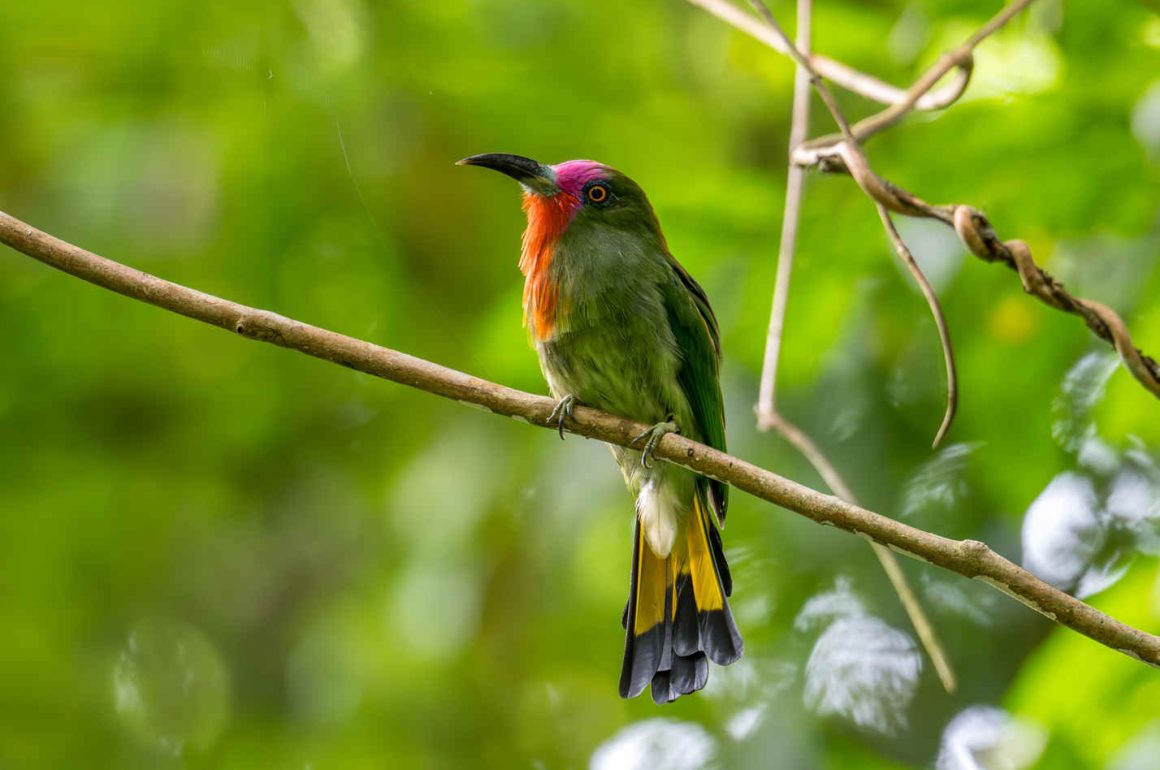
Back in the days when CDs ruled the world, record companies would sometimes take two older, shorter records, put them on one CD, and sell the results as a “Twofer” – an ugly word, if there ever was one. So, please do not call this post a twofer even though it covers both existing species of “bearded” bee-eaters: The Blue-bearded Bee-eater and the Red-bearded Bee-eater.
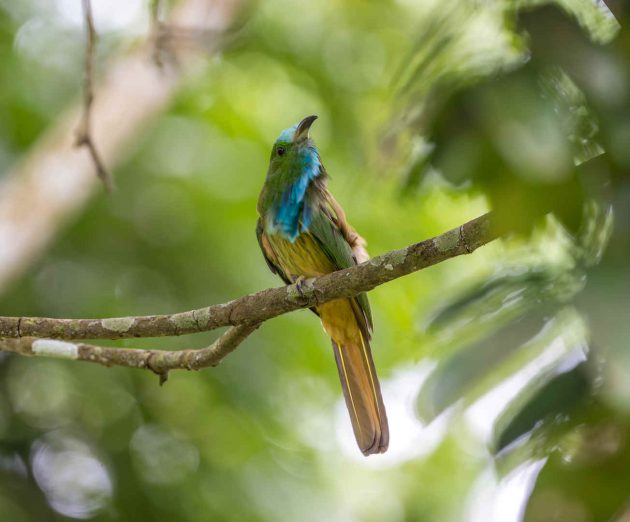
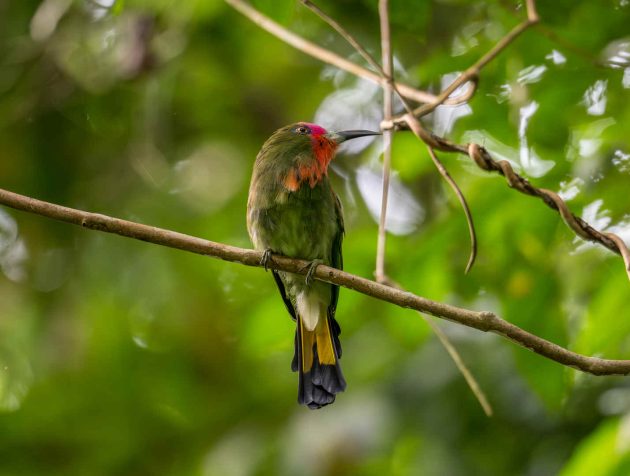
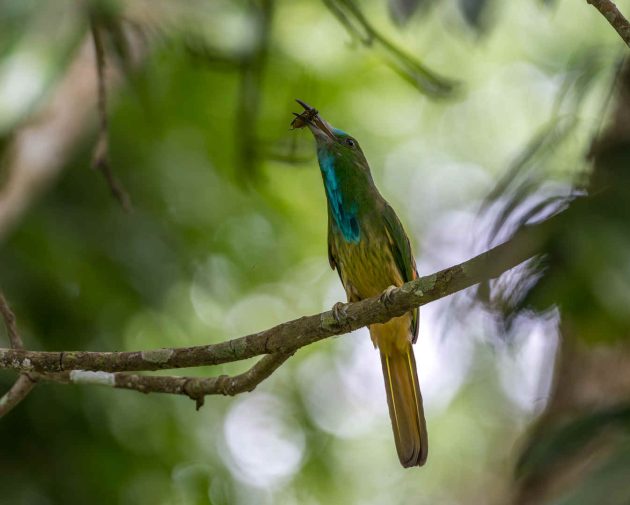
Apart from the names, the other connection between the two species is that both can be found at Kaeng Krachan, Thailand, where the photos were taken (in July 2025).
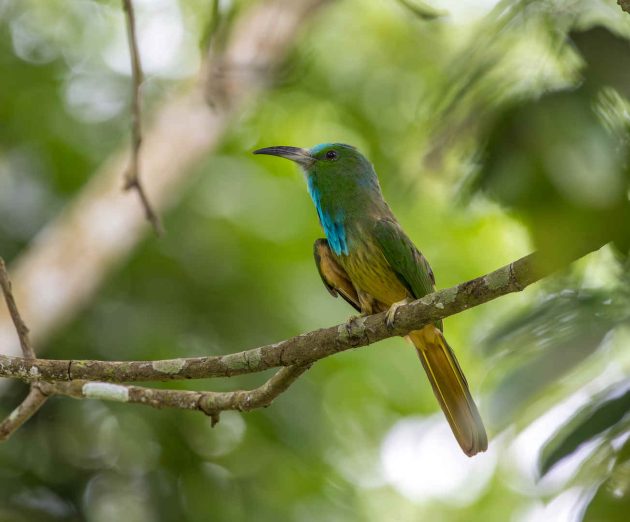
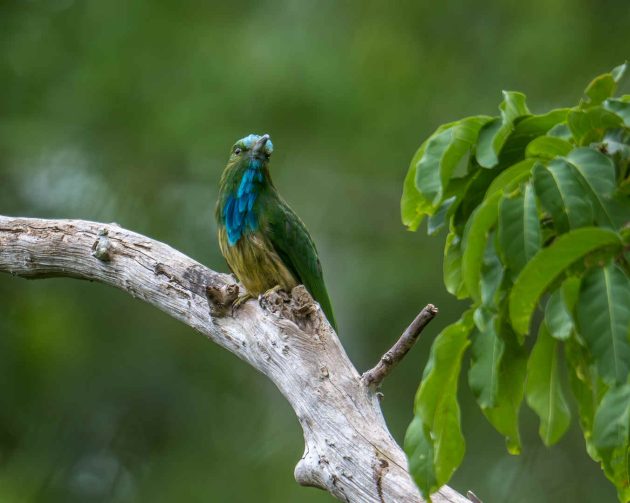
The Blue-bearded Bee-eater (Nyctyornis athertoni) is named after Lt. J. Atherton (1797-1827) of the British Army in India. There is little (actually, no) information on him easily available online, perhaps unsurprising given the young age he died. I asked ChatGPT whether it was unusual for a person in his position and location to die so young. ChatGPT laconically calls it “sad, but not surprising” and explains that people like him “faced a harsh combination of tropical disease, harsh climate, and military danger”. It adds that “the phrase ‘went out to India’ was almost synonymous with ‘shortened life expectancy.’”
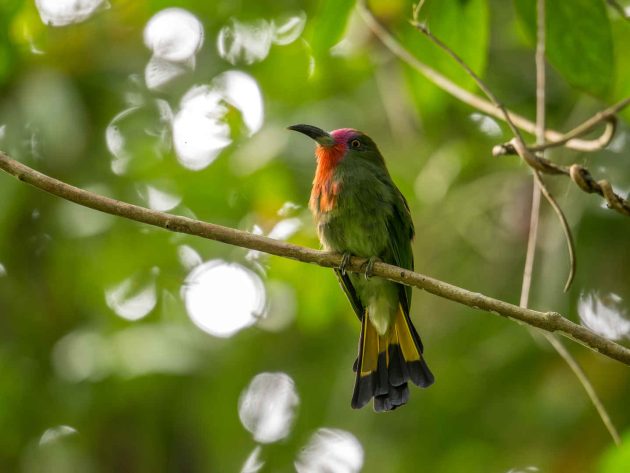
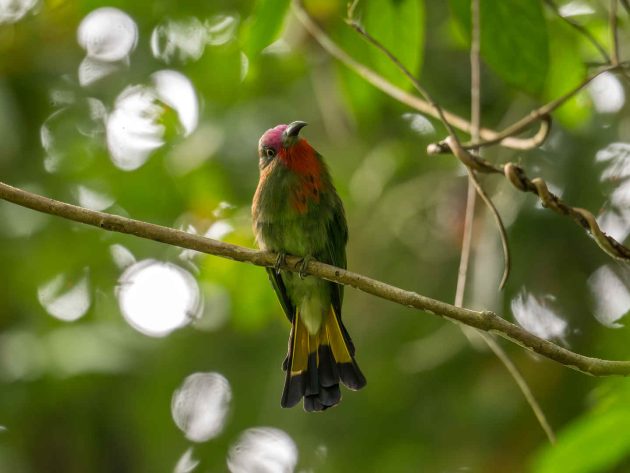
Sadly, the amictus in Nyctyornis amictus, the scientific name of the Red-bearded Bee-eater, does not refer to a Maj. F. Amicter (1790-1830), who might have died from the same causes, though at a slightly higher age, befitting his higher rank. For the species, this might have been preferable to the real meaning of the scientific name – amictus means unsociable. And indeed, the vocalization of this bee-eater does not sound particularly inviting.
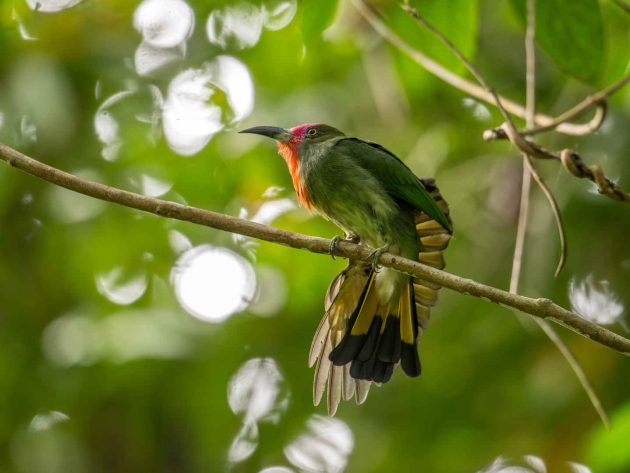
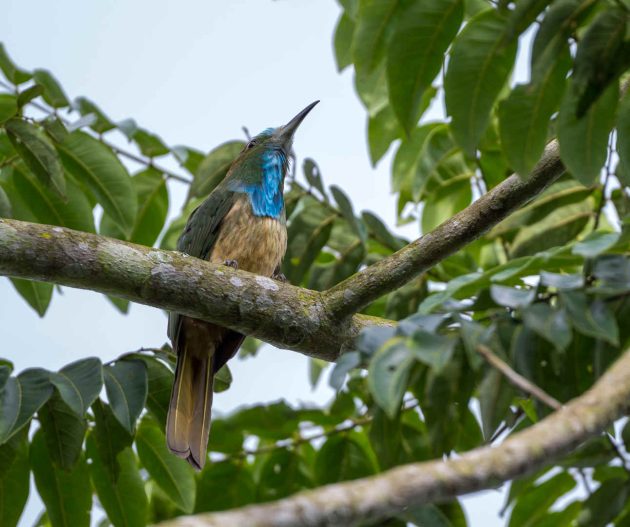
The somewhat negative image of these bee-eaters extends to a description of their foraging behavior: “Nyctyornis bee-eaters are sluggish during foraging, spending long periods of time on a look-out perch in the middle to upper canopy level and flying down to pick up arthropod prey when spotted” (source).
Both use nesting burrows – tunnels dug into sand. For the Red-bearded Bee-eater, a detailed description of the nesting, along with photos of chicks and tunnels, can be found here.
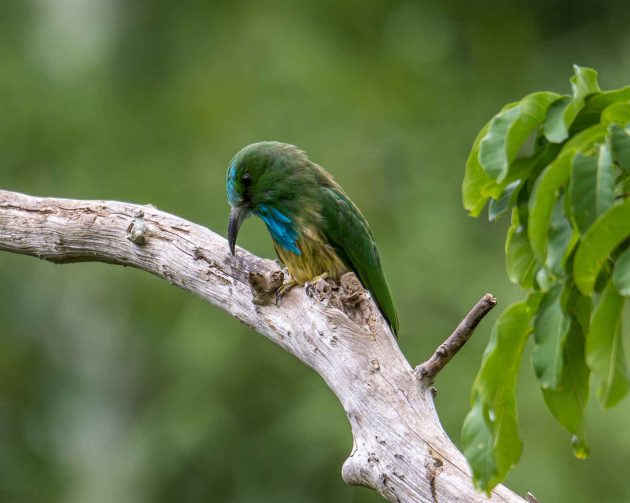
Unsurprisingly, bee-eaters eat bees and are thus also the subject of papers in journals such as Apidologie. One such paper describes Blue-bearded Bee-eaters attacking a nest of giant honeybees. This leads to a mass release of about 700 bees, and the authors also claim some evidence of inter-colonial group defense: colonies that were not directly threatened joined the defence of the threatened colony. Presumably, some of the bee-eaters attacked subsequently switched to a vegan diet.
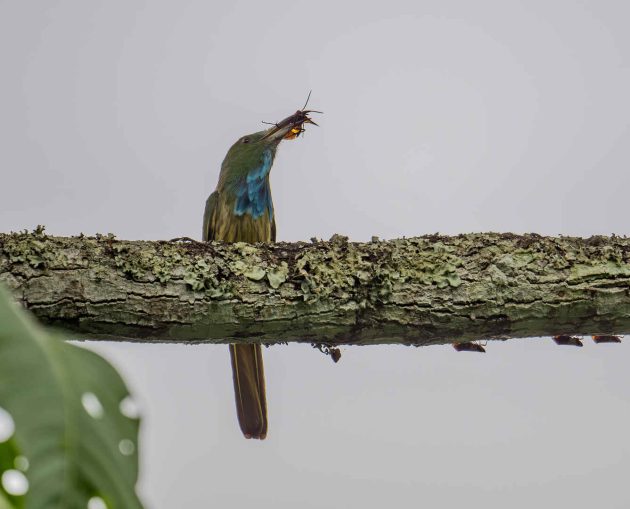
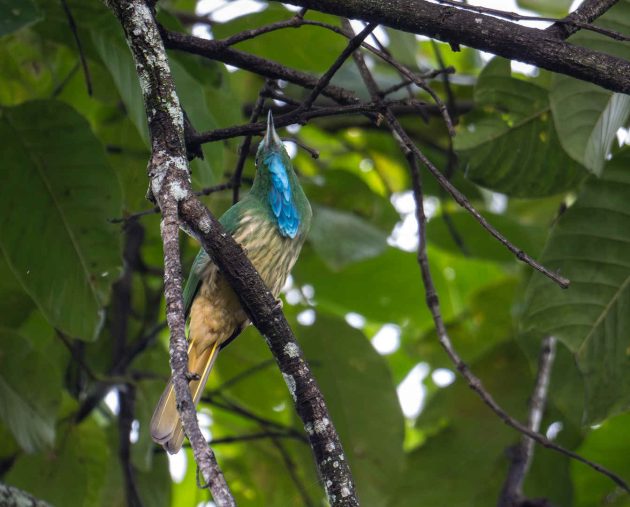
My impression, both from seeing the two species at Kaeng Krachan but also elsewhere, is that the Blue-bearded Bee-eater is much more of an open country bird, preferring to hunt from an alighted post which offers a wide view of the surroundings. In contrast, I have so far only seen the Red-bearded Bee-eater inside tropical forests, not even on the edge of such locations. However, the descriptions of both species in the HBW do not make such a clear distinction, so my experience may not fully cover reality.











In a family consisting of rather gorgeous birds this twofer seems misplaced; they’re colourful but not very aesthetically pleasing. As for the Bluebeard, according to WIkipedia he was “a wealthy man in the habit of murdering his wives”. Note the plural!