

Which bird species do you think is the biggest attraction to visitors of your lodge (please only name one species)?
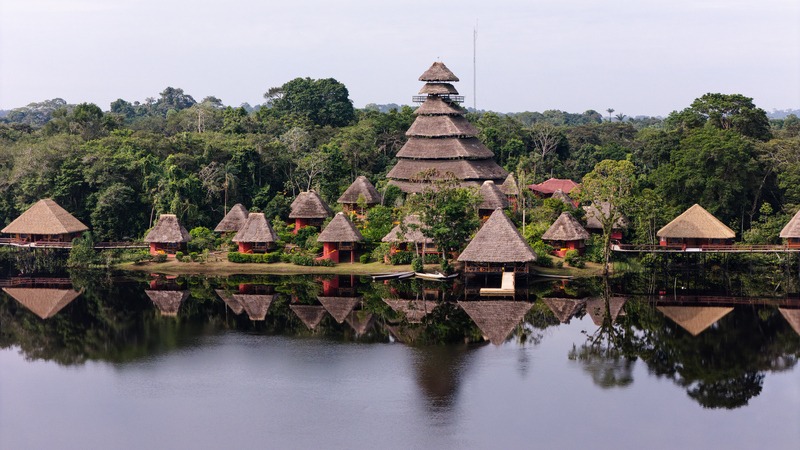
One of the most exciting species for birders visiting our lodge is the Harpy Eagle. Although sightings are never guaranteed, the possibility of encountering one of the most powerful raptors in the world makes the experience incredibly special for visitors.
What is the name of your lodge, and since when has your lodge been operating?
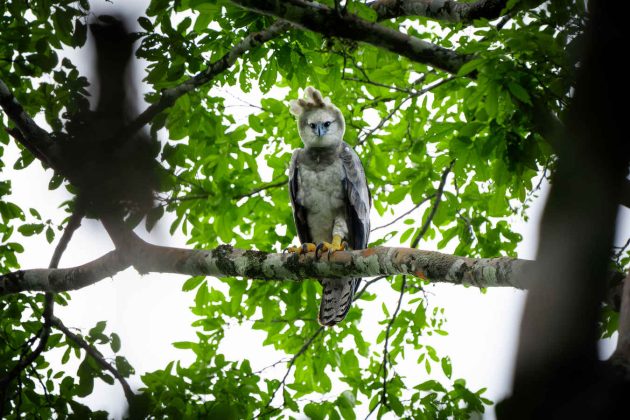
Our lodge is called Napo Wildlife Center, and it has been welcoming visitors since 2002.
How best to travel to your lodge?
Visitors take a 30-minute flight from Quito to the town of El Coca, the main gateway to Yasuní National Park. At the airport, our guides welcome guests and transfer them to our private dock, located about 10 minutes away.
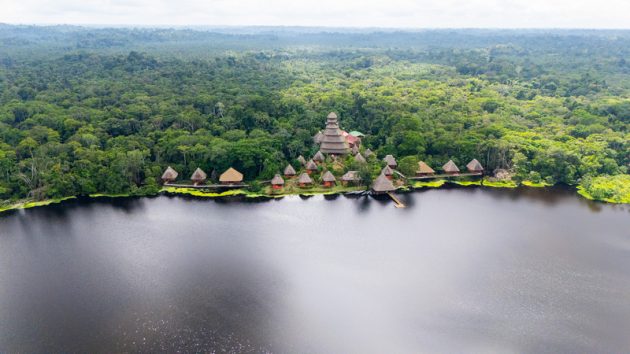
From there, the journey continues with a two-hour motorized canoe ride along the Napo River until reaching our “Welcoming Area.” Here, visitors switch to a traditional paddle canoe and glide quietly for about two hours through the narrow waters of Añangu Creek, often spotting birds, monkeys, and other wildlife along the way. This peaceful canoe journey ends at the beautiful Añangu Lagoon, where Napo Wildlife Center is located.
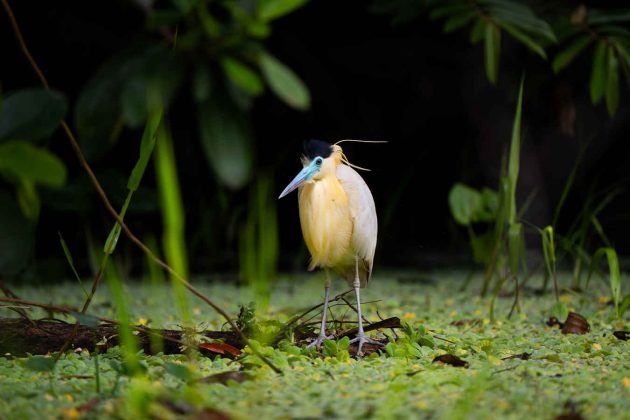
Capped Heron
What kind of services – except for accommodation and food – does your lodge offer to visiting birders?
We offer a variety of experiences designed for birdwatchers, including:
- Specialized birding guides
- Guided jungle walks
- Visits to two parrot clay licks
- Two canopy observation towers
- Canoe excursions along creeks and lagoons
These activities allow birders to explore different forest levels and habitats within the Ecuadorian Amazon.
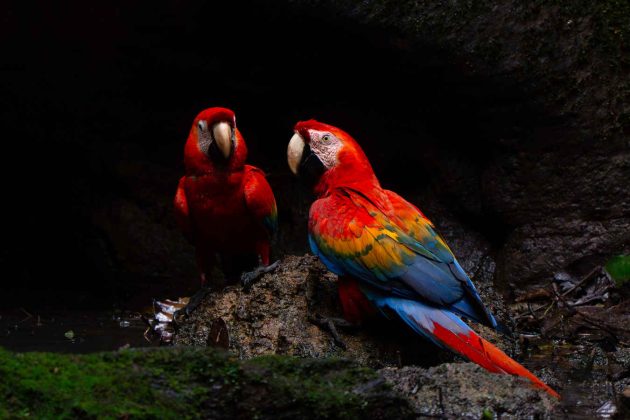
Scarlet Macaw
What makes your lodge special?
Several aspects make Napo Wildlife Center unique:
The lodge is located inside Yasuní National Park, one of the most biodiverse places on Earth and a UNESCO Biosphere Reserve in the Ecuadorian Amazon.
It is owned and operated by the Kichwa Añangu Community, which protects over 21,400 hectares of rainforest within the park.
Tourism follows a community-based model, where revenue is reinvested in education, healthcare, and conservation programs for the community.
The protected forest surrounding the lodge hosts an extraordinary diversity of wildlife, including around 600 species of birds.
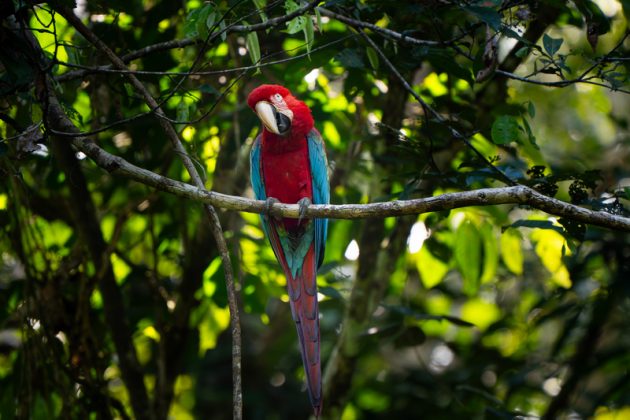
Red-and-green Macaw
What are the 10–20 most interesting birds that your lodge offers good chances to see?
The area offers excellent opportunities to observe many remarkable species. Some highlights include:
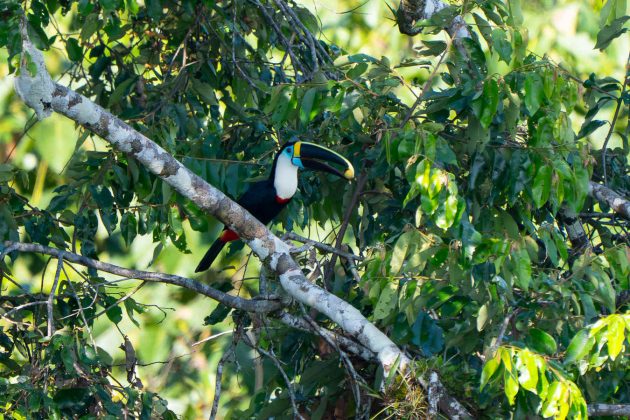
- White-throated Toucan
- Ivory-billed Aracari
- Chestnut-eared Aracari
- Many-banded Aracari
- Hoatzin
- Harpy Eagle
- Crested Eagle
- Rufescent Tiger Heron
- Capped Heron
- Scarlet Macaw
- Red-and-green Macaw
- Various Kingfishers
- Tanagers
- Woodpeckers
- Parrots and Parakeets
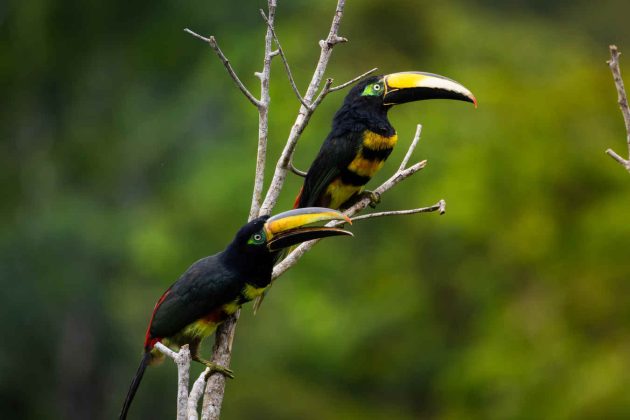
Many-banded Aracari
What is the best time to visit your lodge, and why?
Napo Wildlife Center operates year-round, and birdwatching can be rewarding in any season. Because the Amazon rainforest maintains stable temperatures and high biodiversity throughout the year, bird activity remains consistent.
However, water levels influence access to certain areas. During higher water seasons, canoe exploration becomes easier, allowing birders to reach flooded forests and lagoons where many species can be observed.
Is your lodge involved in conservation efforts?
Yes. Napo Wildlife Center is part of a community-led conservation model. Tourism revenue is reinvested in protecting the surrounding rainforest, supporting community development, and ensuring that the Kichwa Añangu territory remains a safe habitat for wildlife. Through this approach, the community has chosen conservation as a sustainable alternative to activities such as logging or resource extraction.
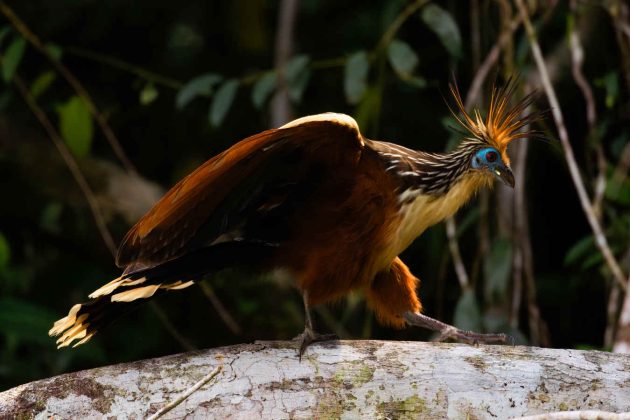
Hoatzin
What other suggestions can you give to birders interested in visiting your lodge?
We recommend bringing binoculars, a spotting scope if possible, and a camera with a telephoto lens. Lightweight clothing, rain protection, and comfortable walking shoes are also helpful.
Our specialized birding guides know the best locations and habitats to maximize bird sightings throughout the stay.
Do you have activities for non-birders?
Yes. While birdwatching is one of the highlights, we offer many other experiences, including guided rainforest walks, paddle canoe excursions, wildlife observation, visits to parrot clay licks, night walks, and cultural exchanges with the Kichwa Añangu Community.
Our programs typically range from 4 to 8 days, allowing guests to fully experience the Ecuadorian Amazon.
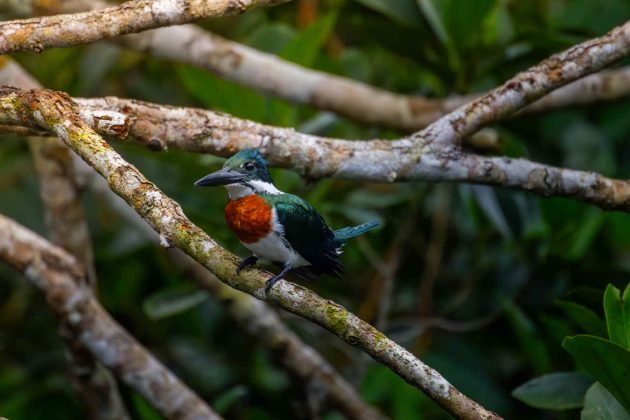
Amazon Kingfisher
If any reader of 10,000 Birds is interested in staying at your lodge, how can they best contact you?
Readers can learn more about our programs and contact us through our website or reach us through our social media channels, including Instagram.
Is there anything else you would like to share with the readers of 10,000 Birds?
Napo Wildlife Center offers birders the opportunity to explore one of the most pristine areas of the Amazon rainforest while supporting a successful model of community-based conservation tourism. Visiting the lodge not only provides extraordinary birdwatching opportunities but also contributes directly to protecting the rainforest and supporting the local Kichwa Añangu Community.
White-throated Toucan





One of my dreams…