

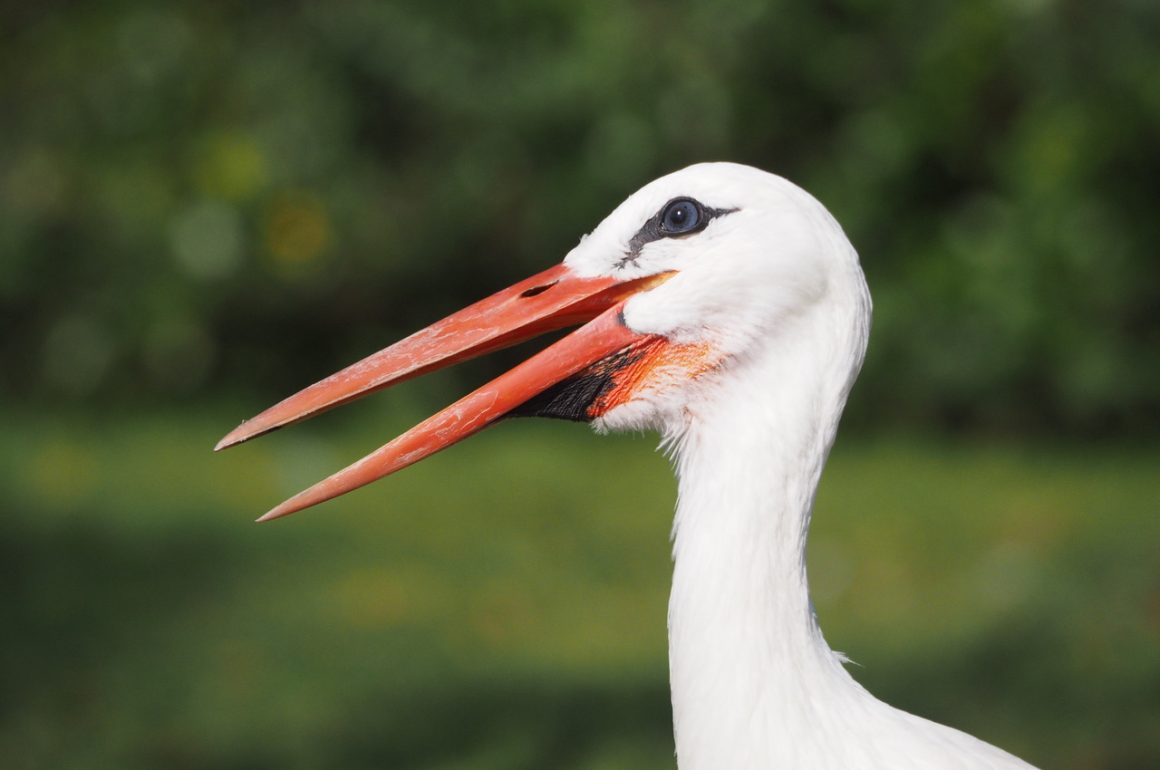
Rewinding is all the rage in Britain now, and scarcely a week goes by without a new rewilding project being announced. Rewilding isn’t solely about turning farmland back into a more natural habitat – it’s also about re-introducing the wildlife that might once have lived there. In the UK there are currently reintroduction projects for Beavers, Pine Martens, Wild Cats and European Bison, along with White Storks and White-tailed Eagles. There are also proposals to release European Lynx and Dalmatian Pelicans, neither of which have occurred in these islands for hundreds if not thousands of years.
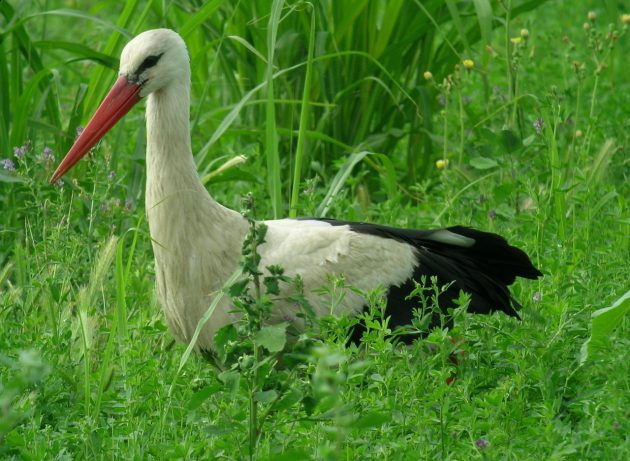
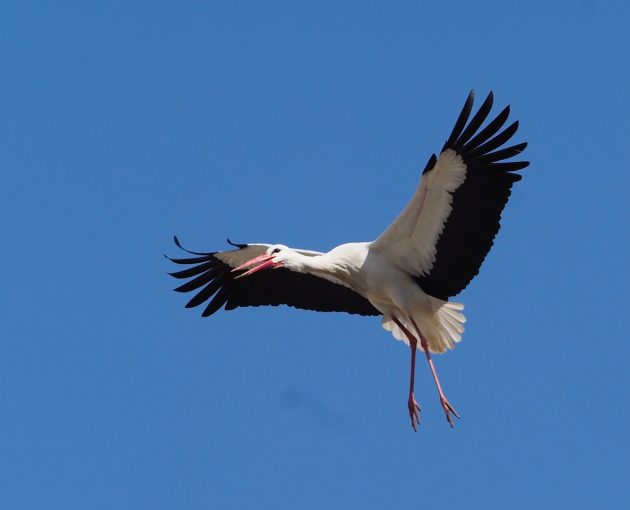
White Storks are the poster birds for reintroductions, their popularity no doubt based on the fact that they are big, handsome and easy to see. Those planning to release these birds invariably claim that they once bred in Britain, usually adding that they were “wiped out 500 years ago due to hunting and habitat loss”. However, there’s not a shred of evidence that these birds have ever nested in the British Isles.
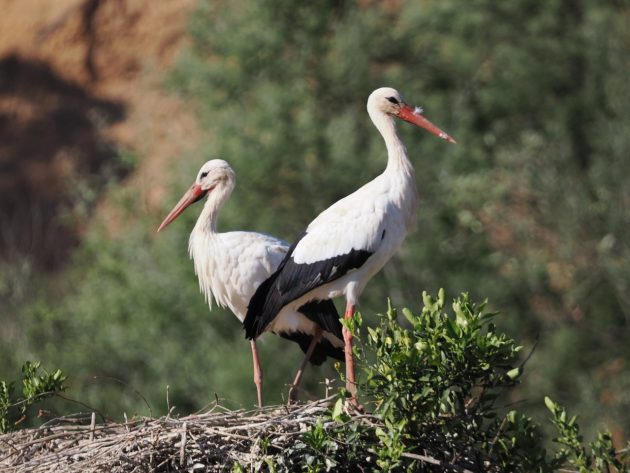
There’s only one supposed record of these birds breeding here, and that was on the top of the church of St Giles in Edinburgh, Scotland, “in the year of our Lord fourteen hundred and sixteen”. The record was written originally in Latin, then translated: it doesn’t stand up to scrutiny. Curiously, all reintroductions in England have to be given approval by the Government’s statutory body, Natural England. Quite why it has given approval to releases of White Storks is inexplicable.
Storks were first released some years ago at Knepp Castle , where a small breeding population has now been established. Knepp was one of the first places in Britain to be rewilded: 3,000 acres of unproductive Sussex farmland is now home to Red Deer, Long-horned cattle and native breeds of pigs. It boasts the biggest population of Purple Emperor butterflies in Britain, as well as growing numbers of endangered Turtle Doves and Nightingales, so it has been a wildlife-conservation success story. But did it really need the storks, except to attract both publicity and (paying) visitors?
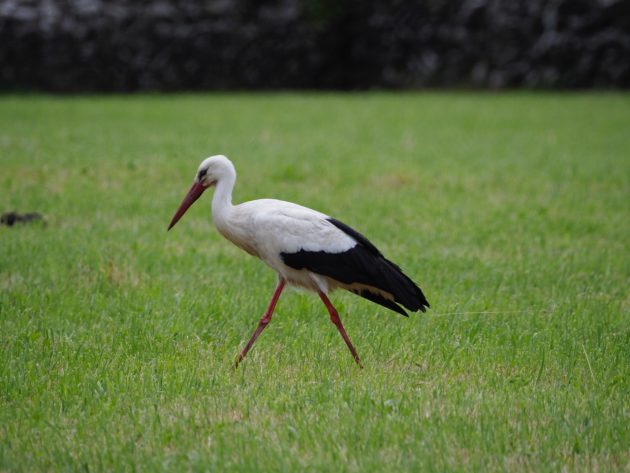
At least the Knepp storks have somewhere to forage, which is more than you can say for one of the most recent rewilding projects. White Storks, together with Beavers, are to be released in East London, with storks due for release this coming autumn, the beavers the following year. The releases form part of a project called Rewilding East London, a partnership between the London Wildlife Trust and The London Borough of Barking (barking mad?), with the support of the Mayor of London, Sadiq Khan.
Releasing these “iconic species” will, so we are told, “build a relationship between Londoners and beavers and storks that inspire pride, an active interest in nature recovery, and a willingness to co-exist with these animals as they become a re-established part of London ecology”. Stirring words for a project that is, in my view, entirely misguided.
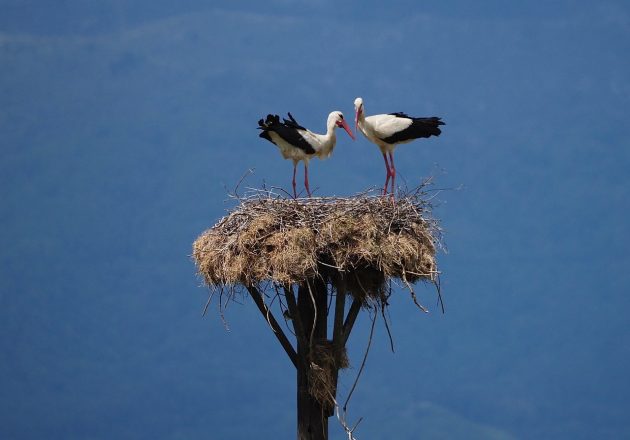
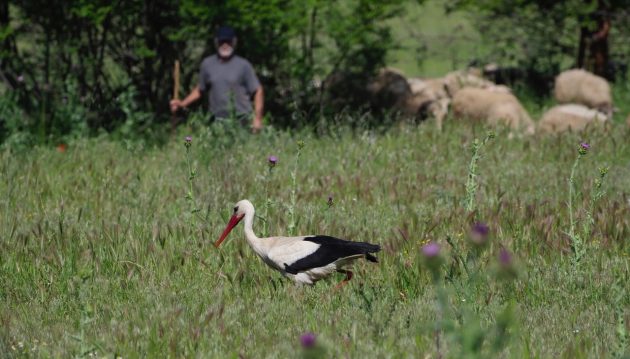
As anyone who has travelled in Spain or eastern Europe will know, White Storks do nest in towns, and there are many cities where the birds and their nests are a familiar sight. However, these nests are invariably near open countryside where the birds can forage for their food, which is almost exclusively animal. Frogs, newts, lizards, mice, moles, snakes and insects make up much of their diet, but they have also been recorded taking kittens, weasels, domestic ducks and chickens. In Spain I once watched one walking through a nesting colony of Avocets, snaffling chicks as it went.
Quite where the Dagenham storks will forage is something of a mystery – the RSPB’s Rainham marshes nature reserve seems the most likely place, but does it have sufficient natural food for it to support such large and voracious birds? I very much doubt it. Dagenham does have three McDonald’s restaurants. Perhaps the birds could be trained to queue up for a takeaway, financed with some of the £500,000 funding from the Mayor of London’s Green Roots Fund.
According to Councillor Dominic Twomey, the leader of Barking and Dagenham Council, the project “is a brilliant achievement for our borough and a real win for our residents… I’m proud that we are leading the way in London, showing how urban spaces can be places of restoration, learning and connection.” One question remains. Does anyone really think that a White Stork or a Beaver would want to be released in Dagenham? The idea is quite crazy.
[Technical note. White Storks are widespread breeding birds in southern and eastern Europe, and vagrants and over-shooting migrants are recorded regularly in southern England.]
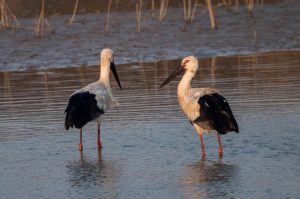
The photographs illustrating this piece were taken in Portugal, Spain and Greece, where White Storks are native breeding birds.








David, I have never seen White Stork as closely as your cover photo allows. What is the anatomical part below the lower bill in your cover photo? It is also noticeable to a much lesser extent in the flight photo? Is this a stupid question? I’ve never seen anything like this before.
@Cathy: are you referring to the gular pouch? I am happy you asked this question as it prevented me from going on a rant (storks, Instagram, blablabla).
Where they nest on roofs, frogs, lizards, mice and snakes commonly roll down into someone’s yard, and some of those people tend to scream at the sight of a snake, and others are terrified one might fall onto their head…
Dragan, here in SW Germany, frogs & snakes aren’t all that common. Our White Stork mostly eat worms and mice, and sometimes lots of slugs, with the latter making the regurgitating of food for their young quite a sight …