

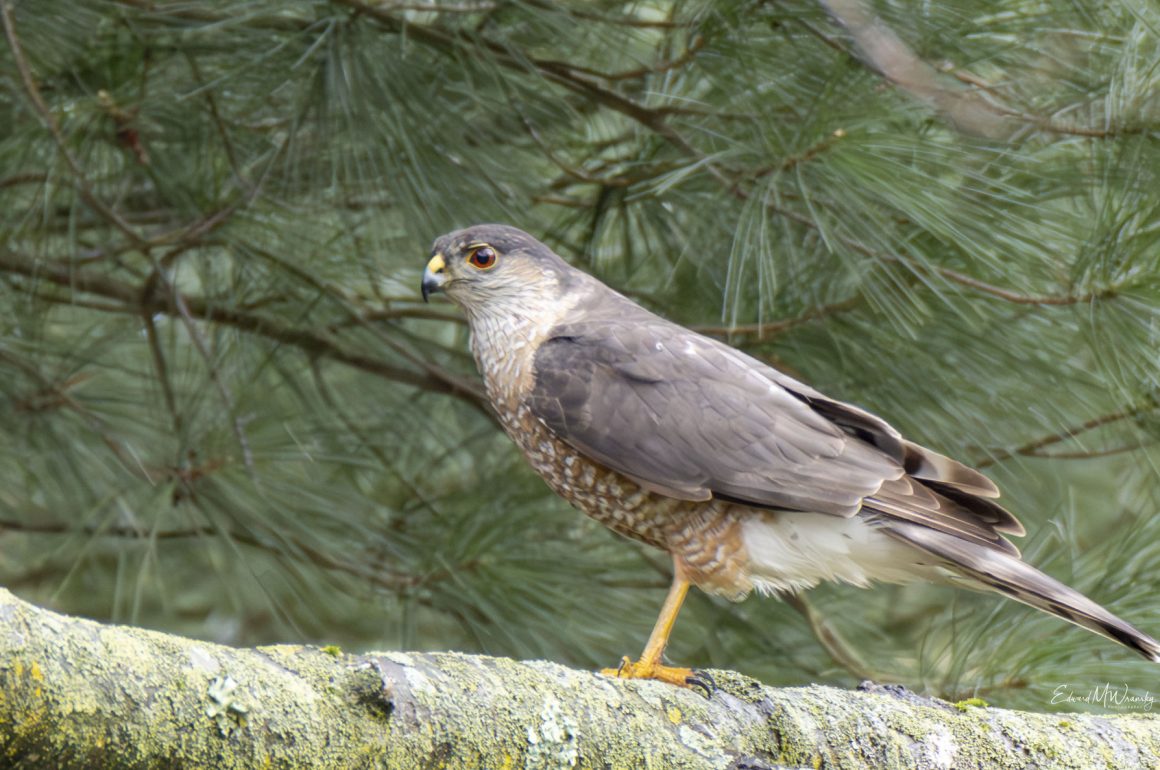
The Sharp-Shinned Hawk is the smallest accipiter to pass over raptor watches. Like many other raptors, the majority of these birds breed in the boreal forests. However, many live in the wooded areas of cities and towns, enjoying the bounty that bird feeders provide.
The Sharpie is robin-sized, wth a compact body. It has long legs and toes, which aid in the capture of songbirds. A Sharpie is nimble and easily chases its prey through bushes and around trees.
Fall migration for this raptor extends from late August to December, with peaks in late September (for juveniles) and early to mid-October (mainly adults). These times coincide with the migratory movements of their prey. I always tell newbies at raptor watches that the diners are following their dinners.

Sharpies use thermals during migration, which means they avoid flying over open water. They follow coastlines and the shorelines of lakes. During windy conditions, they may fly low. We have had Sharpies at our watches that fly right over our heads, which is exciting for veterans and unnerving for newbies. On days with favourable thermals, they will be high overhead. In migration, they travel about 50 miles per day. There are stopovers of up to five days, when they rest and feed.
Sharpies may migrate alone or with their nestmates. We usually tell newbies that if they see one Sharpie early in the season, look ahead or beind it for its migrating sibling. To me, their flight looks like panicked flapping, in comparison to buteos. But, that style of flying still gets them to their wintering grounds. However, the aforementioned bird feeders have caused many Sharpies to stay in more northerly areas, because they can find food year round.
These songbird-catching machines are an interesting addition to the flyovers at raptor watches. Just remember to keep your head down!
Note: All photos are from Wikipedia Commons, an online source of copyright-free photos: Photo at top of article by ewransky; photo in body of article by Steve Berardi.












Leave a Comment