
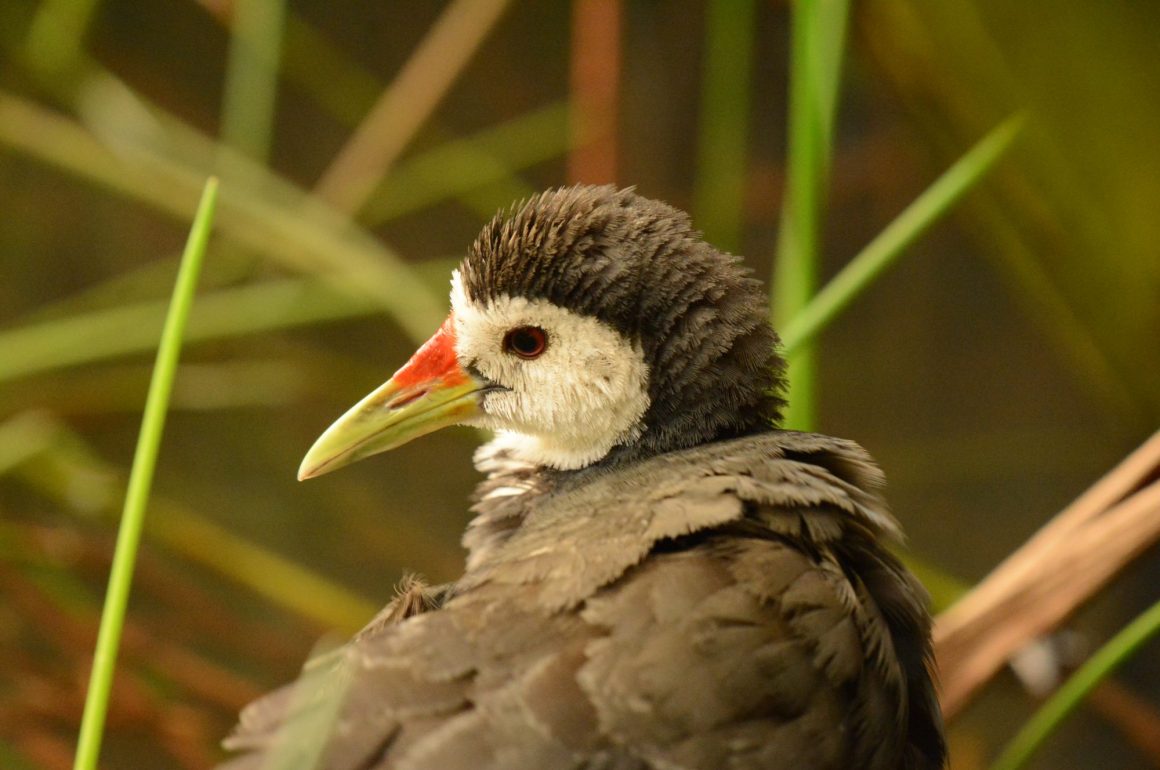
In how many cities are you fortunate enough to see a pitta practically on your doorstep? Well, thanks to Beddagana Park, living in Colombo, Sri Lanka, offers exactly that rare priviledge. Much like Diyasaru Park, which I wrote about in my previous post, Beddagana protects a small remnant of wetland along the edge of Diyawanna Lake in the heart of the city. While the official capital is Sri Jayawardenepura Kotte, most people simply refer to the entire urban sprawl as Colombo. Both parks border the same lake and host many similar species like the White-breasted Waterhen in this post’s featured image. However, Beddagana also supports many different birds, largely due to the dense, forest-like tangle of vegetation that separates much of the wetland from open water.
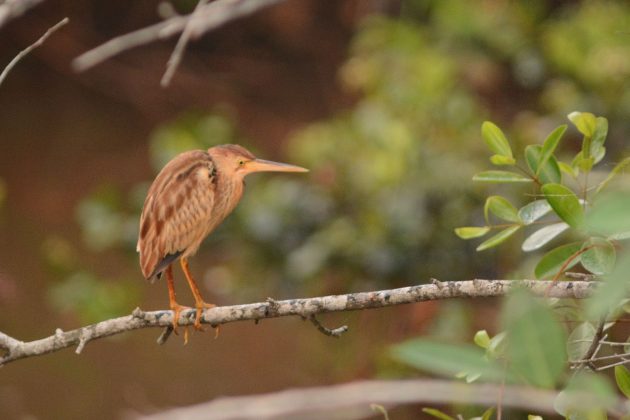
Sri Lanka is home to three resident bitterns – Yellow, Black, and Cinnamon – and remarkably, all three can be found with some regularity at Beddagana. The Black Bittern is the largest of the trio, and is often flushed from the edges of the paths as you walk through the park. When seen well, these birds are endlessly fascinating: their long, flexible necks give them an almost shape-shifting quality, allowing them to appear either squat and compact or suddenly tall and statuesque. Cinnamon Bittern is probably the rarest and I’ve only had a handful of sightings of this species here and in Diyasaru. Yellow Bittern in particular can also be picked out from the observation tower in the centre of the wetland.
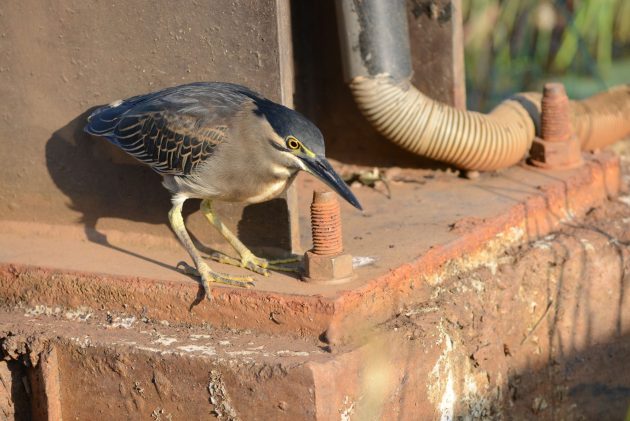
Less skulking than a bittern but similarly shaped is the Striated Heron. One of my favourite sightings from Beddagana involved this species catching a grasshopper and then, instead of eating it, placing it on the water surface as bait to attract fish. I’ve read about this behaviour in other heron species before, but this is the first time I’ve seen it myself.
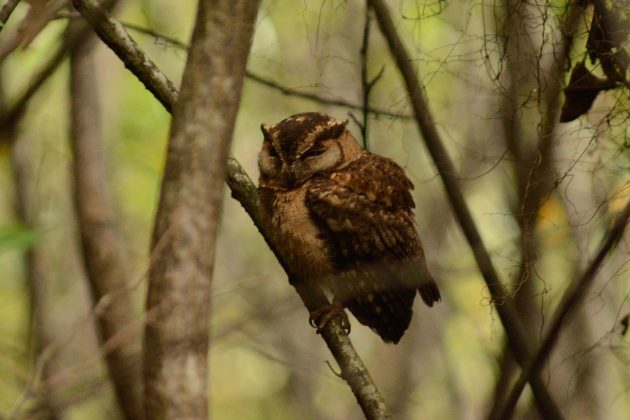
Another memorable encounter here was a pair of Indian Scops-Owls huddled together while roosting in the dense trees along the Diyawanna Lake edge. Although this is the most widespread scops-owl in Sri Lanka – outnumbering Oriental Scops-Owl and obviously the ridiculously rare Serendib Scops-Owl – it remains one of the few times I’ve seen the species. Finding them so close to home made the sighting feel all the more special.
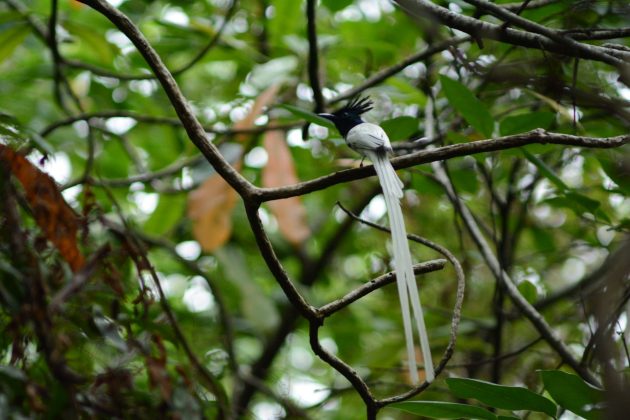
As hinted at in the opening paragraph, Beddagana is also a reliable site for Indian Pitta. Their distinctive calls can often be heard echoing through the park, but actually seeing one is another matter altogether. Most sightings occur along the darker trails in the forested section, where the birds skulk quietly among leaf litter. I’ve mostly seen them as they hop along the trail, maintaining a fixed distance to me: when I stopped, they would stop, but when I slowly approach, they distance themselves by the same amount as the ground I’ve gained. However, this frustration was mostly short-lived because this section of the park also holds Indian Paradise-Flycatchers and for some reason, the white morph is particularly common here. The incredibly long tail was glowing like an illuminated white piece string as the bird fluttered through the dark foliage, truly an impressive sight.
The dense vegetation throughout the park creates the constant impression that something unexpected could appear at any moment. In fact, this sense of anticipation has been well justified on my visits, with surprise sightings such as Grey-bellied Cuckoo adding to the experience. Like Diyasaru, Beddagana Wetland Park is well worth a visit if you find yourself in Colombo and is proof that rewarding birding doesn’t always require leaving the city behind.





Nicee! I think I would like this place.