

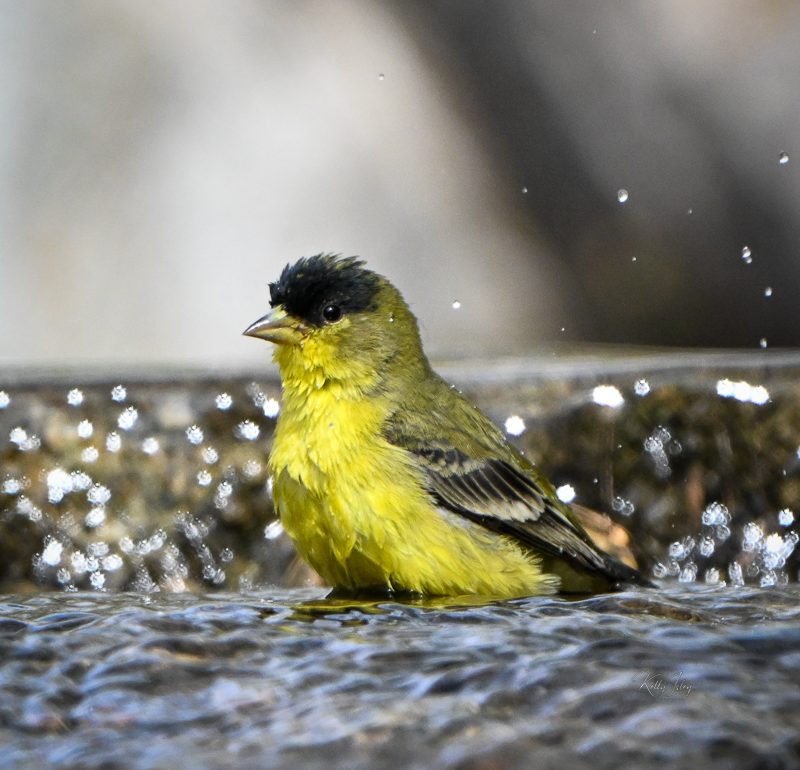
The Lesser Goldfinch is one of North America’s smallest and most charming songbirds. Known for its bright yellow lower plumage, cheerful songs, and energetic behavior, this tiny finch can be found throughout the southwestern United States, Mexico, and parts of Central America. Despite its small size, the Lesser Goldfinch brings plenty of color and spirit to gardens, parks, and backyard feeding stations.
One of the fascinating features of the Lesser Goldfinch is the variation in male plumage across its range. Clever fact: Male Lesser Goldfinches in the eastern part of their range in the United States tend to have black backs. Along the West Coast, their backs are green, with only a black cap. Elsewhere, the amount of black varies, with many birds displaying partly green backs. South of central Mexico, all male Lesser Goldfinches are black backed. This remarkable diversity in coloration makes the species especially interesting for birdwatchers and photographers alike.
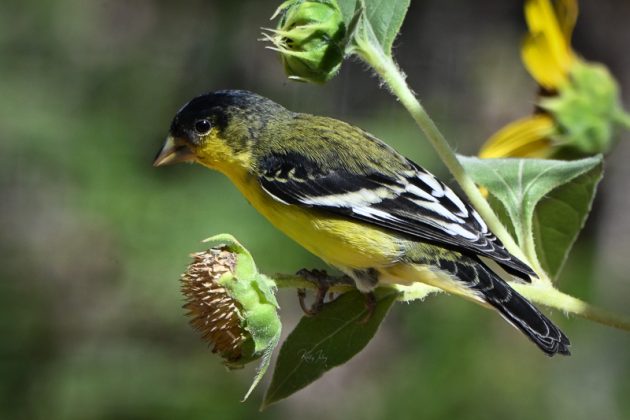
Lesser Goldfinches are highly social birds and readily visit backyard feeders, often alongside other finches such as the American Goldfinch and Pine Siskin. Their diet consists primarily of seeds, especially those from plants in the sunflower family. They are particularly fond of the thin-hulled seeds of nyjer thistle, which provide an excellent source of nutrition. Offering nyjer seed in a tube feeder is one of the best ways to attract these lively birds to your yard. Their acrobatic feeding habits and constant activity make them entertaining to watch.
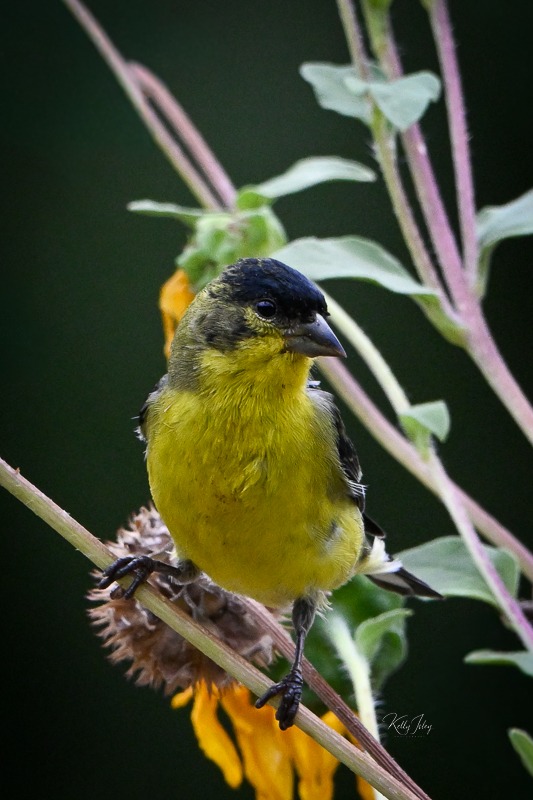
For wildlife photographers, the Lesser Goldfinch presents an excellent subject. Capturing striking images often comes down to grasping light. An effective technique is side lighting, which can add depth and emotion to a portrait. The shadows cast by sidelight add drama to a bird’s features and emphasize the delicate textures of its feathers far more effectively than flat front lighting.
The best opportunity for side lighting often occurs during golden hour. The period shortly after sunrise or before sunset when the sun sits just above the horizon. Positioning yourself so the sunlight illuminates the bird from one side can create beautiful contrasts between brightness and shadow, adding visual interest to your compositions. The resulting images often appear more expressive and artistic.
When photographing stationary subjects such as trees, landscapes, or nesting locations, patience becomes essential. You may need to wait until the sun reaches the ideal position in the sky, and in some cases, revisit a location during a different season. Fortunately, sun-tracking applications can help photographers plan ahead. Well-known picks include PhotoPills, widely regarded as the industry standard for planning precise sun, moon, and Milky Way alignments, and Sun Surveyor, which offers augmented reality views, interactive maps, and street-view integration for scouting locations before a shoot.
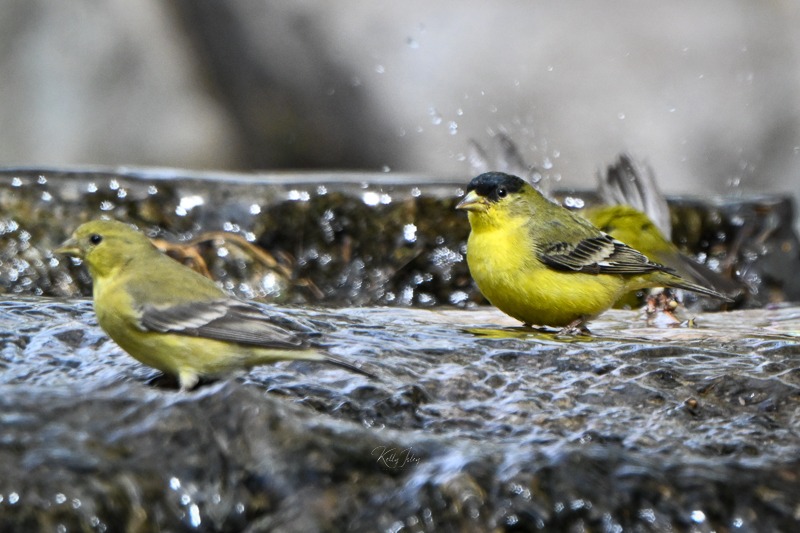
Whether you’re a bird enthusiast, backyard birder, or photographer, the Lesser Goldfinch delivers endless opportunities for observation and enjoyment. Its rich colors, regional variations, and lively personality make it a favorite among nature lovers across its range.





A wonderful overview. The insight into the regional plumage variations of Lesser Goldfinches was fascinating; I had no idea male coloration could vary so dramatically across their range. The addition of the FeederWatch link is a great touch for readers who want to learn more or get involved in citizen science. The photographs are cheerful and beautifully capture the character of these energetic little birds. I also appreciated the photography tip on using side lighting during golden hour. it’s a simple technique that can add remarkable depth and mood to bird portraits. Informative, engaging, and beautifully presented.
I had no idea the back color varies so much by region until reading this. It’s neat that a backyard feeder bird carries that kind of geographic story in its plumage, with green backs out west and black backs further east. I’ll be looking a lot more closely the next time one shows up at the nyjer feeder. Thanks for the great rundown.
Being from California and living now in central Mexico, I can certainly confirm that the LEGOs in these two areas barely look like the same species.