

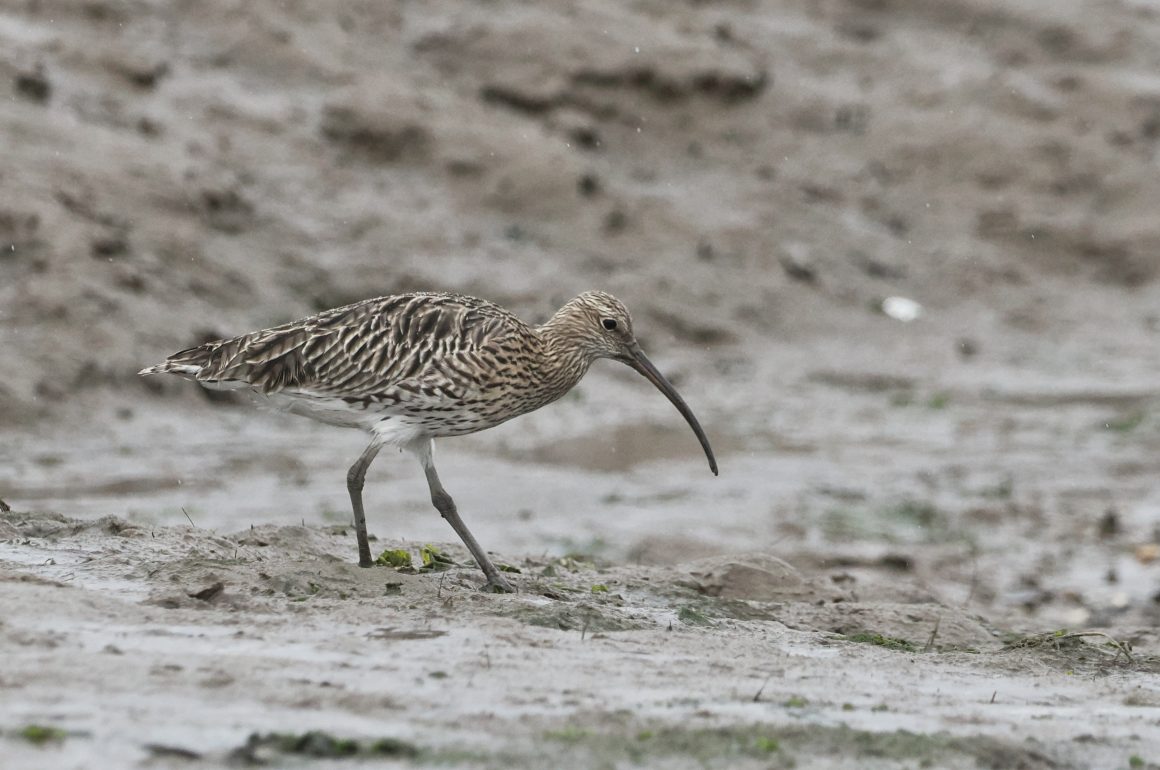
There are no fewer than 80 species of waders (or, for American readers, shorebirds) on the British list, so the fact that I managed to see 21 of them in one day last week doesn’t sound particularly noteworthy. However, the reason that so many different species have been recorded in these isles is a reflection of our geographical position, and the fact that we have a lot of skilled observers here. Among those 80 species are several exceedingly rare birds that have only been recorded a few times – Great Knot, Little Curlew and Tibetan Sand Plover being classic examples. Eskimo Curlew is also on the list, with seven records in the 19th century, but sadly we won’t be seeing another.
To see 21 species in a day requires a little luck and being in the right place at the right time. As I recounted last week, my day started at the RSPB’s reserve of Titchwell in North Norfolk, where our target bird – Spotted Crake – was seen successfully. Early September is a good time to find a variety of waders at Titchwell, and we managed to see most of the species we could expect.
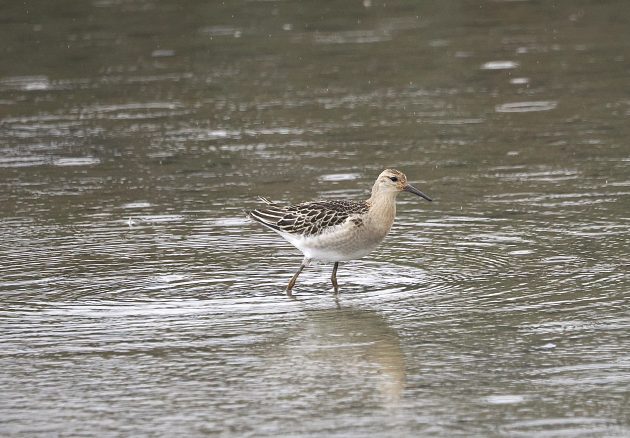
Juvenile Ruff at Titchwell, North Norfolk
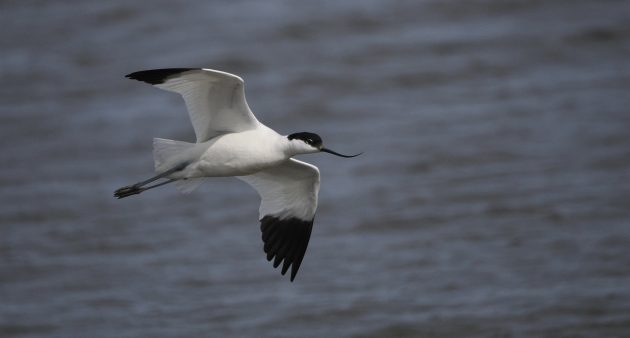
There were around 200 Avocets on the freshmarsh
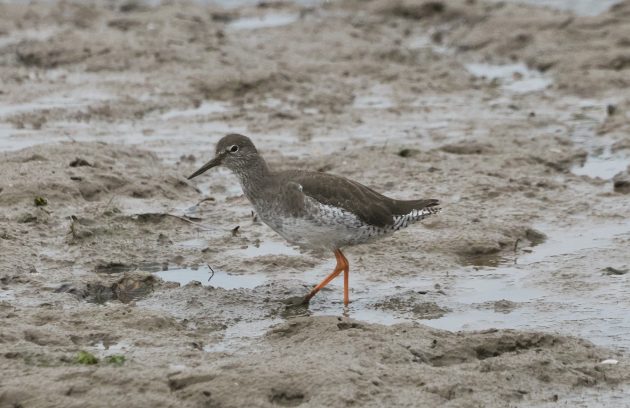
Redshank
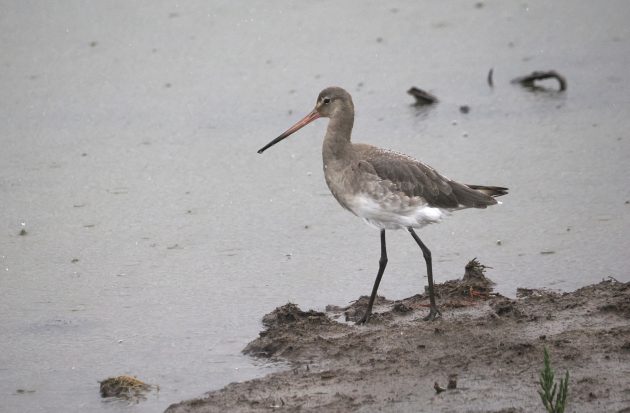
On the freshmarsh there were scores of Black-tailed Godwits and close to 200 Avocets, plus a flock of perhaps 30 Dunlins, 20 or more Ruffs and Redshanks and a few Curlews. A quick check through the Dunlin flock revealed two Little Stints, easily picked out by their diminutive size, short beaks and different jizz to the larger Dunlins – they have a quick, distinctive walk. They were both juveniles, displaying distinctive white stripes (braces) on their backs.
We had earlier seen a single Snipe while looking for the crakes, but we went on to see several more, including a wisp of a dozen birds that flew over us. Wisp, by the way, is the evocative name for a flock of flying Snipe.
There were four species of plovers, too: Lapwing (always a numerous bird here), Golden Plover (only a few, as the big wintering flocks have yet to arrive), Ringed Plover and Little Ringed Plover. It would have been easy to overlook the latter, as the two birds we saw were juveniles with indistinct neck rings. They were too distant to see their yellow eye rings, which in any case are not pronounced on juveniles, but their slim beaks confirmed their identity. A Common Sandpiper was seen briefly by my companions.
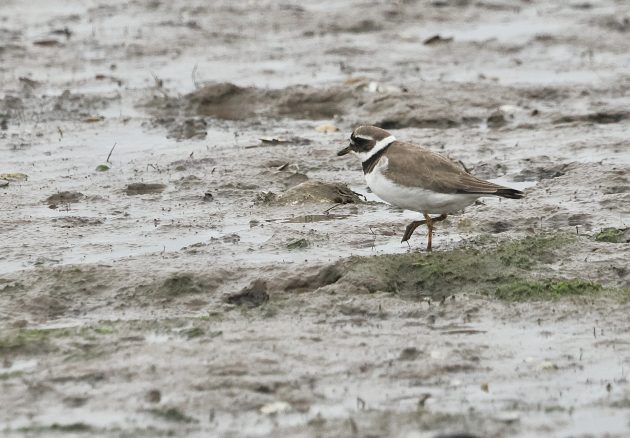
Ringed Plover
It was low tide, so when we reached the shore some serious work with the scopes was needed to add to our wader tally. We soon found Oystercatchers, Bar-tailed Godwits and Turnstones, but surprisingly could only find a single Sanderling. Grey (Black-bellied) Plover was even more of a challenge, but eventually a very distant bird was found, still in handsome summer plumage. A passing flock of Knots completed our tally.
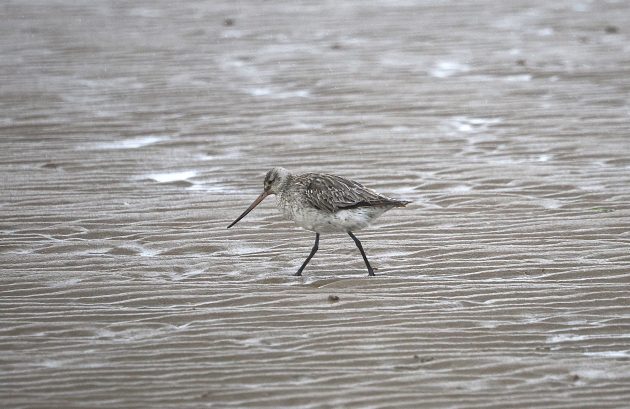
Bar-tailed Godwit on the beach at Titchwell. These birds prefer the shore to the freshmarsh, unlike Black-tailed Godwits (below)
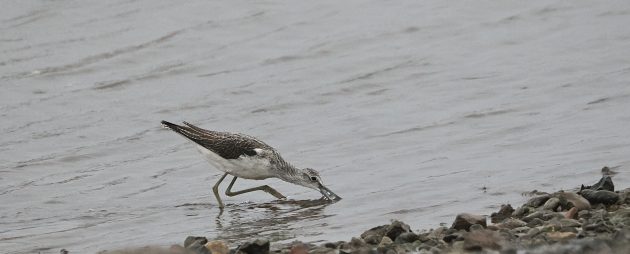
Greenshank are very active feeders
By the time we got back to the car it was lunchtime. It was still raining, so we elected to eat our sandwiches in the car at nearby Brancaster Staithe, where it’s possible to drive close to the saltings. Here, as we ate, we watched a variety of waders, including Black-tailed Godwits and Ringed Plovers, but nothing that we hadn’t seen before until a fine Greenshank flew across in front of us and started feeding actively in the creek. Never numerous, these are handsome birds that I always enjoy watching.
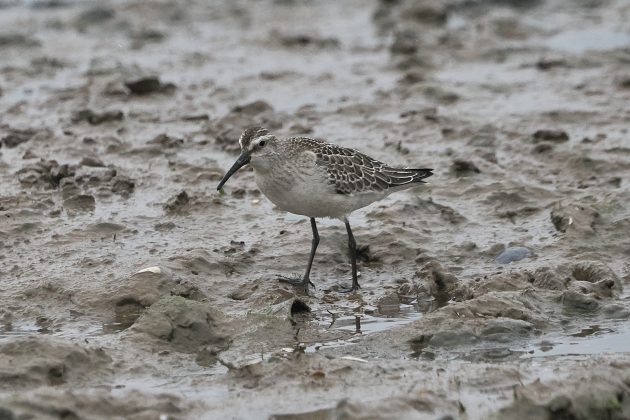
Curlew Sandpiper (above and below): a migrant from Siberia
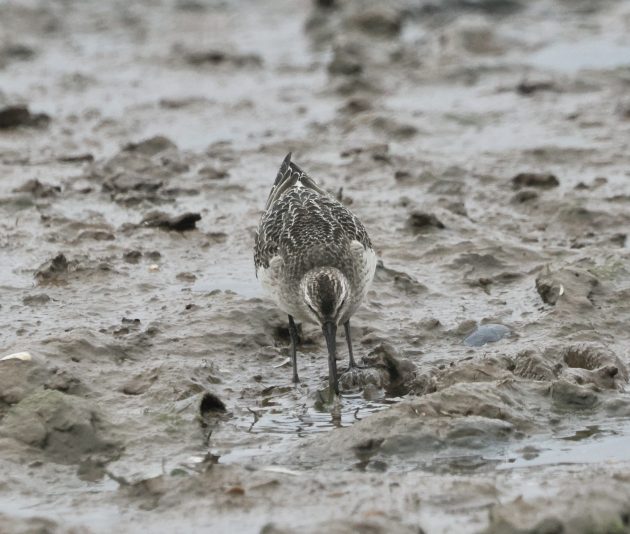
I’d had to move the car to photograph the Greenshank, and from my new position I noticed what, at a glance, I thought to be a Dunlin close to the car. As I reached for my camera I realised that it was Curlew Sandpiper, an unexpected find and a real bonus. We went on to see two more, all smart juveniles in fresh plumage. Curlew Sandpipers don’t breed in Europe, so these birds must have flown a couple of thousand miles from where they were hatched in arctic Siberia. It’s epic migrations like these which make waders such fascinating birds. It was probable that these individuals were refuelling here in Norfolk before heading south to wintering grounds in tropical Africa.
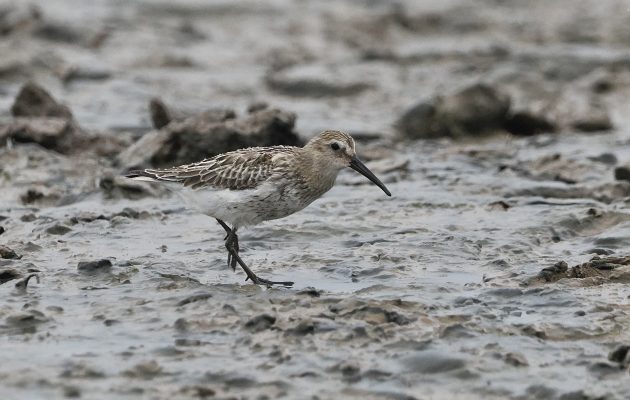
Dunlin winter on the Norfolk coast in large numbers
There had been sightings earlier in the day of two Pectoral Sandpipers at Cley, so these were our next target birds. Frustratingly they hadn’t be seen for several hours, so we looked for them in vain. We did see a couple of additional Little Stints, along with many more Black-tailed Godwits, Dunlins and Redshanks, but there were no new additions for our wader list.
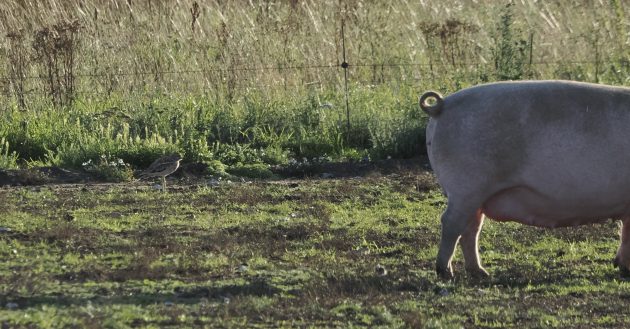
Stone curlew and pig. The 21st wader of the day
There was one more wader possibility for us now: could we find a Stone-curlew on our drive home to Suffolk? We knew of a favoured gathering ground for these birds in pig fields close to our route, and with the day’s rain passed and the sun now shining, we felt optimistic. Such optimism wasn’t misplaced: we saw at least 50, a fitting conclusion to our special wader day.







Leave a Comment