

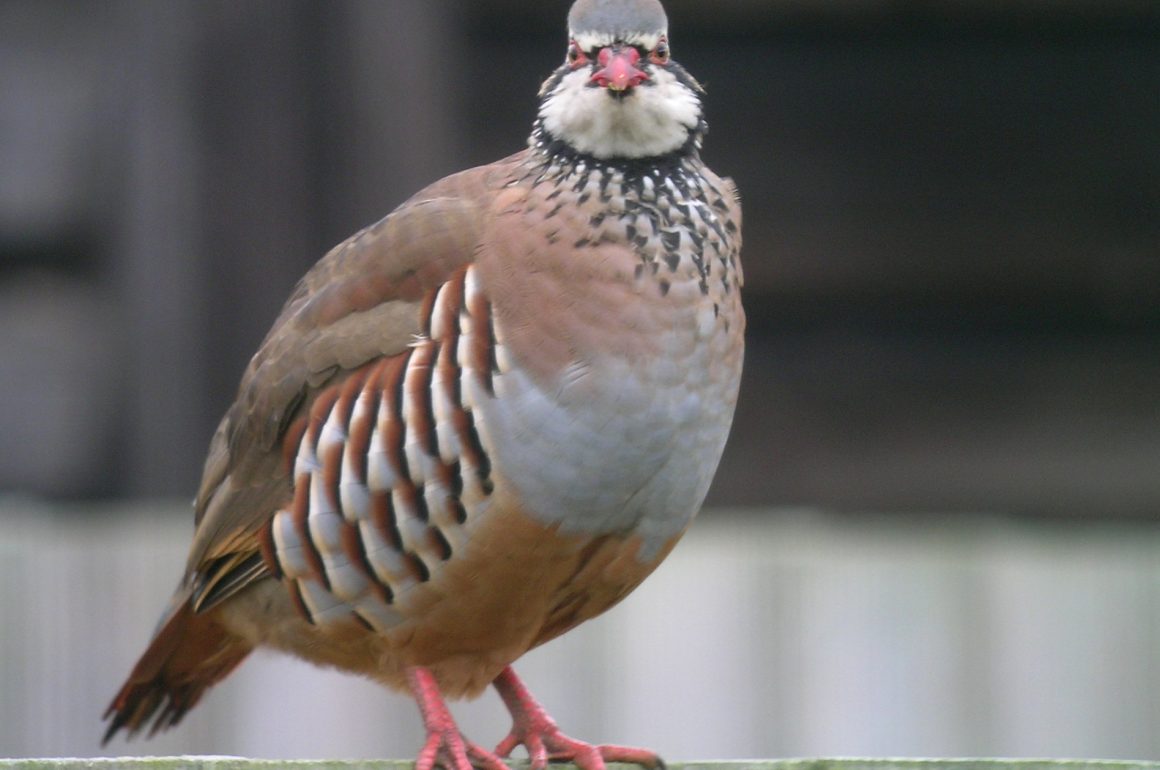
I have to admit to not being a Christmasy person for a variety of reasons. For a start, it’s my least favourite time of the year, as the days are far too short, the weather often miserable. I’m not religious, and I don’t have children or grand children to celebrate Christmas with. However, I’m not such a misery that I can’t find pleasure in Christmas carols, and one of my favourites is On the first day of Christmas my true love sent to me. The very first gift is the somewhat improbable partridge in a pear tree. There follows a series of 11 more unlikely presents, several of which have a bird theme, though concluding with 10 pipers piping, 11 ladies dancing and, finally, 12 lords a-leaping.
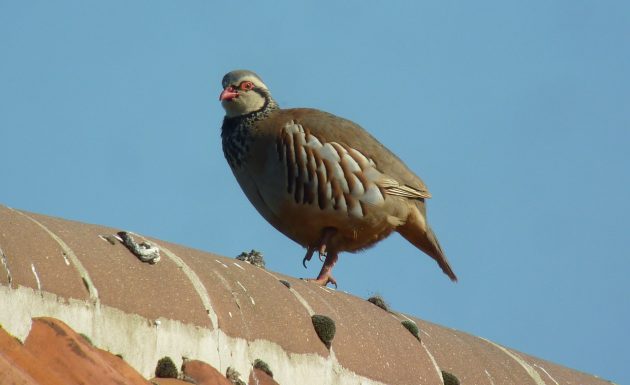
A Partridge (Red-legged) on a roof, not in a pear tree. Red-legs do at least perch on walls and buildings, but rarely in trees
It was written at least 200 years ago, and despite my efforts I haven’t managed to find out who wrote it, but one has to conclude that whoever it was had an interest (of sorts) in birds, hence all the avian gifts. The tone is set with the partridge in a pear tree. Though modern interpretations often illustrate this with a Red-legged Partridge, these birds were virtually unknown in Britain at the time, so the reference must be to our native Grey Partridge, then a common and widespread resident. But what on earth is that partridge doing in a pear tree? Though Red-legged Partridges will readily perch on walls, even on the top of barns, it’s something that Grey Partridges never do, or at least I’ve never seen one perch anywhere.
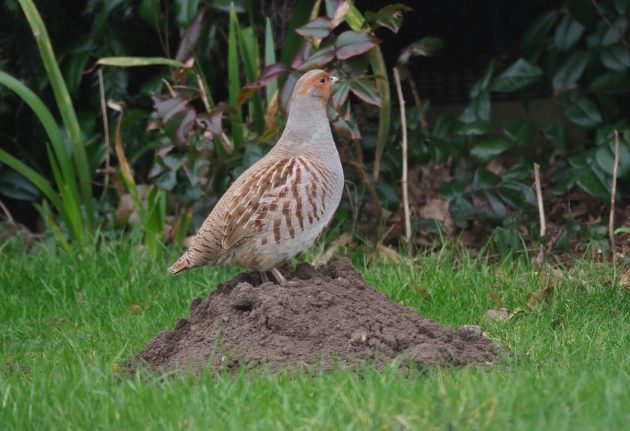
A Grey Partridge on a mole hill. There was a pear tree just feet away from where this bird was photographed, but it chose not to perch in it
However, this prompted me to do a little research, and I found a record of a covey of Grey Partridges that, during a violent storm “took refuge on the roof of a house, and there they remained for the greater part of a December day”. The legendary Scottish naturalist Desmond Nethersole-Thompson once observed a small covey “which perched on a spruce tree during a big snow storm”. However, there are definitely no records of partridges in pear trees.
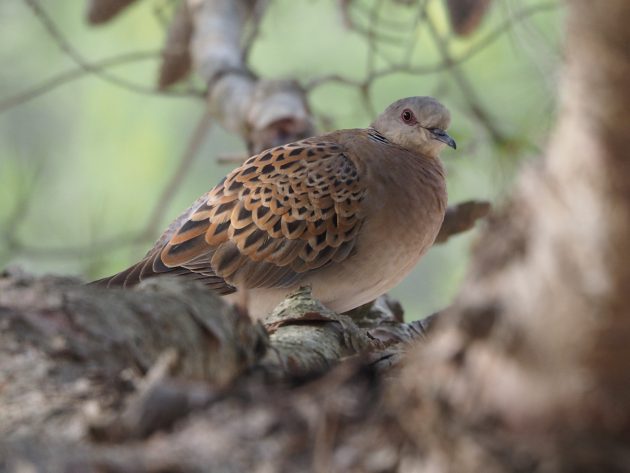
Everyone loves Turtle Doves
Present No 2 is two Turtle Doves. As Turtle Doves are summer visitors to Britain, this again is an unlikely present, but it’s a rather nice one, as everyone likes Turtle Doves.
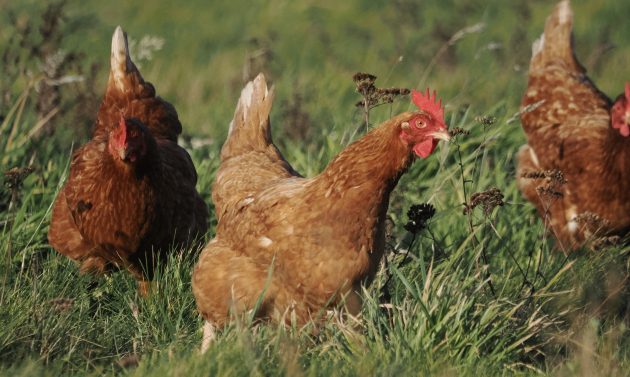
Three hens, but I suspect that these are English , not French
At No 3 are three French hens. Did the author really mean French hens, or simply foreign hens? There are certainly plenty of different breeds of chicken that originate in France. My favourite is the Maran, which lays the most beautiful dark-shelled eggs.
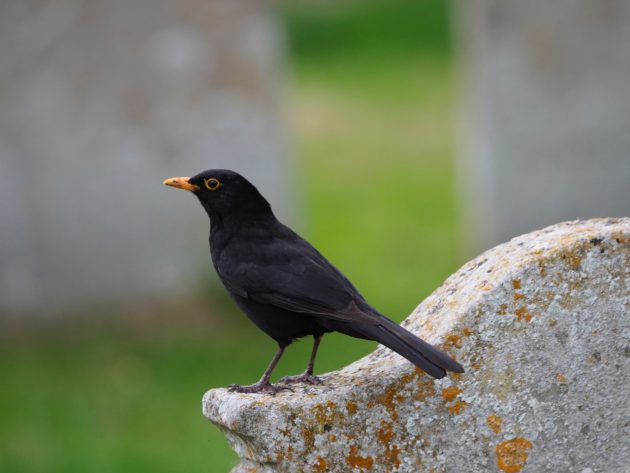
Could a “Colley” bird be a Blackbird?
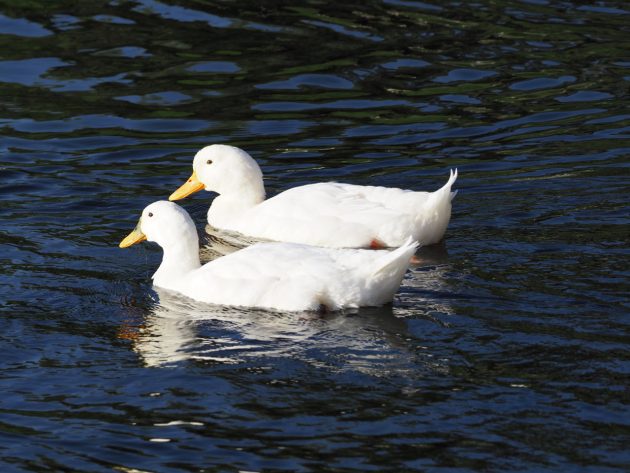
Colley birds are often transcribed as Calling Birds. These are Call Ducks
Coming in at No 4 are four Colley birds. The experts who have tried to analyse this carol are undecided what a Colley bird is, and there are suggestions that the word comes from the Somerset dialect and means Blackbird, which is a possibility. Recent versions of the carol often change the word colley to calling. So we have four calling birds, which could be anything from call ducks to Lapwings.
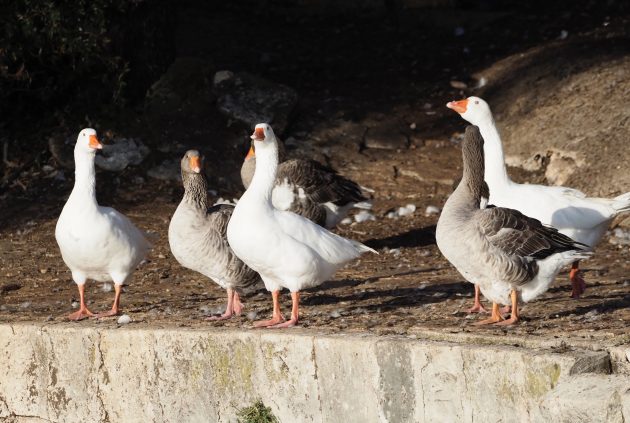
Domestic geese rarely lay eggs in mid-winter
We don’t need to concern ourselves with present No 5, five gold rings, but with No 6 we are again back to an avian theme: six geese a-laying. This would be a very special Christmas present, as anyone who has kept domestic geese will tell you, they’re not keen to lay eggs in mid winter. And if they were indeed laying, it would be a crime to knock one on the head for Christmas dinner.
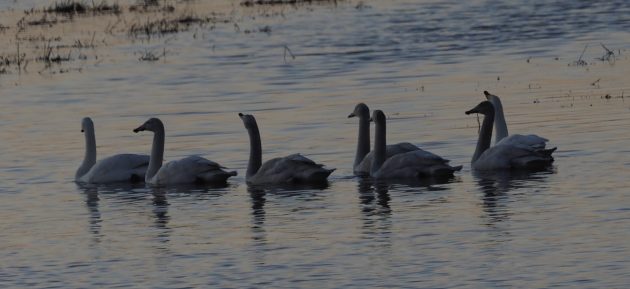
Seven swans a-swimming. A family of Whoopers at dusk
No 7, and the last present with an avian theme, is seven swans a-swimming. This is invariably illustrated with seven Mute Swans, but at Christmas it’s possible to find three species of swans in Britain. My photograph shows a family of seven Whooper Swans, swimming together at dusk. It was taken just before Christmas on the Welney Washes in Norfolk.
Curiously, several other European countries have similar carols, and the French version even has a pair of Turtle Doves and a Partridge, but it’s not in a pear tree. Merry Christmas!









Very timely and interesting! We learned this song in elementary school here in the US and we always sang the verse as “calling” not colley. Calling makes more sense it seems but your research made in far more intriguing. Your piece made it A great way to wake up to this morning before our annual Christmas Bird Count. days starts!
My Dad would shout: chase them bl..dy partridges out of the pear tree! However, this would have been June, a cherry tree and starlings. Merry Christmas David and thanks for this gift. Beats the usual lump of coal.